CHAPTER 10 WAVES and TIDES Anatomy of a

- Slides: 38
CHAPTER 10 WAVES and TIDES
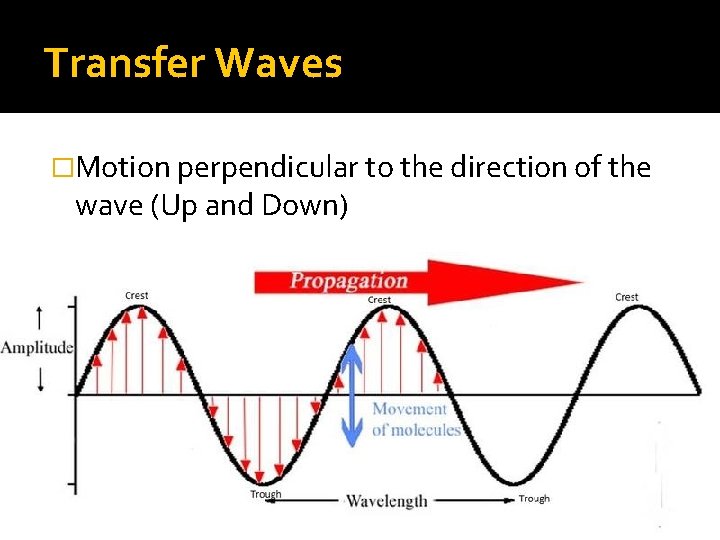
Anatomy of a Wave �A wave is any disturbance in some matter (solid, liquid, or gas) Three types of Progressive waves (in terms of ocean waves): ▪ Longitudinal (back and forth in direction of wave) ▪ Transverse (Up and down perpendicular to direction of the wave) ▪ Orbital (only transmit through fluids, particles in orbital motion return to their original place) ▪ S=L/T
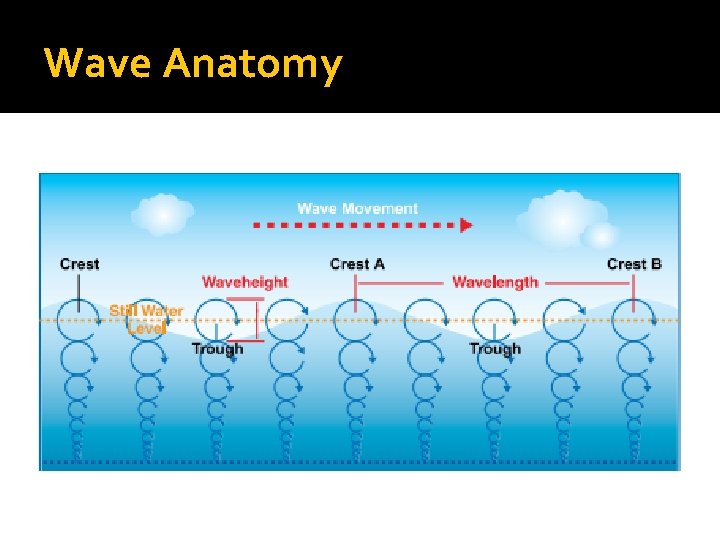
Wave Components �Wavelength: the distance between successive crests of a wave, especially points in a sound wave or electromagnetic wave. � Period (T): the time needed for one complete cycle of vibration to pass a given point �Frequency (f): the number of crests of a wave that move past a given point in a given unit of time. �F= 1/T or T=1/f
Wave Anatomy
�https: //www. youtube. com/watch? v=w 2 s 2 f. Zr 8 sq. Q
Transfer Waves �Motion perpendicular to the direction of the wave (Up and Down)
Orbital Waves �Only in fluids �Energy moves fluid in a circular motion as it passes �Fluid particles return to their original position
Disturbing Forces (Causes) �Wind �Changes in gravity (Position with respect to sun and moon) �Seismic activity
Restoring Forces �Capillary waves: Surface tension �Gravity waves: “Gravity” or basically the weight of the wave itself. �Tides: Gravity between the sun, the Earth and the Moon as well as coriolis effect.
Classifying waves �Capillary: Wind generated waves with wavelengths smaller than 2 cm Restoring force is surface tension First to form As waves grow larger surface tension becomes almost insignificant
Classifying Waves �Gravity Waves: Large than capillary waves, the weight of the wave itself being pulled by gravity is the main restoring force (thus the name gravity waves). Wavelengths from 2 cm 100’s of meters �Seismic waves (Tsunamis) are produced by seismic activity Wavelength up to 200 km �Tides
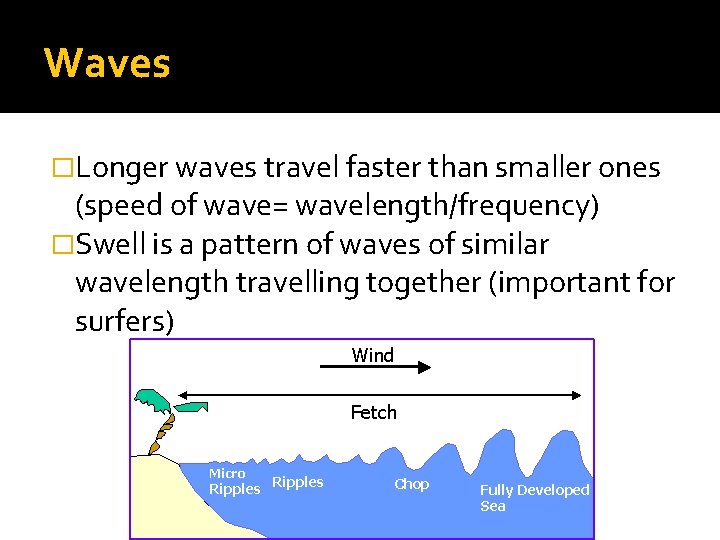
Waves �Longer waves travel faster than smaller ones (speed of wave= wavelength/frequency) �Swell is a pattern of waves of similar wavelength travelling together (important for surfers)
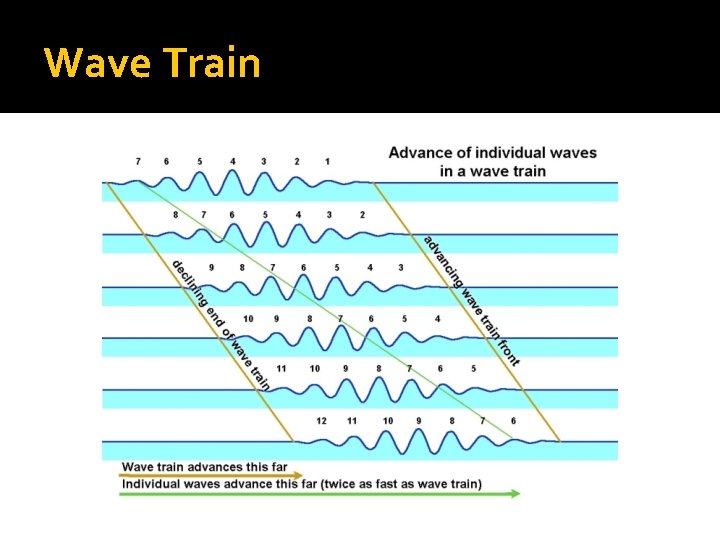
Wave Train �Groups of swells �Leading waves dissipate �Trailing waves join and form the train �Train moves at half the speed of individual waves �When wave train reaches shallow water, speed of train and ind waves become the same
Wave Train
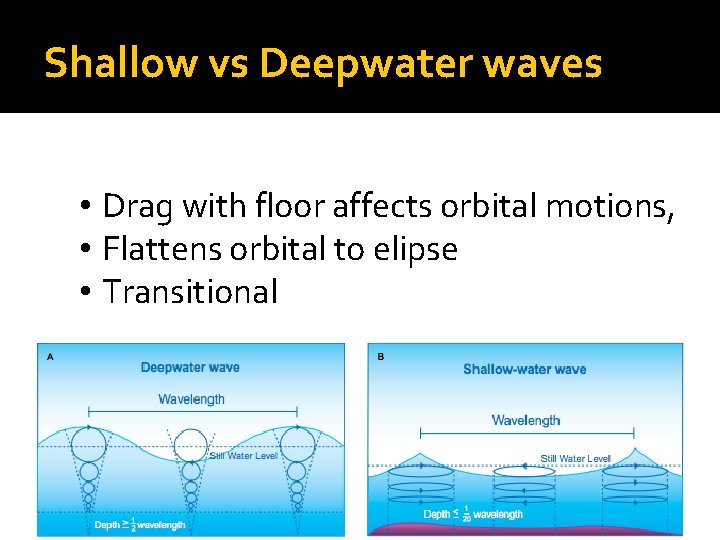
Shallow vs Deepwater waves • Drag with floor affects orbital motions, • Flattens orbital to elipse • Transitional
Shallow vs Deepwater waves �Tidal waves are always shallow water �Wind can create smaller waves on top of tides: This results in deepwater waves on top of shallow water waves Capillary waves are almost always deep water waves.
Factors for wave growth �Wind speed �Wind duration �Fetch is the surface area over which wind blows Maximum in the Antarctic When an area has reached maximum wave size it is known as fully developed sea “rogue waves” are produced from interaction of closely related waves.
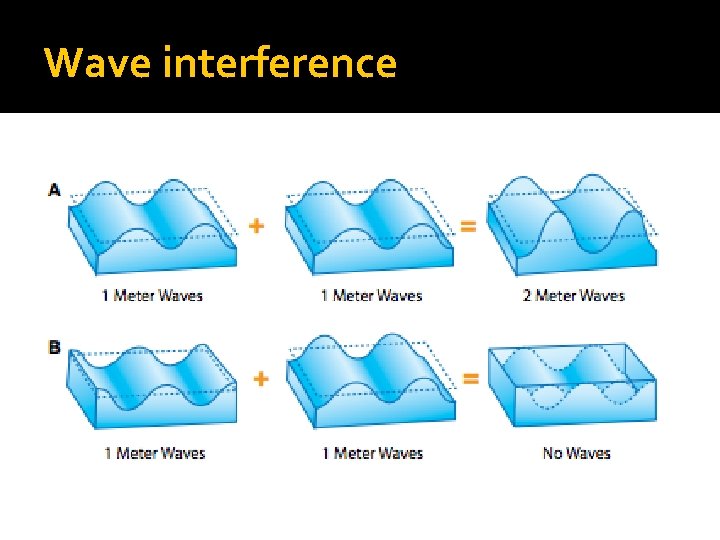
In/Out of phase �Wave trains from different areas will interact with each other (wave interference) �In phase means constructive and combine to make larger waves �Out of phase are destructive �Interference cannot act over more than a few wavelengths
Wave interference
Internal Waves �Occur within different density layers �Very large amplitude 100 s of feet �Low frequency, move very slowly �Cause depth variation in thermocline �Differ from surface waves because air is much less competent than water, vs waters of different densities with similar competency �https: //www. youtube. com/watch? v=oljinl. D 2 y ho
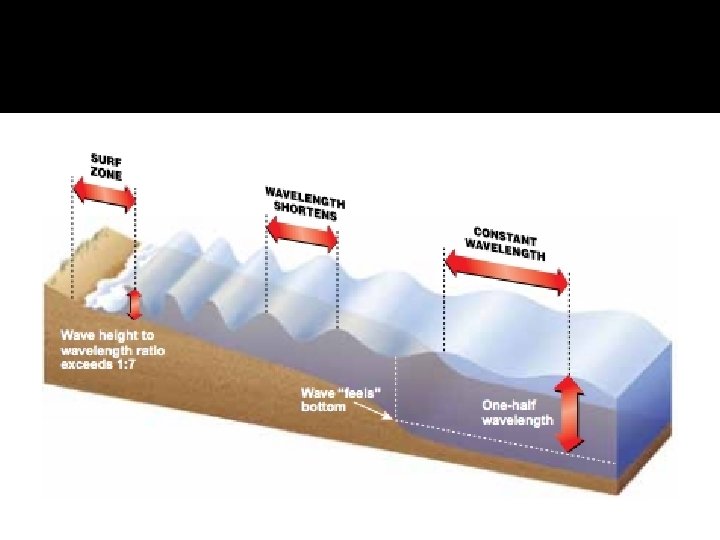
Surf and Breaking Waves �H: L ratio of 1: 7 causes waved to break because the crest is traveling faster than the trough �This happens when the depth of the water at equilibrium is 1. 3 times the height of the wave itself.
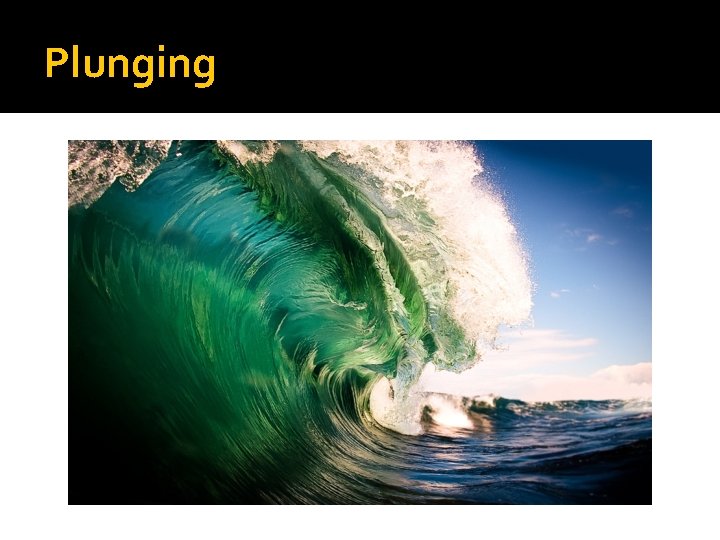
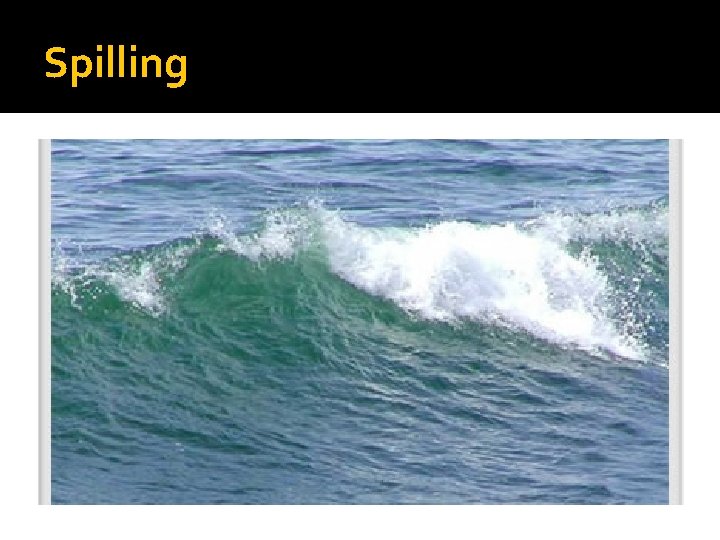
Breaking Waves �Plunging waves=curl at the top= moderately steep beaches �Spilling waves= gentle slope �Surging waves = Very steep
Plunging
Spilling
Surging �https: //www. youtube. com/watch? v=f. PDS 9 bv Wscs
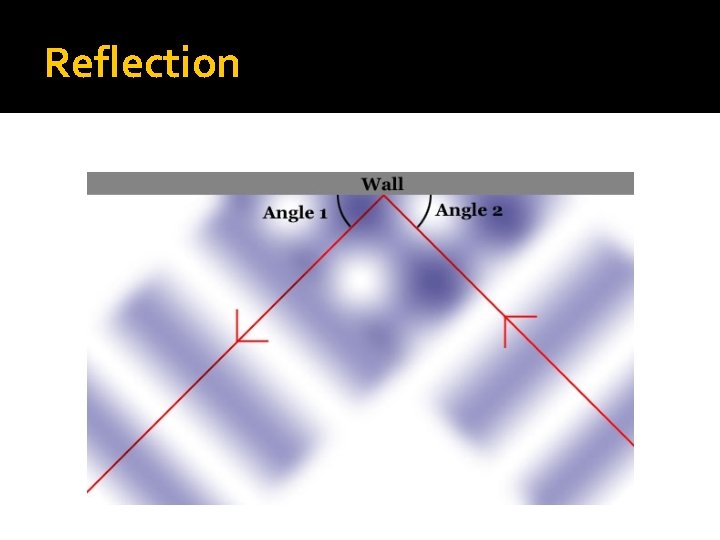
Reflection
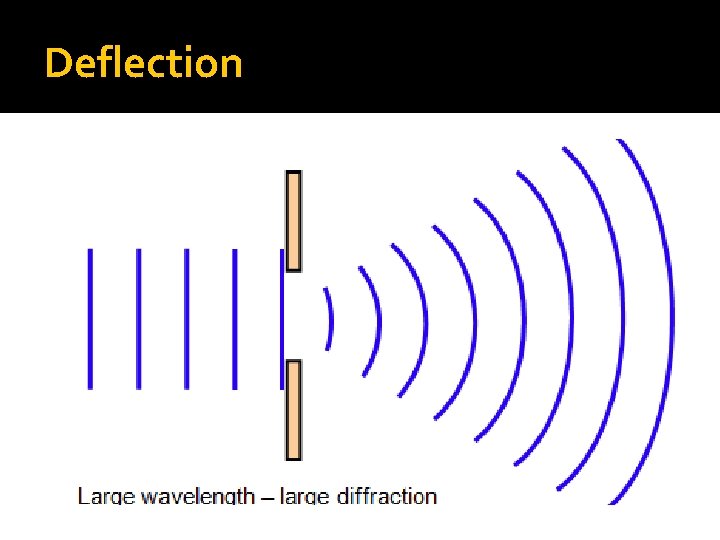
Deflection
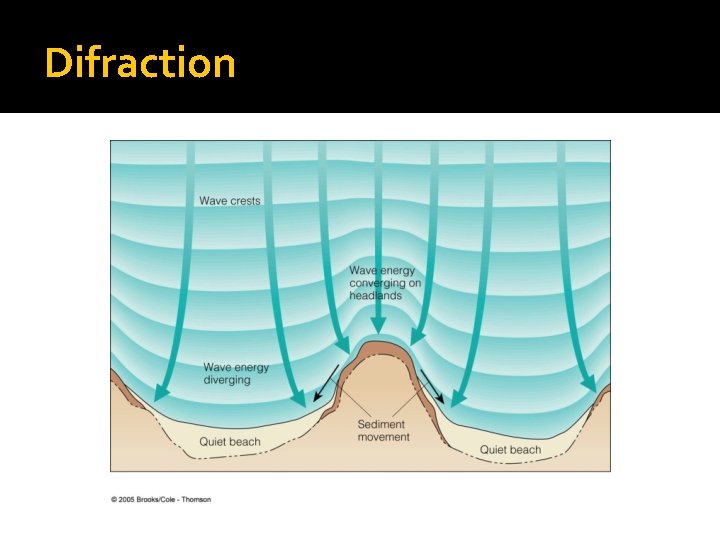
Difraction
Refraction �https: //www. youtube. com/watch? v=Ma. Gieyc P 9_U
Bozeman Science �https: //www. youtube. com/watch? v=Jpp. Vi. Ht LNlc
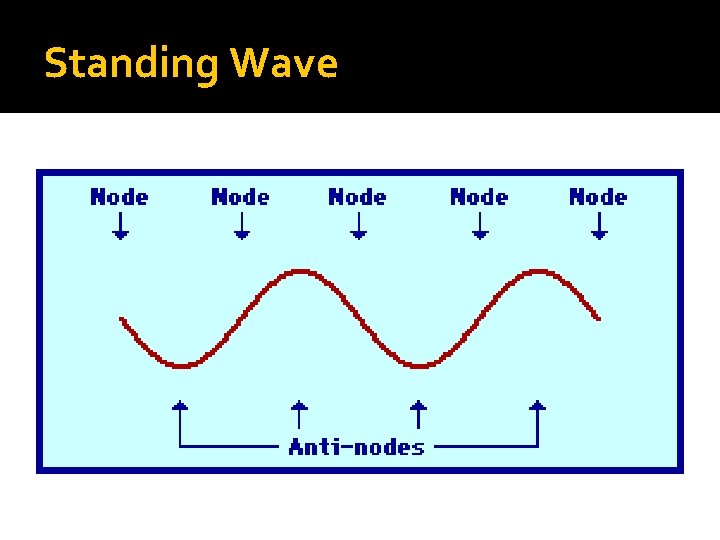
Standing Wave
Destructive Waves �Storm Surge: storms push water onto itself against the shore, as storms moves towards shore the surge piles on tide (not progressive) �Seiche: Standing wave, flooding and water front property damage �Tsunami: Sudden displacement of large mass of water by landslide, iceberg, volcanic eruption or tectonic movement. Shallow water waves only, Surge waves at shore.
Tides �Newton’s Equilibrium theory assumes Earth is perfectly uniform, oceans are very deep, and there are no land masses. �Laplace’s Dynamic theory shows there are several tidal bulges because of gravity, shape of the Earth, seasons, time of the month, shape of the ocean basin, coriolis
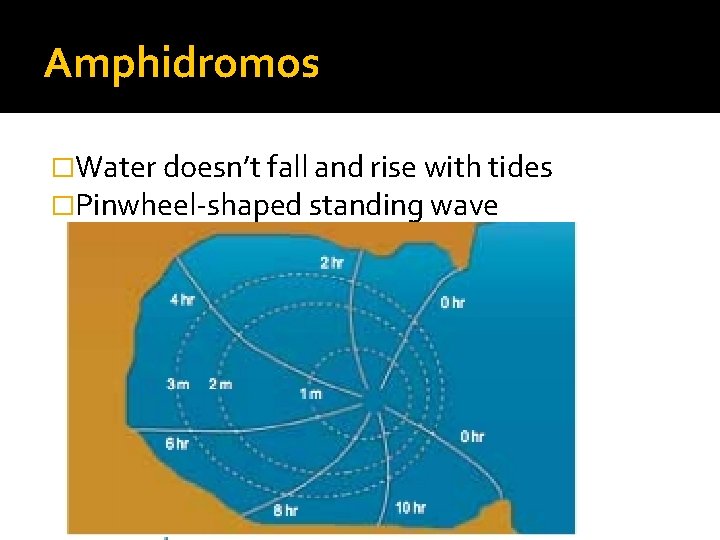
Amphidromos �Water doesn’t fall and rise with tides �Pinwheel-shaped standing wave
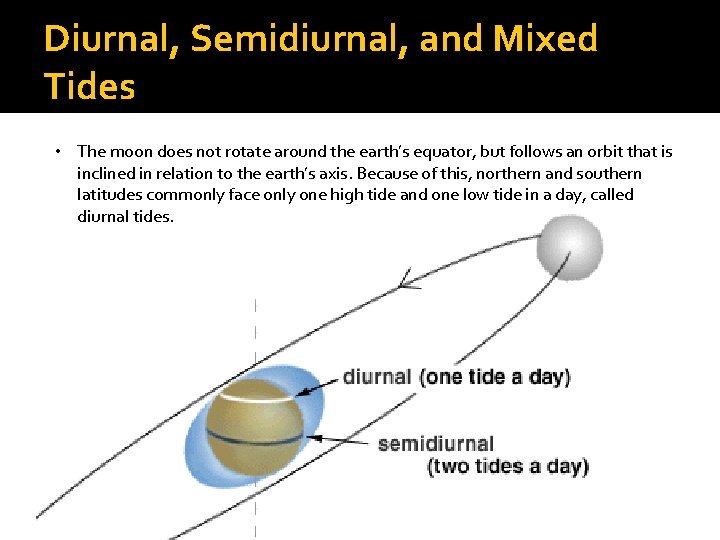
Diurnal, Semidiurnal, and Mixed Tides • The moon does not rotate around the earth’s equator, but follows an orbit that is inclined in relation to the earth’s axis. Because of this, northern and southern latitudes commonly face only one high tide and one low tide in a day, called diurnal tides.
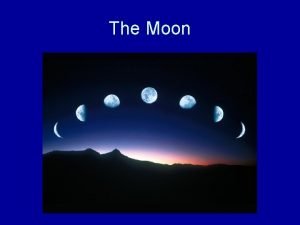
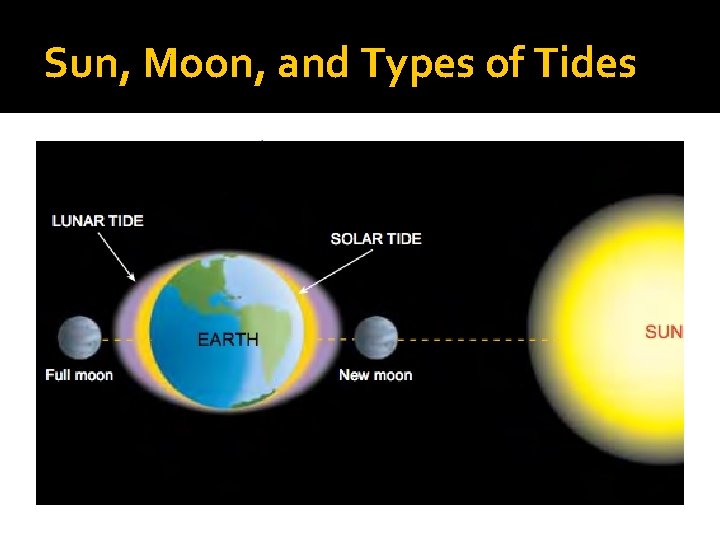
Sun, Moon, and Types of Tides
Sun, Moon, and Types of Tides �https: //www. youtube. com/watch? v=pw. Chk 4 S 99 i 4 �Blue Planet “Tidal Seas”