Chapter 10 Privacy Security and Ethics 9 1
- Slides: 26
Chapter 10 Privacy, Security and Ethics 9 -1
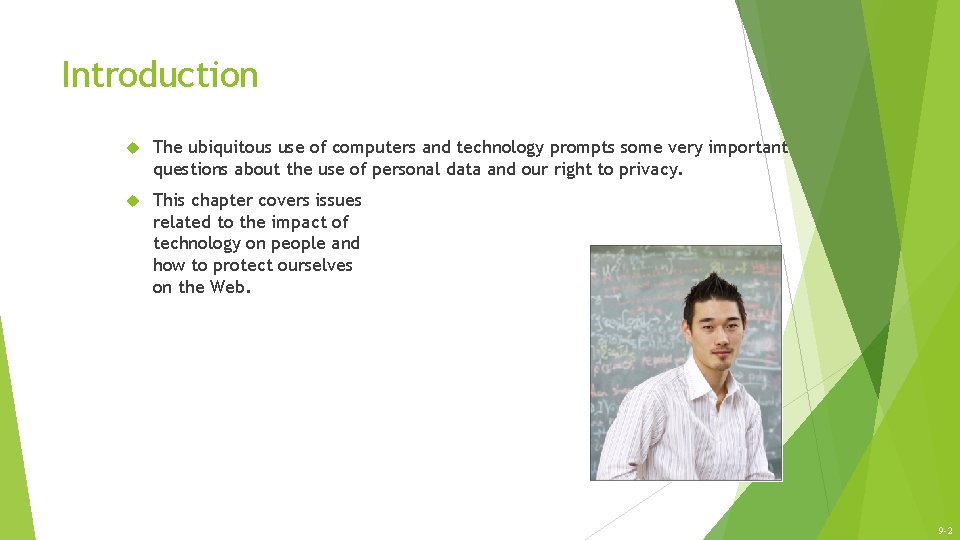
Introduction The ubiquitous use of computers and technology prompts some very important questions about the use of personal data and our right to privacy. This chapter covers issues related to the impact of technology on people and how to protect ourselves on the Web. 9 -2
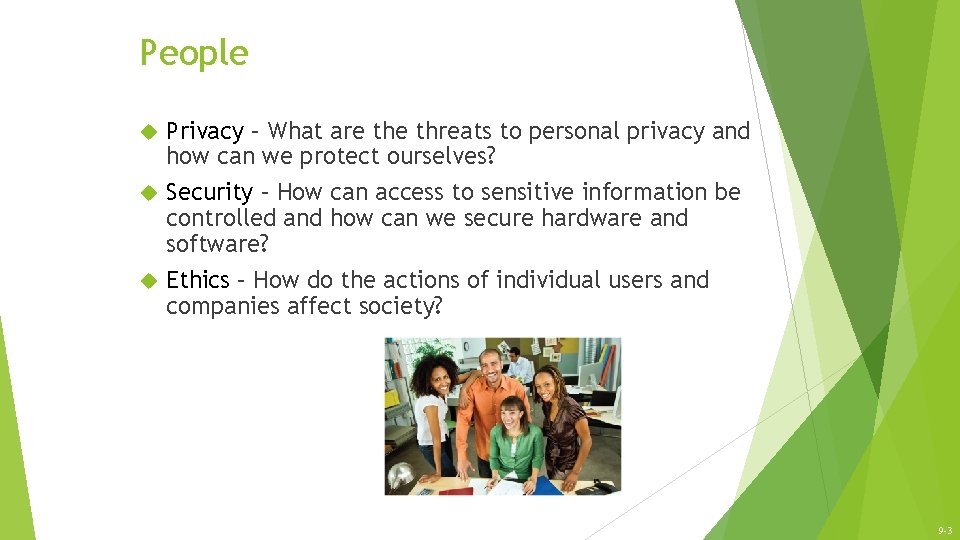
People Privacy – What are threats to personal privacy and how can we protect ourselves? Security – How can access to sensitive information be controlled and how can we secure hardware and software? Ethics – How do the actions of individual users and companies affect society? 9 -3
Privacy – concerns the collection and use of data about individuals Three primary privacy issues: Accuracy Property Access 9 -4
Large Databases Large organizations compile information about us daily Big Data Ever growing volume of data Data collectors include Government agencies Telephone companies Credit card companies Supermarket scanners Financial institutions Search engines Social networking sites 9 -5
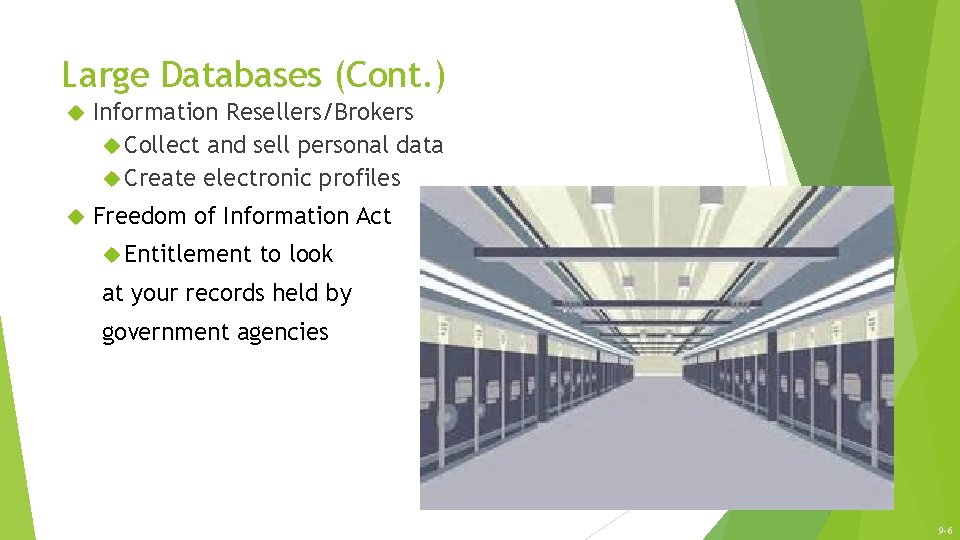
Large Databases (Cont. ) Information Resellers/Brokers Collect and sell personal data Create electronic profiles Freedom of Information Act Entitlement to look at your records held by government agencies 9 -6
Large Databases (Cont. ) Personal information is a marketable commodity, which raises many issues: Collecting public, but personally identifying information (e. g. , Google’s Street View) Spreading information without personal consent, leading to identity theft Spreading inaccurate information Mistaken identity 9 -7
Private Networks Employee monitoring software Employers can monitor e-mail legally A proposed law could prohibit this type of electronic monitoring or at least require the employer to notify the employee first 9 -8
The Internet and the Web Illusion of anonymity People are not concerned about privacy when surfing the Internet or when sending e-mail History Files Temporary Internet Files Browser cache Cookies Privacy Mode Spyware 9 -9
History Files and Temporary Internet Files History Files Include locations or addresses of sites you have recently visited Temporary Internet Files / Browser Cache Saved files from visited websites Return Viewing History Files 9 -10
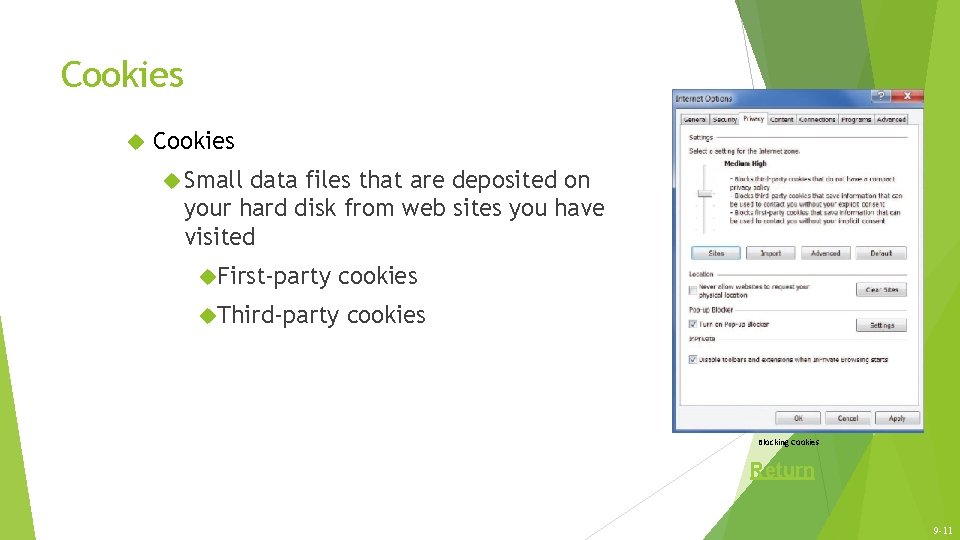
Cookies Small data files that are deposited on your hard disk from web sites you have visited First-party cookies Third-party cookies Blocking Cookies Return 9 -11
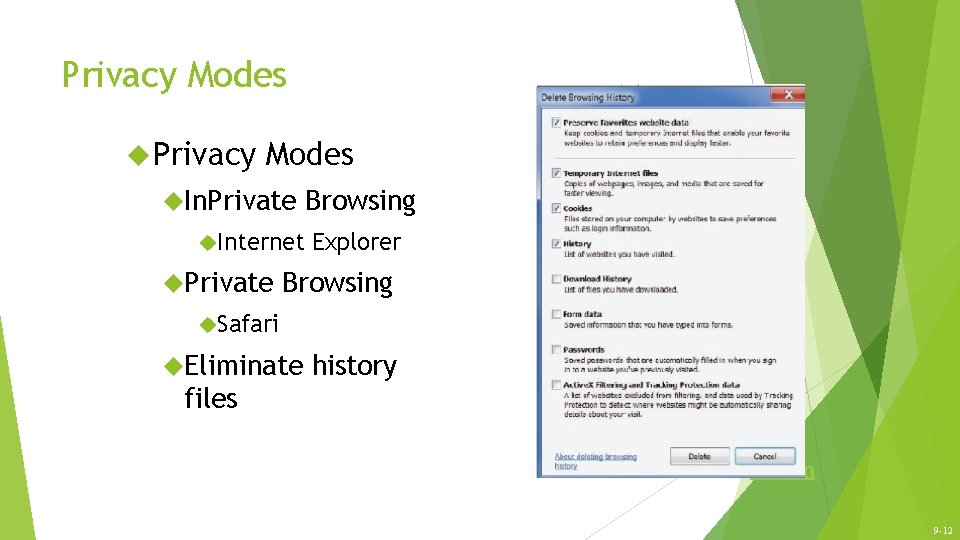
Privacy Modes In. Private Internet Private Browsing Explorer Browsing Safari Eliminate history files Return 9 -12
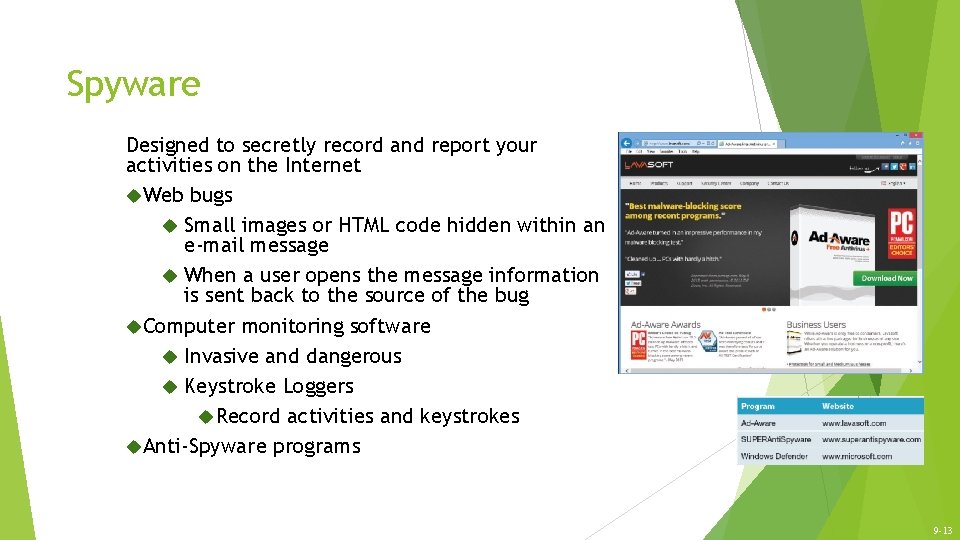
Spyware Designed to secretly record and report your activities on the Internet Web bugs Small images or HTML code hidden within an e-mail message When a user opens the message information is sent back to the source of the bug Computer monitoring software Invasive and dangerous Keystroke Loggers Record activities and keystrokes Anti-Spyware programs 9 -13
Online Identity The information that people voluntarily post about themselves online Archiving and search features of the Web make it available indefinitely Major Laws on Privacy Gramm-Leach-Bliley Act Health Insurance Portability and Accountability Act (HIPAA) Family Educational Rights and Privacy Act (FERPA) 9 -14
Security Involves protecting individuals or organizations from theft and danger Hackers Gain unauthorized access Cybercrime / Computer Crime Criminal offense that involves a computer and a network Effects over 400 million people annually Costs over $400 billion each year 9 -15
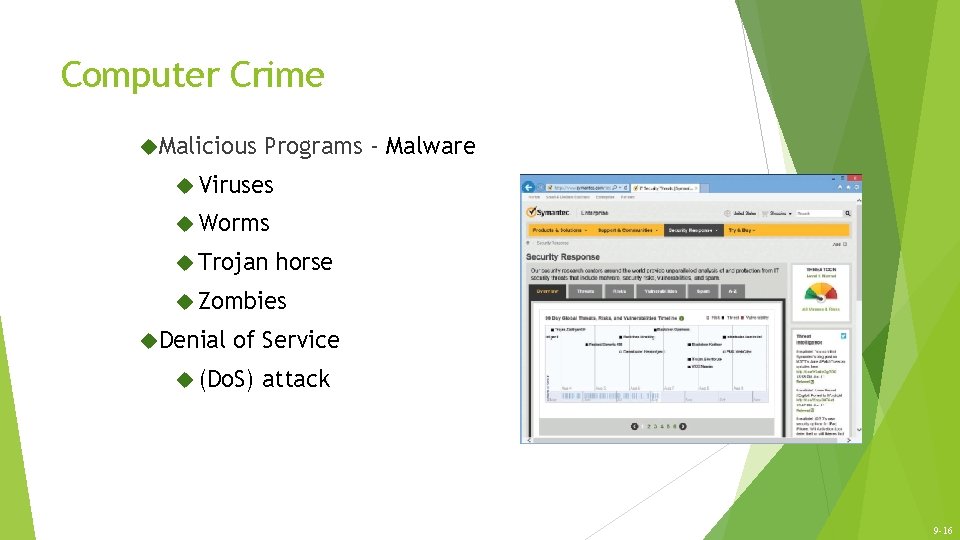
Computer Crime Malicious Programs - Malware Viruses Worms Trojan horse Zombies Denial of Service (Do. S) attack 9 -16
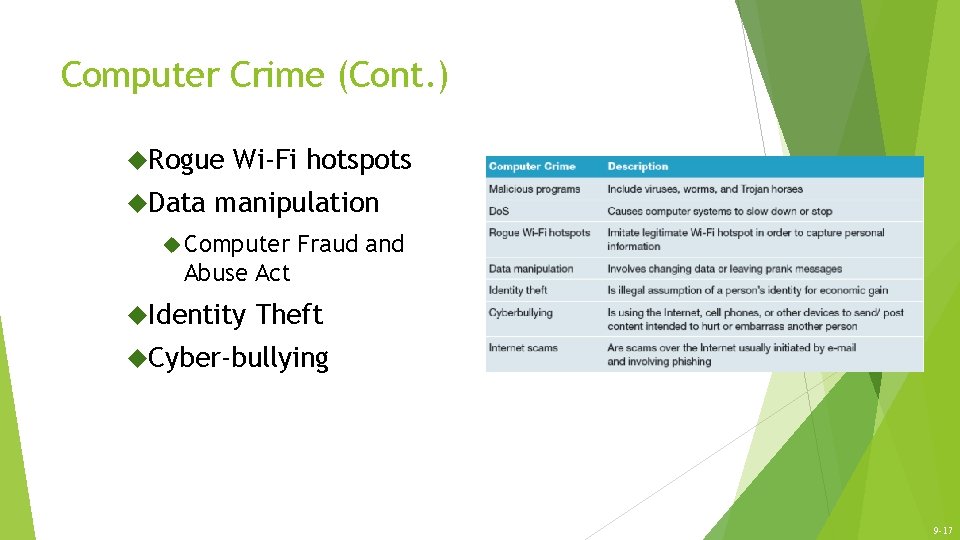
Computer Crime (Cont. ) Rogue Data Wi-Fi hotspots manipulation Computer Fraud and Abuse Act Identity Theft Cyber-bullying 9 -17
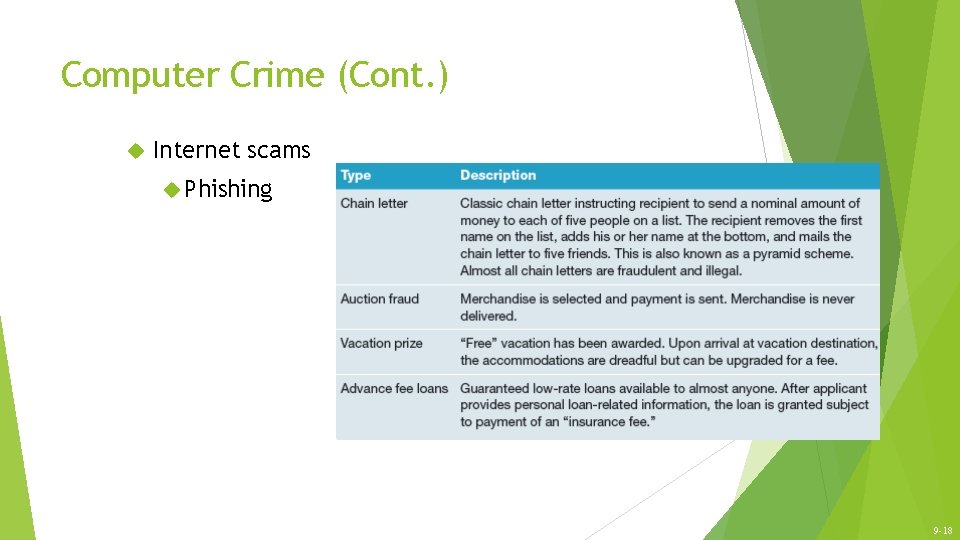
Computer Crime (Cont. ) Internet scams Phishing 9 -18
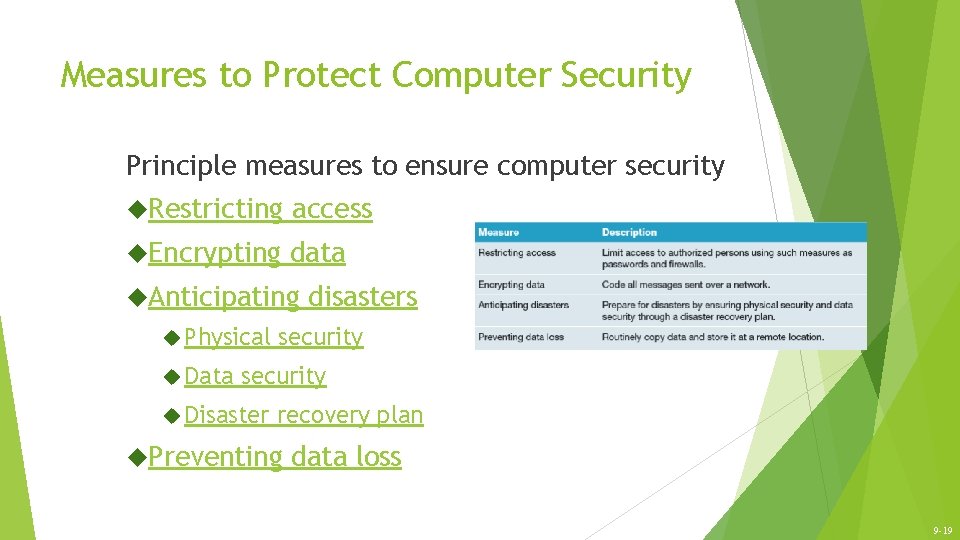
Measures to Protect Computer Security Principle measures to ensure computer security Restricting access Encrypting data Anticipating Physical Data disasters security Disaster recovery plan Preventing data loss 9 -19
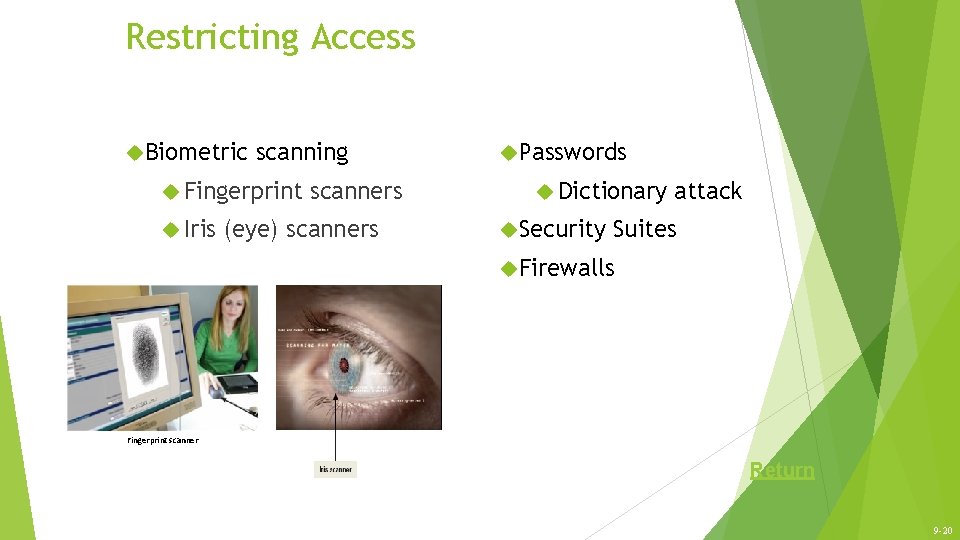
Restricting Access Biometric scanning Fingerprint Iris scanners (eye) scanners Passwords Dictionary Security attack Suites Firewalls Fingerprint scanner Return 9 -20
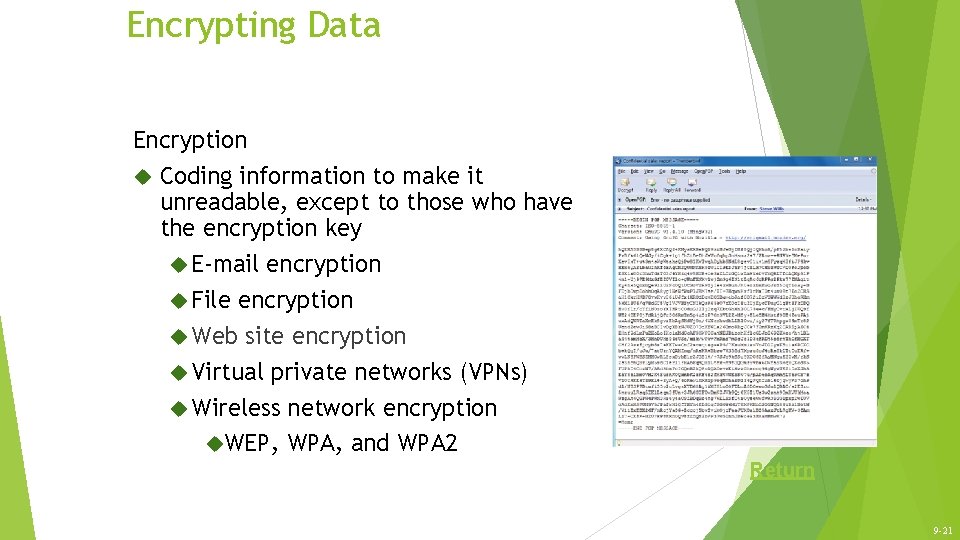
Encrypting Data Encryption Coding information to make it unreadable, except to those who have the encryption key E-mail encryption File encryption Web site encryption Virtual private networks (VPNs) Wireless network encryption WEP, WPA, and WPA 2 Return 9 -21
Anticipating Disasters Anticipating Physical Data Disasters Security Disaster Preventing Data Loss Frequent backups Redundant data storage Recovery Plan 9 -22
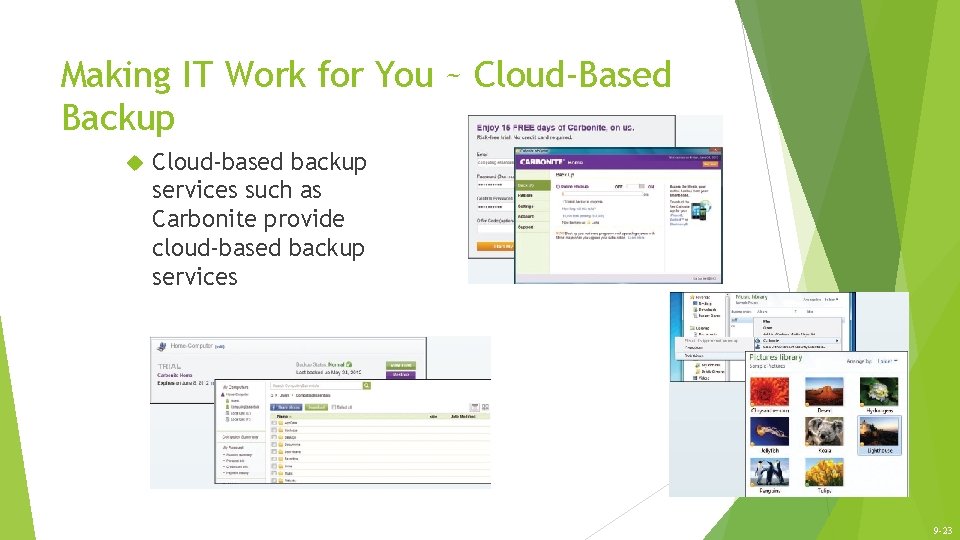
Making IT Work for You ~ Cloud-Based Backup Cloud-based backup services such as Carbonite provide cloud-based backup services 9 -23
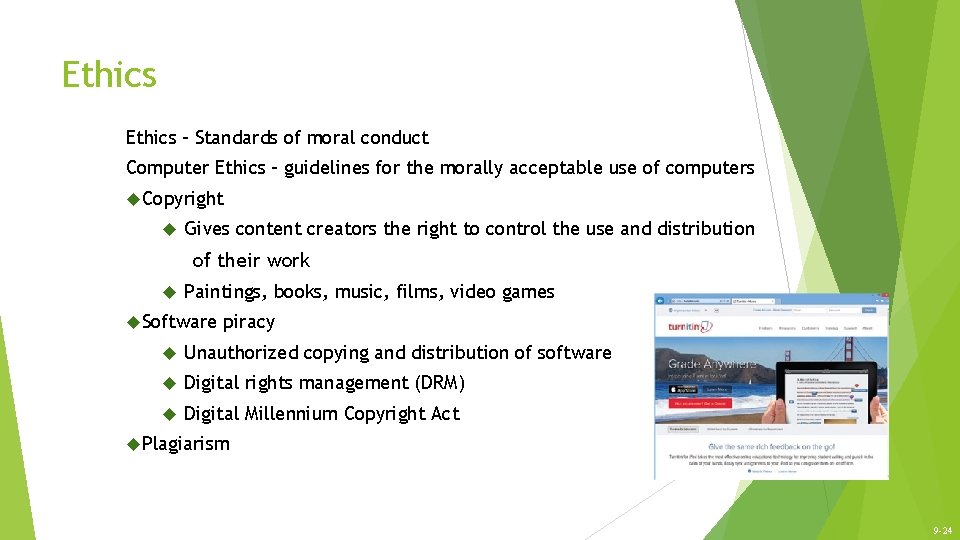
Ethics - Standards of moral conduct Computer Ethics – guidelines for the morally acceptable use of computers Copyright Gives content creators the right to control the use and distribution of their work Paintings, books, music, films, video games Software piracy Unauthorized copying and distribution of software Digital rights management (DRM) Digital Millennium Copyright Act Plagiarism 9 -24
Careers in IT IT Security Analysts maintain the security of a company’s network, systems, and data. Must safeguard information systems against external threats Annual salary is usually from $62, 000 to $101, 000 Demand for this position is expected to grow 9 -25
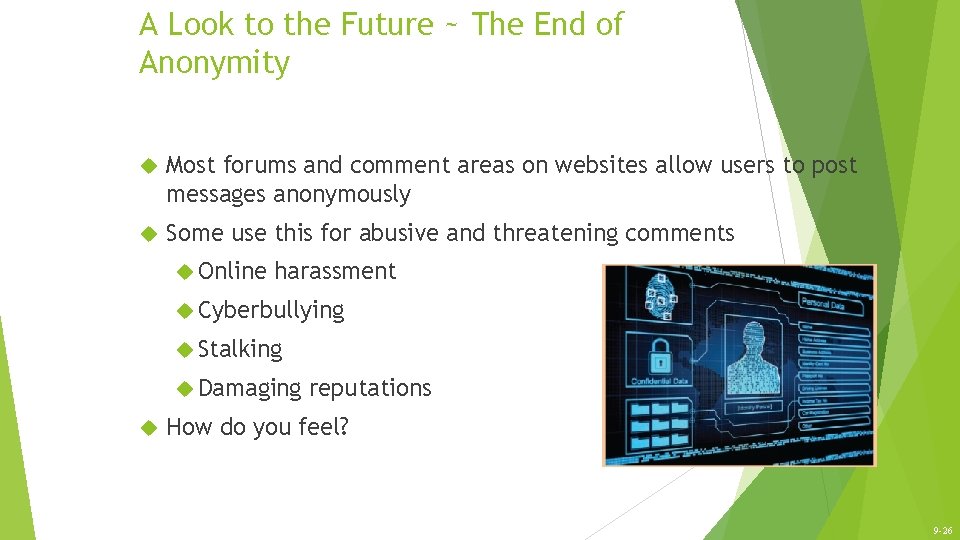
A Look to the Future ~ The End of Anonymity Most forums and comment areas on websites allow users to post messages anonymously Some use this for abusive and threatening comments Online harassment Cyberbullying Stalking Damaging reputations How do you feel? 9 -26