CAMDEN JSNA FOCUS ON MARCH 2016 POPULATION GROWTH
- Slides: 5
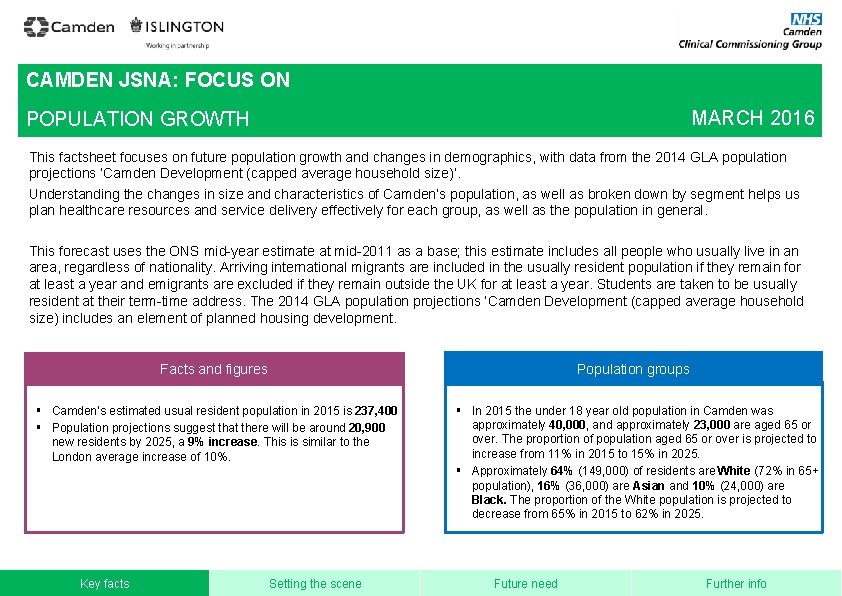
CAMDEN JSNA: FOCUS ON MARCH 2016 POPULATION GROWTH This factsheet focuses on future population growth and changes in demographics, with data from the 2014 GLA population projections ‘Camden Development (capped average household size)’. Understanding the changes in size and characteristics of Camden’s population, as well as broken down by segment helps us plan healthcare resources and service delivery effectively for each group, as well as the population in general. This forecast uses the ONS mid-year estimate at mid-2011 as a base; this estimate includes all people who usually live in an area, regardless of nationality. Arriving international migrants are included in the usually resident population if they remain for at least a year and emigrants are excluded if they remain outside the UK for at least a year. Students are taken to be usually resident at their term-time address. The 2014 GLA population projections ‘Camden Development (capped average household size) includes an element of planned housing development. Population groups Facts and figures § Camden’s estimated usual resident population in 2015 is 237, 400 § Population projections suggest that there will be around 20, 900 new residents by 2025, a 9% increase. This is similar to the London average increase of 10%. Key facts Setting the scene § In 2015 the under 18 year old population in Camden was approximately 40, 000, and approximately 23, 000 are aged 65 or over. The proportion of population aged 65 or over is projected to increase from 11% in 2015 to 15% in 2025. § Approximately 64% (149, 000) of residents are White (72% in 65+ population), 16% (36, 000) are Asian and 10% (24, 000) are Black. The proportion of the White population is projected to decrease from 65% in 2015 to 62% in 2025. Future need Further info
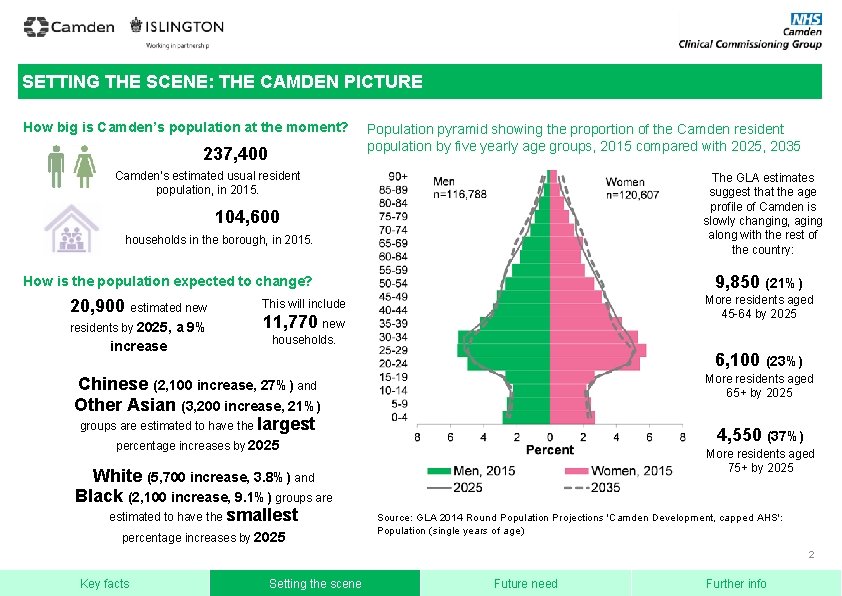
SETTING THE SCENE: THE CAMDEN PICTURE How big is Camden’s population at the moment? 237, 400 Population pyramid showing the proportion of the Camden resident population by five yearly age groups, 2015 compared with 2025, 2035 Camden’s estimated usual resident population, in 2015. The GLA estimates suggest that the age profile of Camden is slowly changing, aging along with the rest of the country: 104, 600 households in the borough, in 2015. 9, 850 (21%) How is the population expected to change? 20, 900 estimated new residents by 2025, a 9% increase More residents aged 45 -64 by 2025 This will include 11, 770 new households. 6, 100 (23%) More residents aged 65+ by 2025 Chinese (2, 100 increase, 27%) and Other Asian (3, 200 increase, 21%) groups are estimated to have the largest 4, 550 (37%) percentage increases by 2025 White (5, 700 increase, 3. 8%) and Black (2, 100 increase, 9. 1%) groups are estimated to have the smallest percentage increases by 2025 More residents aged 75+ by 2025 Source: GLA 2014 Round Population Projections 'Camden Development, capped AHS': Population (single years of age) 2 Key facts Setting the scene Future need Further info
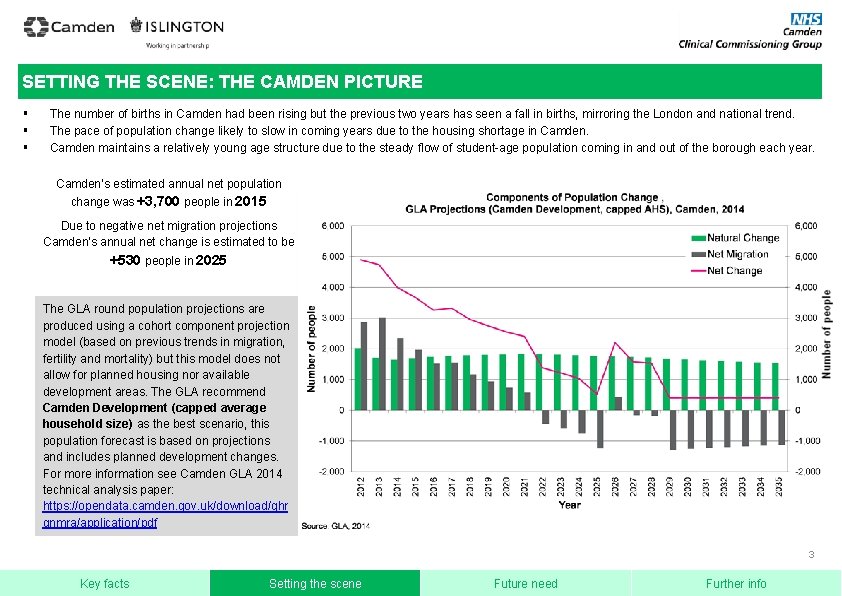
SETTING THE SCENE: THE CAMDEN PICTURE § § § The number of births in Camden had been rising but the previous two years has seen a fall in births, mirroring the London and national trend. The pace of population change likely to slow in coming years due to the housing shortage in Camden maintains a relatively young age structure due to the steady flow of student-age population coming in and out of the borough each year. Camden’s estimated annual net population change was +3, 700 people in 2015 Due to negative net migration projections Camden’s annual net change is estimated to be +530 people in 2025 The GLA round population projections are produced using a cohort component projection model (based on previous trends in migration, fertility and mortality) but this model does not allow for planned housing nor available development areas. The GLA recommend Camden Development (capped average household size) as the best scenario, this population forecast is based on projections and includes planned development changes. For more information see Camden GLA 2014 technical analysis paper: https: //opendata. camden. gov. uk/download/ghr qnmra/application/pdf 3 Key facts Setting the scene Future need Further info
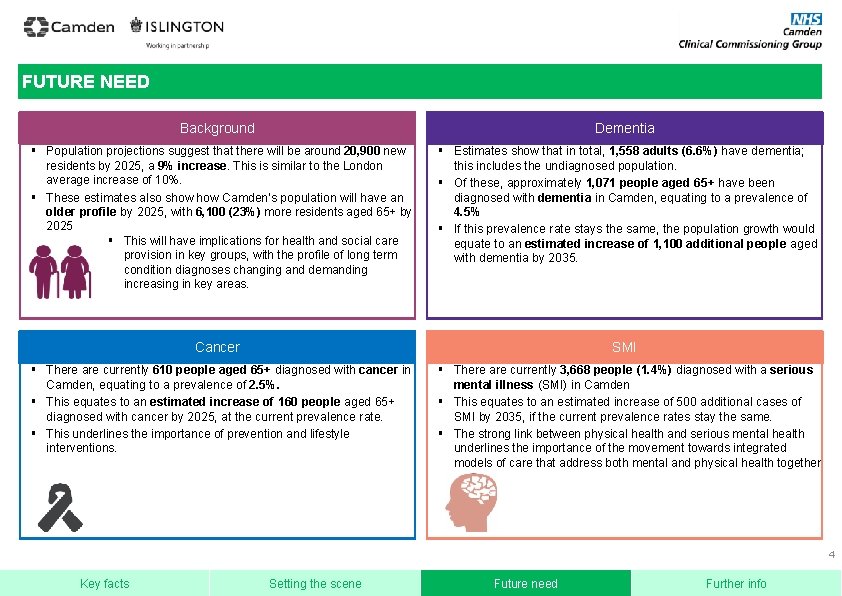
FUTURE NEED Background Dementia § Population projections suggest that there will be around 20, 900 new residents by 2025, a 9% increase. This is similar to the London average increase of 10%. § These estimates also show Camden’s population will have an older profile by 2025, with 6, 100 (23%) more residents aged 65+ by 2025 § This will have implications for health and social care provision in key groups, with the profile of long term condition diagnoses changing and demanding increasing in key areas. § Estimates show that in total, 1, 558 adults (6. 6%) have dementia; this includes the undiagnosed population. § Of these, approximately 1, 071 people aged 65+ have been diagnosed with dementia in Camden, equating to a prevalence of 4. 5% § If this prevalence rate stays the same, the population growth would equate to an estimated increase of 1, 100 additional people aged with dementia by 2035. Cancer SMI § There are currently 610 people aged 65+ diagnosed with cancer in Camden, equating to a prevalence of 2. 5%. § This equates to an estimated increase of 160 people aged 65+ diagnosed with cancer by 2025, at the current prevalence rate. § This underlines the importance of prevention and lifestyle interventions. § There are currently 3, 668 people (1. 4%) diagnosed with a serious mental illness (SMI) in Camden § This equates to an estimated increase of 500 additional cases of SMI by 2035, if the current prevalence rates stay the same. § The strong link between physical health and serious mental health underlines the importance of the movement towards integrated models of care that address both mental and physical health together 4 Key facts Setting the scene Future need Further info
§ Demographics: Population Segmentation 2015, Camden JSNA https: //opendata. camden. gov. uk/Health/Camden-Demographics-Population-Segmentation-2015/v 6 fr-wght § Technical Analysis Paper: GLA 2014 Round of Demographic Projections, London Borough of Camden https: //opendata. camden. gov. uk/download/ghrq-nmra/application/pdf § GLA Demography Datastore: http: //data. london. gov. uk/demography/Camden About Camden’s JSNA Open Data Camden brings together information held across different organisations into one accessible place. It provides access to evidence, intelligence and data on the current and anticipated needs of Camden’s population and is designed to be used by a broad range of audiences including practitioners, researchers, commissioners, policy makers, Councillors, students and the general public. This factsheet was produced by John Cannings (Public Health Information Officer) and approved for publication by Dalina Vekinis (Principal Public Health Intelligence Specialist). Contact: JSNA@camden. gov. uk 5 Key facts Setting the scene Future need Further info