Ancient China SETTING THE STAGE Chinas first city

- Slides: 20
Ancient China
SETTING THE STAGE • China’s first city walls were built 1500 years after the walls of Ur, q, 000 years after the great pyramids, and 1, 000 years after the planned cities on the Indus River. • Unlike most cultures on earth, the civilization that began in China over 3, 500 years ago still thrives there today.
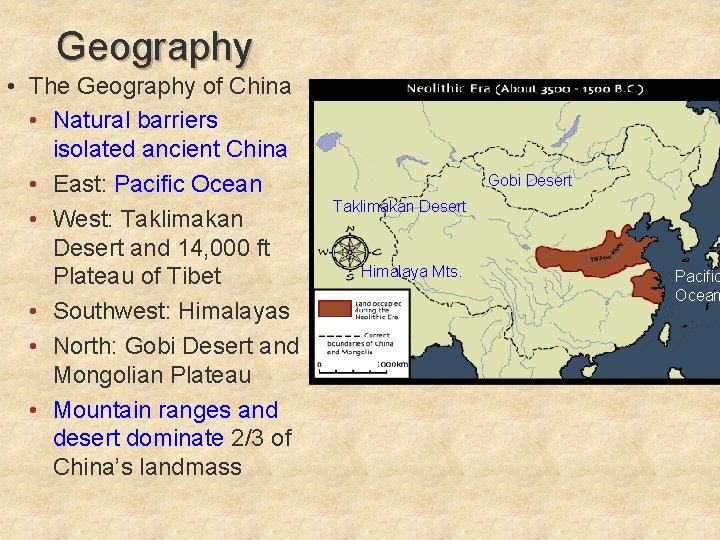
Geography • The Geography of China • Natural barriers isolated ancient China • East: Pacific Ocean • West: Taklimakan Desert and 14, 000 ft Plateau of Tibet • Southwest: Himalayas • North: Gobi Desert and Mongolian Plateau • Mountain ranges and desert dominate 2/3 of China’s landmass Gobi Desert Taklimakan Desert Himalaya Mts. Pacific Ocean
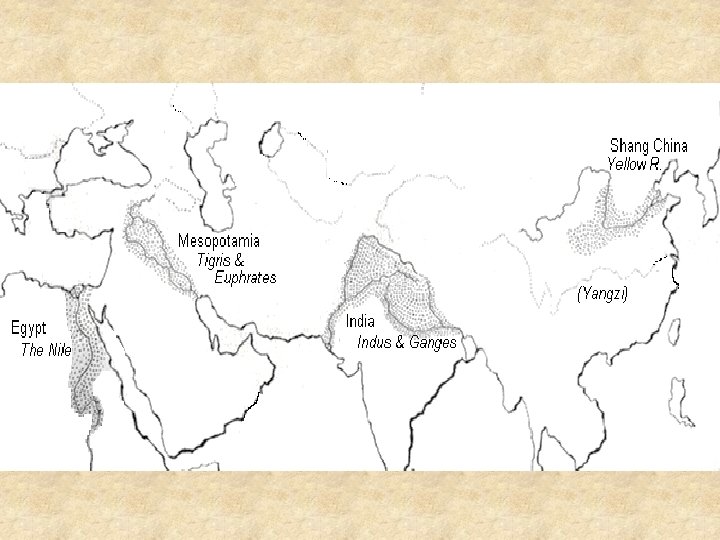
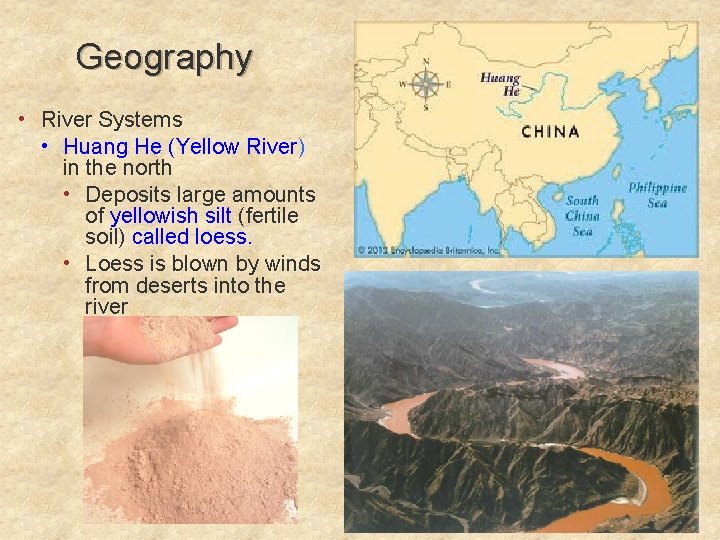
Geography • River Systems • Huang He (Yellow River) in the north • Deposits large amounts of yellowish silt (fertile soil) called loess. • Loess is blown by winds from deserts into the river
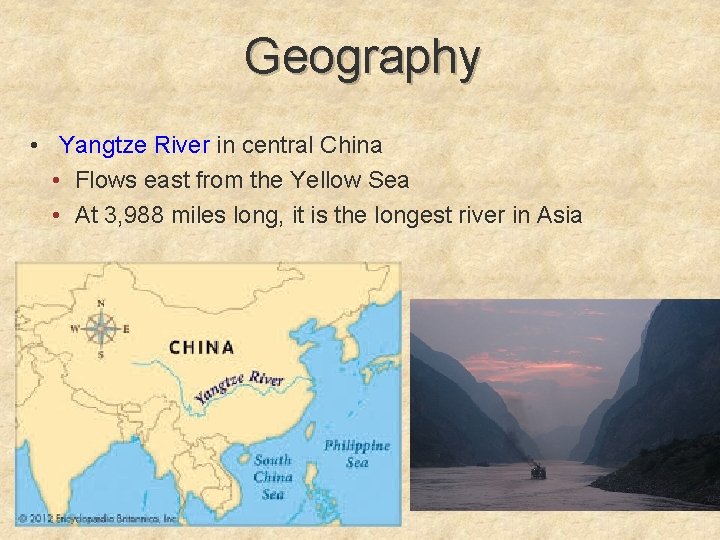
Geography • Yangtze River in central China • Flows east from the Yellow Sea • At 3, 988 miles long, it is the longest river in Asia
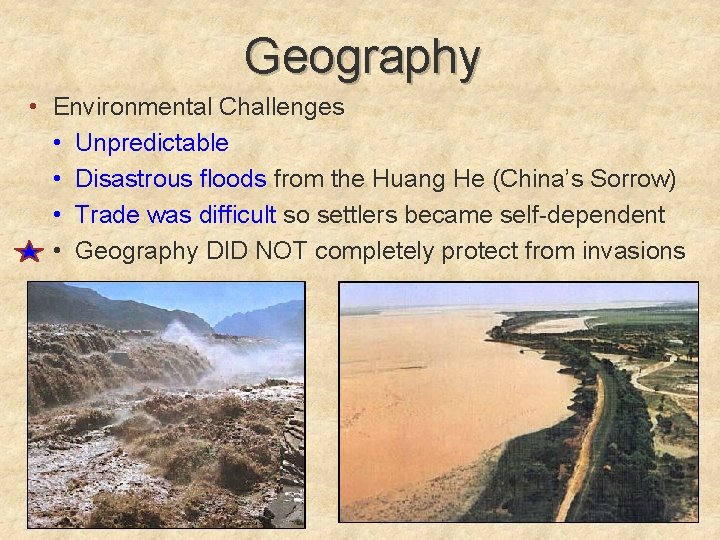
Geography • Environmental Challenges • Unpredictable • Disastrous floods from the Huang He (China’s Sorrow) • Trade was difficult so settlers became self-dependent • Geography DID NOT completely protect from invasions
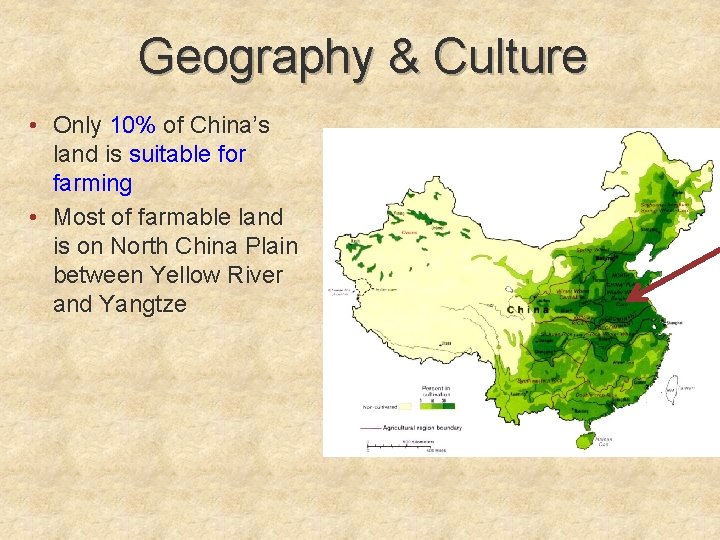
Geography & Culture • Only 10% of China’s land is suitable for farming • Most of farmable land is on North China Plain between Yellow River and Yangtze
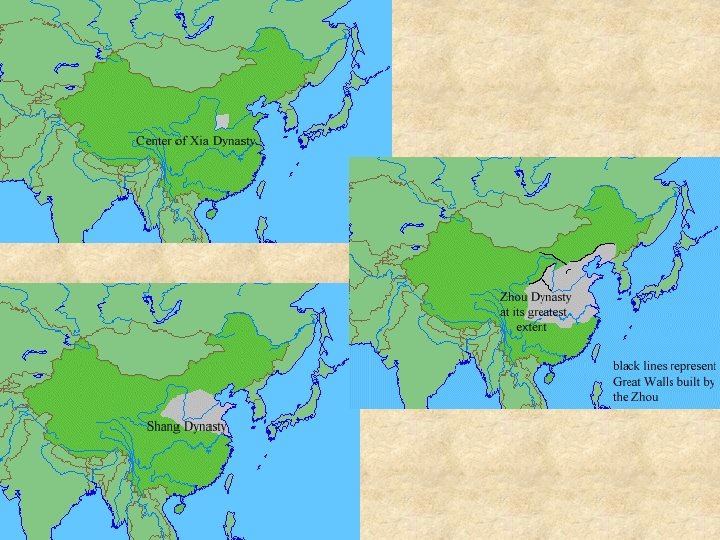
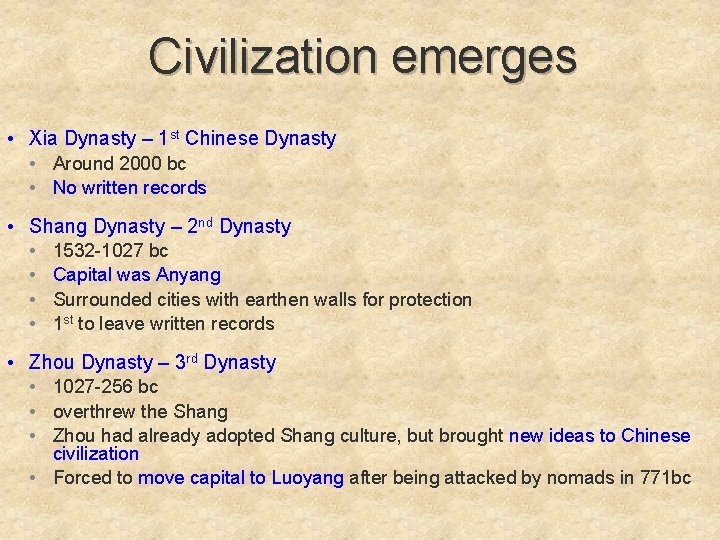
Civilization emerges • Xia Dynasty – 1 st Chinese Dynasty • Around 2000 bc • No written records • Shang Dynasty – 2 nd Dynasty • 1532 -1027 bc • Capital was Anyang • Surrounded cities with earthen walls for protection • 1 st to leave written records • Zhou Dynasty – 3 rd Dynasty • 1027 -256 bc • overthrew the Shang • Zhou had already adopted Shang culture, but brought new ideas to Chinese civilization • Forced to move capital to Luoyang after being attacked by nomads in 771 bc
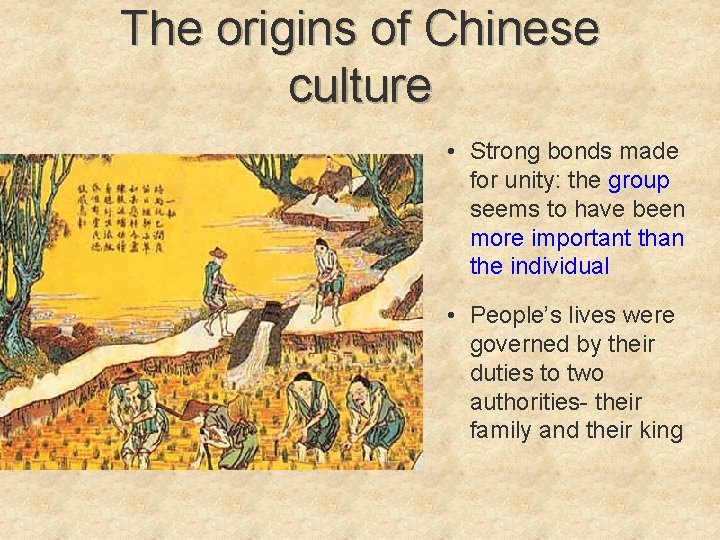
The origins of Chinese culture • Strong bonds made for unity: the group seems to have been more important than the individual • People’s lives were governed by their duties to two authorities- their family and their king
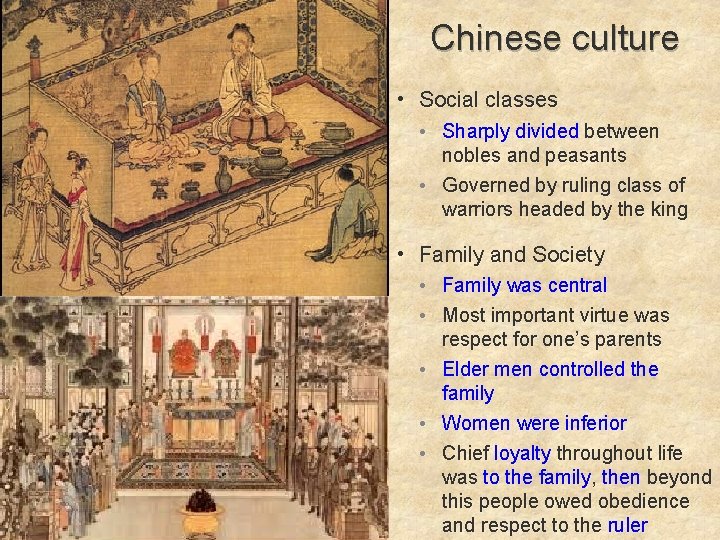
Chinese culture • Social classes • Sharply divided between nobles and peasants • Governed by ruling class of warriors headed by the king • Family and Society • Family was central • Most important virtue was respect for one’s parents • Elder men controlled the family • Women were inferior • Chief loyalty throughout life was to the family, then beyond this people owed obedience and respect to the ruler
• Unlike other river valley civilizations, the Chinese held peasants higher than artisans or merchants because they produced food
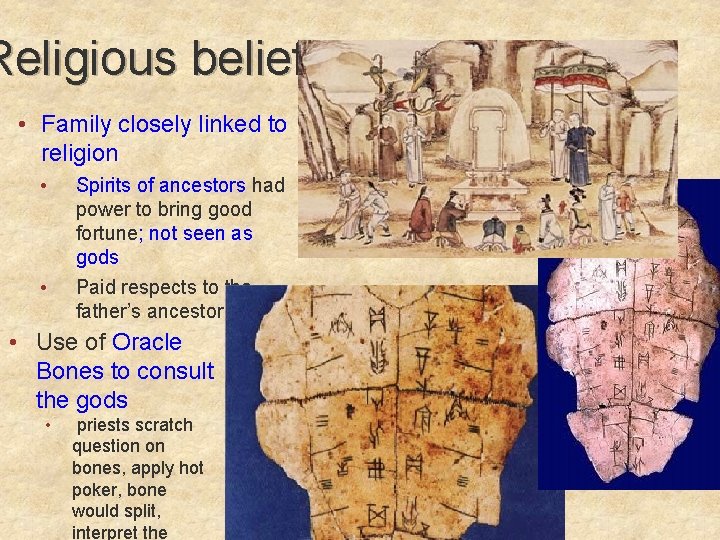
Religious beliefs • Family closely linked to religion • • Spirits of ancestors had power to bring good fortune; not seen as gods Paid respects to the father’s ancestor • Use of Oracle Bones to consult the gods • priests scratch question on bones, apply hot poker, bone would split, interpret the
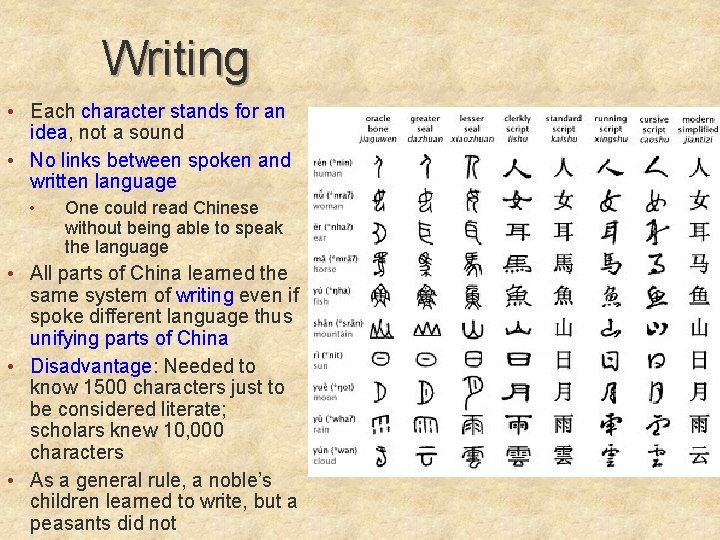
Writing • Each character stands for an idea, not a sound • No links between spoken and written language • One could read Chinese without being able to speak the language • All parts of China learned the same system of writing even if spoke different language thus unifying parts of China • Disadvantage: Needed to know 1500 characters just to be considered literate; scholars knew 10, 000 characters • As a general rule, a noble’s children learned to write, but a peasants did not
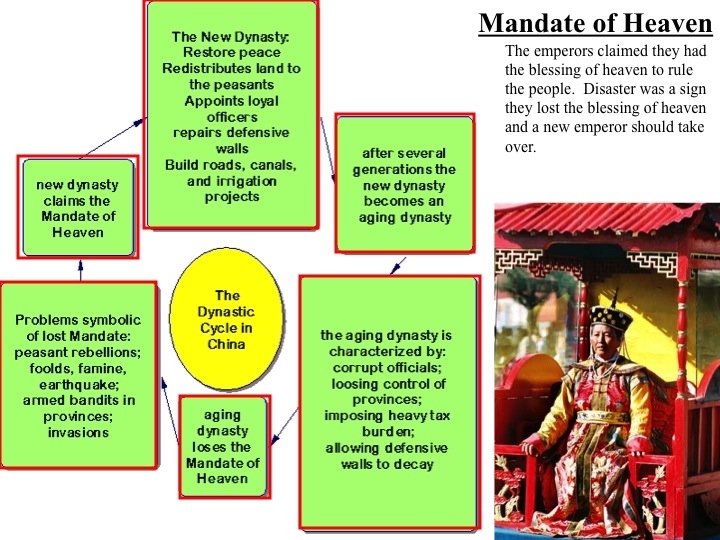
Government • Governed by ruling class of warriors headed by the king • Zhou leaders over threw the Shang Dynasty and declared that the final Shang king had been such a poor ruler that the gods had taken away the Shang’s rule • Mandate of Heaven • • • Royal authority came from heaven, a just ruler had approval King could lose the Mandate and lose the right to rule Used to explain rebellion, civil war, and the rise of a new dynasty • Dynastic Cycle • The pattern of rise, decline, and replacement of dynasties • Feudalism develops • A political system in which nobles, or lords, are granted the use of lands that legally belong to the king. In return nobles owe military service to the king and protection to the people
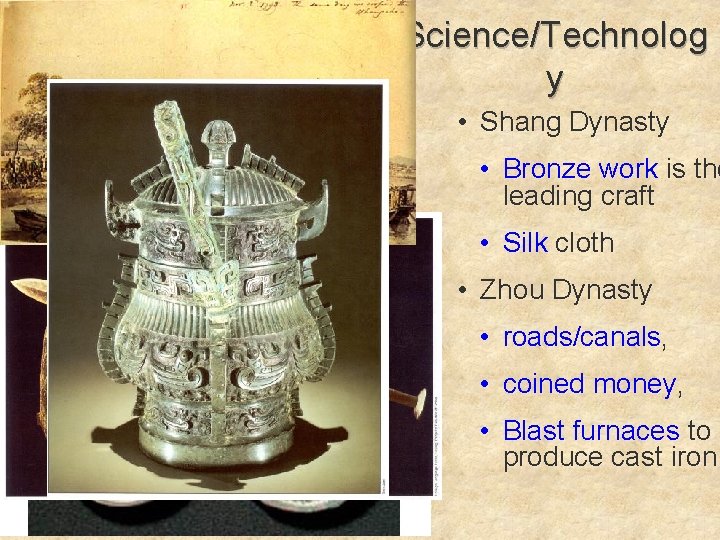
Science/Technolog y • Shang Dynasty • Bronze work is the leading craft • Silk cloth • Zhou Dynasty • roads/canals, • coined money, • Blast furnaces to produce cast iron
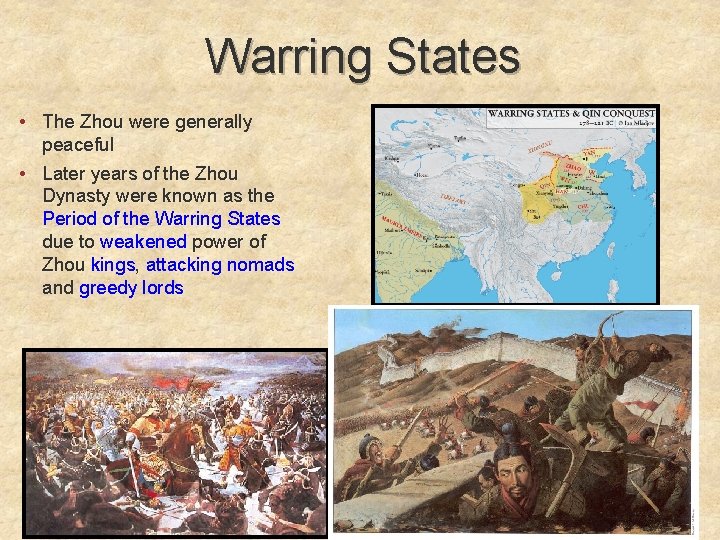
Warring States • The Zhou were generally peaceful • Later years of the Zhou Dynasty were known as the Period of the Warring States due to weakened power of Zhou kings, attacking nomads and greedy lords
• What was the great advantage of the Chinese written language? • Explain the Mandate of Heaven and the dynastic cycle in China • Compare the roles of women from Mesopotamia, Egypt, and China.