An approach for Glasgow Shaw Anderson Glasgow City
- Slides: 20
An approach for Glasgow Shaw Anderson Glasgow City Council
Contents • Prioritising Outcomes • Engagement & Buy-In • Single Outcome Agreement – Thriving Places • Transformation Strategy
Prioritising Outcomes
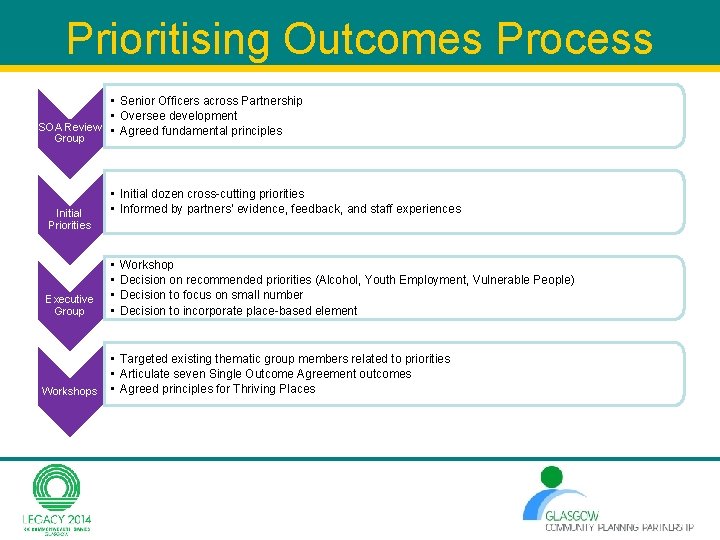
Prioritising Outcomes Process • Senior Officers across Partnership • Oversee development SOA Review • Agreed fundamental principles Group Initial Priorities Executive Group Workshops • Initial dozen cross-cutting priorities • Informed by partners’ evidence, feedback, and staff experiences • • Workshop Decision on recommended priorities (Alcohol, Youth Employment, Vulnerable People) Decision to focus on small number Decision to incorporate place-based element • Targeted existing thematic group members related to priorities • Articulate seven Single Outcome Agreement outcomes • Agreed principles for Thriving Places
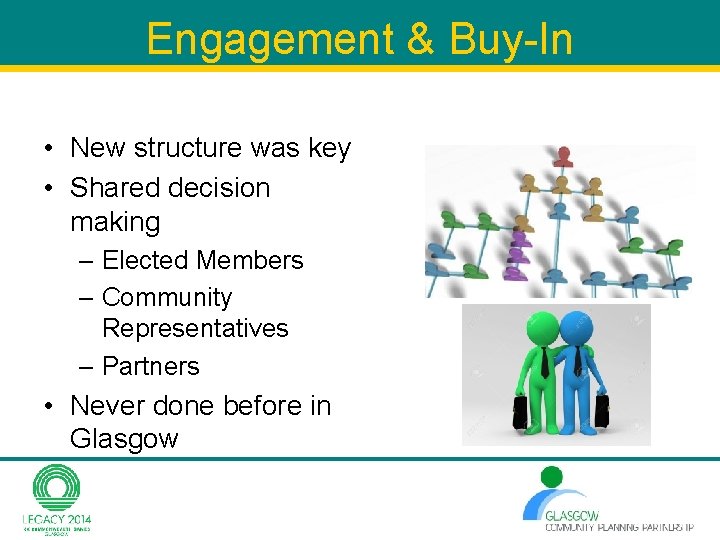
Engagement & Buy-In • New structure was key • Shared decision making – Elected Members – Community Representatives – Partners • Never done before in Glasgow
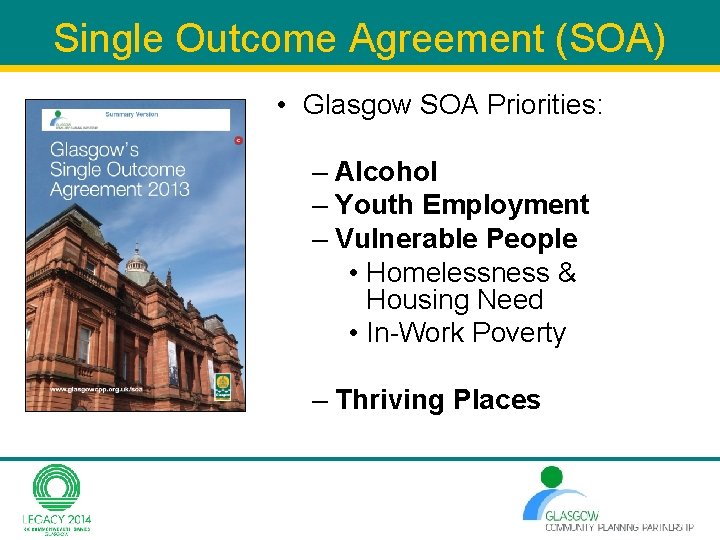
Single Outcome Agreement (SOA) • Glasgow SOA Priorities: – Alcohol – Youth Employment – Vulnerable People • Homelessness & Housing Need • In-Work Poverty – Thriving Places
Single Outcome Agreement (SOA) • Alcohol Outcomes – reducing the accessibility of alcohol in communities – reducing the acceptability of misusing alcohol • Youth Employment Outcomes – increasing the number of employers recruiting young Glaswegians – all young people developing the skills, attitude and resilience for employment – all key employability partners using an agreed information hub • Vulnerable People Outcomes – we will work together to intervene early to prevent homelessness or reduce the risk of homelessness – we will reduce the number of residents affected by in-work poverty All priorities have associated Implementation Plans
Implementation Plans • • Translate the SOA outcomes into actions 3 Priority Plans 3 Sector Plans Thriving Places Plans • will update and evolve each year over the next 10 years
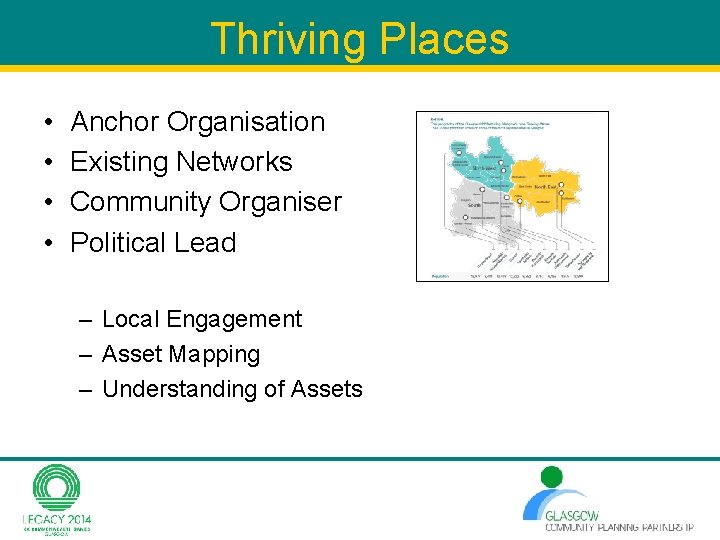
Thriving Places • • Anchor Organisation Existing Networks Community Organiser Political Lead – Local Engagement – Asset Mapping – Understanding of Assets
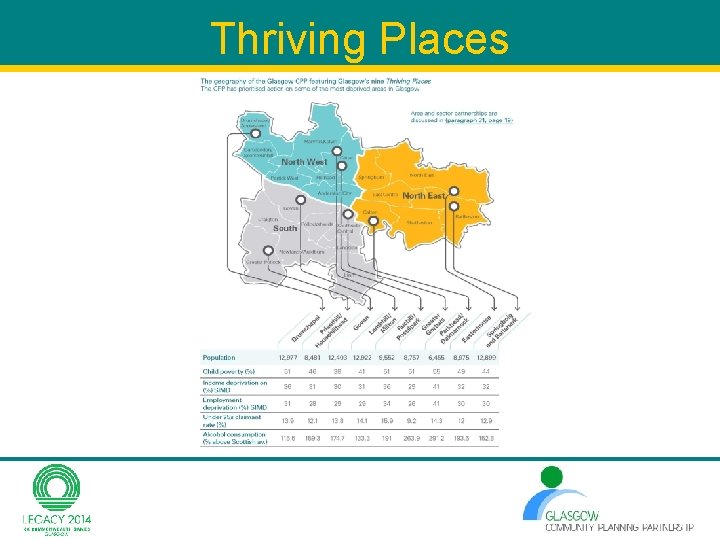
Thriving Places • our ‘place based’ approach to support specific neighbourhoods and communities • recognises continued inequality within Glasgow • to speed up better outcomes for our residents • neighbourhoods identified on basis of both need and opportunity • focussing on nine neighbourhoods over time – Gorbals – Parkhead/Dalmarnock – Ruchill/Possilpark
Thriving Places Key principles for this approach include: • long term partnership focus, up to 10 years • flexible local responses, working more closely with communities • co-production of services with residents • a commitment to community capacity building, increasing social capital and empowering communities • an asset based approach, making the most of buildings, services, local groups and individuals
Thriving Places Key Outcomes of this approach include: • more resilient, sustainable communities • thriving and growing neighbourhoods – where people are proud of where they live • communities have more aspiration and influence over local services • communities work in partnership with providers to plan, develop and commission local services • higher levels of engagement and diversity of local residents engaged – beyond the ‘usual suspects’
Identification of Thriving Places • Local SOA Data – Statement of Ambition for community planning emphasised importance of local data • Scottish Index of Multiple Deprivation • Opportunities
Thriving Places
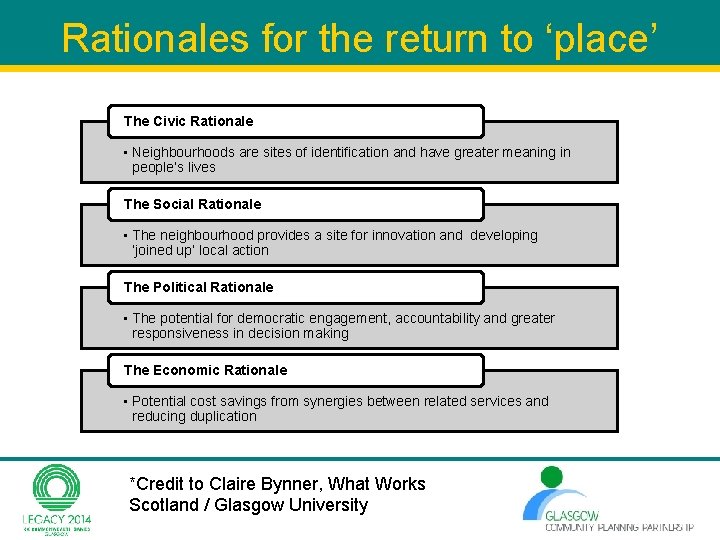
Rationales for the return to ‘place’ The Civic Rationale • Neighbourhoods are sites of identification and have greater meaning in people’s lives The Social Rationale • The neighbourhood provides a site for innovation and developing ‘joined up’ local action The Political Rationale • The potential for democratic engagement, accountability and greater responsiveness in decision making The Economic Rationale • Potential cost savings from synergies between related services and reducing duplication *Credit to Claire Bynner, What Works Scotland / Glasgow University
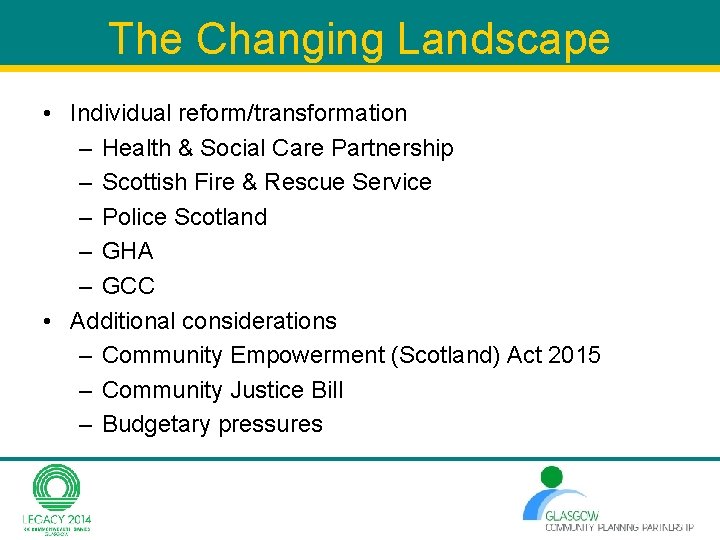
The Changing Landscape • Individual reform/transformation – Health & Social Care Partnership – Scottish Fire & Rescue Service – Police Scotland – GHA – GCC • Additional considerations – Community Empowerment (Scotland) Act 2015 – Community Justice Bill – Budgetary pressures
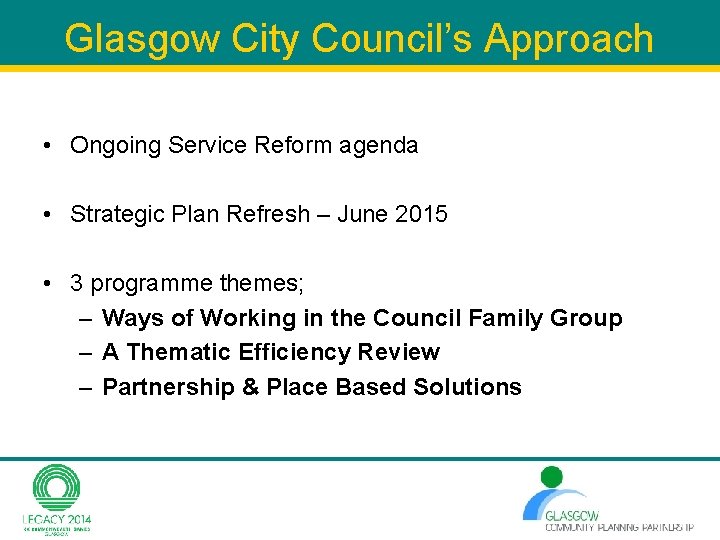
Glasgow City Council’s Approach • Ongoing Service Reform agenda • Strategic Plan Refresh – June 2015 • 3 programme themes; – Ways of Working in the Council Family Group – A Thematic Efficiency Review – Partnership & Place Based Solutions
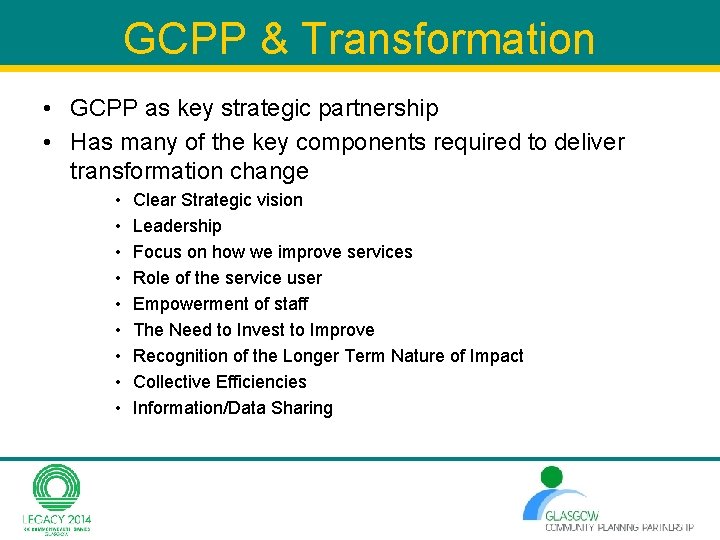
GCPP & Transformation • GCPP as key strategic partnership • Has many of the key components required to deliver transformation change • • • Clear Strategic vision Leadership Focus on how we improve services Role of the service user Empowerment of staff The Need to Invest to Improve Recognition of the Longer Term Nature of Impact Collective Efficiencies Information/Data Sharing
GCPP & Transformation • Provides place to re-state joint priorities for the City in the SOA • Well positioned to drive forward joint action using collective resources • Can collectively identify shared opportunities to transform public services • Potential to co-ordinate community empowerment
More Information 0141 287 0060 cpp@glasgow. gov. uk www. glasgowcpp. org. uk/soa Twitter: @Glasgow. CPP