Affirmative and Negative Words Sra Hyman Spanish 2




- Slides: 11
Affirmative and Negative Words Sra Hyman Spanish 2
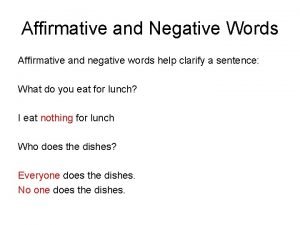
Use an affirmative or negative word when you want to talk about an indefinite or negative situation. EX: Something happened. Someone talked. Neither he nor I had fun.
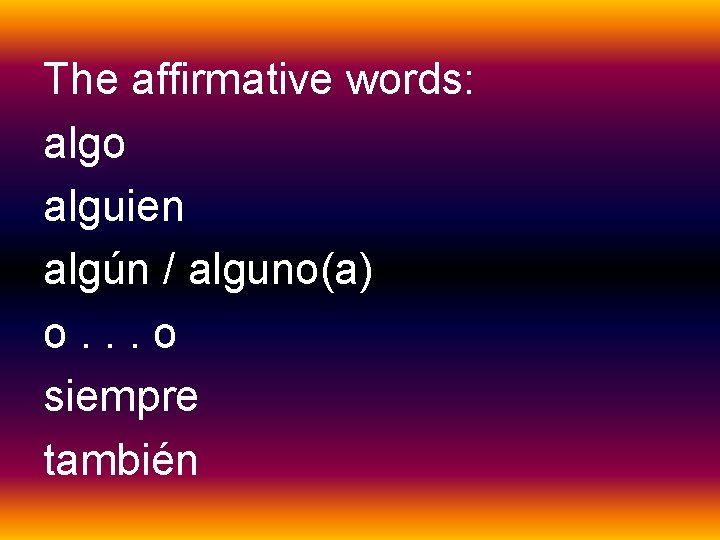
The affirmative words: algo alguien algún / alguno(a) o. . . o siempre también
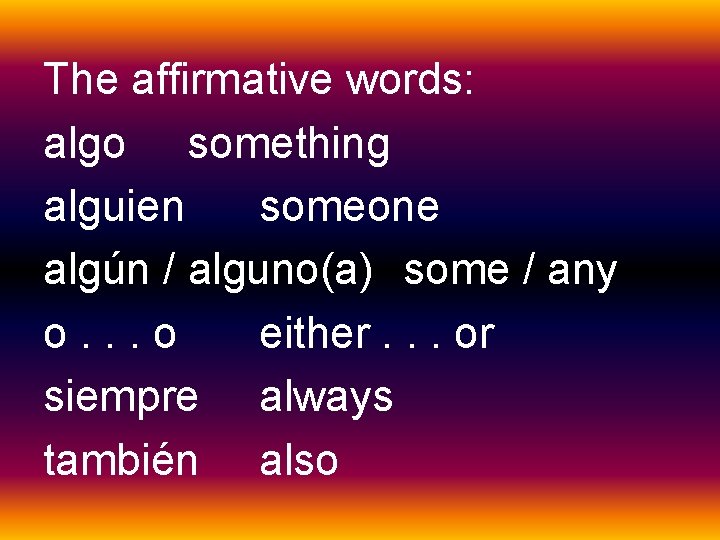
The affirmative words: algo something alguien someone algún / alguno(a) some / any o. . . o either. . . or siempre always también also
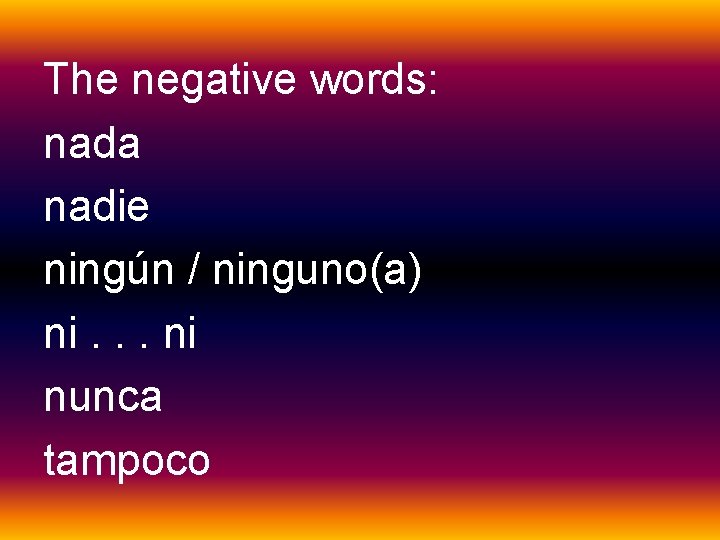
The negative words: nada nadie ningún / ninguno(a) ni. . . ni nunca tampoco
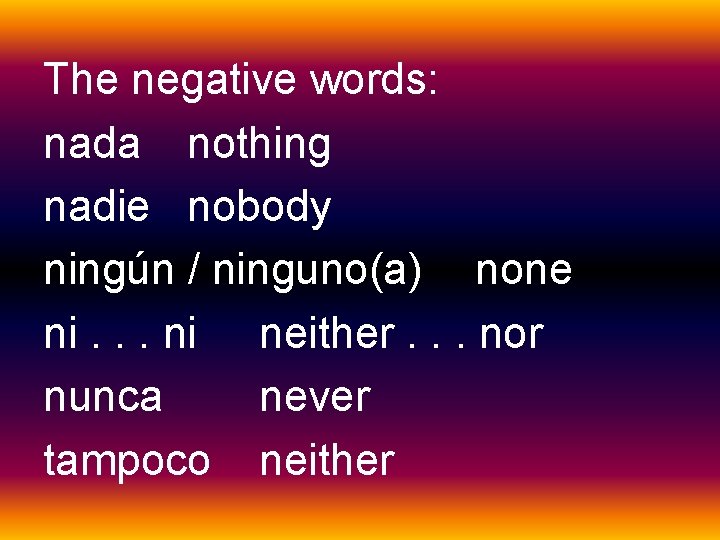
The negative words: nada nothing nadie nobody ningún / ninguno(a) none ni. . . ni neither. . . nor nunca never tampoco neither
Important information about negative words: In Spanish, double negatives are okay. If you put “no” before the verb, you MUST use a negative word after the verb. EX: No hay nadie en la clase.
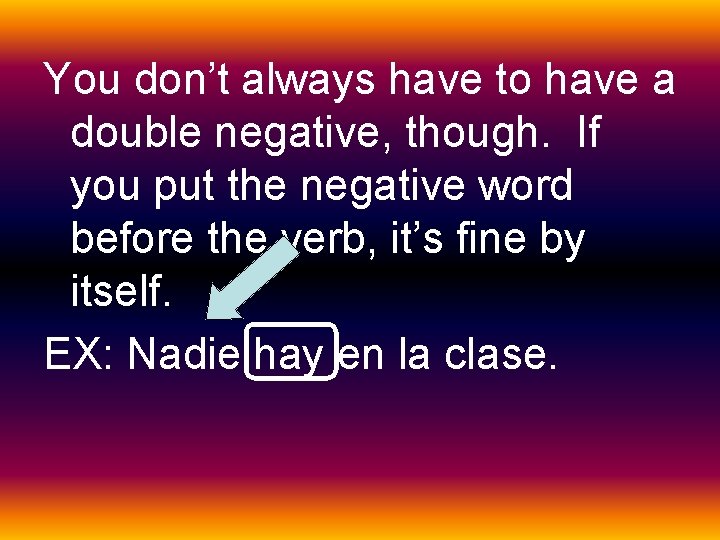
You don’t always have to have a double negative, though. If you put the negative word before the verb, it’s fine by itself. EX: Nadie hay en la clase.
Sometimes, it can be hard to figure out which negative word you’re going to use. Let’s look at some clues
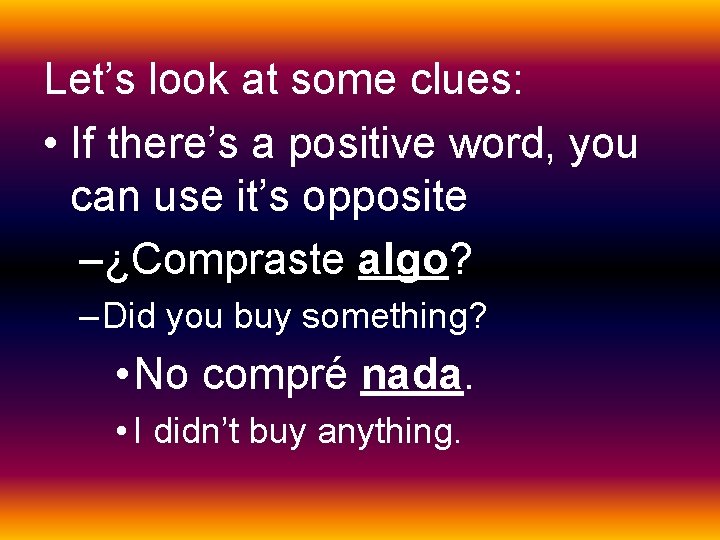
Let’s look at some clues: • If there’s a positive word, you can use it’s opposite –¿Compraste algo? – Did you buy something? • No compré nada. • I didn’t buy anything.
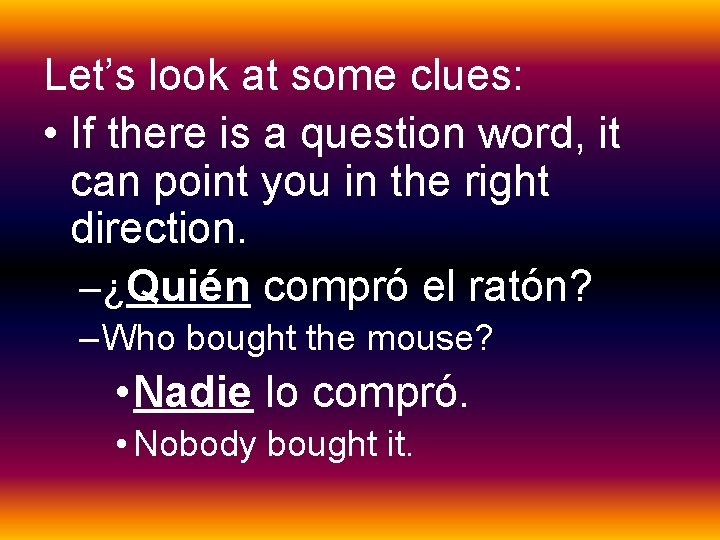
Let’s look at some clues: • If there is a question word, it can point you in the right direction. –¿Quién compró el ratón? – Who bought the mouse? • Nadie lo compró. • Nobody bought it.