Administrative ethics Answer the following questions What is
- Slides: 20
Administrative ethics
Answer the following questions: �What is the relationship between law and morality? �What is ethics? �Why are moral principles particularly important for civil servants? �Have the views on morality changed significantly in recent years?
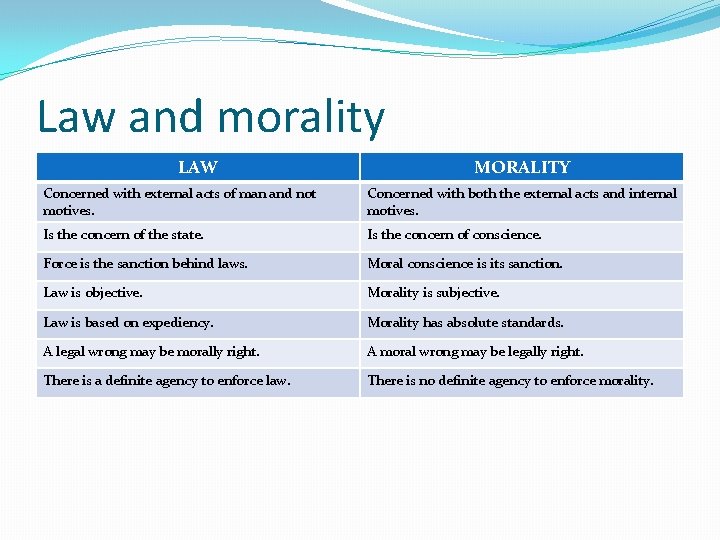
Law and morality LAW MORALITY Concerned with external acts of man and not motives. Concerned with both the external acts and internal motives. Is the concern of the state. Is the concern of conscience. Force is the sanction behind laws. Moral conscience is its sanction. Law is objective. Morality is subjective. Law is based on expediency. Morality has absolute standards. A legal wrong may be morally right. A moral wrong may be legally right. There is a definite agency to enforce law. There is no definite agency to enforce morality.
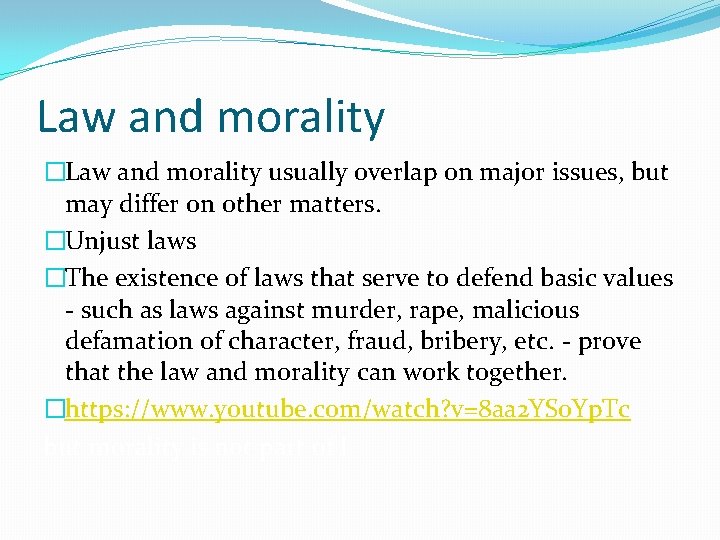
Law and morality �Law and morality usually overlap on major issues, but may differ on other matters. �Unjust laws �The existence of laws that serve to defend basic values - such as laws against murder, rape, malicious defamation of character, fraud, bribery, etc. - prove that the law and morality can work together. �https: //www. youtube. com/watch? v=8 aa 2 YS 0 Yp. Tc but morality is not part of l
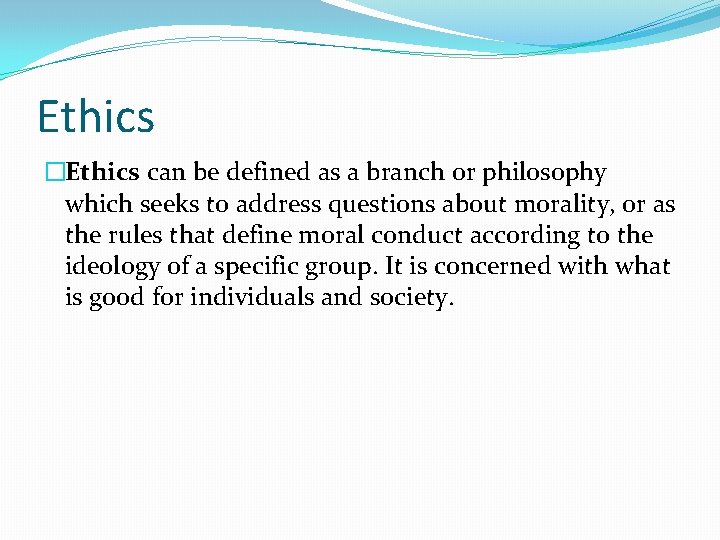
Ethics �Ethics can be defined as a branch or philosophy which seeks to address questions about morality, or as the rules that define moral conduct according to the ideology of a specific group. It is concerned with what is good for individuals and society.
Administrative ethics �Administrative ethics involves the application of moral principles to the conduct of officials in organizations. It is a species of political ethics which applies moral principles to political life more generally.
Accountability and integrity �Ethics provide accountability between the public and the administration. Adhering to a code of ethics ensures that the public receives what it needs in a fair manner. It also gives the administration guidelines for integrity in their operations. That integrity, in turn, helps foster the trust of the community. By creating this atmosphere of trust, the administration helps the public understand that they are working with their best interests in mind.
Professionalism �A code of ethics creates standards of professionalism that co-workers in the public sector can expect from each other — the public can also expect the same from their leaders
Code of ethics �With a strong code of ethics in public administration, leaders have the guidelines they need to carry out their tasks and inspire their employees and committees to enforce laws in a professional and equitable manner.
Transparency �Another positive outcome of good ethics in public administration is timely and informative communication with the community. This kind of transparency builds trust and prevents or minimizes the potential issues that can arise when information is divulged from outside sources.
CODE OF ETHICS FOR ADMINISTRATIVE PROFESSIONALS �The International Association of Administrative Professionals® defines administrative professionals as „individuals who are responsible for administrative tasks and coordination of information in support of an office related environment and who are dedicated to furthering their personal and professional growth in their chosen profession. “
Reading task �Read the text and identify all words and phrases you are unfamiliar with!
Vocabulary study � To promulgate – proglasiti, donijeti, objaviti � Prima facie violation – očito kršenje � To embody – utjeloviti � To exceed – nadmašiti, premašiti � To impair – narušiti, ometati, oslabiti, umanjiti � Confidentiality – povjerljivost, tajnost, diskrecija � Testimony – svjedočenje, iskaz na sudu � Compulsion – prinuda, prisila � Demeanor – držanje, vladanje, stav, nastup � To condone – odobravati, prihvatiti, prelaziti preko, tolerirati � Creed – vjera, uvjerenje, vjeroispovijest � Fringe benefits – dodatne beneficije (naknade) � Paramount – najvažniji, od temeljnog značenja � Factual evidence – činjenični dokazi � Vindication – osveta, osporavanje
Read Pt. 1 in the text and answer the following questions: � 1. Who is the immediate employer, and who is the corporate employer? � 2. What is the duty of an administrative professional in cases of conflict of interest with the employer? � 3. When can the administrative professional reveal confidential matters? �When will the administrative professional assume responsibilities?
Discuss the meaning of “shall” in the following sentence: �The administrative professional shall strive to improve working conditions and to ensure equal employment opportunities within the profession and throughout the organization by which employed. �Translate the sentence!
Discuss the meaning of “may” in the following sentence: �An administrative professional’s personal ethical behavior may often exceed the requirements of the Code, which do not demand less than the law, and often exceed those of the law. �Translate the sentence!
Discuss the meaning of “should” in the following sentence: �Testimony in a court of law regarding confidential matters should be given only under the immediate or corporate employer’s authorization, under legal compulsion, or to protect the public from harm.
Expressing obligation �When must the administrative professional resign or notify the proper authorities? �Find the answer in the text!
Translate the following paragraph: �The administrative professional, when applying for or being listed for employment, shall not make exaggerated, misleading, or false claims concerning training or qualifications. When judging the qualifications of other persons, whether in providing references, assisting with assignments, or evaluating performances, the administrative professional shall strive to provide fair and objective appraisals and shall attempt to avoid any false, malicious, or indiscriminate injury to or criticism of the professional reputation or work of others.
Thank you for your attention!