56 M no PMH pw RUQ pain Jeremy

- Slides: 13
56 M no PMH p/w RUQ pain Jeremy Price, MSIV Albert Einstein College of Medicine July 19, 2013
Case �RUQ pain x 3 days, began gradually now 10/10 and constant, sharp, radiating around to the back, accompanied by nausea, vomiting x 1. Denies fever, dysuria, frequency, hematuria, change in bowel habits. �PMH: none �PSHx: none �Meds: none �Allergies: NKDA �SH: denies toxic habits �FH: non-contributory
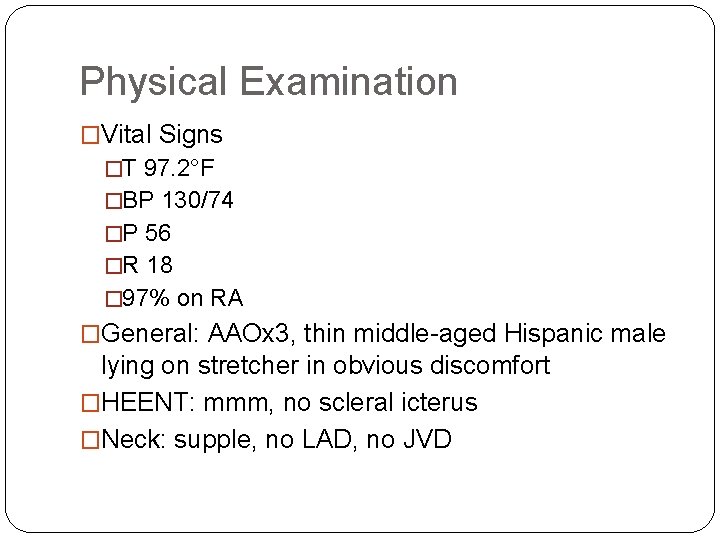
Physical Examination �Vital Signs �T 97. 2°F �BP 130/74 �P 56 �R 18 � 97% on RA �General: AAOx 3, thin middle-aged Hispanic male lying on stretcher in obvious discomfort �HEENT: mmm, no scleral icterus �Neck: supple, no LAD, no JVD
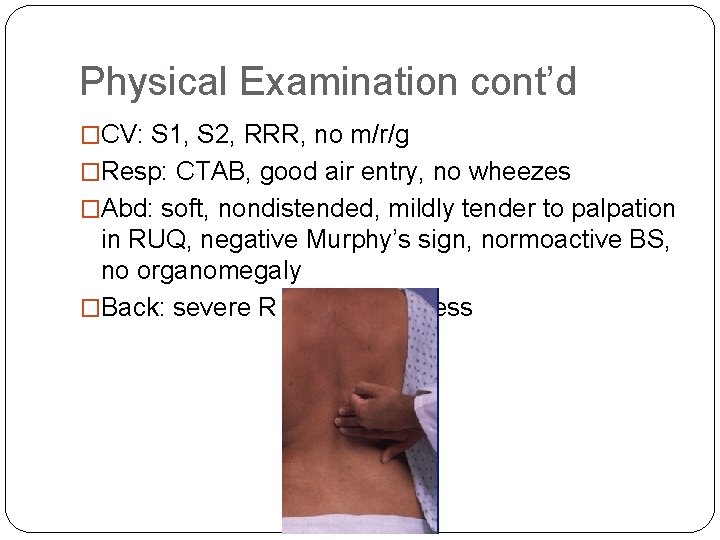
Physical Examination cont’d �CV: S 1, S 2, RRR, no m/r/g �Resp: CTAB, good air entry, no wheezes �Abd: soft, nondistended, mildly tender to palpation in RUQ, negative Murphy’s sign, normoactive BS, no organomegaly �Back: severe R CVA tenderness
Differential Diagnosis �RUQ pain: �R Flank pain: �Cholelithiasis �Nephrolithiasis �Acute cholecystitis �Urolithiasis �Cholangitis �Retroperitoneal �Acute hepatitis hematoma �Ruptured renal cyst �Ureteral stricture �Pyelonephritis �Perinephric abscess �Ruptured AAA �Perforated duodenal ulcer �RLL pneumonia
Labs �CBC: 8. 1>12. 6/37. 7<224 �BMP: 137/3. 6|104/23|21/1. 0<146 �Alk Phos 83 / AST 22 / ALT 27 �Amylase 155, Lipase 140 �And the urinalysis is…
Labs cont’d �…negative
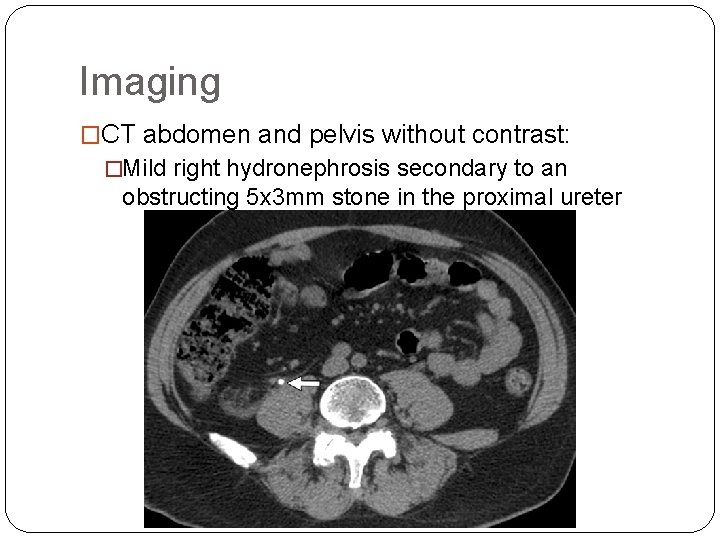
Imaging �CT abdomen and pelvis without contrast: �Mild right hydronephrosis secondary to an obstructing 5 x 3 mm stone in the proximal ureter
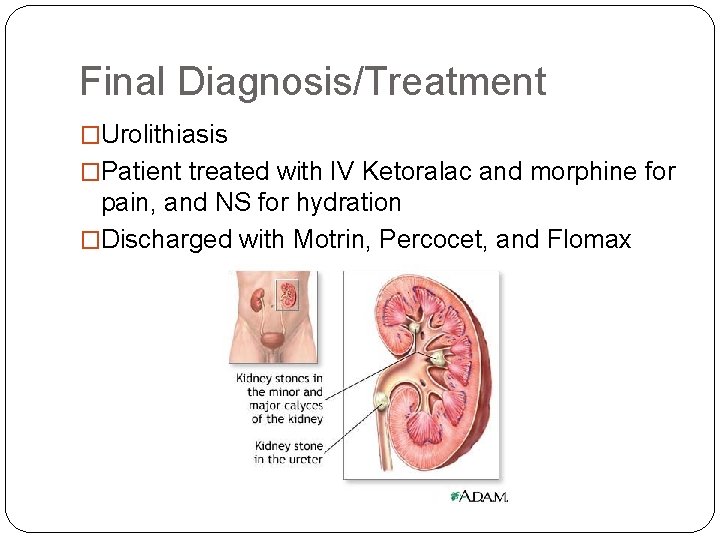
Final Diagnosis/Treatment �Urolithiasis �Patient treated with IV Ketoralac and morphine for pain, and NS for hydration �Discharged with Motrin, Percocet, and Flomax
ED Management of Kidney Stones �Pain control: ketorolac 30 mg IV (caution in renal insufficiency) and morphine 0. 1 mg/kg x 1 then titrated for further relief �IV hydration. . . hastens stone passage or exacerbates pain?
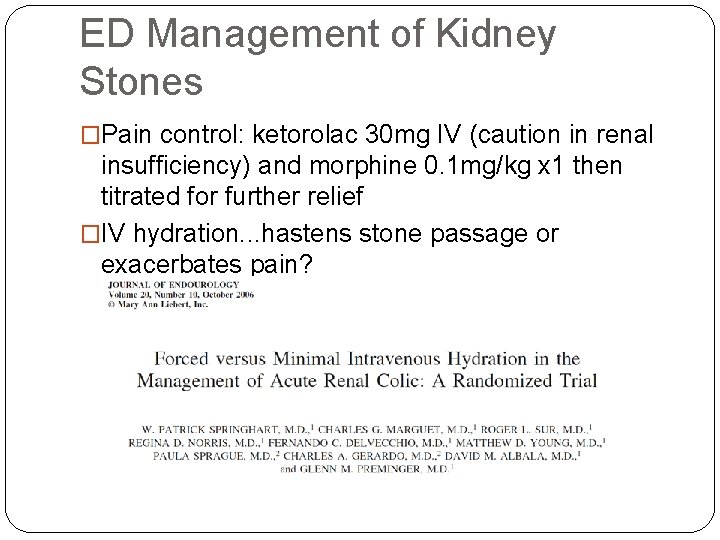
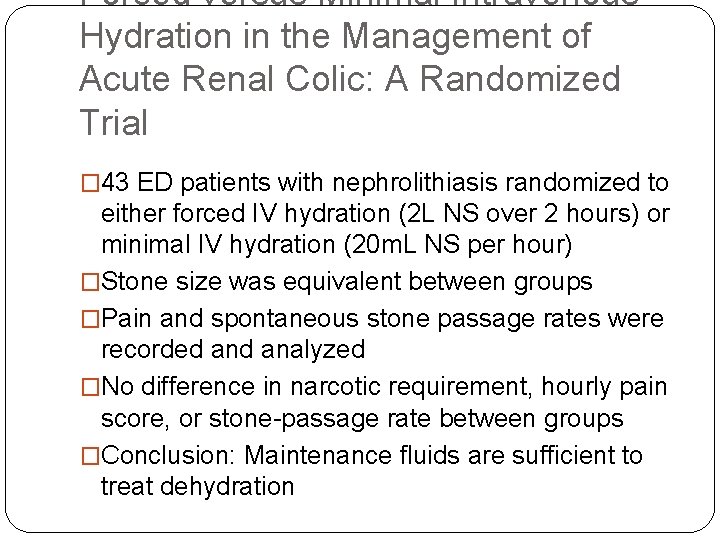
Forced versus Minimal Intravenous Hydration in the Management of Acute Renal Colic: A Randomized Trial � 43 ED patients with nephrolithiasis randomized to either forced IV hydration (2 L NS over 2 hours) or minimal IV hydration (20 m. L NS per hour) �Stone size was equivalent between groups �Pain and spontaneous stone passage rates were recorded analyzed �No difference in narcotic requirement, hourly pain score, or stone-passage rate between groups �Conclusion: Maintenance fluids are sufficient to treat dehydration
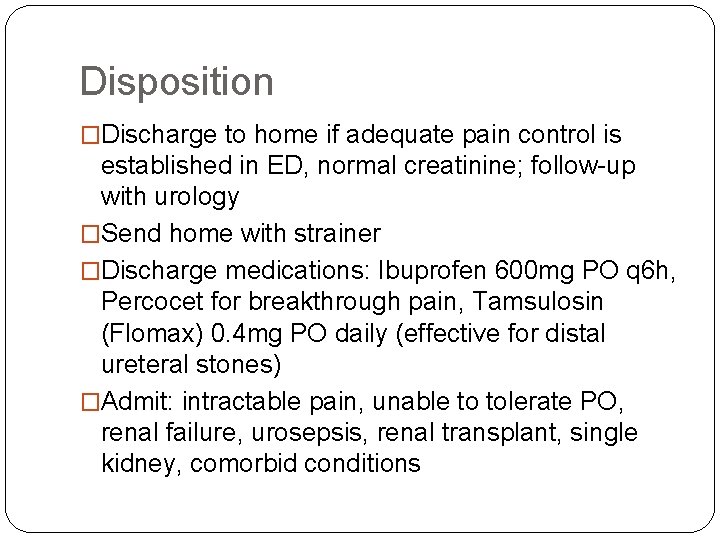
Disposition �Discharge to home if adequate pain control is established in ED, normal creatinine; follow-up with urology �Send home with strainer �Discharge medications: Ibuprofen 600 mg PO q 6 h, Percocet for breakthrough pain, Tamsulosin (Flomax) 0. 4 mg PO daily (effective for distal ureteral stones) �Admit: intractable pain, unable to tolerate PO, renal failure, urosepsis, renal transplant, single kidney, comorbid conditions
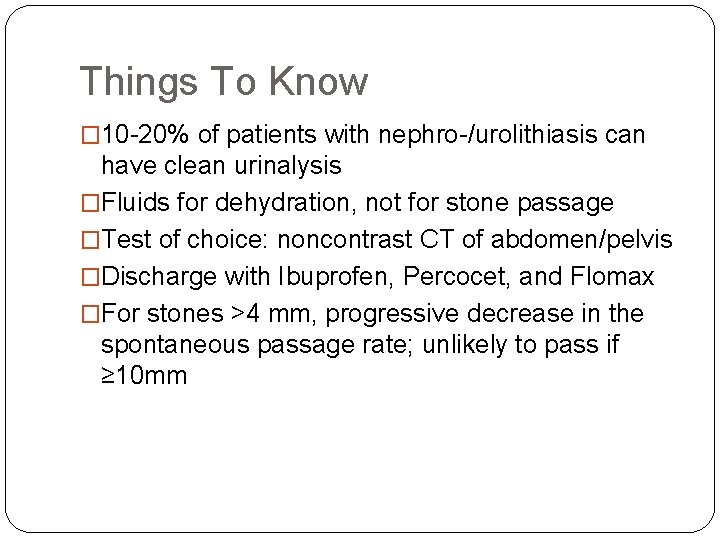
Things To Know � 10 -20% of patients with nephro-/urolithiasis can have clean urinalysis �Fluids for dehydration, not for stone passage �Test of choice: noncontrast CT of abdomen/pelvis �Discharge with Ibuprofen, Percocet, and Flomax �For stones >4 mm, progressive decrease in the spontaneous passage rate; unlikely to pass if ≥ 10 mm