1 What can you tell students who seek

- Slides: 48
1. What can you tell students who seek study advice? 2. How can you model effective learning strategies in the classroom? 3. How might you bring up student mastery in a difficult topic you teach?
Make it Stick at Touro Peter C. Brown April 12, 2019
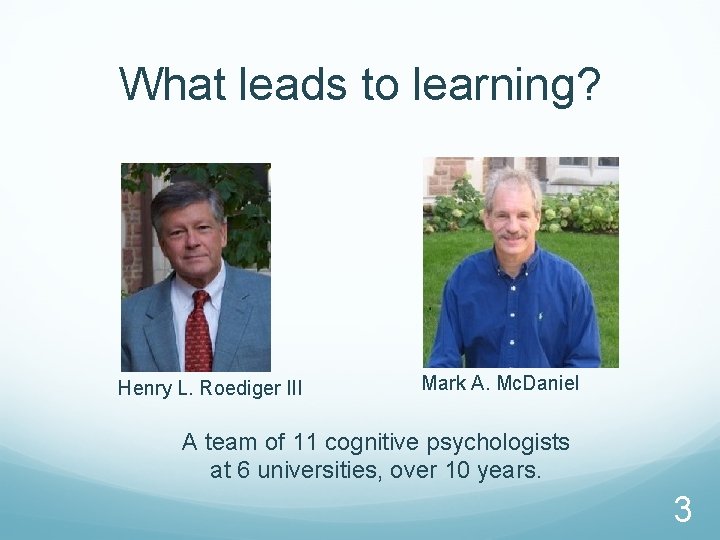
What leads to learning? Henry L. Roediger III Mark A. Mc. Daniel A team of 11 cognitive psychologists at 6 universities, over 10 years. 3
“People generally are going about learning in the wrong way. ” Part 1: 3 Big ideas about learning some of the underlying evidence Part 2: Implications 4
3 Big Ideas about Learning 1. Get it out to get it in. 2. Some difficulties are desirable. 3. Intuition steers us wrong. 5
3 Big Ideas about Learning 1. Get it out to get it in. 2. Some difficulties are desirable. 3. Intuition steers us wrong. 6
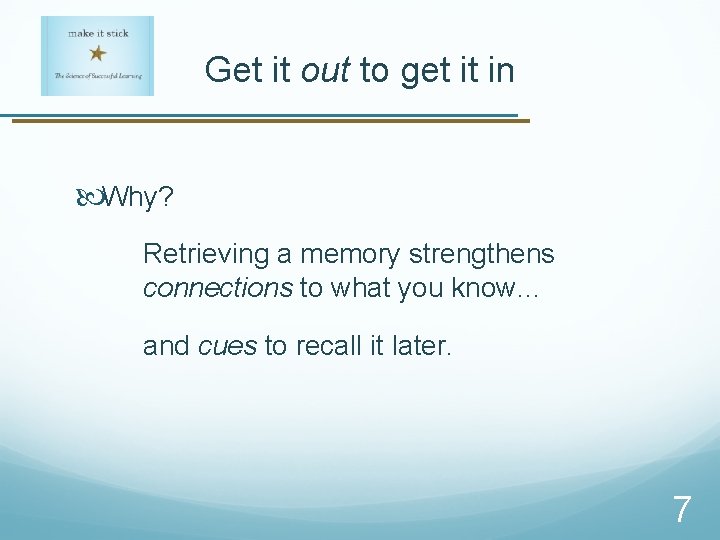
Get it out to get it in Why? Retrieving a memory strengthens connections to what you know… and cues to recall it later. 7
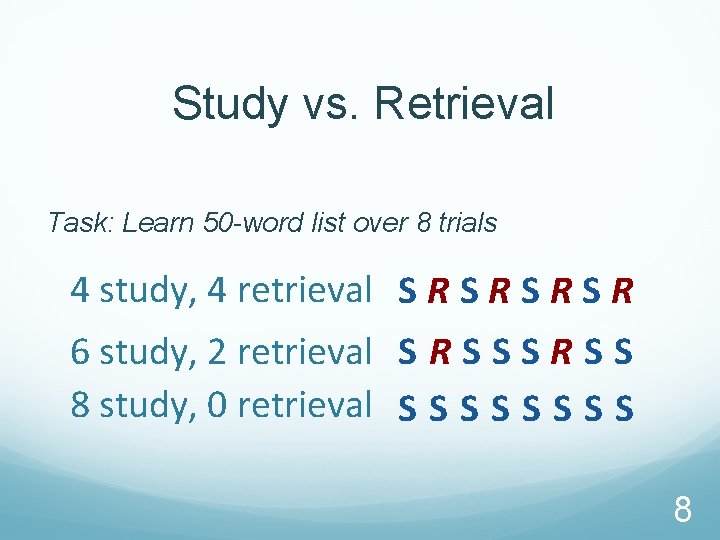
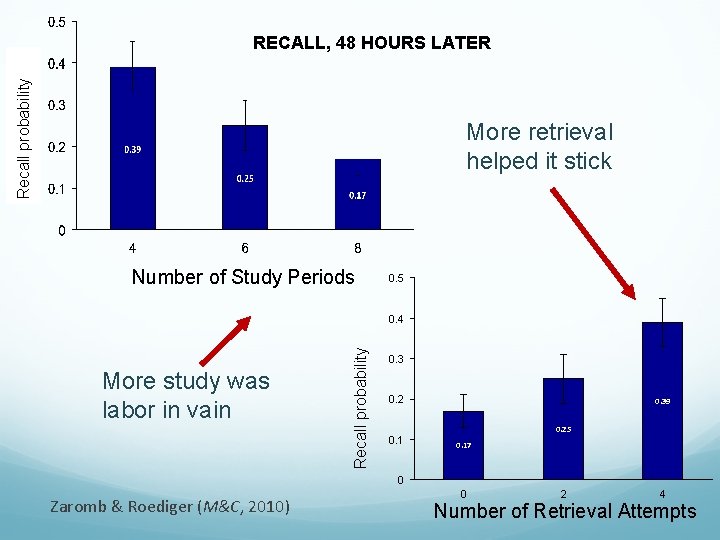
Study vs. Retrieval Task: Learn 50 -word list over 8 trials 4 study, 4 retrieval S R S R 6 study, 2 retrieval S R S S 8 study, 0 retrieval S S S S 8
Recall probability RECALL, 48 HOURS LATER More retrieval helped it stick Number of Study Periods 0. 5 More study was labor in vain Recall probability 0. 4 0. 3 0. 2 0. 1 0. 39 0. 25 0. 17 0 Zaromb & Roediger (M&C, 2010) 0 2 4 Number of Retrieval Attempts
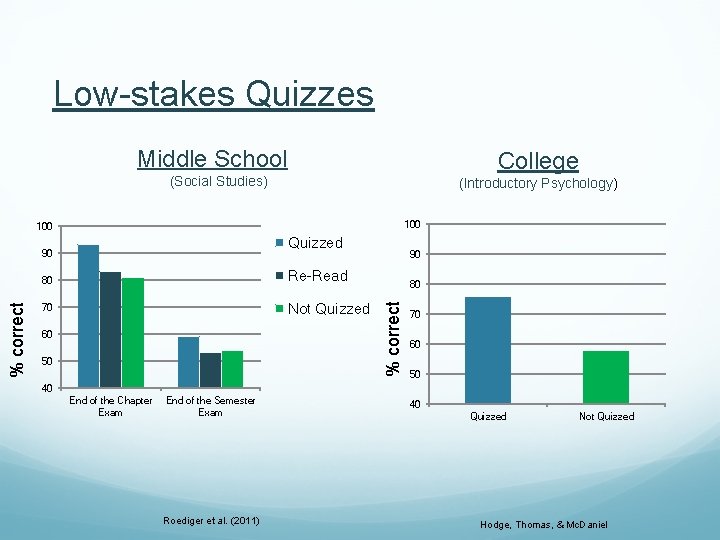
Low-stakes Quizzes Middle School College (Social Studies) (Introductory Psychology) 100 Quizzed 80 Re-Read 70 Not Quizzed 60 50 90 80 % correct 90 70 60 50 40 End of the Chapter Exam End of the Semester Exam Roediger et al. (2011) 40 Quizzed Not Quizzed Hodge, Thomas, & Mc. Daniel
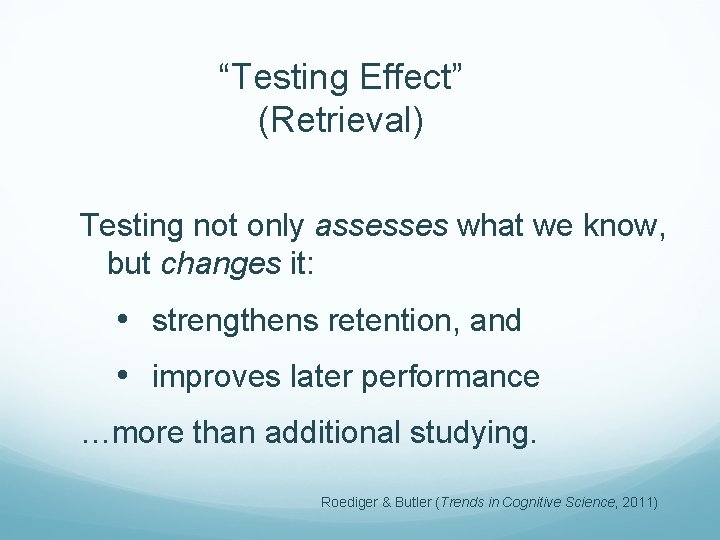
“Testing Effect” (Retrieval) Testing not only assesses what we know, but changes it: • strengthens retention, and • improves later performance …more than additional studying. Roediger & Butler (Trends in Cognitive Science, 2011)
3 Big Ideas about Learning 1. Get it out to get it in. 2. Some difficulties are desirable. 12
Desirable Difficulties Wrestling with new material so as to: Create understanding Embed learning in memory Create cues to recall it later
Desirable difficulties For example: Trying to figure it out, then getting corrective feedback. Elaborating to create meaning. (“Why? ” “What if? ” “How does it fit what I know? ”). Spacing out learning & retrieval attempts. Mixing up practice of problem types.
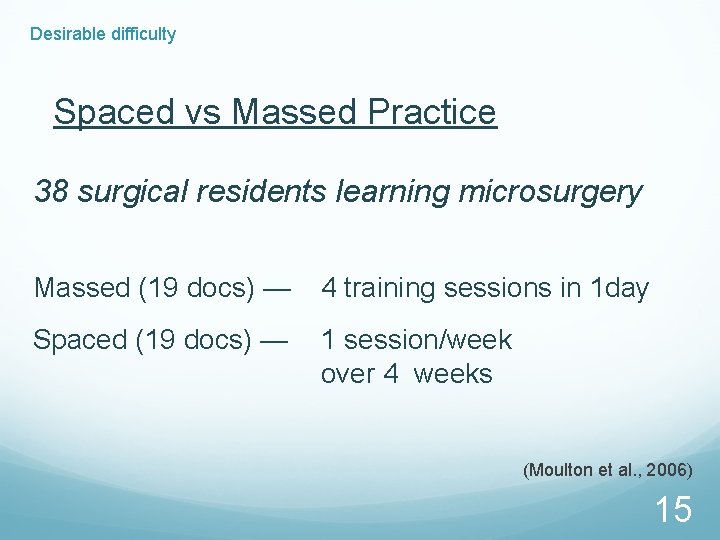
Desirable difficulty Spaced vs Massed Practice 38 surgical residents learning microsurgery Massed (19 docs) — 4 training sessions in 1 day Spaced (19 docs) — 1 session/week over 4 weeks (Moulton et al. , 2006) 15
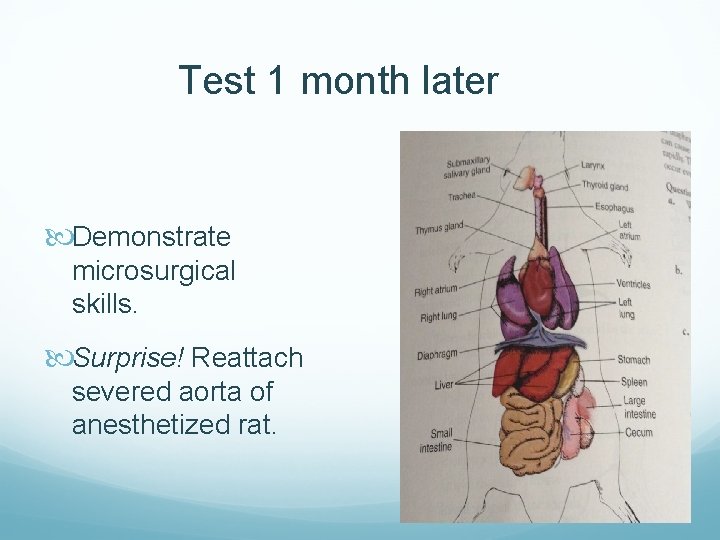
Test 1 month later Demonstrate microsurgical skills. Surprise! Reattach severed aorta of anesthetized rat. 16
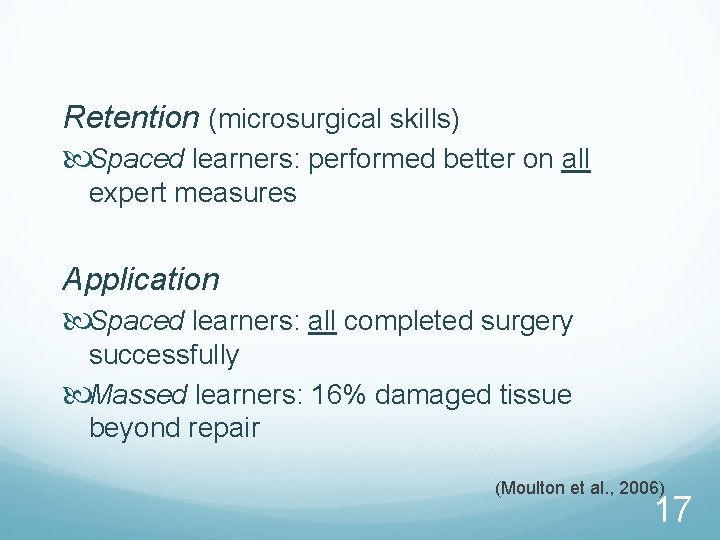
Retention (microsurgical skills) Spaced learners: performed better on all expert measures Application Spaced learners: all completed surgery successfully Massed learners: 16% damaged tissue beyond repair (Moulton et al. , 2006) 17
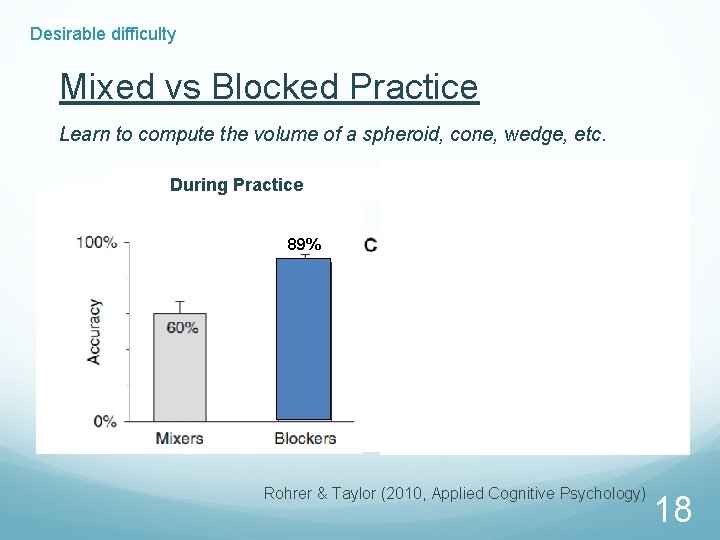
Desirable difficulty Mixed vs Blocked Practice Learn to compute the volume of a spheroid, cone, wedge, etc. During Practice Test One Week Later (Solve 8 types of solids in random order. ) 89% 20% Rohrer & Taylor (2010, Applied Cognitive Psychology) 18
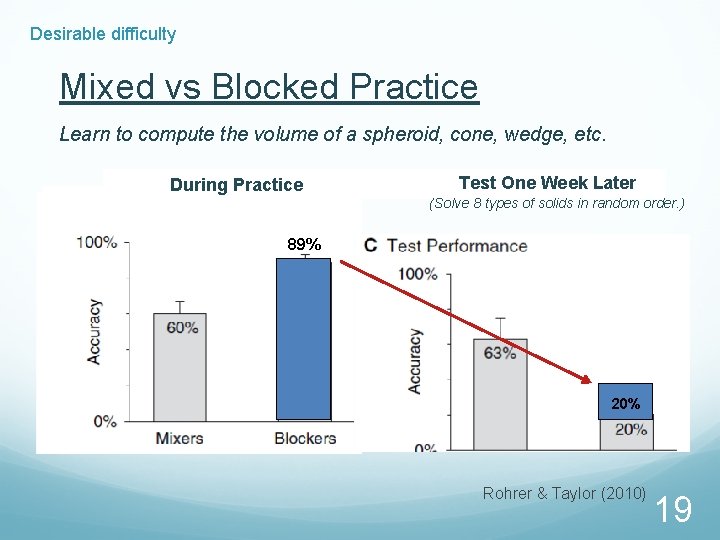
Desirable difficulty Mixed vs Blocked Practice Learn to compute the volume of a spheroid, cone, wedge, etc. During Practice Test One Week Later (Solve 8 types of solids in random order. ) 89% 20% Rohrer & Taylor (2010) 19
3 Big Ideas about Learning 1. Get it out to get it in. 2. Some difficulties are desirable. 3. Intuition steers us wrong. 20
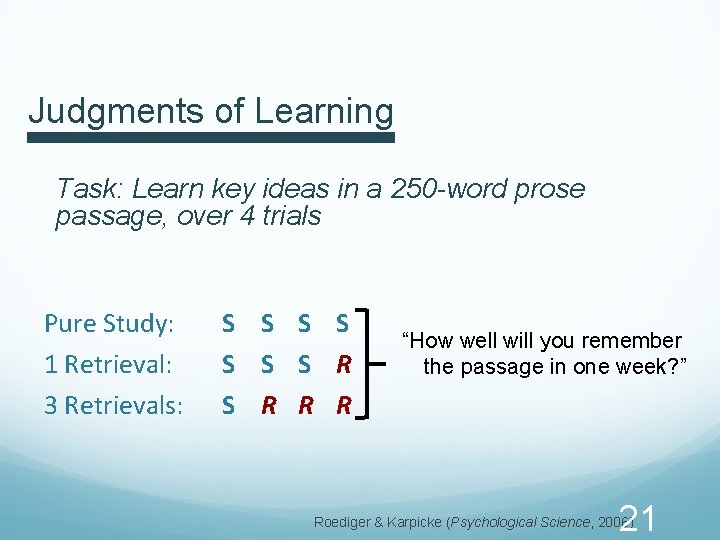
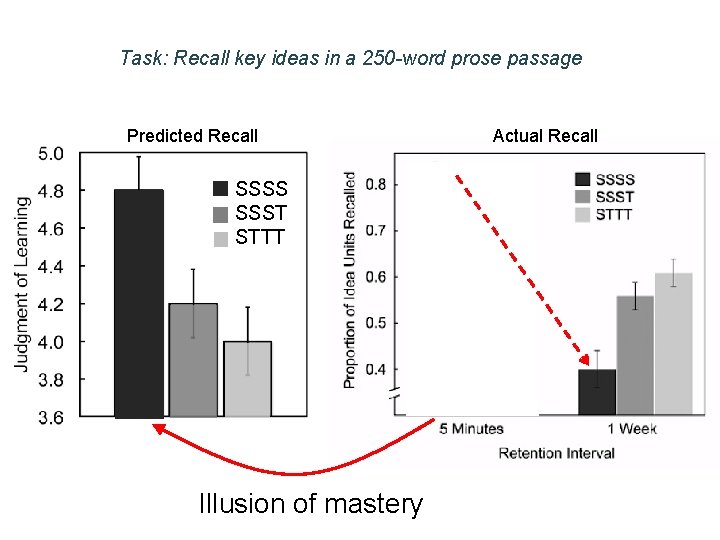
Judgments of Learning Task: Learn key ideas in a 250 -word prose passage, over 4 trials Pure Study: 1 Retrieval: 3 Retrievals: S S S S R R R “How well will you remember the passage in one week? ” 21 Roediger & Karpicke (Psychological Science, 2006)
Task: Recall key ideas in a 250 -word prose passage Predicted Recall Actual Recall SSSS SSST STTT Illusion of mastery 22
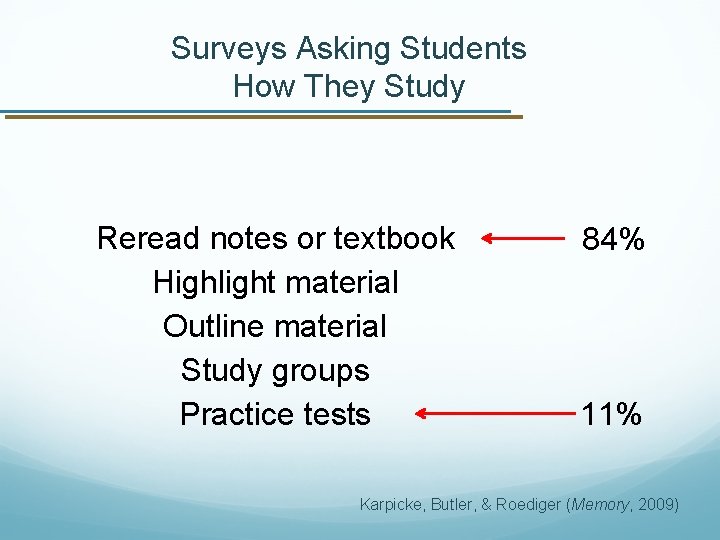
Surveys Asking Students How They Study Reread notes or textbook Highlight material Outline material Study groups Practice tests 84% 11% Karpicke, Butler, & Roediger (Memory, 2009)
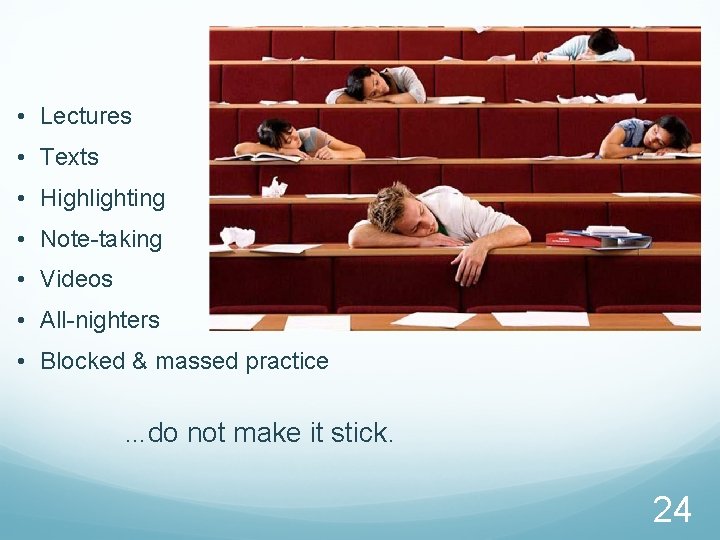
• Lectures • Texts • Highlighting • Note-taking • Videos • All-nighters • Blocked & massed practice …do not make it stick. 24
3 Big Ideas about Learning 1. Get it out to get it in. 2. Some difficulties are desirable. 3. Intuition steers us wrong. 25
We know what strategies are effective …but they are counter-intuitive. 26
“People generally are going about learning in the wrong way. ” Part 2: Implications 27
Students need to learn content and strategies. 28
What do we do now? 29
Model effective strategies Be transparent Help students create understanding Space instruction Mix related problems in homework Quiz often (reach back to carry forward) 30
Examples from the field 31
Andrew Sobel Washington Univ. at St. Louis International political economics: Replaced 2 midterms and final exam w/ 9 quizzes over 26 week term Cumulative: “Reach back to carry forward” 32
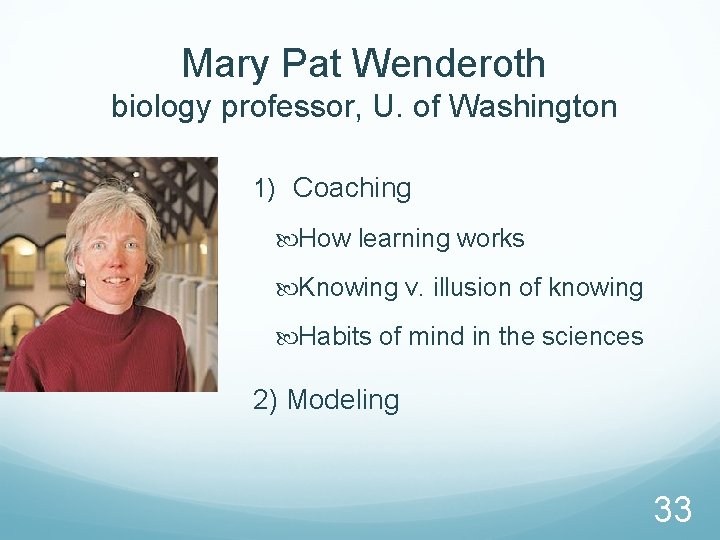
Mary Pat Wenderoth biology professor, U. of Washington 1) Coaching How learning works Knowing v. illusion of knowing Habits of mind in the sciences 2) Modeling 33
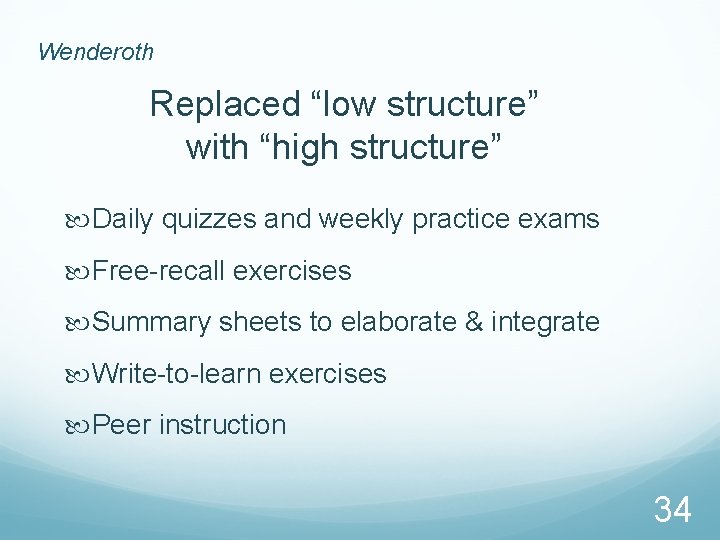
Wenderoth Replaced “low structure” with “high structure” Daily quizzes and weekly practice exams Free-recall exercises Summary sheets to elaborate & integrate Write-to-learn exercises Peer instruction 34
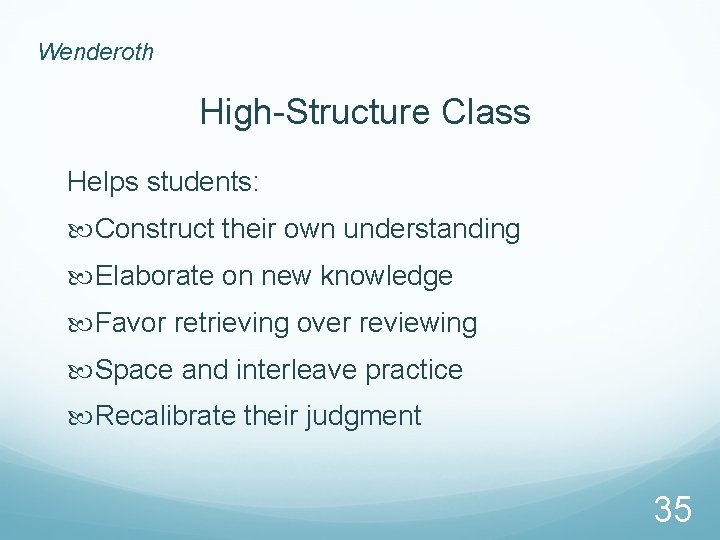
Wenderoth High-Structure Class Helps students: Construct their own understanding Elaborate on new knowledge Favor retrieving over reviewing Space and interleave practice Recalibrate their judgment 35
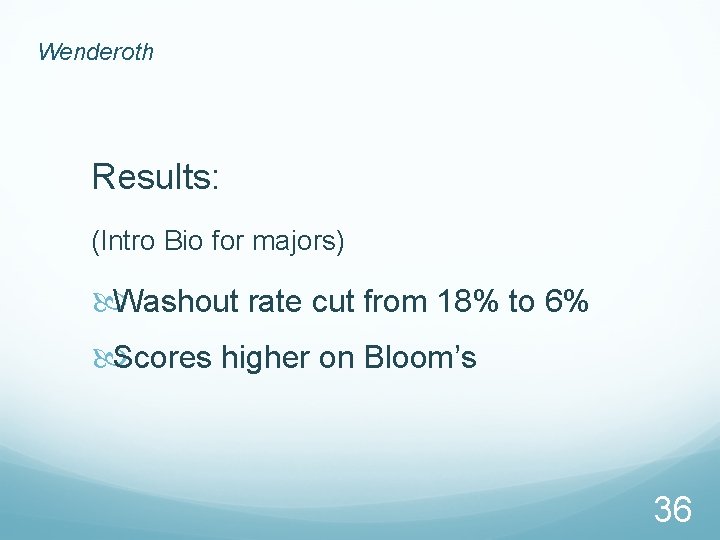
Wenderoth Results: (Intro Bio for majors) Washout rate cut from 18% to 6% Scores higher on Bloom’s 36
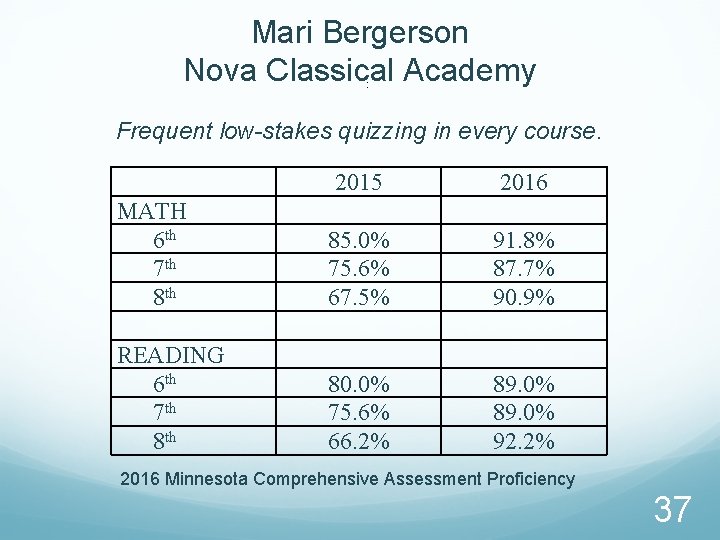
Mari Bergerson Nova Classical Academy : Frequent low-stakes quizzing in every course. MATH 6 th 7 th 8 th READING 6 th 7 th 8 th 2015 85. 0% 75. 6% 67. 5% 80. 0% 75. 6% 66. 2% 2016 91. 8% 87. 7% 90. 9% 89. 0% 92. 2% 2016 Minnesota Comprehensive Assessment Proficiency 37
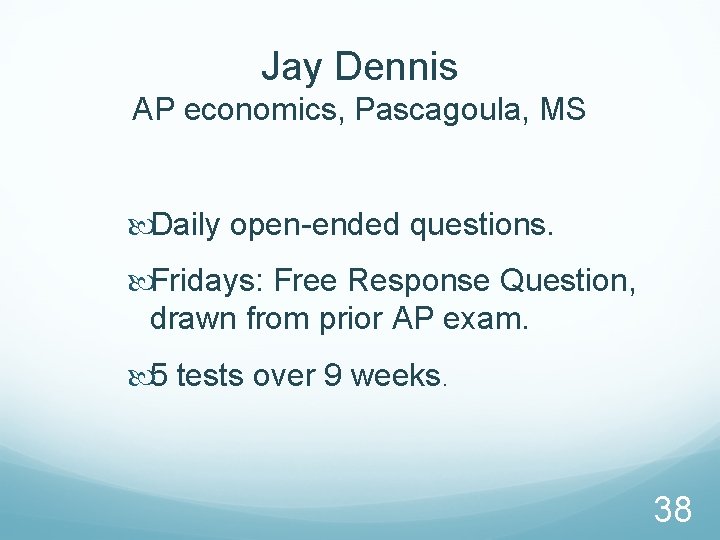
Jay Dennis AP economics, Pascagoula, MS Daily open-ended questions. Fridays: Free Response Question, drawn from prior AP exam. 5 tests over 9 weeks. 38
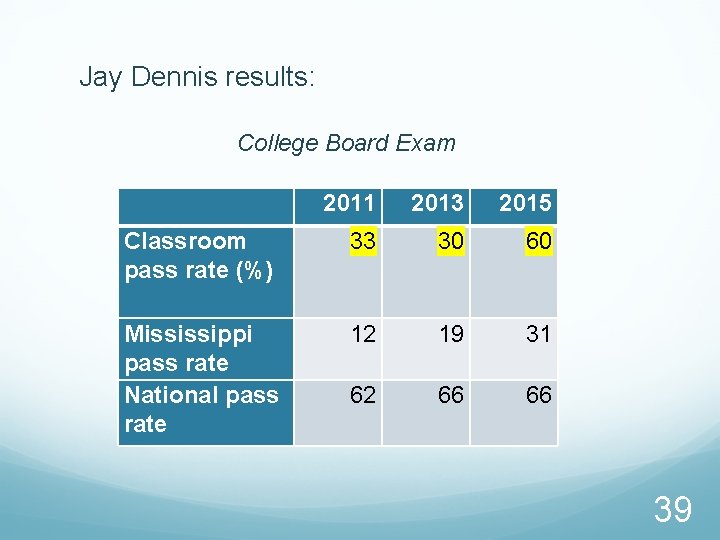
Jay Dennis results: College Board Exam 2011 2013 2015 Classroom pass rate (%) 33 30 60 Mississippi pass rate National pass rate 12 19 31 62 66 66 39
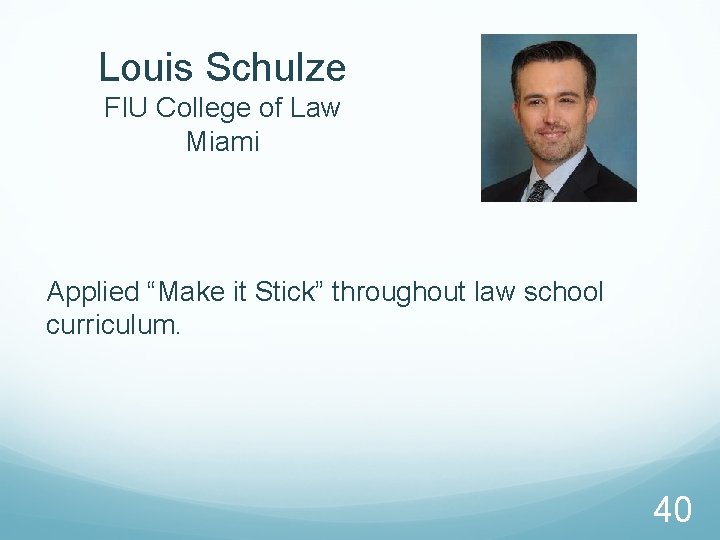
Louis Schulze FIU College of Law Miami Applied “Make it Stick” throughout law school curriculum. 40
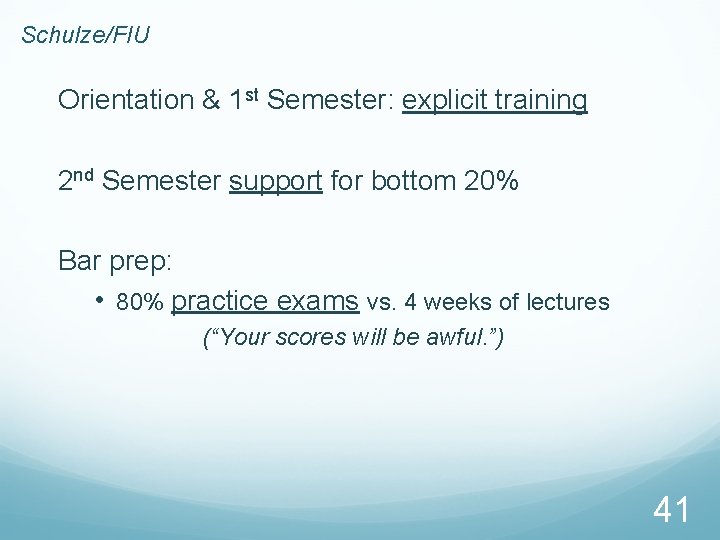
Schulze/FIU Orientation & 1 st Semester: explicit training 2 nd Semester support for bottom 20% Bar prep: • 80% practice exams vs. 4 weeks of lectures (“Your scores will be awful. ”) 41
Schulze/FIU FIU’s pass rate for bar exam: • #1 among FL law schools. • Formerly #4 or #5. 42
What do we do now? 43
“I have shifted the educational lens that I look through from teaching to learning. ” - Jay Dennis, AP Economics, Pascagoula, Mississippi 44
3 Big Ideas about Learning 1. Get it out to get it in. 2. Some difficulties are desirable. 3. Intuition steers us wrong. 45
Workshop 46
1. What are we already doing along these lines that could be extended into other areas? 2. What are 2 -3 competencies where student success is not up to target? How can we use these strategies to bring it up? 3. Where are massed and blocked strategies the norm and could be changed to spaced and mixed? 4. Can Touro “first year” courses for students & faculty help increase awareness & use of these strategies? 5. How will I coach my students on successful study strategies? 6. How can I incorporate frequent low-stakes quizzing in all of my courses? 47
A lifetime of successful learning 48