1 Lecture Five Alkaloid and Heterocyclic Compounds 2

- Slides: 12
1
Lecture Five Alkaloid and Heterocyclic Compounds. 2
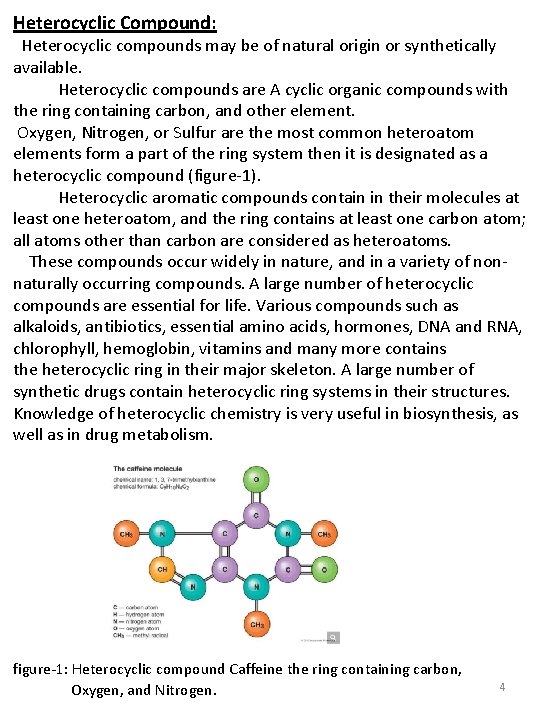
Lecture Five: ﻋﻀﻮﻳﺔ ALKALOIDS AND HETEROCYCLIC COMPOUNDS Alkaloids : Alkaloids are a group of naturally occurring chemical compounds that mostly contain nitrogen atom in the heterocyclic, and originate from amino acids. This group also includes some related compounds with neutral, and even weakly acidic properties. In addition to carbon, hydrogen and nitrogen, alkaloids may also contain oxygen, sulfur. Alkaloids are produced by a large variety of organisms including bacteria, fungi, plants, and animals, also used as Pharmacological drugs due to its pharmacological activities , Table 1: - Pharmacological activities of Alkaloids have a wide range of pharmacological activities Pharmacological drugs Antimalarial Quinine: This medication is used alone or with other medication to treat malaria caused by mosquito bites in countries where malaria is common. Malaria parasites can enter the body through these mosquito bites, and then live in body tissues such as red blood cells or the Liver. This medication is used to kill the malaria parasites living inside red blood cells. Anticancer Omacetaxine: A plant alkaloid with antitumor properties originally identified nearly 40 years ago, has a unique mechanism of action by preventing the initial elongation step of protein synthesis. It has been used widely in China for the treatment of leukemia. 3
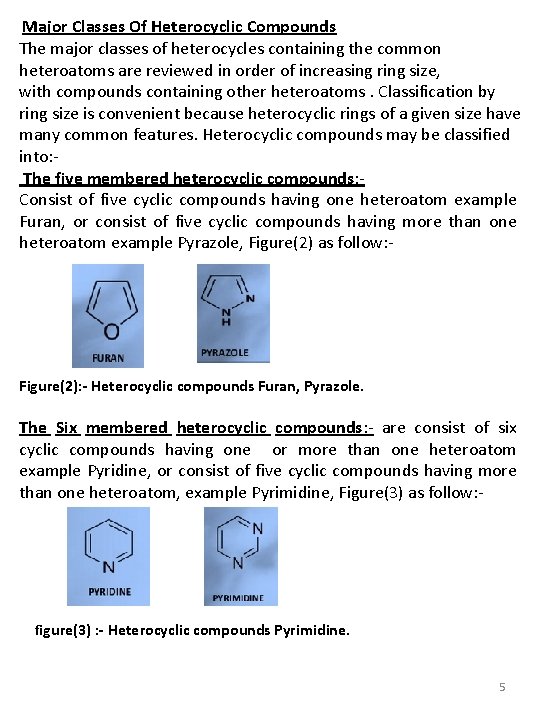
Heterocyclic Compound: Heterocyclic compounds may be of natural origin or synthetically available. Heterocyclic compounds are A cyclic organic compounds with the ring containing carbon, and other element. Oxygen, Nitrogen, or Sulfur are the most common heteroatom elements form a part of the ring system then it is designated as a heterocyclic compound (figure-1). Heterocyclic aromatic compounds contain in their molecules at least one heteroatom, and the ring contains at least one carbon atom; all atoms other than carbon are considered as heteroatoms. These compounds occur widely in nature, and in a variety of nonnaturally occurring compounds. A large number of heterocyclic compounds are essential for life. Various compounds such as alkaloids, antibiotics, essential amino acids, hormones, DNA and RNA, chlorophyll, hemoglobin, vitamins and many more contains the heterocyclic ring in their major skeleton. A large number of synthetic drugs contain heterocyclic ring systems in their structures. Knowledge of heterocyclic chemistry is very useful in biosynthesis, as well as in drug metabolism. figure-1: Heterocyclic compound Caffeine the ring containing carbon, Oxygen, and Nitrogen. 4
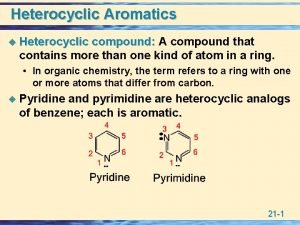
Major Classes Of Heterocyclic Compounds The major classes of heterocycles containing the common heteroatoms are reviewed in order of increasing ring size, with compounds containing other heteroatoms. Classification by ring size is convenient because heterocyclic rings of a given size have many common features. Heterocyclic compounds may be classified into: - The five membered heterocyclic compounds: - Consist of five cyclic compounds having one heteroatom example Furan, or consist of five cyclic compounds having more than one heteroatom example Pyrazole, Figure(2) as follow: - Figure(2): - Heterocyclic compounds Furan, Pyrazole. The Six membered heterocyclic compounds: - are consist of six cyclic compounds having one or more than one heteroatom example Pyridine, or consist of five cyclic compounds having more than one heteroatom, example Pyrimidine, Figure(3) as follow: - figure(3) : - Heterocyclic compounds Pyrimidine. 5
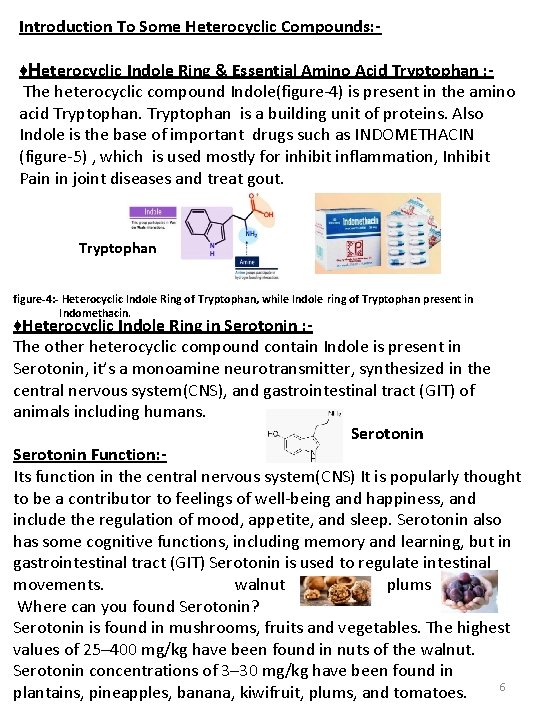
Introduction To Some Heterocyclic Compounds: - ♦Heterocyclic Indole Ring & Essential Amino Acid Tryptophan : The heterocyclic compound Indole(figure-4) is present in the amino acid Tryptophan is a building unit of proteins. Also Indole is the base of important drugs such as INDOMETHACIN (figure-5) , which is used mostly for inhibit inflammation, Inhibit Pain in joint diseases and treat gout. Tryptophan figure-4: - Heterocyclic Indole Ring of Tryptophan, while Indole ring of Tryptophan present in Indomethacin. ♦Heterocyclic Indole Ring in Serotonin : The other heterocyclic compound contain Indole is present in Serotonin, it’s a monoamine neurotransmitter, synthesized in the central nervous system(CNS), and gastrointestinal tract (GIT) of animals including humans. Serotonin Function: Its function in the central nervous system(CNS) It is popularly thought to be a contributor to feelings of well-being and happiness, and include the regulation of mood, appetite, and sleep. Serotonin also has some cognitive functions, including memory and learning, but in gastrointestinal tract (GIT) Serotonin is used to regulate intestinal movements. walnut plums Where can you found Serotonin? Serotonin is found in mushrooms, fruits and vegetables. The highest values of 25– 400 mg/kg have been found in nuts of the walnut. Serotonin concentrations of 3– 30 mg/kg have been found in 6 plantains, pineapples, banana, kiwifruit, plums, and tomatoes.
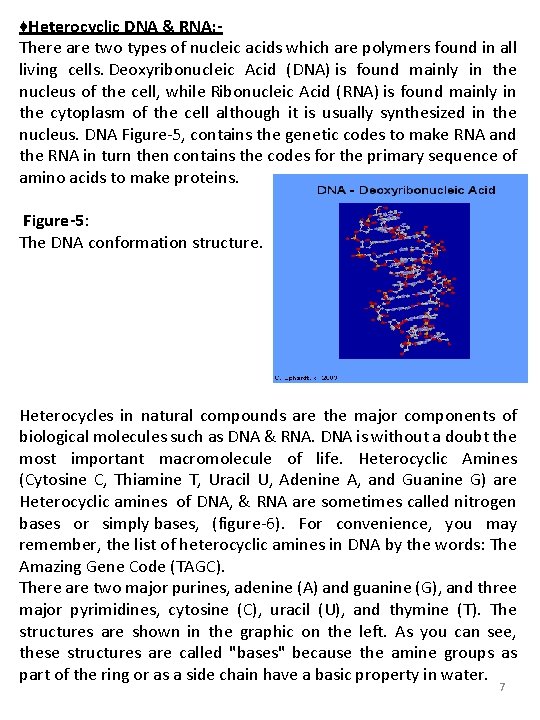
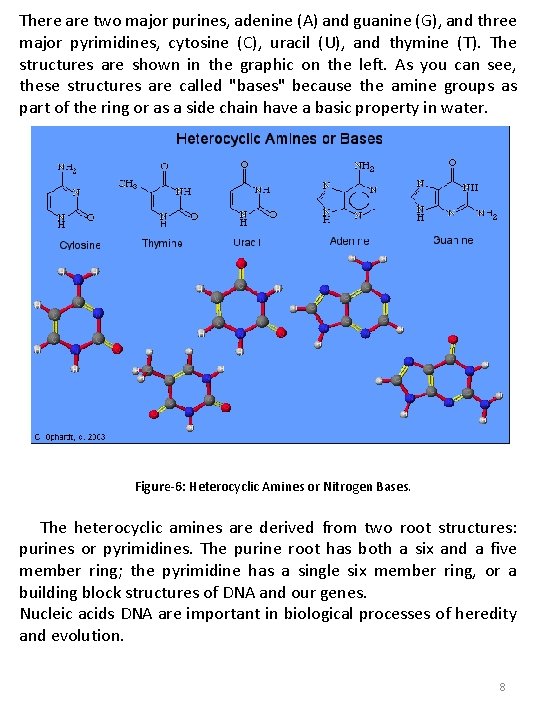
♦Heterocyclic DNA & RNA: There are two types of nucleic acids which are polymers found in all living cells. Deoxyribonucleic Acid (DNA) is found mainly in the nucleus of the cell, while Ribonucleic Acid (RNA) is found mainly in the cytoplasm of the cell although it is usually synthesized in the nucleus. DNA Figure-5, contains the genetic codes to make RNA and the RNA in turn then contains the codes for the primary sequence of amino acids to make proteins. Figure-5: The DNA conformation structure. Heterocycles in natural compounds are the major components of biological molecules such as DNA & RNA. DNA is without a doubt the most important macromolecule of life. Heterocyclic Amines (Cytosine C, Thiamine T, Uracil U, Adenine A, and Guanine G) are Heterocyclic amines of DNA, & RNA are sometimes called nitrogen bases or simply bases, (figure-6). For convenience, you may remember, the list of heterocyclic amines in DNA by the words: The Amazing Gene Code (TAGC). There are two major purines, adenine (A) and guanine (G), and three major pyrimidines, cytosine (C), uracil (U), and thymine (T). The structures are shown in the graphic on the left. As you can see, these structures are called "bases" because the amine groups as part of the ring or as a side chain have a basic property in water. 7
There are two major purines, adenine (A) and guanine (G), and three major pyrimidines, cytosine (C), uracil (U), and thymine (T). The structures are shown in the graphic on the left. As you can see, these structures are called "bases" because the amine groups as part of the ring or as a side chain have a basic property in water. Figure-6: Heterocyclic Amines or Nitrogen Bases. The heterocyclic amines are derived from two root structures: purines or pyrimidines. The purine root has both a six and a five member ring; the pyrimidine has a single six member ring, or a building block structures of DNA and our genes. Nucleic acids DNA are important in biological processes of heredity and evolution. 8
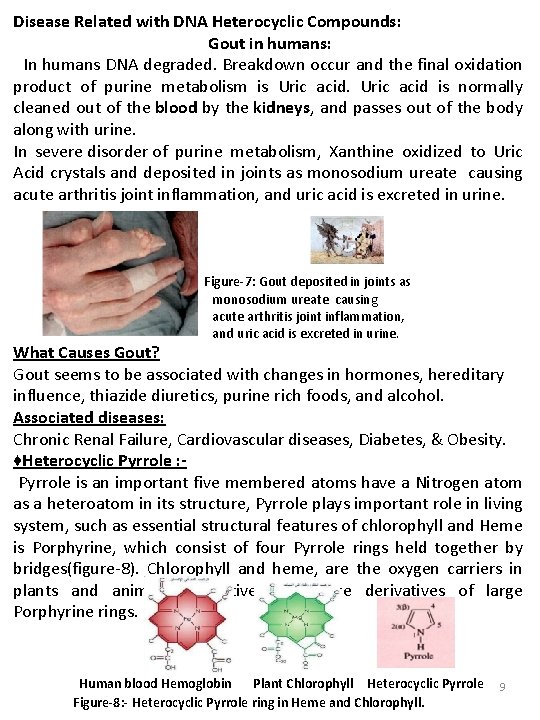
Disease Related with DNA Heterocyclic Compounds: Gout in humans: In humans DNA degraded. Breakdown occur and the final oxidation product of purine metabolism is Uric acid is normally cleaned out of the blood by the kidneys, and passes out of the body along with urine. In severe disorder of purine metabolism, Xanthine oxidized to Uric Acid crystals and deposited in joints as monosodium ureate causing acute arthritis joint inflammation, and uric acid is excreted in urine. Figure-7: Gout deposited in joints as monosodium ureate causing acute arthritis joint inflammation, and uric acid is excreted in urine. What Causes Gout? Gout seems to be associated with changes in hormones, hereditary influence, thiazide diuretics, purine rich foods, and alcohol. Associated diseases: Chronic Renal Failure, Cardiovascular diseases, Diabetes, & Obesity. ♦Heterocyclic Pyrrole : Pyrrole is an important five membered atoms have a Nitrogen atom as a heteroatom in its structure, Pyrrole plays important role in living system, such as essential structural features of chlorophyll and Heme is Porphyrine, which consist of four Pyrrole rings held together by bridges(figure-8). Chlorophyll and heme, are the oxygen carriers in plants and animals respectively, and are derivatives of large Porphyrine rings. Human blood Hemoglobin Plant Chlorophyll Heterocyclic Pyrrole Figure-8: - Heterocyclic Pyrrole ring in Heme and Chlorophyll. 9
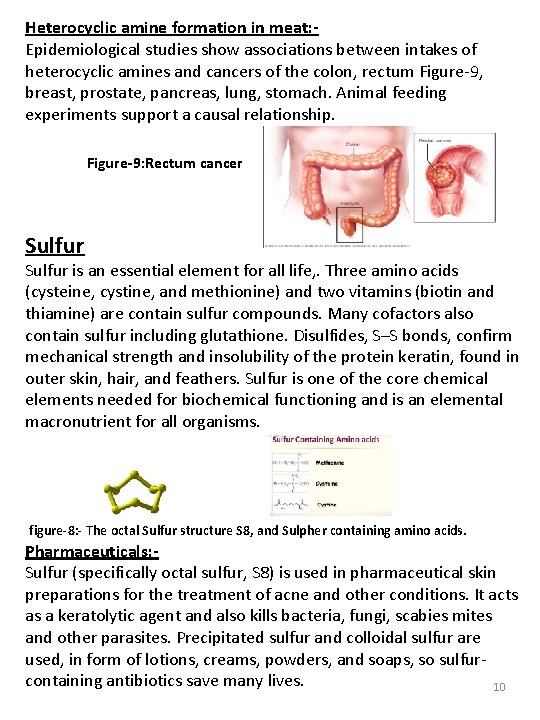
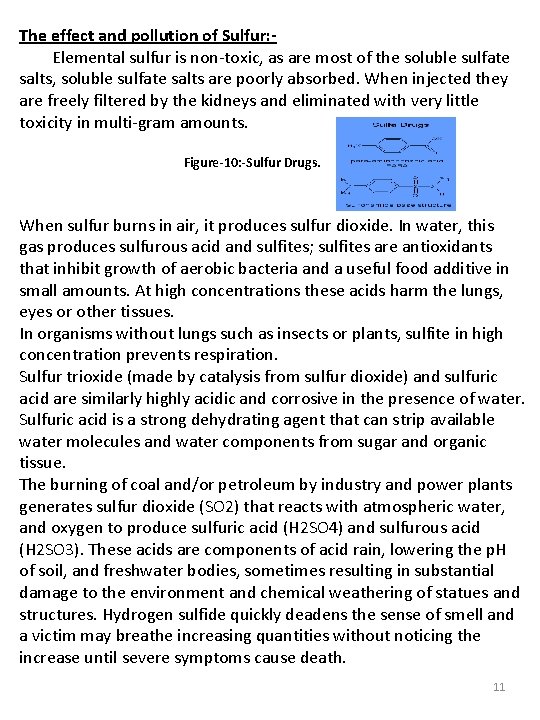
Heterocyclic amine formation in meat: Epidemiological studies show associations between intakes of heterocyclic amines and cancers of the colon, rectum Figure-9, breast, prostate, pancreas, lung, stomach. Animal feeding experiments support a causal relationship. Figure-9: Rectum cancer Sulfur is an essential element for all life, . Three amino acids (cysteine, cystine, and methionine) and two vitamins (biotin and thiamine) are contain sulfur compounds. Many cofactors also contain sulfur including glutathione. Disulfides, S–S bonds, confirm mechanical strength and insolubility of the protein keratin, found in outer skin, hair, and feathers. Sulfur is one of the core chemical elements needed for biochemical functioning and is an elemental macronutrient for all organisms. figure-8: - The octal Sulfur structure S 8, and Sulpher containing amino acids. Pharmaceuticals: Sulfur (specifically octal sulfur, S 8) is used in pharmaceutical skin preparations for the treatment of acne and other conditions. It acts as a keratolytic agent and also kills bacteria, fungi, scabies mites and other parasites. Precipitated sulfur and colloidal sulfur are used, in form of lotions, creams, powders, and soaps, so sulfurcontaining antibiotics save many lives. 10
The effect and pollution of Sulfur: Elemental sulfur is non-toxic, as are most of the soluble sulfate salts, soluble sulfate salts are poorly absorbed. When injected they are freely filtered by the kidneys and eliminated with very little toxicity in multi-gram amounts. Figure-10: -Sulfur Drugs. When sulfur burns in air, it produces sulfur dioxide. In water, this gas produces sulfurous acid and sulfites; sulfites are antioxidants that inhibit growth of aerobic bacteria and a useful food additive in small amounts. At high concentrations these acids harm the lungs, eyes or other tissues. In organisms without lungs such as insects or plants, sulfite in high concentration prevents respiration. Sulfur trioxide (made by catalysis from sulfur dioxide) and sulfuric acid are similarly highly acidic and corrosive in the presence of water. Sulfuric acid is a strong dehydrating agent that can strip available water molecules and water components from sugar and organic tissue. The burning of coal and/or petroleum by industry and power plants generates sulfur dioxide (SO 2) that reacts with atmospheric water, and oxygen to produce sulfuric acid (H 2 SO 4) and sulfurous acid (H 2 SO 3). These acids are components of acid rain, lowering the p. H of soil, and freshwater bodies, sometimes resulting in substantial damage to the environment and chemical weathering of statues and structures. Hydrogen sulfide quickly deadens the sense of smell and a victim may breathe increasing quantities without noticing the increase until severe symptoms cause death. 11
Reference - Journal List • HHS Author Manuscripts • PMC 3775965 Clin Lymphoma Myeloma Leuk. Author manuscript; available in PMC 2014 Oct 1. Published in final edited form as: Clin Lymphoma Myeloma Leuk. 2013 Oct; 13(5): 530– 533. Published online 2013 Jun 20. doi: 10. 1016/j. clml. 2013. 017 PMCID: PMC 3775965 NIHMSID: NIHMS 499260 PMID: 23790799 Homoharringtonine/Omacetaxine Mepesuccinate: The Long and Winding Road to Food and Drug Administration Approval Hagop M. Kantarjian, Susan O’Brien, and Jorge Cortes Author information Copyright and License information Disclaimer. - - US National Library of Medicine National Institutes of Health Search database Search term Search Advanced Journal list Help Journal List HHS Author Manuscripts PMC 4048124 Clin Cancer Res. Author manuscript; available in PMC 2014 Oct 1. Published in final edited form as: Clin Cancer Res. 2014 Apr 1; 20(7): 1735– 1740. Published online 2014 Feb 5. doi: 10. 1158/1078 -0432. CCR-13 -1283 PMCID: PMC 4048124 NIHMSID: NIHMS 562162 PMID: 24501394 Omacetaxine: a protein translation inhibitor for treatment of chronic myelogenous leukemia Varsha Gandhi, 1, 2 William Plunkett, 1, 2 and Jorge E. Cortes 2 Author information Copyright and License information Disclaimer. - Gout Leaflet www. melthamgp. co. u 12