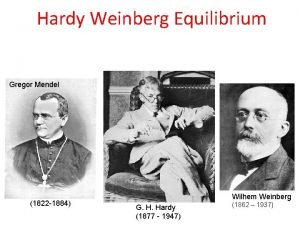
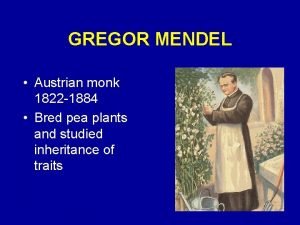
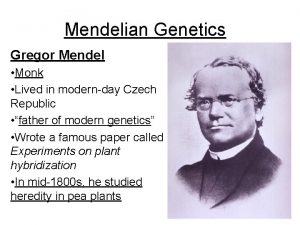
1 Gregor Mendel Peas please 2 Segregation of
- Slides: 43
1. Gregor Mendel Peas, please 2. Segregation of alleles Shown by monohybrid crosses 3. Independent assortment of alleles shown by dihybrid crosses
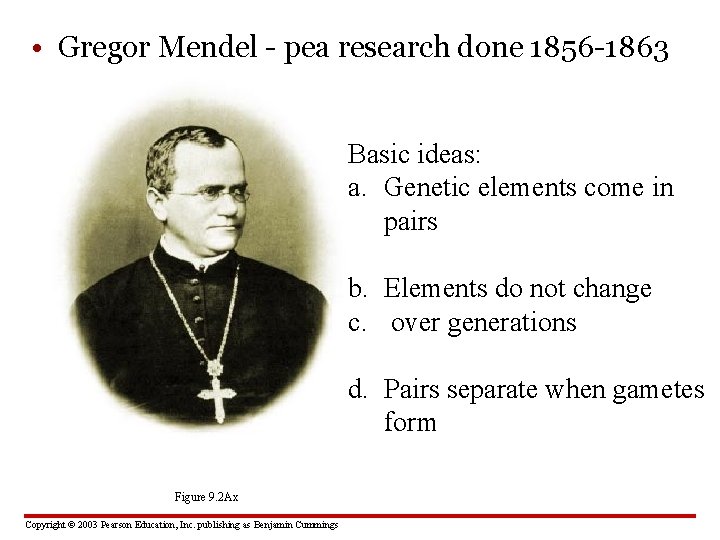
• Gregor Mendel - pea research done 1856 -1863 Basic ideas: a. Genetic elements come in pairs b. Elements do not change c. over generations d. Pairs separate when gametes form Figure 9. 2 Ax Copyright © 2003 Pearson Education, Inc. publishing as Benjamin Cummings
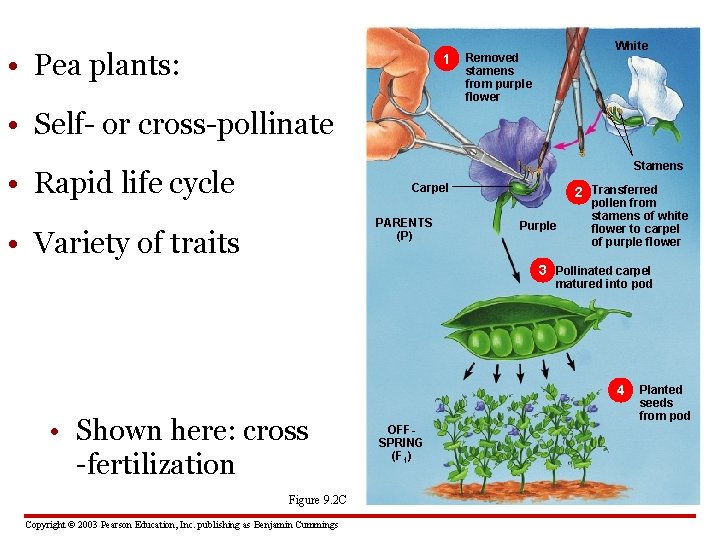
• Pea plants: 1 White Removed stamens from purple flower • Self- or cross-pollinate Stamens • Rapid life cycle Carpel PARENTS (P) • Variety of traits 2 Transferred Purple pollen from stamens of white flower to carpel of purple flower 3 Pollinated carpel matured into pod 4 • Shown here: cross -fertilization Figure 9. 2 C Copyright © 2003 Pearson Education, Inc. publishing as Benjamin Cummings OFFSPRING (F 1) Planted seeds from pod
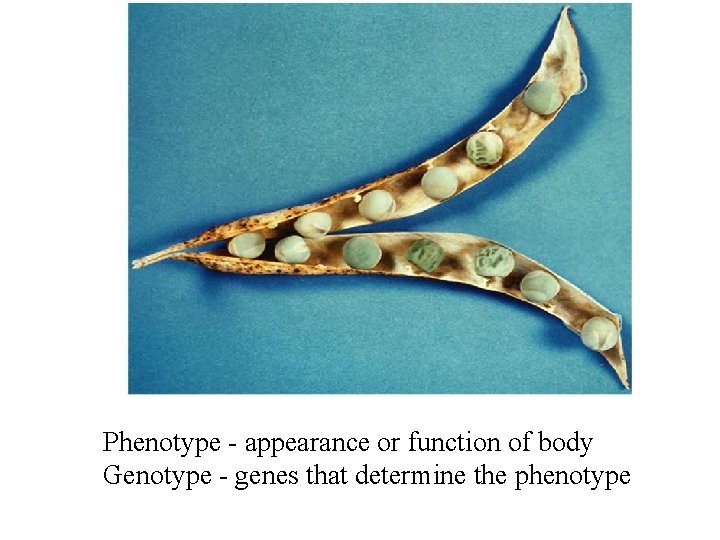
Phenotype - appearance or function of body Genotype - genes that determine the phenotype
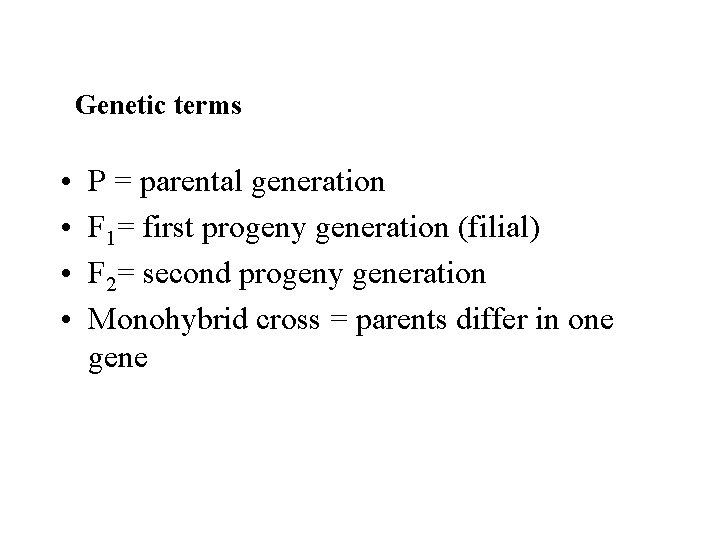
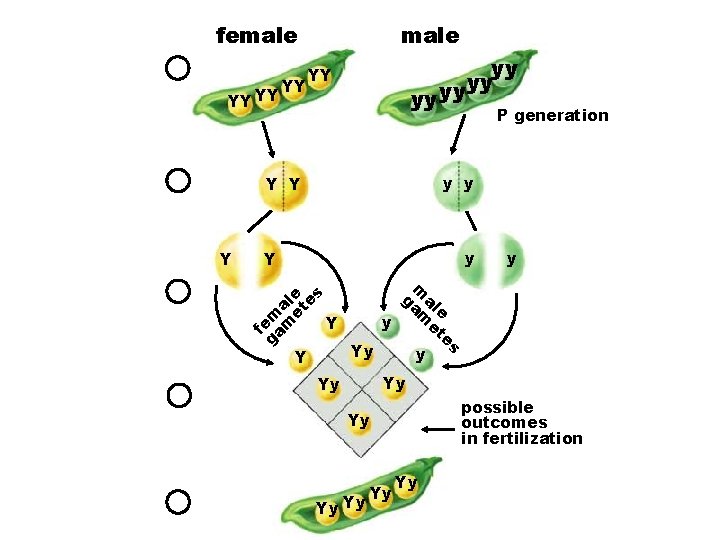
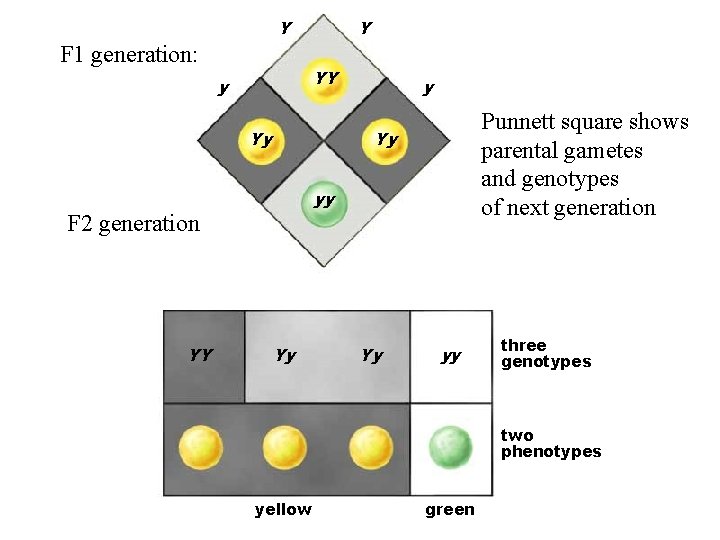
Genetic terms • • P = parental generation F 1= first progeny generation (filial) F 2= second progeny generation Monohybrid cross = parents differ in one gene
female YY YY YY male YY yy P generation y y Y Yy y s Y y e te al e m am g f gaem m al et e es Y yy yy yy Yy Yy possible outcomes in fertilization Yy Yy Yy
Y F 1 generation: Y YY y Yy Punnett square shows parental gametes and genotypes of next generation Yy yy F 2 generation YY y Yy Yy yy three genotypes two phenotypes yellow green
1 st law - segregation of alleles • Cells contain 2 copies of each gene (alleles) • Alleles do not blend (dominant, recessive) • Alleles separate during gamete formation (meiosis)
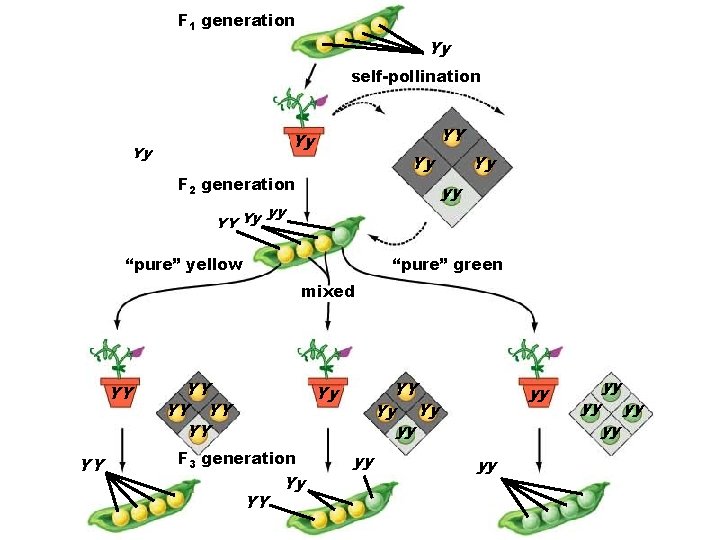
F 1 generation Yy self-pollination YY Yy Yy Yy F 2 generation YY Yy Yy yy yy “pure” yellow “pure” green mixed YY YY Yy Yy yy Yy F 3 generation YY Yy yy yy
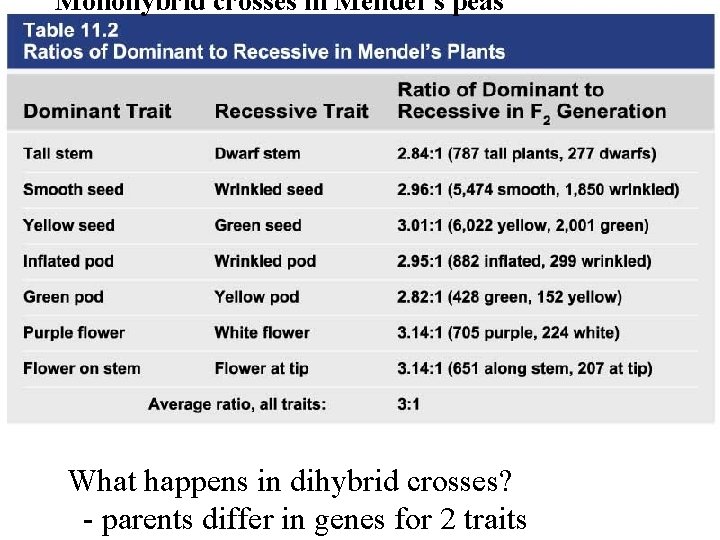
Monohybrid crosses in Mendel’s peas What happens in dihybrid crosses? - parents differ in genes for 2 traits
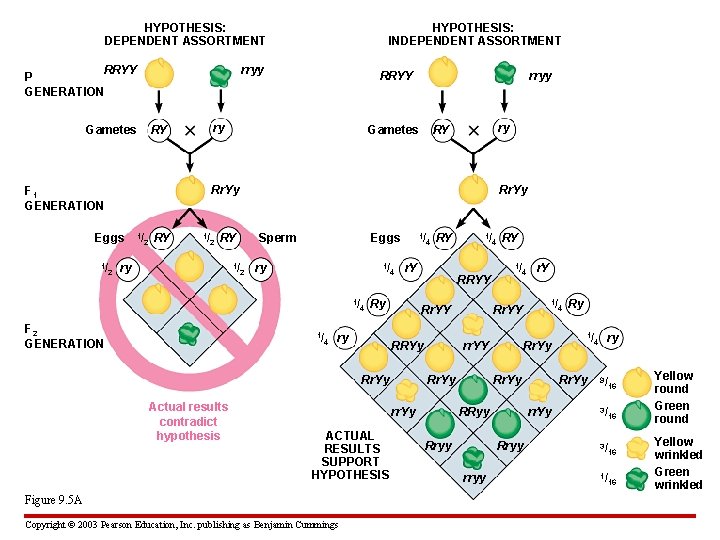
HYPOTHESIS: DEPENDENT ASSORTMENT RRYY P GENERATION rryy Gametes RRYY ry RY rryy Gametes ry RY Rr. Yy F 1 GENERATION Eggs 1/ HYPOTHESIS: INDEPENDENT ASSORTMENT 2 1/ 2 RY 1/ 2 Rr. Yy RY ry 1/ Sperm 2 Eggs ry 1/ 1/ F 2 GENERATION 1/ 4 4 4 1/ RRYY RRYy Figure 9. 5 A Copyright © 2003 Pearson Education, Inc. publishing as Benjamin Cummings 4 RY 1/ 4 Rr. Yy r. Y 1/ Rr. YY rr. Yy ACTUAL RESULTS SUPPORT HYPOTHESIS 1/ Rr. YY Rr. Yy Actual results contradict hypothesis RY r. Y Ry ry 4 Rr. Yy RRyy Rryy rryy Ry 1/ Rr. Yy rr. Yy Rryy 4 4 ry 9/ 16 3/ 16 1/ 16 Yellow round Green round Yellow wrinkled Green wrinkled
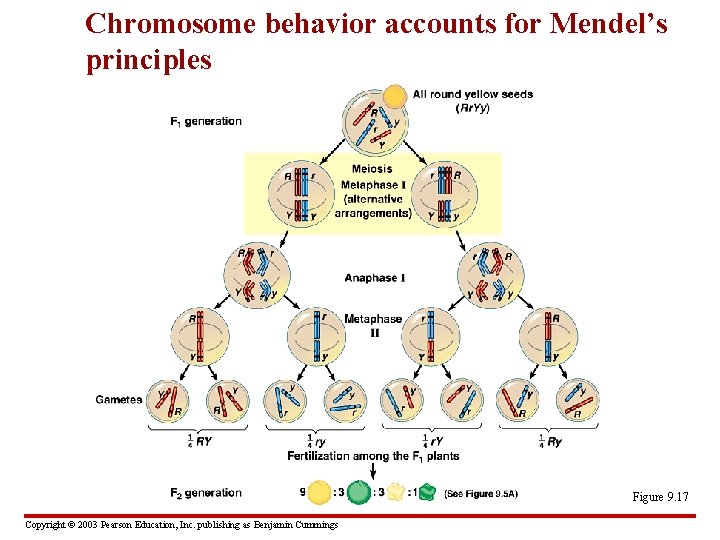
Law of Independent Assortment • During gamete formation, genes for different traits separate independently into gametes • Why? random alignment of homologues at Meiosis I • A sperm or egg carries only one allele of each pair
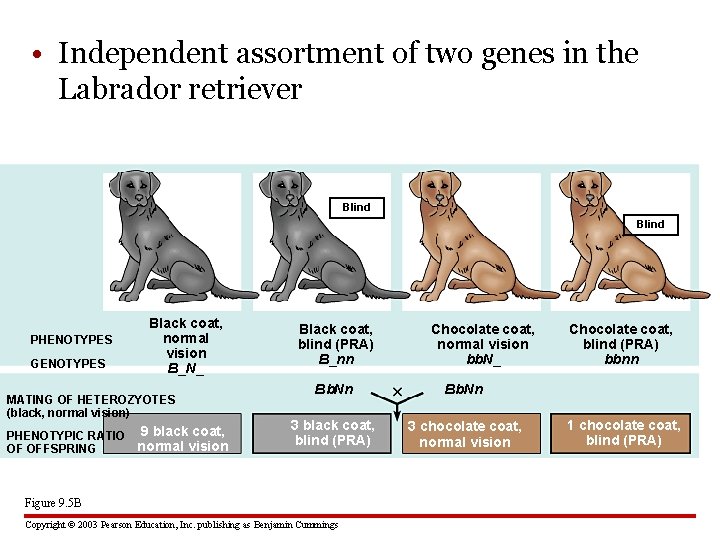
• Independent assortment of two genes in the Labrador retriever Blind PHENOTYPES GENOTYPES Black coat, normal vision B_N_ MATING OF HETEROZYOTES (black, normal vision) PHENOTYPIC RATIO 9 black coat, normal vision OF OFFSPRING Black coat, blind (PRA) B_nn Chocolate coat, normal vision bb. N_ Bb. Nn 3 black coat, blind (PRA) 3 chocolate coat, normal vision Figure 9. 5 B Copyright © 2003 Pearson Education, Inc. publishing as Benjamin Cummings Chocolate coat, blind (PRA) bbnn 1 chocolate coat, blind (PRA)
Chromosome behavior accounts for Mendel’s principles Figure 9. 17 Copyright © 2003 Pearson Education, Inc. publishing as Benjamin Cummings
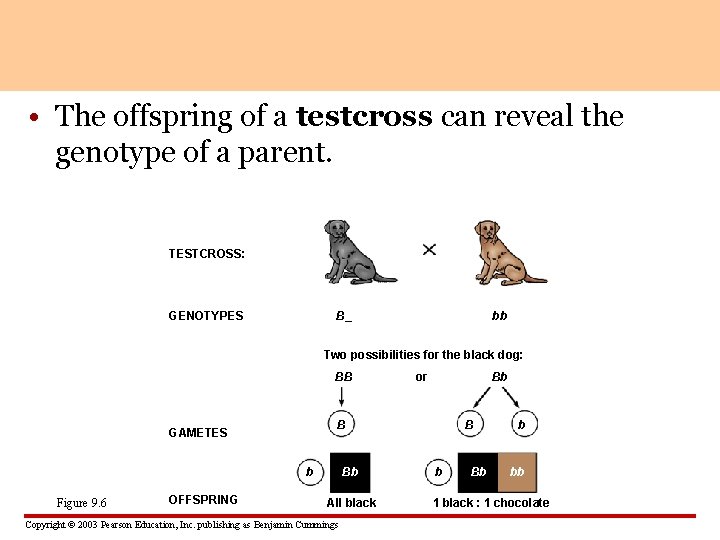
• The offspring of a testcross can reveal the genotype of a parent. TESTCROSS: GENOTYPES B_ bb Two possibilities for the black dog: BB b OFFSPRING Bb B GAMETES Figure 9. 6 or Bb All black Copyright © 2003 Pearson Education, Inc. publishing as Benjamin Cummings B b Bb b bb 1 black : 1 chocolate
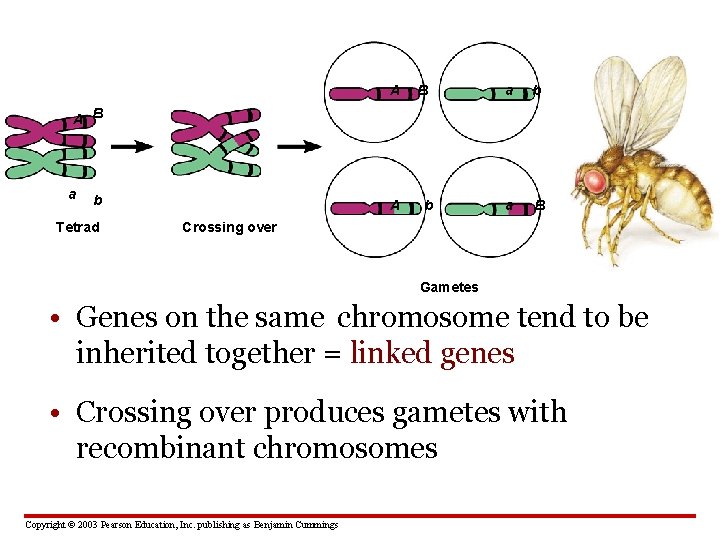
A B a b a B A B a b Tetrad A b Crossing over Gametes • Genes on the same chromosome tend to be inherited together = linked genes • Crossing over produces gametes with recombinant chromosomes Copyright © 2003 Pearson Education, Inc. publishing as Benjamin Cummings
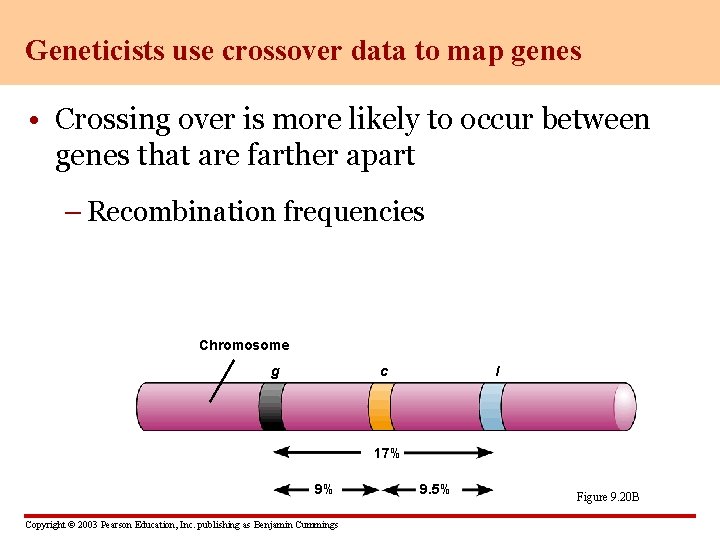
Geneticists use crossover data to map genes • Crossing over is more likely to occur between genes that are farther apart – Recombination frequencies Chromosome g c l 17% 9% Copyright © 2003 Pearson Education, Inc. publishing as Benjamin Cummings 9. 5% Figure 9. 20 B
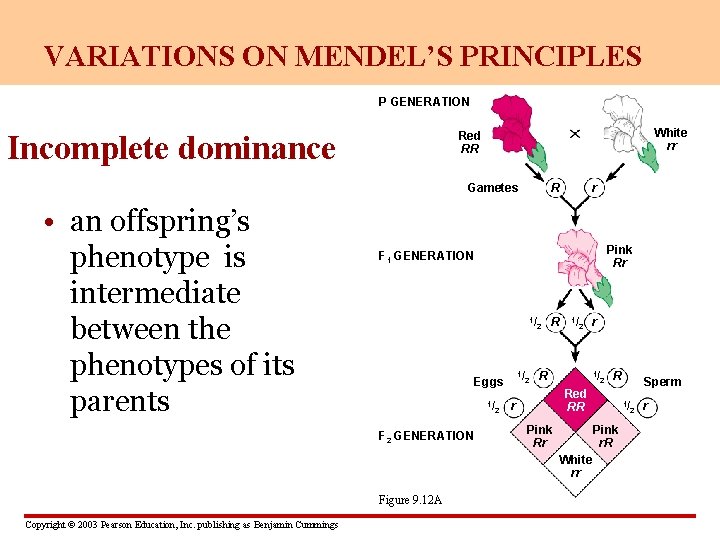
VARIATIONS ON MENDEL’S PRINCIPLES P GENERATION Incomplete dominance White rr Red RR Gametes • an offspring’s phenotype is intermediate between the phenotypes of its parents R r Pink Rr F 1 GENERATION 1/ 1/ Eggs 1/ F 2 GENERATION 2 2 2 R 1/ 2 r R 1/ Copyright © 2003 Pearson Education, Inc. publishing as Benjamin Cummings R Red RR r Pink Rr Sperm 1/ Pink r. R White rr Figure 9. 12 A 2 2 r
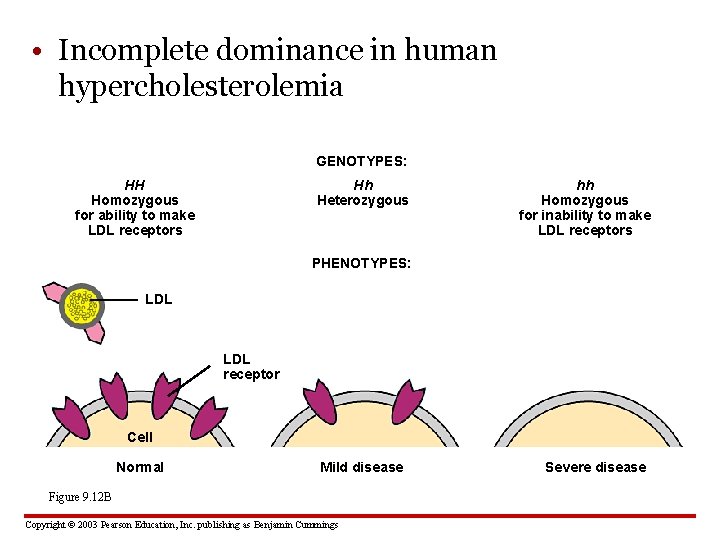
• Incomplete dominance in human hypercholesterolemia GENOTYPES: HH Homozygous for ability to make LDL receptors Hh Heterozygous hh Homozygous for inability to make LDL receptors PHENOTYPES: LDL receptor Cell Normal Mild disease Figure 9. 12 B Copyright © 2003 Pearson Education, Inc. publishing as Benjamin Cummings Severe disease
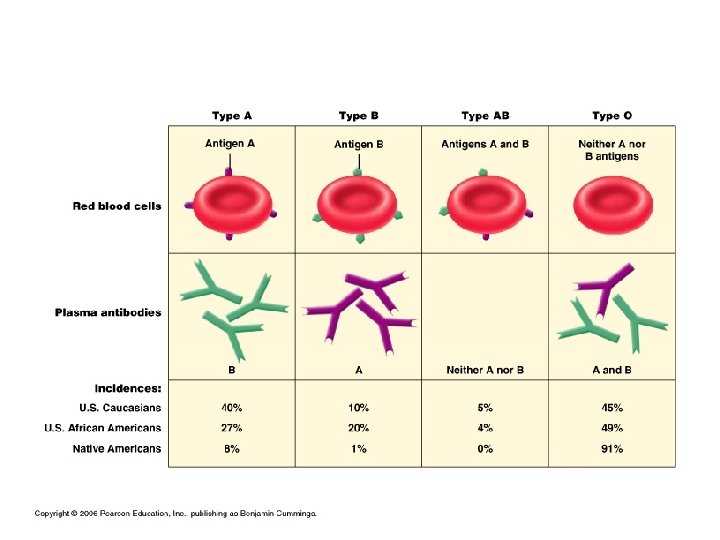
Many genes have more than two alleles in the population The three alleles for ABO blood type in humans is an example Copyright © 2003 Pearson Education, Inc. publishing as Benjamin Cummings
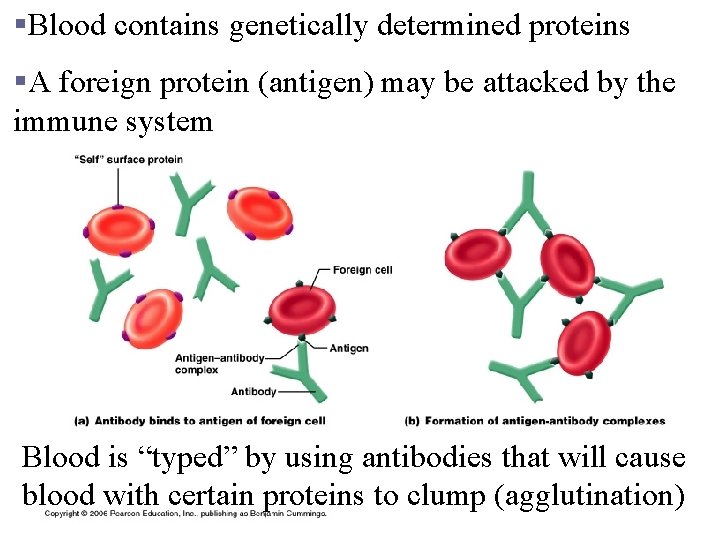
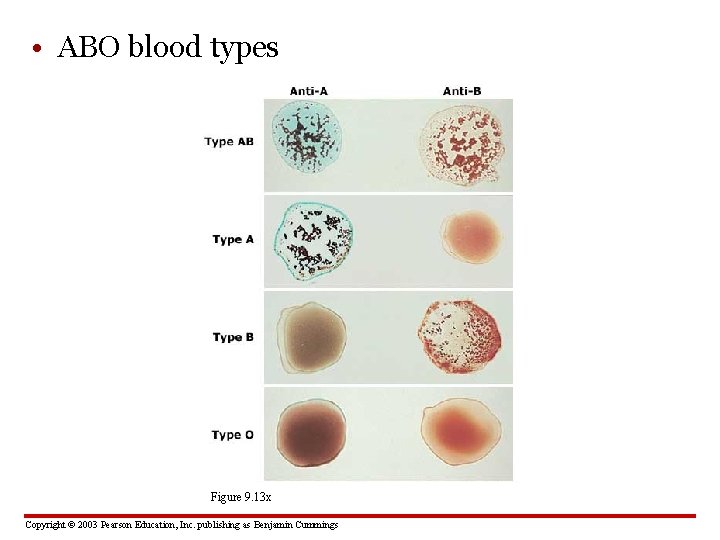
§Blood contains genetically determined proteins §A foreign protein (antigen) may be attacked by the immune system Blood is “typed” by using antibodies that will cause blood with certain proteins to clump (agglutination) Copyright © 2003 Pearson Education, Inc. publishing as Benjamin Cummings
Copyright © 2003 Pearson Education, Inc. publishing as Benjamin Cummings
• ABO blood types Figure 9. 13 x Copyright © 2003 Pearson Education, Inc. publishing as Benjamin Cummings
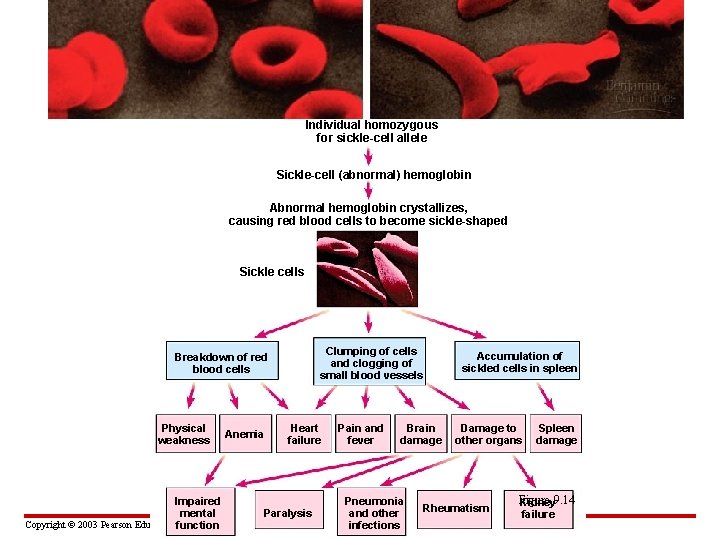
• pleiotropy is when a single gene affects phenotype in many ways – Ex. Marfan syndrome - fibrillin The gene’s effects may be dependent on environment, and not be simultaneous. – Ex. sickle-cell disease - hemoglobin Copyright © 2003 Pearson Education, Inc. publishing as Benjamin Cummings
Individual homozygous for sickle-cell allele Sickle-cell (abnormal) hemoglobin Abnormal hemoglobin crystallizes, causing red blood cells to become sickle-shaped Sickle cells Breakdown of red blood cells Physical weakness Anemia Clumping of cells and clogging of small blood vessels Heart failure Pain and fever Brain damage Pneumonia Impaired Paralysis and other mental Copyright © 2003 Pearson Education, function Inc. publishing as Benjamin Cummings infections Accumulation of sickled cells in spleen Damage to other organs Rheumatism Spleen damage Figure Kidney 9. 14 failure
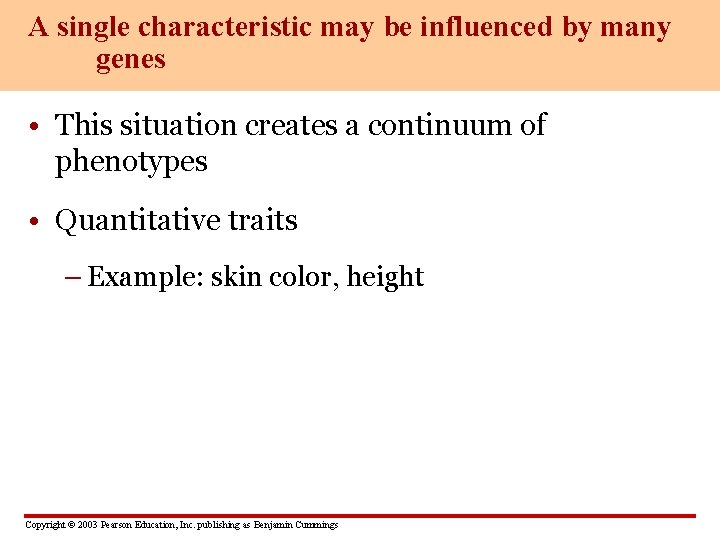
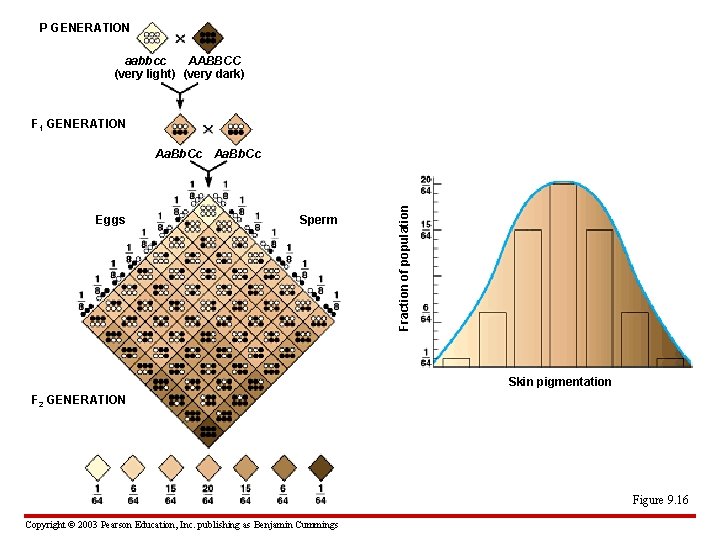
A single characteristic may be influenced by many genes • This situation creates a continuum of phenotypes • Quantitative traits – Example: skin color, height Copyright © 2003 Pearson Education, Inc. publishing as Benjamin Cummings
P GENERATION aabbcc AABBCC (very light) (very dark) F 1 GENERATION Eggs Sperm Fraction of population Aa. Bb. Cc Skin pigmentation F 2 GENERATION Figure 9. 16 Copyright © 2003 Pearson Education, Inc. publishing as Benjamin Cummings
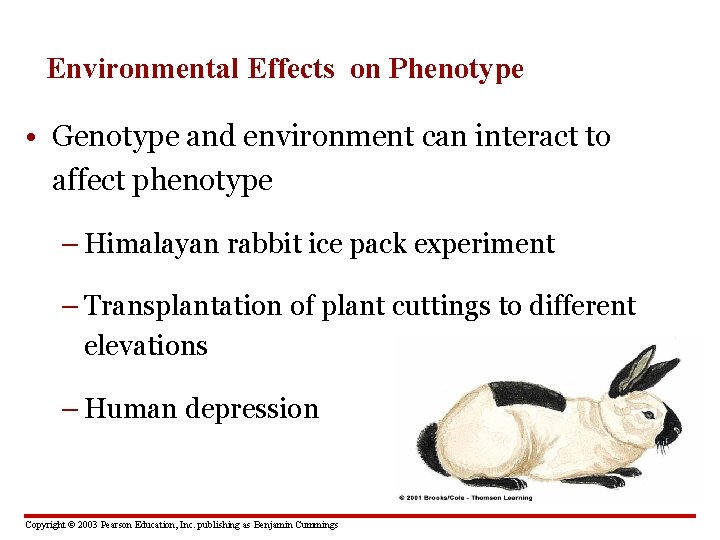
Environmental Effects on Phenotype • Genotype and environment can interact to affect phenotype – Himalayan rabbit ice pack experiment – Transplantation of plant cuttings to different elevations – Human depression Copyright © 2003 Pearson Education, Inc. publishing as Benjamin Cummings
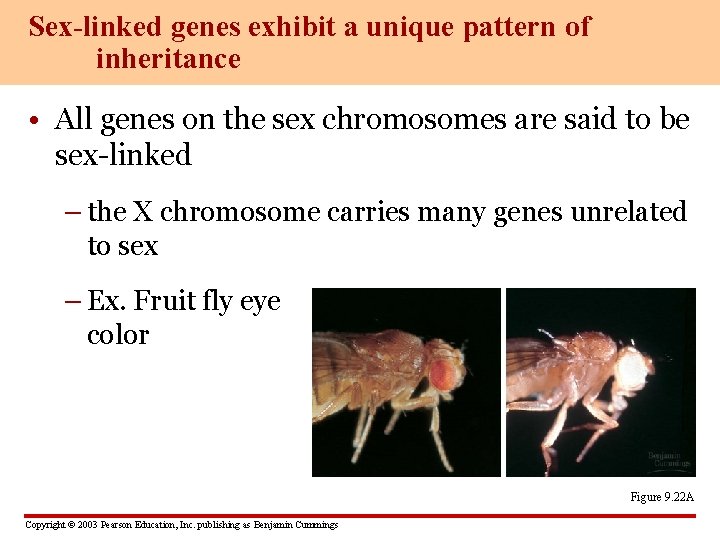
Sex-linked genes exhibit a unique pattern of inheritance • All genes on the sex chromosomes are said to be sex-linked – the X chromosome carries many genes unrelated to sex – Ex. Fruit fly eye color Figure 9. 22 A Copyright © 2003 Pearson Education, Inc. publishing as Benjamin Cummings
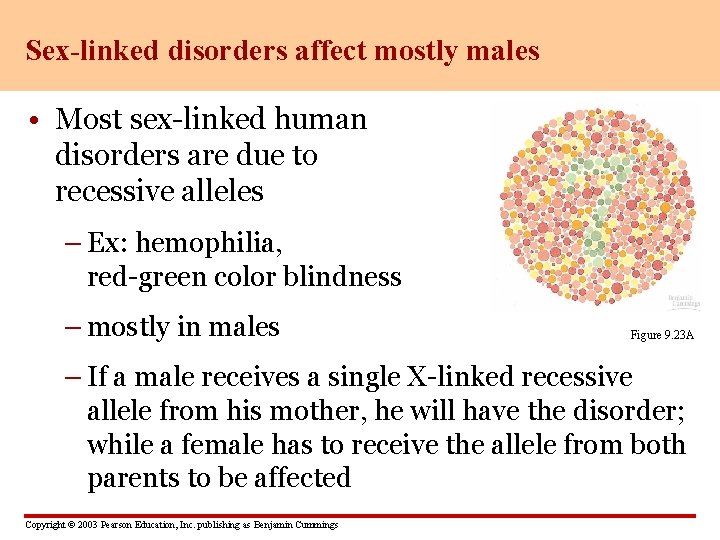
Sex-linked disorders affect mostly males • Most sex-linked human disorders are due to recessive alleles – Ex: hemophilia, red-green color blindness – mostly in males Figure 9. 23 A – If a male receives a single X-linked recessive allele from his mother, he will have the disorder; while a female has to receive the allele from both parents to be affected Copyright © 2003 Pearson Education, Inc. publishing as Benjamin Cummings
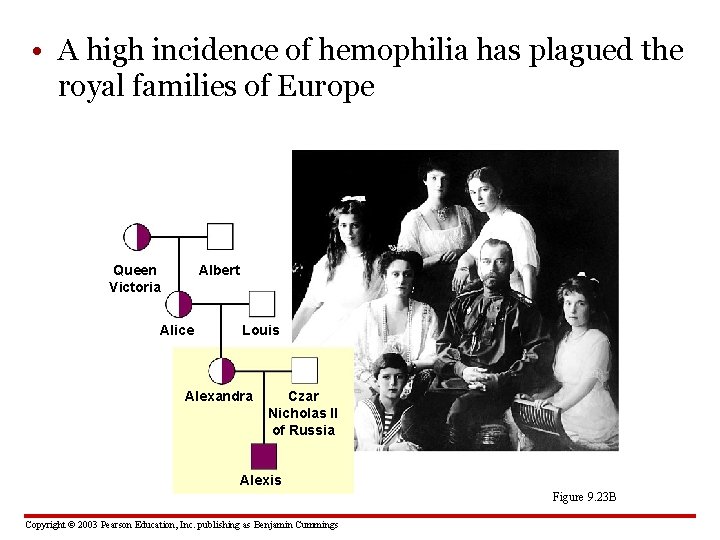
• A high incidence of hemophilia has plagued the royal families of Europe Queen Victoria Albert Alice Louis Alexandra Czar Nicholas II of Russia Alexis Figure 9. 23 B Copyright © 2003 Pearson Education, Inc. publishing as Benjamin Cummings
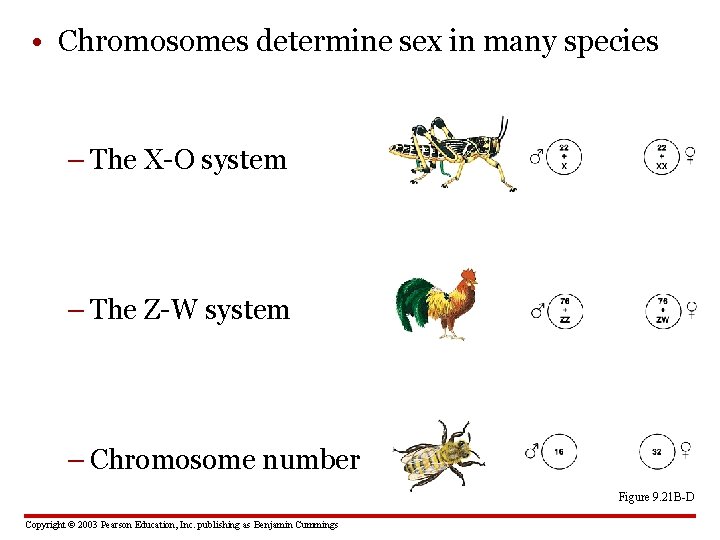
• Chromosomes determine sex in many species – The X-O system – The Z-W system – Chromosome number Figure 9. 21 B-D Copyright © 2003 Pearson Education, Inc. publishing as Benjamin Cummings
Variations on Mendel’s Principles • Codominance, multiple alleles • Pleiotropy • Polygenic traits • Sex-linked genes • Environmental effects Copyright © 2003 Pearson Education, Inc. publishing as Benjamin Cummings
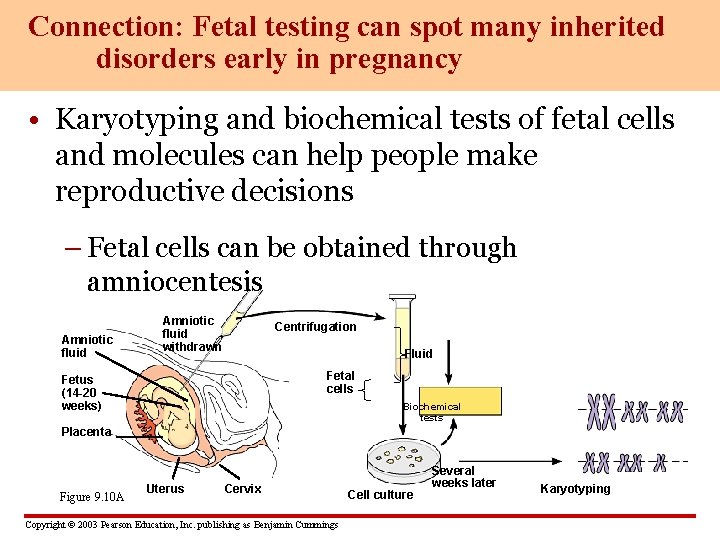
Connection: Fetal testing can spot many inherited disorders early in pregnancy • Karyotyping and biochemical tests of fetal cells and molecules can help people make reproductive decisions – Fetal cells can be obtained through amniocentesis Amniotic fluid withdrawn Centrifugation Fluid Fetal cells Fetus (14 -20 weeks) Biochemical tests Placenta Figure 9. 10 A Uterus Cervix Copyright © 2003 Pearson Education, Inc. publishing as Benjamin Cummings Cell culture Several weeks later Karyotyping
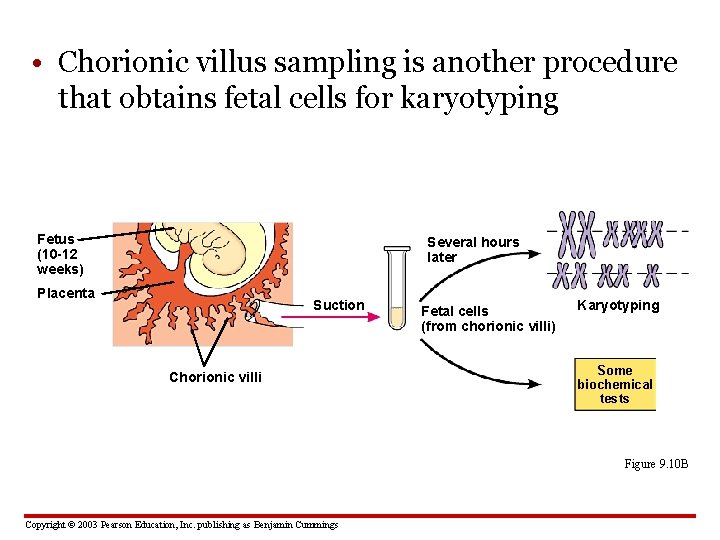
• Chorionic villus sampling is another procedure that obtains fetal cells for karyotyping Fetus (10 -12 weeks) Several hours later Placenta Suction Chorionic villi Fetal cells (from chorionic villi) Karyotyping Some biochemical tests Figure 9. 10 B Copyright © 2003 Pearson Education, Inc. publishing as Benjamin Cummings
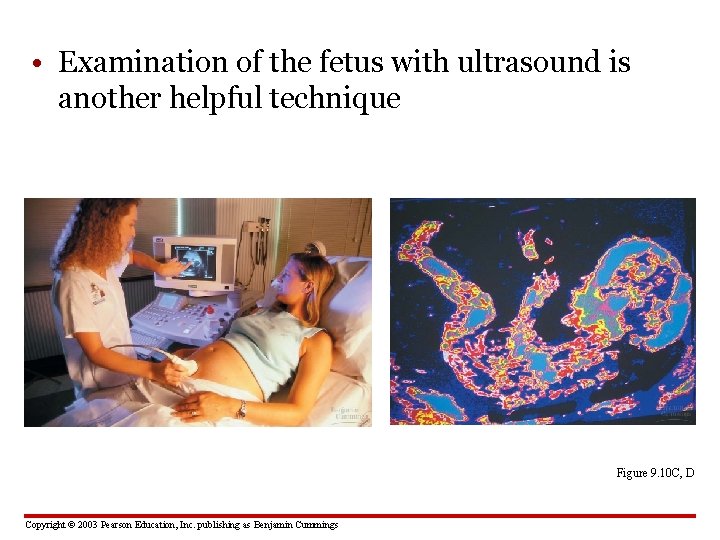
• Examination of the fetus with ultrasound is another helpful technique Figure 9. 10 C, D Copyright © 2003 Pearson Education, Inc. publishing as Benjamin Cummings
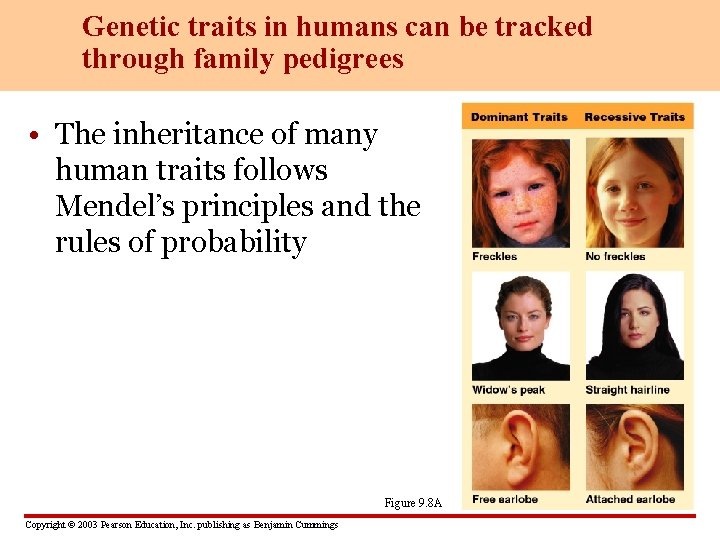
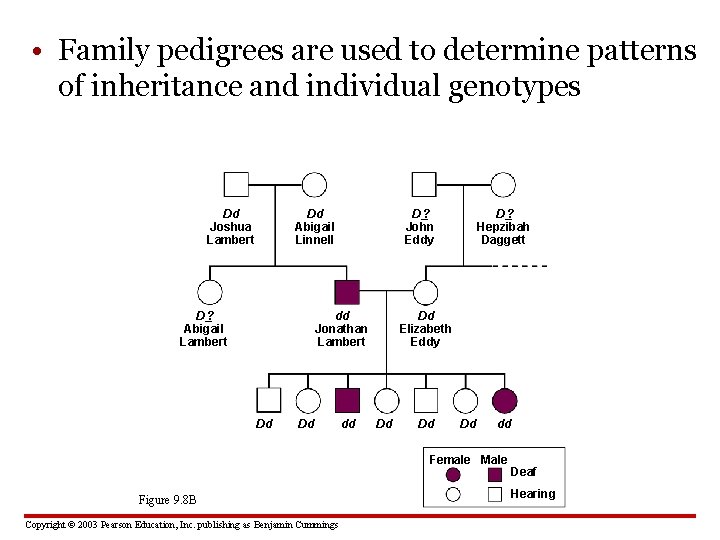
Genetic traits in humans can be tracked through family pedigrees • The inheritance of many human traits follows Mendel’s principles and the rules of probability Figure 9. 8 A Copyright © 2003 Pearson Education, Inc. publishing as Benjamin Cummings
• Family pedigrees are used to determine patterns of inheritance and individual genotypes Dd Joshua Lambert Dd Abigail Linnell D_? Abigail Lambert D_? John Eddy dd Jonathan Lambert Dd Dd dd D_? Hepzibah Daggett Dd Elizabeth Eddy Dd Dd Dd dd Female Male Figure 9. 8 B Copyright © 2003 Pearson Education, Inc. publishing as Benjamin Cummings Deaf Hearing
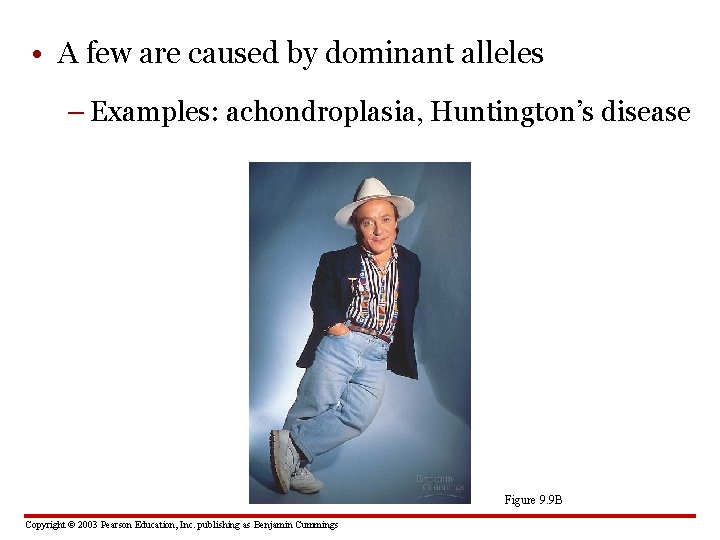
• A few are caused by dominant alleles – Examples: achondroplasia, Huntington’s disease Figure 9. 9 B Copyright © 2003 Pearson Education, Inc. publishing as Benjamin Cummings
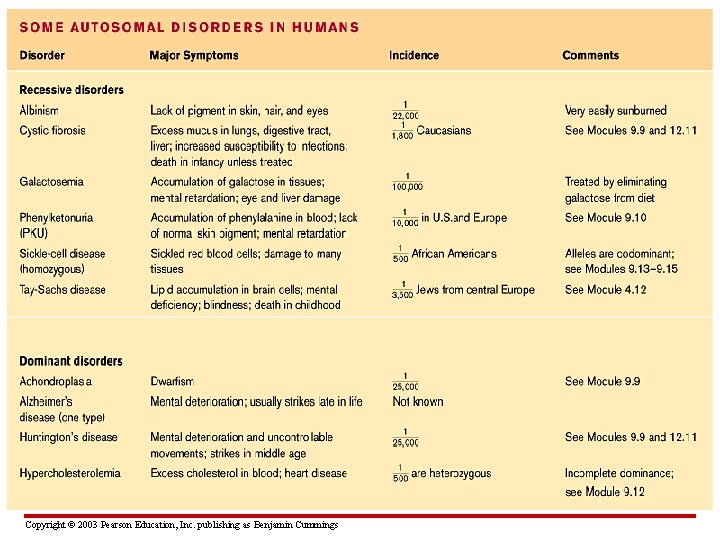
Table 9. 9 Copyright © 2003 Pearson Education, Inc. publishing as Benjamin Cummings
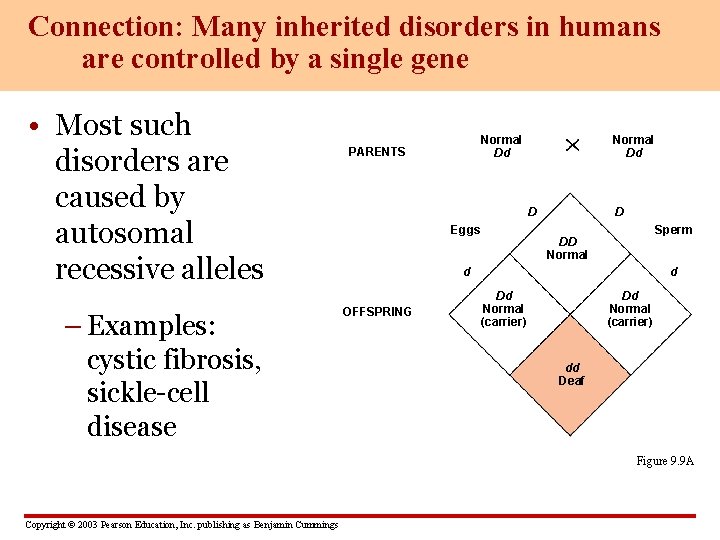
Connection: Many inherited disorders in humans are controlled by a single gene • Most such disorders are caused by autosomal recessive alleles – Examples: cystic fibrosis, sickle-cell disease Normal Dd PARENTS Normal Dd D Eggs D Sperm DD Normal d OFFSPRING d Dd Normal (carrier) dd Deaf Figure 9. 9 A Copyright © 2003 Pearson Education, Inc. publishing as Benjamin Cummings