www Apushreview com AMERICAN HISTORY CHAPTER 1 REVIEW


- Slides: 9
www. Apushreview. com AMERICAN HISTORY: CHAPTER 1 REVIEW VIDEO Colliding Worlds (1450 – 1600)
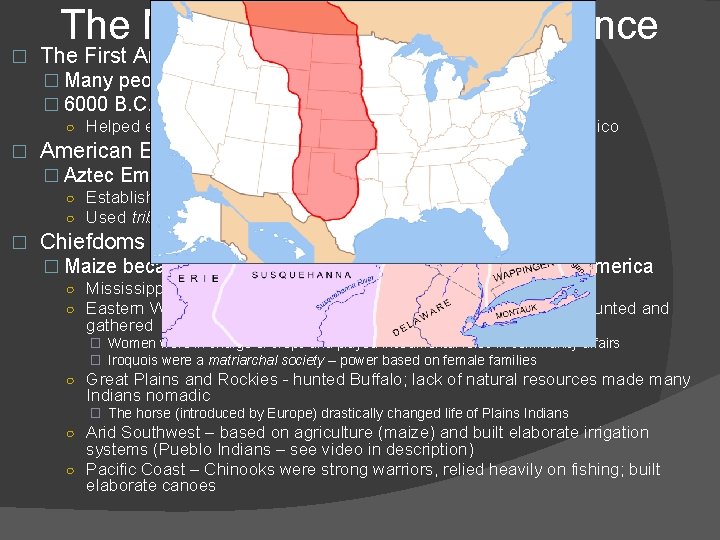
� The Native American Experience The First Americans: � Many people came to the Americas via the Bering Straight � 6000 B. C. E. – Indians began raising crops – maize ○ Helped encourage population growth, especially in present-day Mexico � American Empires: � Aztec Empire – Tenochtitlán was the capital ○ Established trading routes throughout the empire ○ Used tribute – payment (taxes) � Chiefdoms and Confederacies: � Maize became a major crop throughout Central and North America ○ Mississippi Valley ○ Eastern Woodlands – villages were built around maize fields; also hunted and gathered � Women were in charge of crops and played instrumental roles in community affairs � Iroquois were a matriarchal society – power based on female families ○ Great Plains and Rockies - hunted Buffalo; lack of natural resources made many Indians nomadic � The horse (introduced by Europe) drastically changed life of Plains Indians ○ Arid Southwest – based on agriculture (maize) and built elaborate irrigation systems (Pueblo Indians – see video in description) ○ Pacific Coast – Chinooks were strong warriors, relied heavily on fishing; built elaborate canoes
The Native American Experience Cont. � Patterns of Trade: �Many Indians traded with each other throughout the Americas ○ Trade fairs between nomadic Navajos and Pueblos in the Southwest ○ Maize would be traded for meat, furs, and other supplies � Sacred Power: �Animism – religion associated with nature ○ Indians respected animals they hunted by performing rituals
Western Europe: The Edge of the Old World � Hierarchy and Authority: �European families were patriarchal – property and wealth was based on male families �Females gave up many rights when married – name, property, expected to submit to husband �Primogeniture – eldest son inheriting most of wealth ○ Later encouraged immigration to colonies � Peasant Society: �Poor individuals, mostly farmers; made up most of the immigrants to Americas �Half of the children died before 21! � Expanding Trade Networks: �Merchant cities began to grow drastically �Guilds helped regulate trade
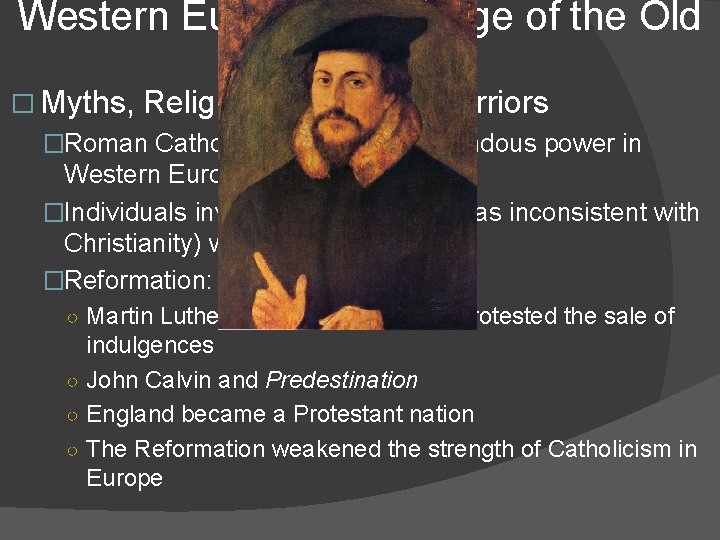
Western Europe: The Edge of the Old World Cont. � Myths, Religions, and Holy Warriors �Roman Catholic Church had tremendous power in Western Europe �Individuals involved in heresies (ideas inconsistent with Christianity) were persecuted �Reformation: ○ Martin Luther and his 95 Theses – protested the sale of indulgences ○ John Calvin and Predestination ○ England became a Protestant nation ○ The Reformation weakened the strength of Catholicism in Europe
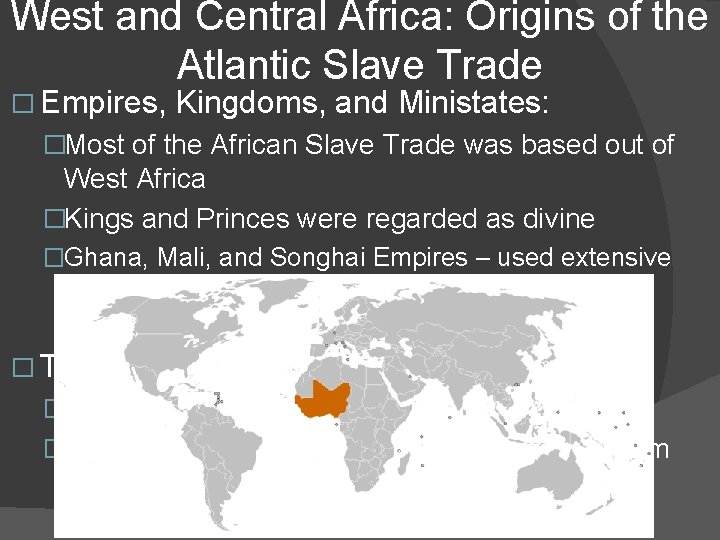
West and Central Africa: Origins of the Atlantic Slave Trade � Empires, Kingdoms, and Ministates: �Most of the African Slave Trade was based out of West Africa �Kings and Princes were regarded as divine �Ghana, Mali, and Songhai Empires – used extensive trade routes ○ Used the military to control trade routes – GOLD! � The Spirit World: �Islam spread over trade routes in Africa �Many Africans still practiced versions of Animism and were polytheistic
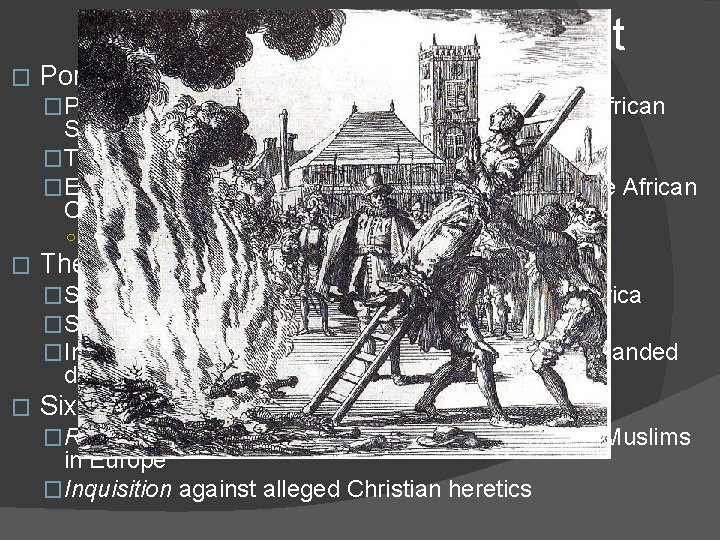
Exploration and Conquest � Portuguese Expansion: �Portugal had an extensive role in exploration and African Slave Trade �Trading posts were established in West Africa �Europeans had little luck exploring the interior of the African Continent: ○ Disease – malaria, the interior was well defended � The African Slave Trade: �Slavery was widespread throughout Europe and Africa �Slaves were used on sugar plantations �In the mid-16 th century, the African Slave Trade expanded drastically and used in South America � Sixteenth-Century Incursions: �Reconquista – Spanish Catholics tried to get rid of Muslims in Europe �Inquisition against alleged Christian heretics
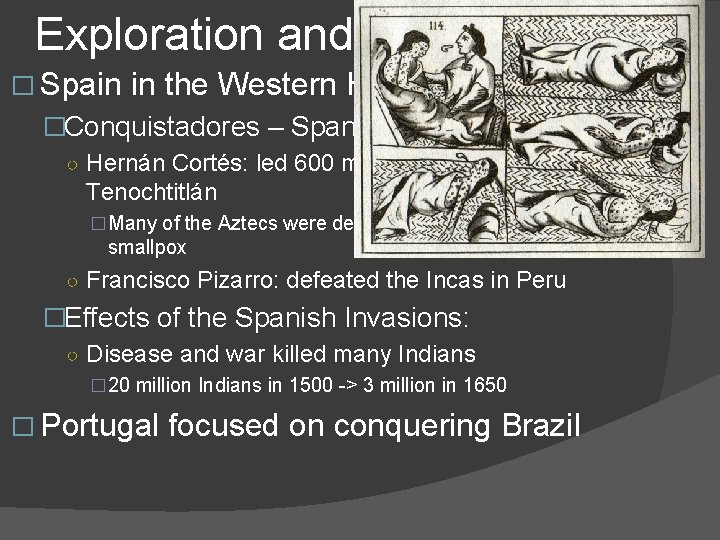
Exploration and Conquest Cont. � Spain in the Western Hemisphere: �Conquistadores – Spanish conquerors ○ Hernán Cortés: led 600 men to defeat the Aztecs at Tenochtitlán �Many of the Aztecs were defeated due to disease, especially smallpox ○ Francisco Pizarro: defeated the Incas in Peru �Effects of the Spanish Invasions: ○ Disease and war killed many Indians � 20 million Indians in 1500 -> 3 million in 1650 � Portugal focused on conquering Brazil
Thanks for watching! �Subscribe to my channel �Press the “Like” button � Questions? Comments? Subsc ri Down be here! Follow me on Twitter @APUSH_Review