We use too at the end of a
- Slides: 8
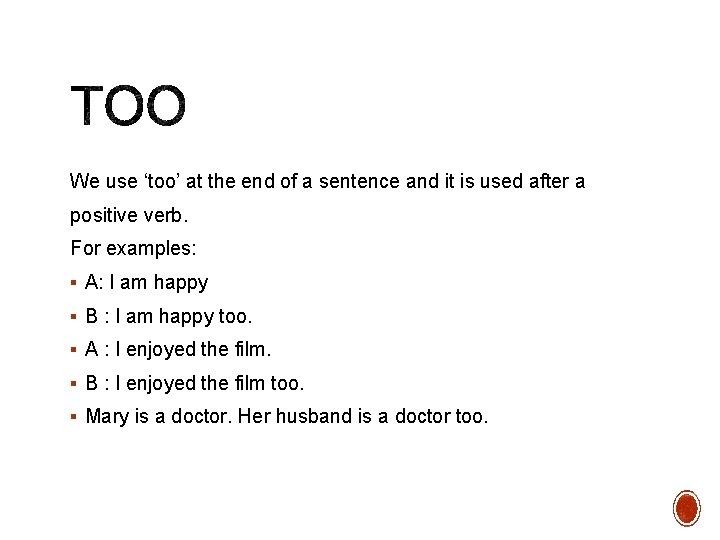
We use ‘too’ at the end of a sentence and it is used after a positive verb. For examples: § A: I am happy § B : I am happy too. § A : I enjoyed the film. § B : I enjoyed the film too. § Mary is a doctor. Her husband is a doctor too.
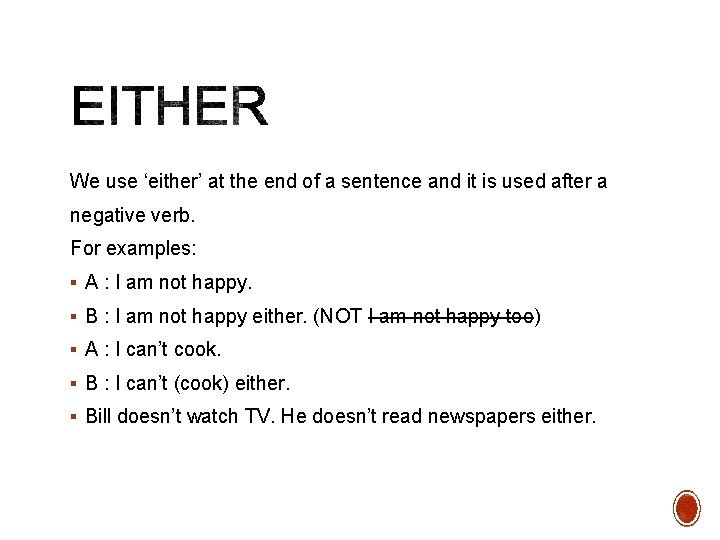
We use ‘either’ at the end of a sentence and it is used after a negative verb. For examples: § A : I am not happy. § B : I am not happy either. (NOT I am not happy too) § A : I can’t cook. § B : I can’t (cook) either. § Bill doesn’t watch TV. He doesn’t read newspapers either.
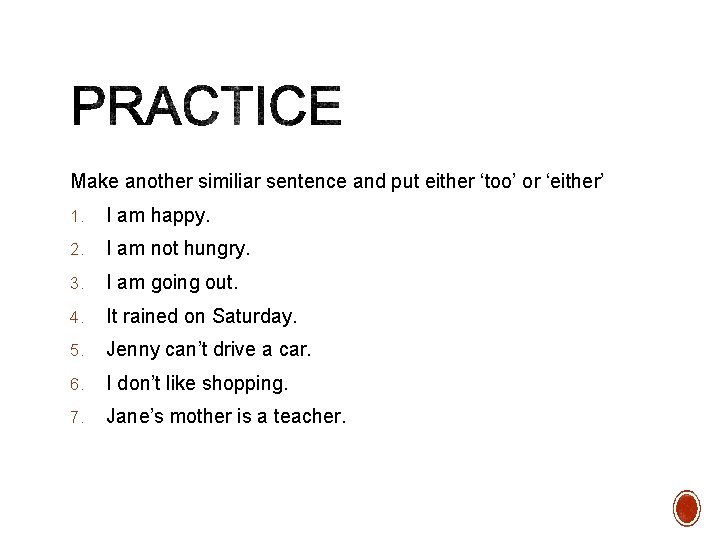
Make another similiar sentence and put either ‘too’ or ‘either’ 1. I am happy. 2. I am not hungry. 3. I am going out. 4. It rained on Saturday. 5. Jenny can’t drive a car. 6. I don’t like shopping. 7. Jane’s mother is a teacher.
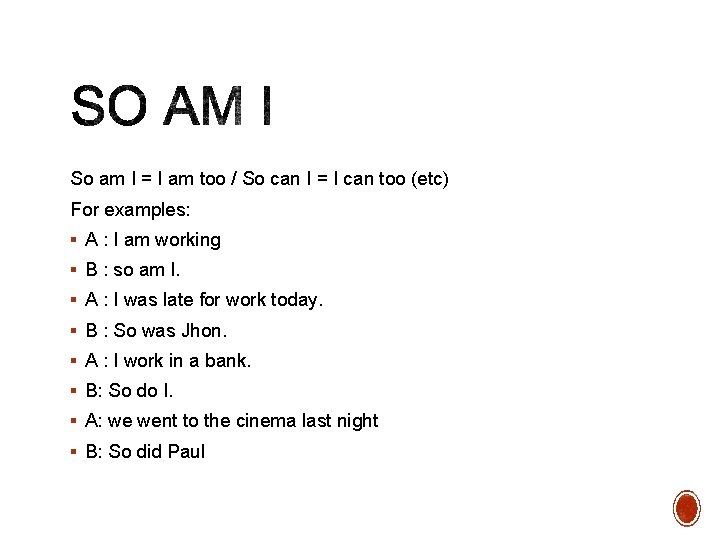
So am I = I am too / So can I = I can too (etc) For examples: § A : I am working § B : so am I. § A : I was late for work today. § B : So was Jhon. § A : I work in a bank. § B: So do I. § A: we went to the cinema last night § B: So did Paul
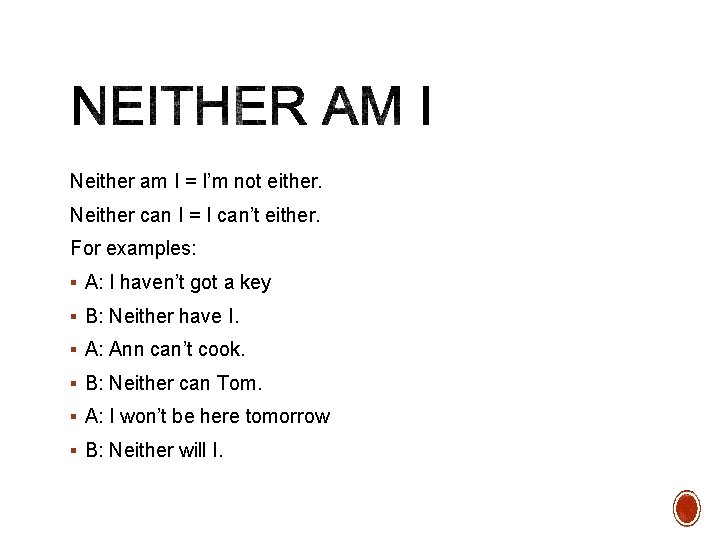
Neither am I = I’m not either. Neither can I = I can’t either. For examples: § A: I haven’t got a key § B: Neither have I. § A: Ann can’t cook. § B: Neither can Tom. § A: I won’t be here tomorrow § B: Neither will I.
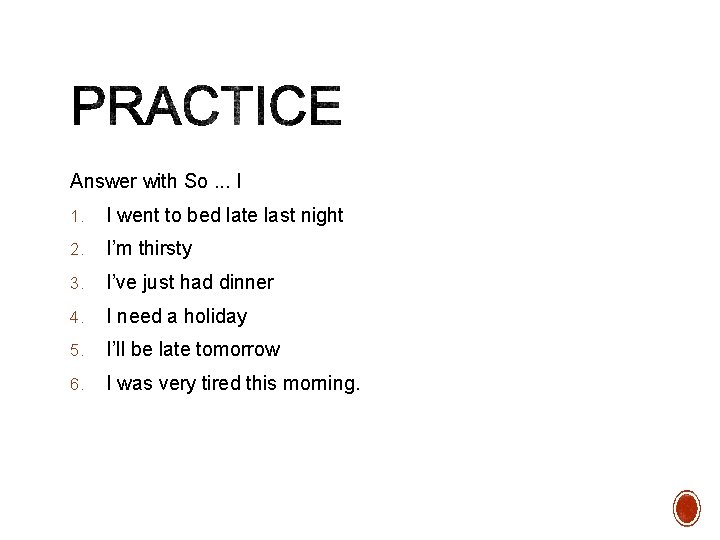
Answer with So. . . I 1. I went to bed late last night 2. I’m thirsty 3. I’ve just had dinner 4. I need a holiday 5. I’ll be late tomorrow 6. I was very tired this morning.
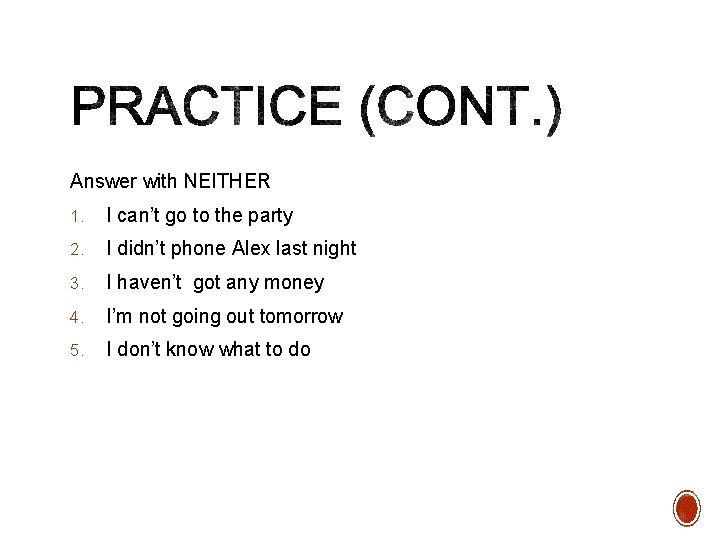
Answer with NEITHER 1. I can’t go to the party 2. I didn’t phone Alex last night 3. I haven’t got any money 4. I’m not going out tomorrow 5. I don’t know what to do