Virtual File System in Linux Chap 12 in

- Slides: 21
Virtual File System in Linux (Chap. 12 in Understanding the Linux Kernel) J. H. Wang Nov. 22, 2011
Outline • • Role of VFS Data Structures Filesystem Types Filesystem Handling Pathname Lookup Implementation of VFS System Calls File Locking
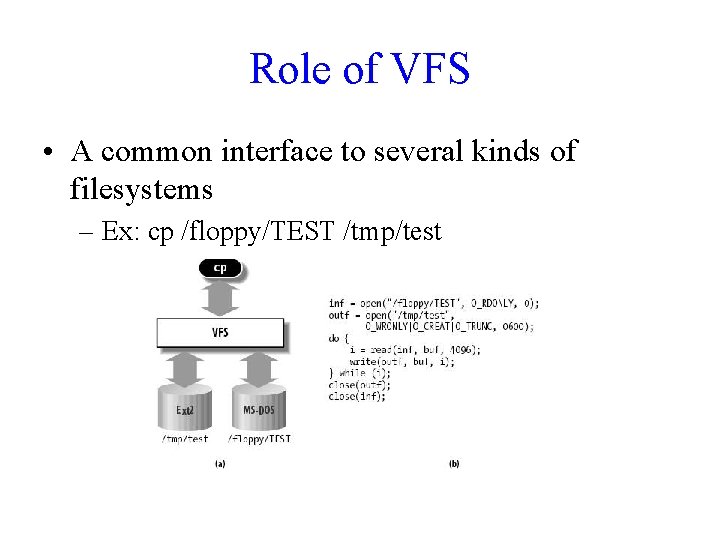
Role of VFS • A common interface to several kinds of filesystems – Ex: cp /floppy/TEST /tmp/test
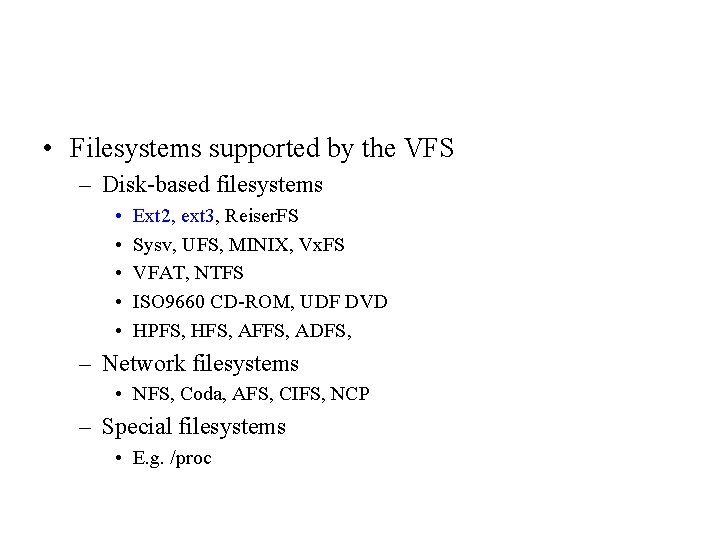
• Filesystems supported by the VFS – Disk-based filesystems • • • Ext 2, ext 3, Reiser. FS Sysv, UFS, MINIX, Vx. FS VFAT, NTFS ISO 9660 CD-ROM, UDF DVD HPFS, HFS, AFFS, ADFS, – Network filesystems • NFS, Coda, AFS, CIFS, NCP – Special filesystems • E. g. /proc
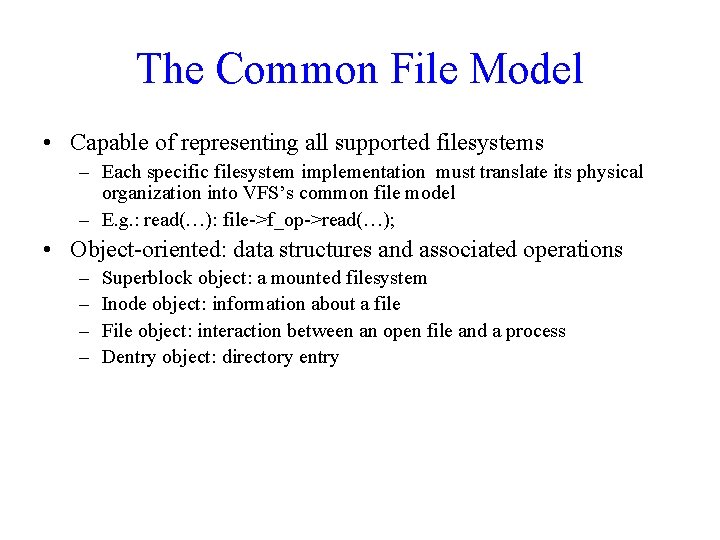
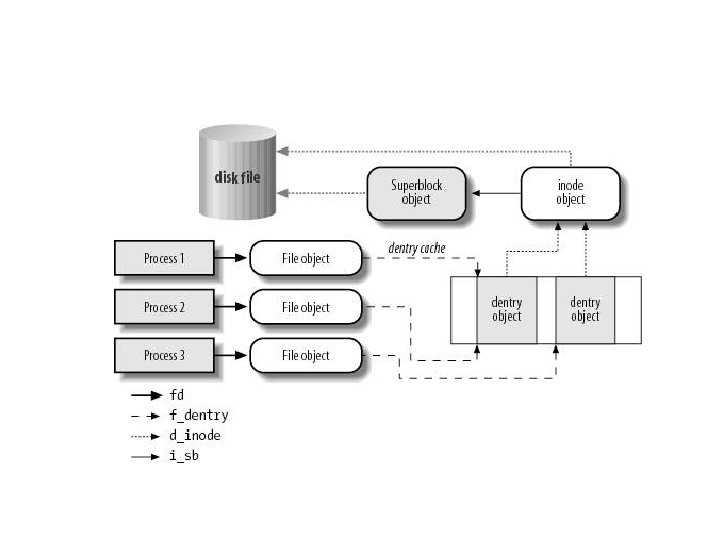
The Common File Model • Capable of representing all supported filesystems – Each specific filesystem implementation must translate its physical organization into VFS’s common file model – E. g. : read(…): file->f_op->read(…); • Object-oriented: data structures and associated operations – – Superblock object: a mounted filesystem Inode object: information about a file File object: interaction between an open file and a process Dentry object: directory entry
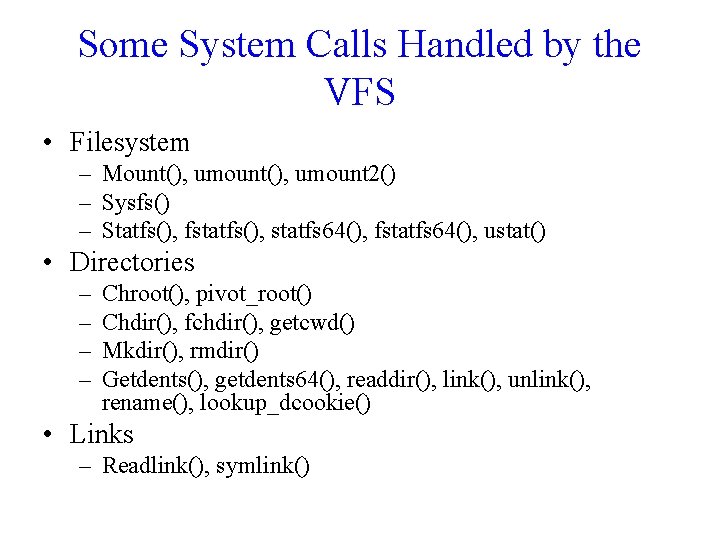
Some System Calls Handled by the VFS • Filesystem – Mount(), umount 2() – Sysfs() – Statfs(), fstatfs(), statfs 64(), fstatfs 64(), ustat() • Directories – – Chroot(), pivot_root() Chdir(), fchdir(), getcwd() Mkdir(), rmdir() Getdents(), getdents 64(), readdir(), link(), unlink(), rename(), lookup_dcookie() • Links – Readlink(), symlink()
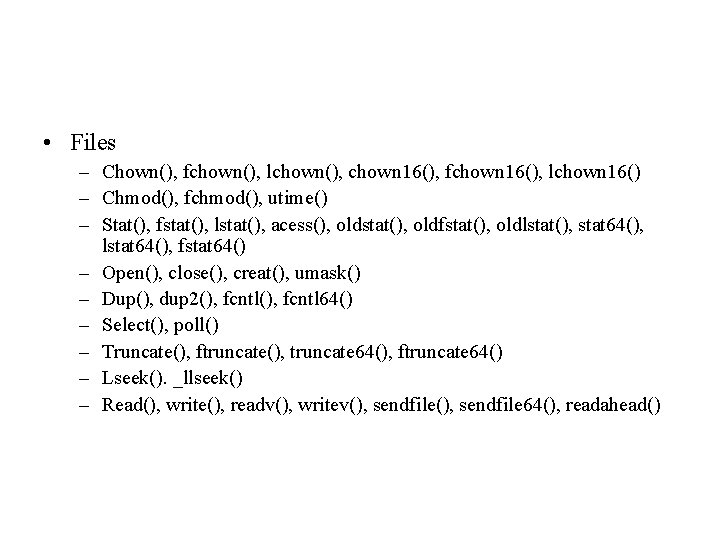
• Files – Chown(), fchown(), lchown(), chown 16(), fchown 16(), lchown 16() – Chmod(), fchmod(), utime() – Stat(), fstat(), lstat(), acess(), oldstat(), oldfstat(), oldlstat(), stat 64(), lstat 64(), fstat 64() – Open(), close(), creat(), umask() – Dup(), dup 2(), fcntl 64() – Select(), poll() – Truncate(), ftruncate(), truncate 64(), ftruncate 64() – Lseek(). _llseek() – Read(), write(), readv(), writev(), sendfile 64(), readahead()
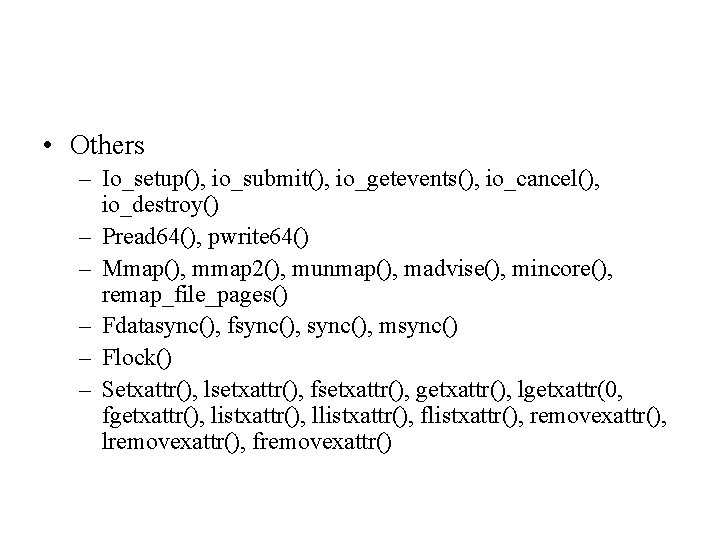
• Others – Io_setup(), io_submit(), io_getevents(), io_cancel(), io_destroy() – Pread 64(), pwrite 64() – Mmap(), mmap 2(), munmap(), madvise(), mincore(), remap_file_pages() – Fdatasync(), fsync(), msync() – Flock() – Setxattr(), lsetxattr(), fsetxattr(), getxattr(), lgetxattr(0, fgetxattr(), listxattr(), llistxattr(), flistxattr(), removexattr(), lremovexattr(), fremovexattr()
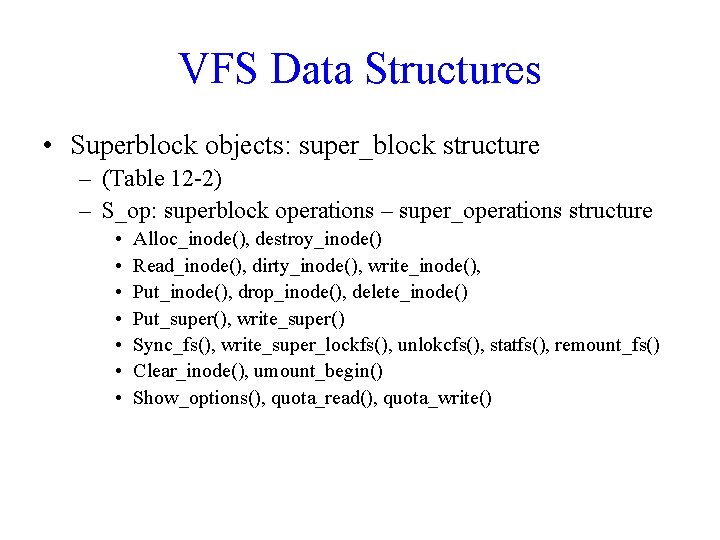
VFS Data Structures • Superblock objects: super_block structure – (Table 12 -2) – S_op: superblock operations – super_operations structure • • Alloc_inode(), destroy_inode() Read_inode(), dirty_inode(), write_inode(), Put_inode(), drop_inode(), delete_inode() Put_super(), write_super() Sync_fs(), write_super_lockfs(), unlokcfs(), statfs(), remount_fs() Clear_inode(), umount_begin() Show_options(), quota_read(), quota_write()
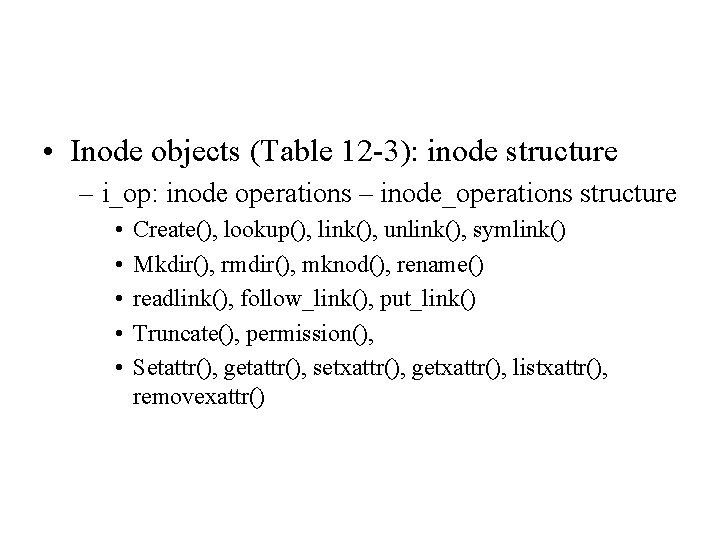
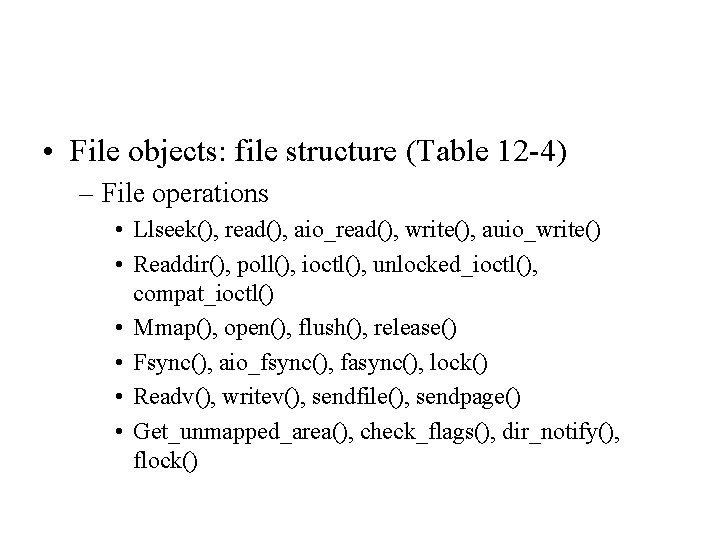
• Inode objects (Table 12 -3): inode structure – i_op: inode operations – inode_operations structure • • • Create(), lookup(), link(), unlink(), symlink() Mkdir(), rmdir(), mknod(), rename() readlink(), follow_link(), put_link() Truncate(), permission(), Setattr(), getattr(), setxattr(), getxattr(), listxattr(), removexattr()
• File objects: file structure (Table 12 -4) – File operations • Llseek(), read(), aio_read(), write(), auio_write() • Readdir(), poll(), ioctl(), unlocked_ioctl(), compat_ioctl() • Mmap(), open(), flush(), release() • Fsync(), aio_fsync(), fasync(), lock() • Readv(), writev(), sendfile(), sendpage() • Get_unmapped_area(), check_flags(), dir_notify(), flock()
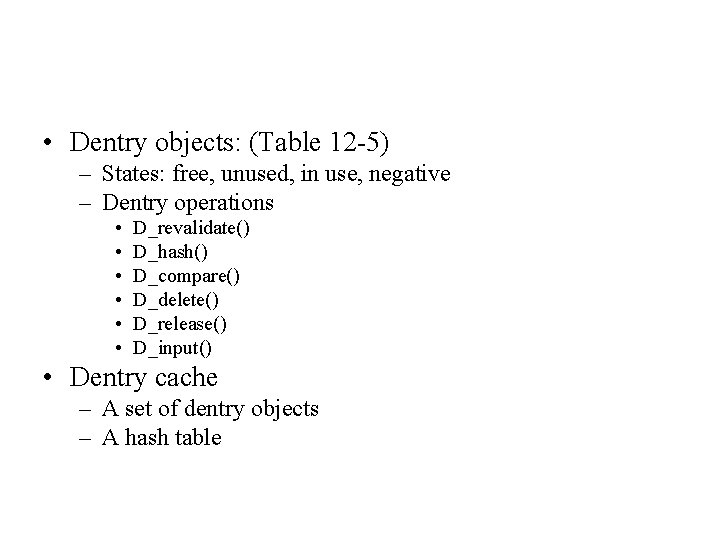
• Dentry objects: (Table 12 -5) – States: free, unused, in use, negative – Dentry operations • • • D_revalidate() D_hash() D_compare() D_delete() D_release() D_input() • Dentry cache – A set of dentry objects – A hash table
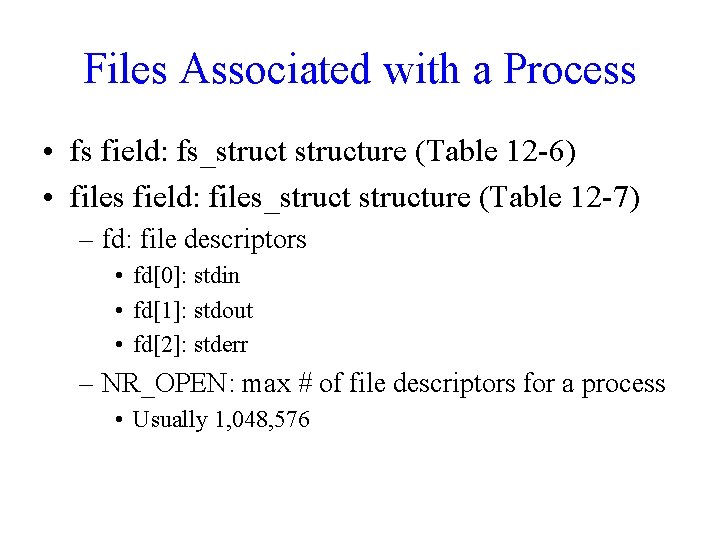
Files Associated with a Process • fs field: fs_structure (Table 12 -6) • files field: files_structure (Table 12 -7) – fd: file descriptors • fd[0]: stdin • fd[1]: stdout • fd[2]: stderr – NR_OPEN: max # of file descriptors for a process • Usually 1, 048, 576
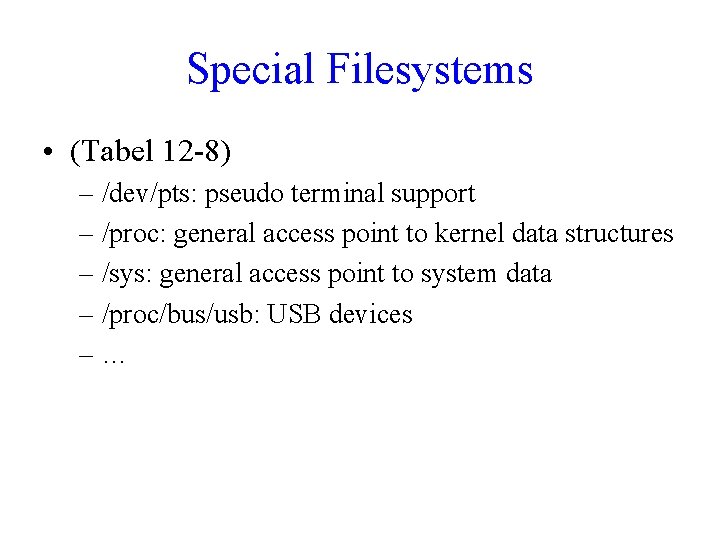
Special Filesystems • (Tabel 12 -8) – /dev/pts: pseudo terminal support – /proc: general access point to kernel data structures – /sys: general access point to system data – /proc/bus/usb: USB devices –…
Filesystem Type Registration • File_system_type object: (Table 12 -9) • Fs_flags: (Table 12 -10)
Filesystem Handling • Root filesystem • Mount point • Namespaces: in Linux 2. 6, each process might have its own tree of mounted filesystems – Namespace structure (Table 12 -11) • Filesystem mounting – It’s possible in Linux to mount the same filesystem several times – Mounted filesystem descriptor: of type vfsmount (Tabel 1212) – Mounting/unmounting the filesystem
• Pathname lookup – Pathname -> inode – Pathlookup(): return the nameidata structure (Table 12 -15) – Standard pathname lookup – Parent pathname lookup – Lookup of symbolic links
Implementation of VFS System Calls • • Open() Read() Write() Close()
File Locking • Advisory locks: by POSIX – Based on fcntl() system call – Possible to lock an arbitrary region of a file • Mandatory locks: by System V Release 3 – The kernel checks every invocation of open(), read(), write() system calls does not violate a mandatory lock • Linux supports both + fcntl() and flock() system calls
Thanks for Your Attention!