Unit 3 Natural resources Natural Resources Vital and

- Slides: 13
Unit -3 Natural resources
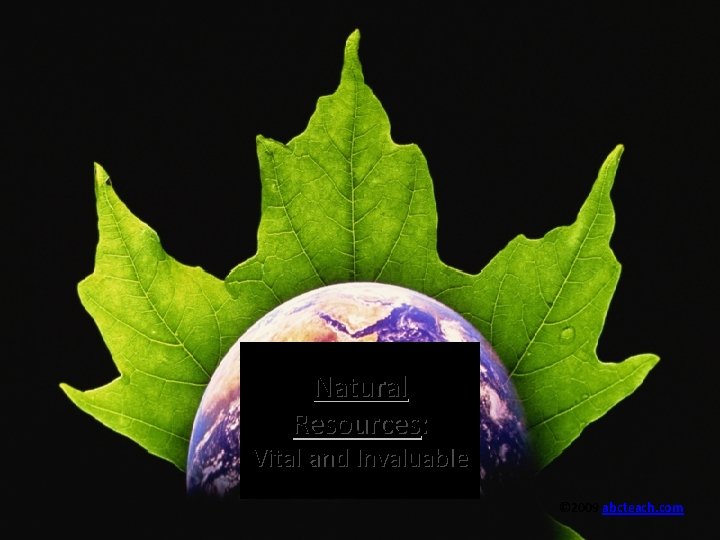
Natural Resources: Vital and Invaluable abcteach. com © 2009 abcteach. com
Forest resources Water resources Mineral resources Food resources Energy resources - renewable & non renewable resources - alternate energy sources • Land resources • Environmental biochemistry • • •
Types Forest resources • Renewable resources -regenerated ex: soil, air, water, natural vegetation • Non-renewable resources – can not regenerate ex: minerals, coal, oil, natural gas, ground water
Forest Resources • The word forest is derived from a Latin word • “ Foris” means Outside • Forest are one of the most important natural resources of the earth. • Approximately 1/3 rd of the earth’s total area is covered by forests
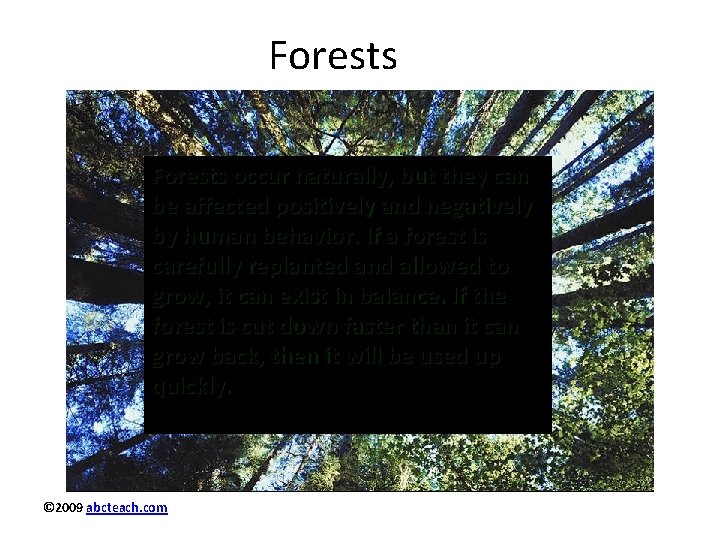
Forests A forest is any area with a lot of trees. There are forests all over the world. The type of forest varies depending on the location of the forest: for example, there are tropical rain forests, coniferous forests, and deciduous forests. © 2009 abcteach. com
Forests occur naturally, but they can be affected positively and negatively by human behavior. If a forest is carefully replanted and allowed to grow, it can exist in balance. If the forest is cut down faster than it can grow back, then it will be used up quickly. © 2009 abcteach. com
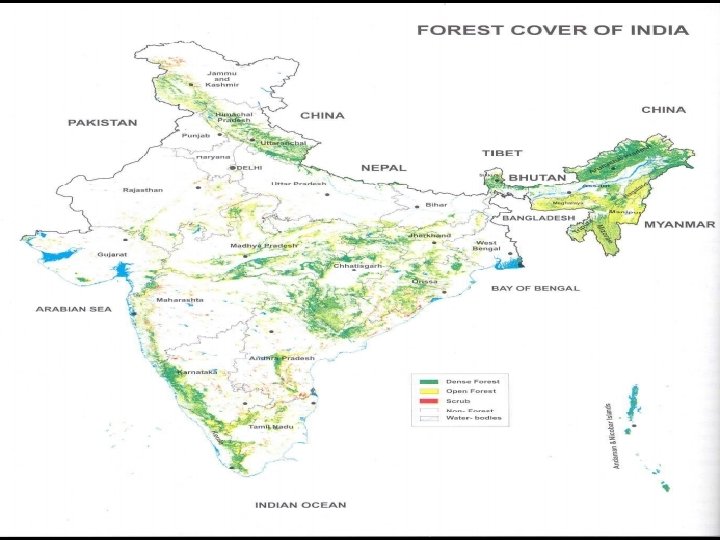
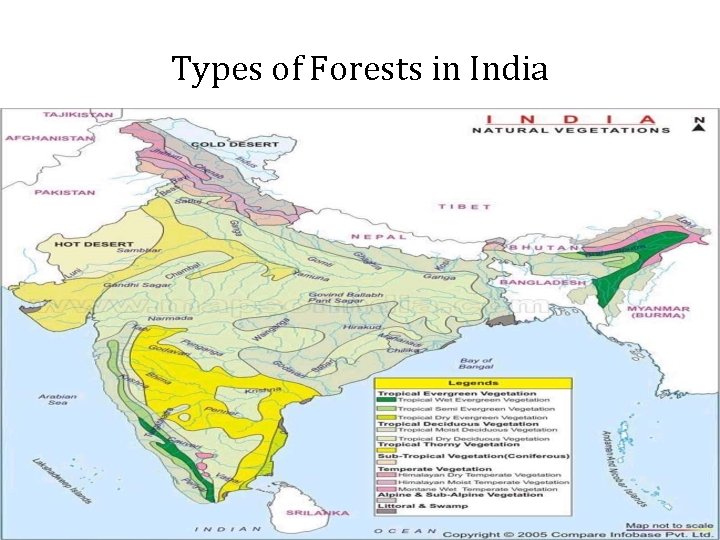
Types of Forests in India
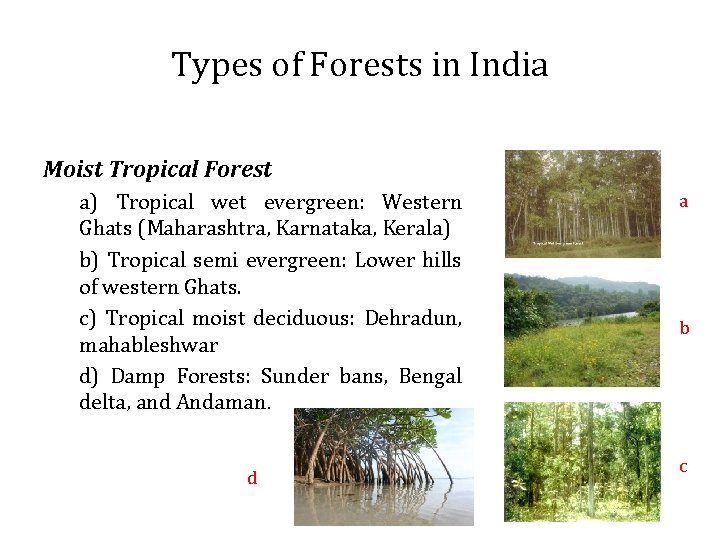
Types of Forests in India Moist Tropical Forest a) Tropical wet evergreen: Western Ghats (Maharashtra, Karnataka, Kerala) b) Tropical semi evergreen: Lower hills of western Ghats. c) Tropical moist deciduous: Dehradun, mahableshwar d) Damp Forests: Sunder bans, Bengal delta, and Andaman. d a b c
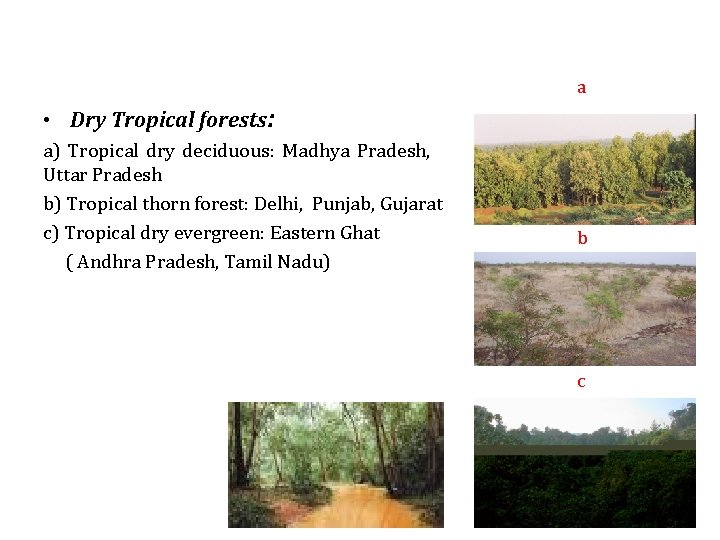
a • Dry Tropical forests: a) Tropical dry deciduous: Madhya Pradesh, Uttar Pradesh b) Tropical thorn forest: Delhi, Punjab, Gujarat c) Tropical dry evergreen: Eastern Ghat ( Andhra Pradesh, Tamil Nadu) b c
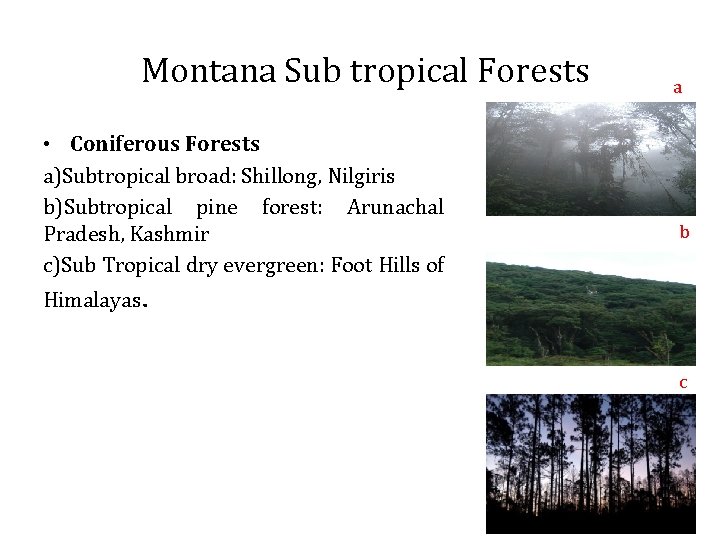
Montana Sub tropical Forests • Coniferous Forests a)Subtropical broad: Shillong, Nilgiris b)Subtropical pine forest: Arunachal Pradesh, Kashmir c)Sub Tropical dry evergreen: Foot Hills of a b Himalayas. c
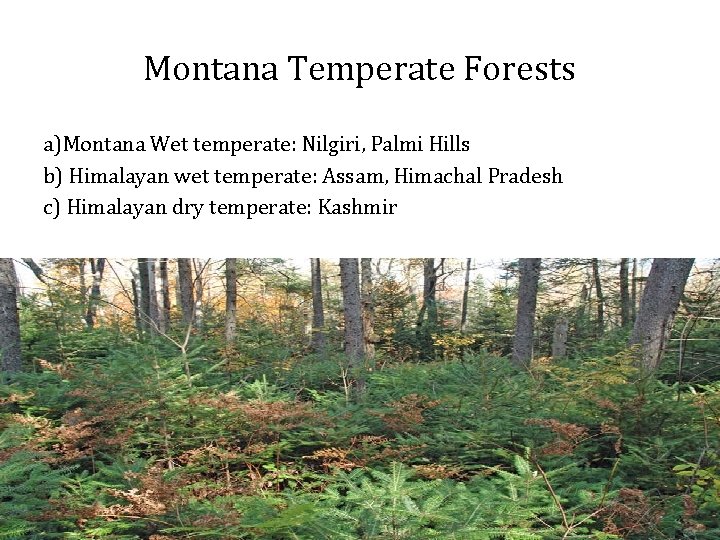
Montana Temperate Forests a)Montana Wet temperate: Nilgiri, Palmi Hills b) Himalayan wet temperate: Assam, Himachal Pradesh c) Himalayan dry temperate: Kashmir
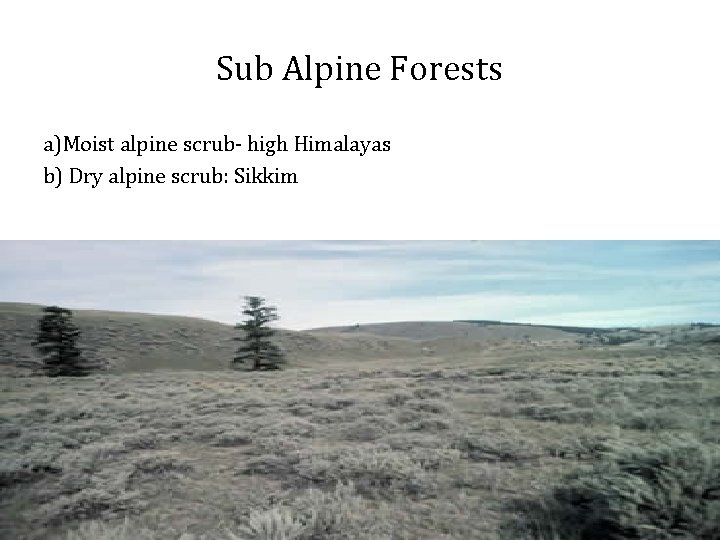
Sub Alpine Forests a)Moist alpine scrub- high Himalayas b) Dry alpine scrub: Sikkim