Understanding Work Teams Prentice Hall 2001 Chapter 9

- Slides: 13
Understanding Work Teams ©Prentice Hall, 2001 Chapter 9 1
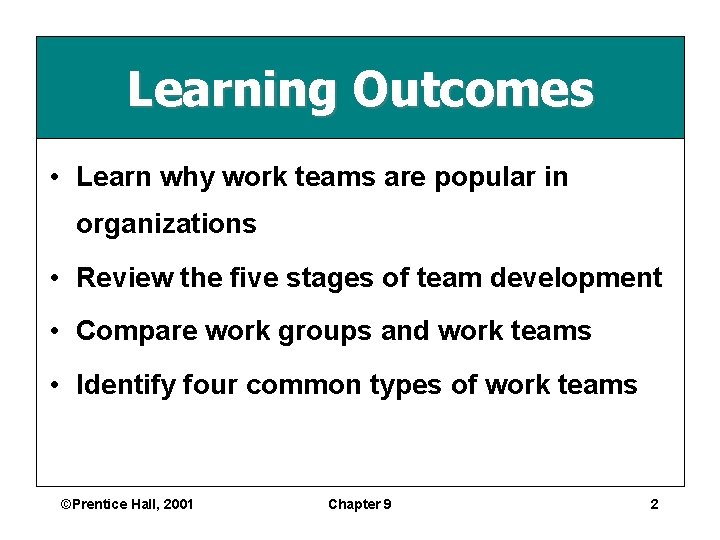
Learning Outcomes • Learn why work teams are popular in organizations • Review the five stages of team development • Compare work groups and work teams • Identify four common types of work teams ©Prentice Hall, 2001 Chapter 9 2
Learning Outcomes • List the traits of high-performing work teams • Learn how organizations create team players • Explain how management can keep teams from becoming stagnant • Analyze the role of teams in continuous process improvement programs ©Prentice Hall, 2001 Chapter 9 3
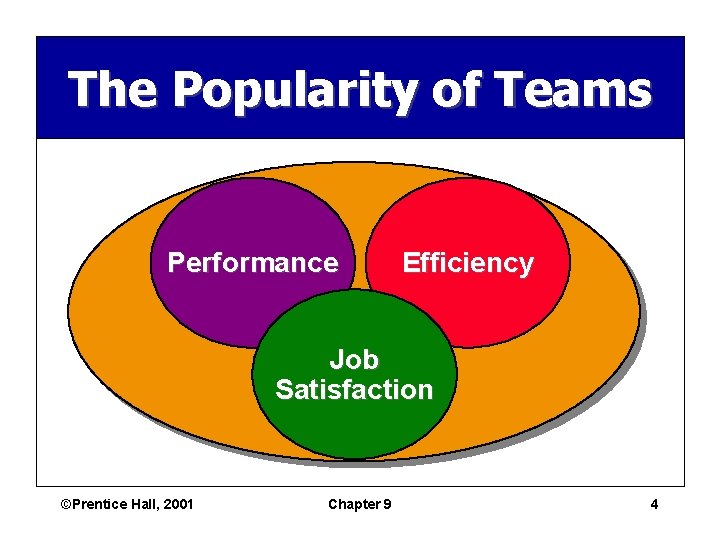
The Popularity of Teams Performance Efficiency Job Satisfaction ©Prentice Hall, 2001 Chapter 9 4
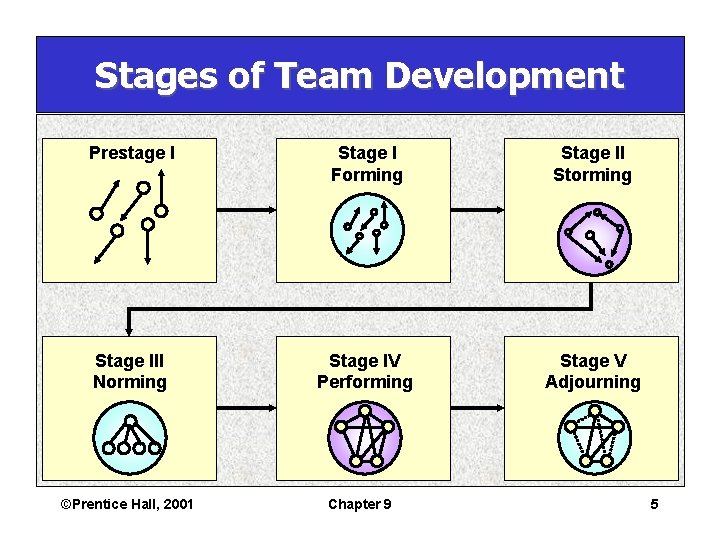
Stages of Team Development Prestage I Stage I Forming Stage II Storming Stage III Norming Stage IV Performing Stage V Adjourning ©Prentice Hall, 2001 Chapter 9 5
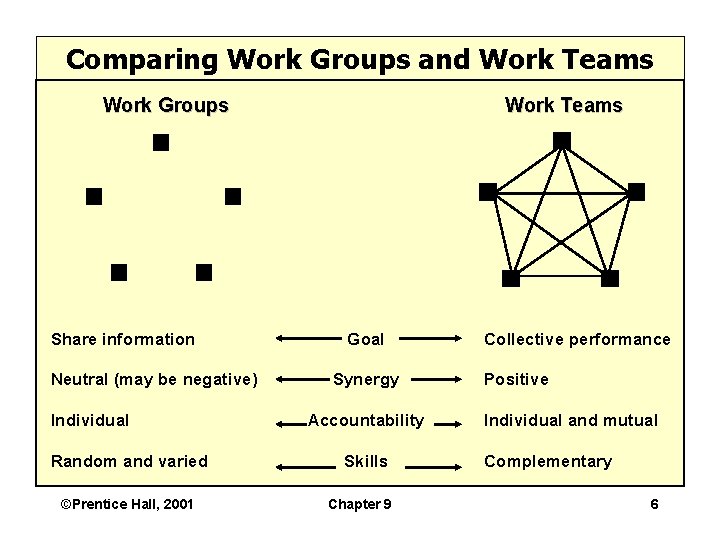
Comparing Work Groups and Work Teams Work Groups Share information Neutral (may be negative) Individual Random and varied ©Prentice Hall, 2001 Work Teams Goal Synergy Accountability Skills Chapter 9 Collective performance Positive Individual and mutual Complementary 6
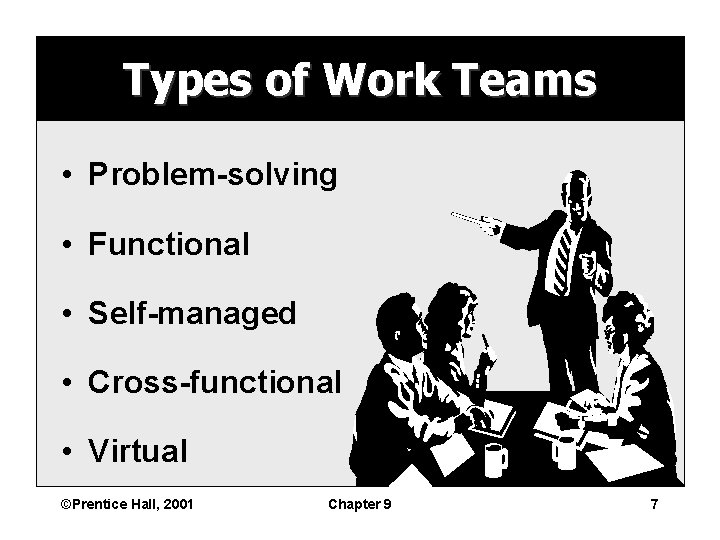
Types of Work Teams • Problem-solving • Functional • Self-managed • Cross-functional • Virtual ©Prentice Hall, 2001 Chapter 9 7
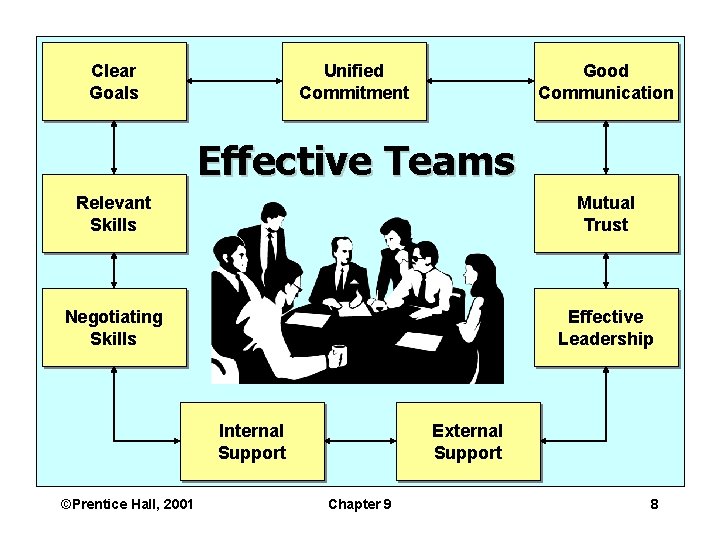
Clear Goals Unified Commitment Good Communication Effective Teams Relevant Skills Mutual Trust Negotiating Skills Effective Leadership Internal Support ©Prentice Hall, 2001 External Support Chapter 9 8
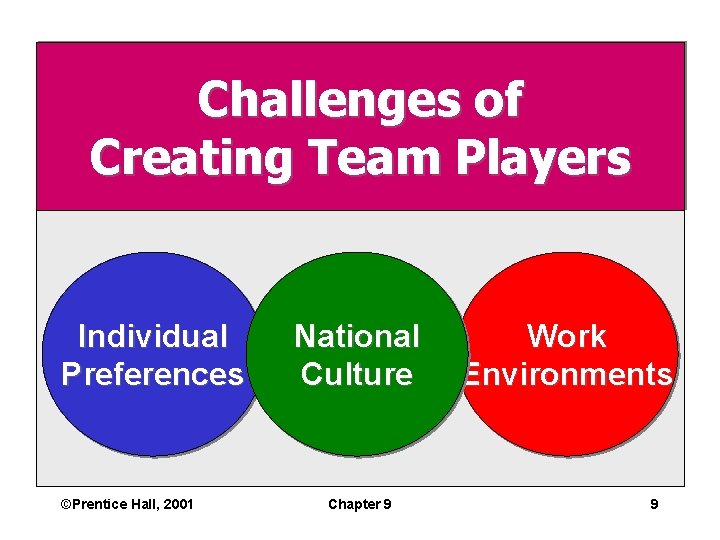
Challenges of Creating Team Players Individual Preferences ©Prentice Hall, 2001 National Culture Chapter 9 Work Environments 9
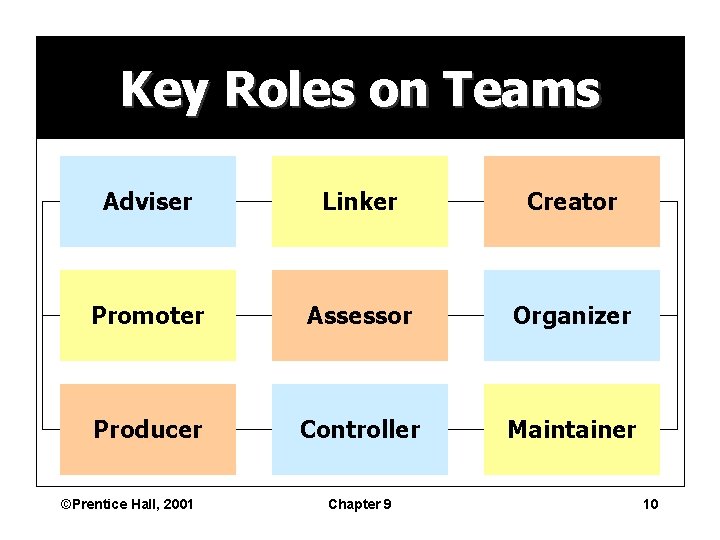
Key Roles on Teams Adviser Linker Creator Promoter Assessor Organizer Producer Controller Maintainer ©Prentice Hall, 2001 Chapter 9 10
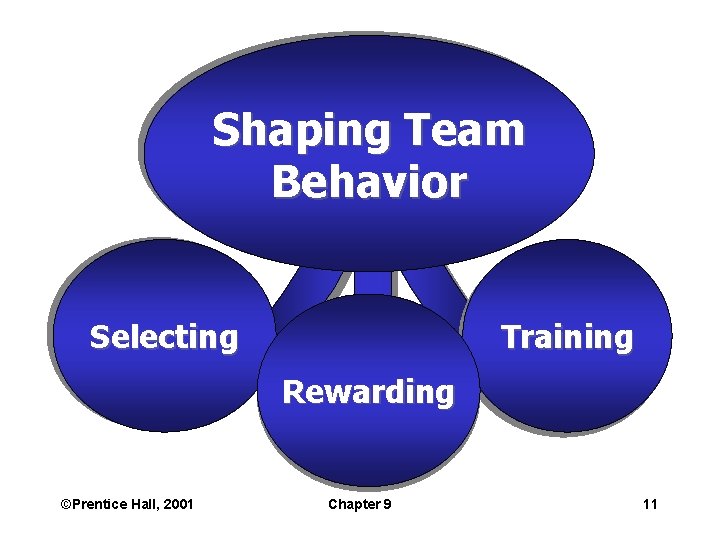
Shaping Team Behavior Selecting Training Rewarding ©Prentice Hall, 2001 Chapter 9 11
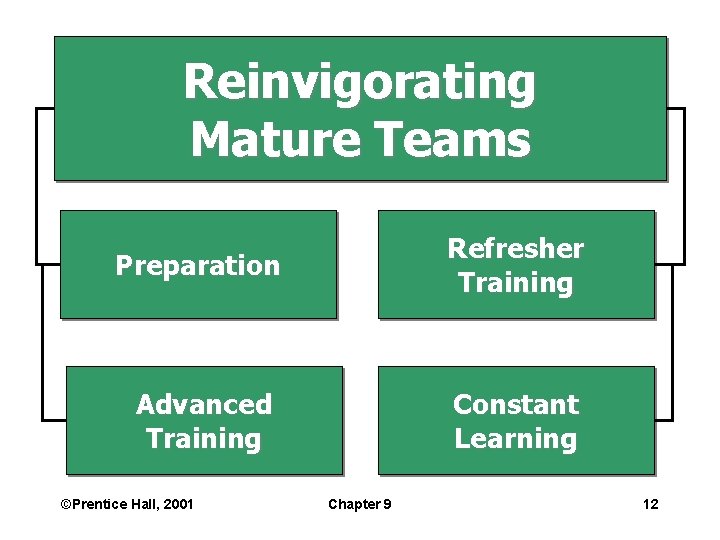
Reinvigorating Mature Teams Preparation Refresher Training Advanced Training Constant Learning ©Prentice Hall, 2001 Chapter 9 12
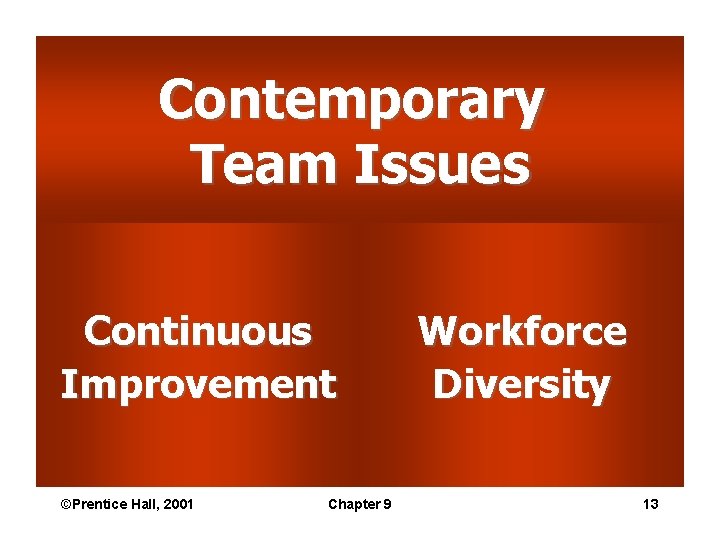
Contemporary Team Issues Continuous Improvement ©Prentice Hall, 2001 Chapter 9 Workforce Diversity 13