Understanding Gangs and the local picture Clifford Hilderly




- Slides: 21
Understanding Gangs and the local picture Clifford Hilderly- Gangs Manager Victor O’Tudor- Gangs Worker Croydon Youth Offending Service
Introduction to day and learning outcomes • • Factors behind gang membership Looking at the local picture Intro to the Gangs team and their work Understanding the services available for gang members
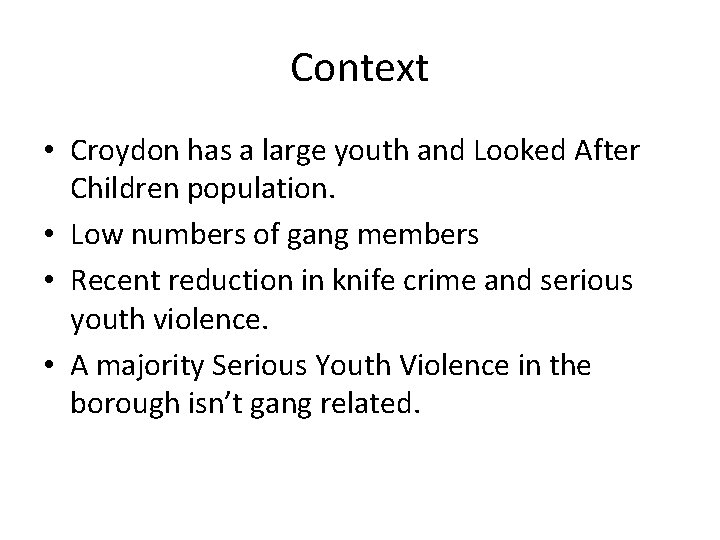
Context • Croydon has a large youth and Looked After Children population. • Low numbers of gang members • Recent reduction in knife crime and serious youth violence. • A majority Serious Youth Violence in the borough isn’t gang related.
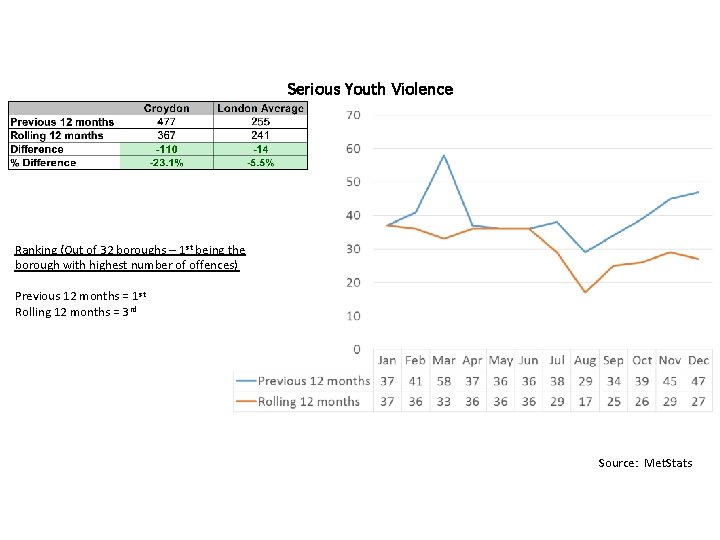
Serious Youth Violence Ranking (Out of 32 boroughs – 1 st being the borough with highest number of offences) Previous 12 months = 1 st Rolling 12 months = 3 rd Source: Met. Stats
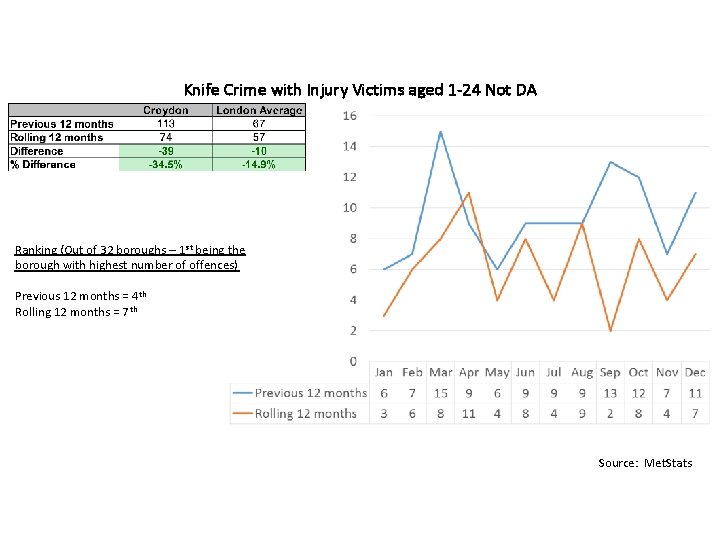
Knife Crime with Injury Victims aged 1 -24 Not DA Ranking (Out of 32 boroughs – 1 st being the borough with highest number of offences) Previous 12 months = 4 th Rolling 12 months = 7 th Source: Met. Stats
Definition of ‘Street Gang’ A relatively durable, predominately street-based group of young people who: 1) see themselves (& are seen by others) as a discernible group 2) engage in a range of criminal activity & violence. 3) identify with or lay claim over territory 4) have some form of identifying structure 5) are in conflict with other similar gangs. Groups that meet some, but not all, of the above criteria are classified as peer offending groups. Recent months have seen an increase in the identification of these within Croydon.
Why do young people join gangs? • • • Feeling of protection: belief that in your area it protects against being assaulted, bullied or robbed. It may also mean your family are protected. Popularity. Being part of gang can give a young person almost celebrity status and all the perks this brings. Sense of belonging and family. Family gangs links. Issues at home (DV, substance misuse, absent parents, bereavement). • • • Financial gain. Excitement. Self esteem and Achievement. Through gaining ratings, young people who may be unable to succeed at school, sports or other activities can be seen as a “something”. Other Adverse Childhood Experiences JT Jumps Off (UK gang member animation) - Newsnight 2014. 05. 13. . https: //www. youtube. com/watch ? v=8 y. SZHMJUv 9 Y
Related risks and issues • • • Serious harm. Exclusion from school. Ongoing conflict fuelled via music videos Unable to go to certain areas Custody Breakdown in family relations
Current active gangs • • • S Block- Selhurst/ South Norwood 25’s- South Norwood/ Addiscombe Fieldboyz- New Addington #0 - West Croydon CR 7/ Heathset
Conflicts • • Conflict between S- Block and 25’s. Conflcit between S- Block and Fieldboyz Ongoing conflict between CR 7 and #0. CR 7 have merged with older Heathset
• https: //www. youtube. c om/watch? v=w. V 52 pc. EY L 5 c • https: //www. youtube. c om/watch? v=leo. ZDU 5 n n 34
Current Gang Support • • • Croydon YOS Cliff Hilderly- Gangs Manager Lewis Kelly - Gangs Analyst Zarina Vidale - Gangs Worker, Probation. Victor O’Tudor - Gangs Worker YOS Dulaine Smith - Gangs Worker YOS Ivan Fergus- Gangs Prevention Worker • • • MPS DCI Richard Mc. Donagh DI Dan O’Sullivan DS Natalie Reseigh DC Misia Pegg DC Alex Game DC Marc Lawson
Gangs Interventions • • • Referral Police Intel/Screening Action Plan One-to-one support Weekly Taskings Meetings GMAT (Gangs Multi-Agency Tasking) – 6 Weekly Community interventions Schools work Visits around tensions
What the gangs team do • • One to one support for gang members. Challenge and change attitudes and behaviour. Workshops Safeguard Positive activities Support in to housing and ETE React to critical incidents Refer on for specialist services (Emotional health. . )
Preventions • • • Gangs/ County Line prevention worker CPFC Breaking The Cycle Barnardo’s- Youturn Safer London Foundation- CSE Off The Record- Emotional health Turning Point- substance misuse
Crime/ gangs prevention: What works? • Community base. • Ongoing positive rapport with a worker. • A structured programme running alongside informal support. • A holistic programme or at least one that is tied in to other essential services (mental health, parenting, social care, substance misuse, education). • Challenging attitudes and behaviour, changing the environment, offering alternatives. • Guest speakers, multi media, peer discussions.
Program planning • The right young people- PREVENTION • The right staff (skills and DBS) • Suitable premises • Risk assessments • Equipment • Timings and duration. • A clear session by session plan. • Guest speakers with a good history. • Food
Showing what works/ end of project • How will you measure what works? • A good evaluation will grow your reputation, improve your delivery and assist in future funding bids. • Let refers know how young people are doing throughout the programme but send them a summary at its conclusion. • Ask young people if they will offer testimonies on the programme. • Write a case study.
Every Choice Matters • A workshop tool to prevent young people offending. • The resource. One hour workshop. A short film, on screen questions and answers and interviews • Outline- To be used as a discursive tool, to raise awareness of the consequences of offending. • Delivery- Groups of 30 and less. Appropriate for young people aged 10 upwards. Look to identify key staff who can deliver. Look at other sources to add to your knowledge.
Topics • • • Knife crime Victim Robbery Moped enabled theft Stop and Search • • • Drug dealing County lines Gangs Sexual bullying Homophobia
Clifford. Hilderly@croydon. gov. uk