UMMC Occupational Therapy Department Virtual Simulation Module 1

- Slides: 10
UMMC Occupational Therapy Department Virtual Simulation- Module 1 What is Occupational Therapy? 4 hours After reviewing this module, please complete the corresponding section in the Virtual Observation Reflection packet.
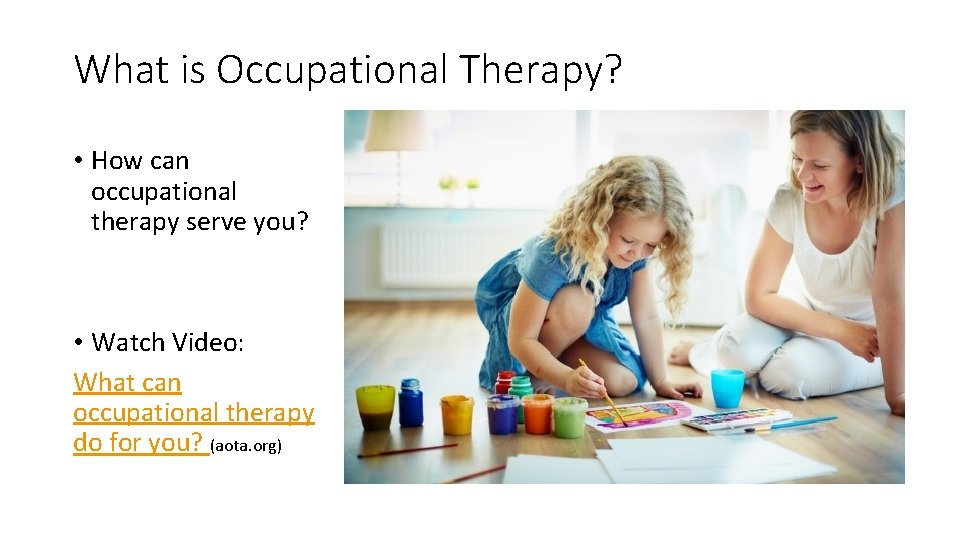
What is Occupational Therapy? • How can occupational therapy serve you? • Watch Video: What can occupational therapy do for you? (aota. org)
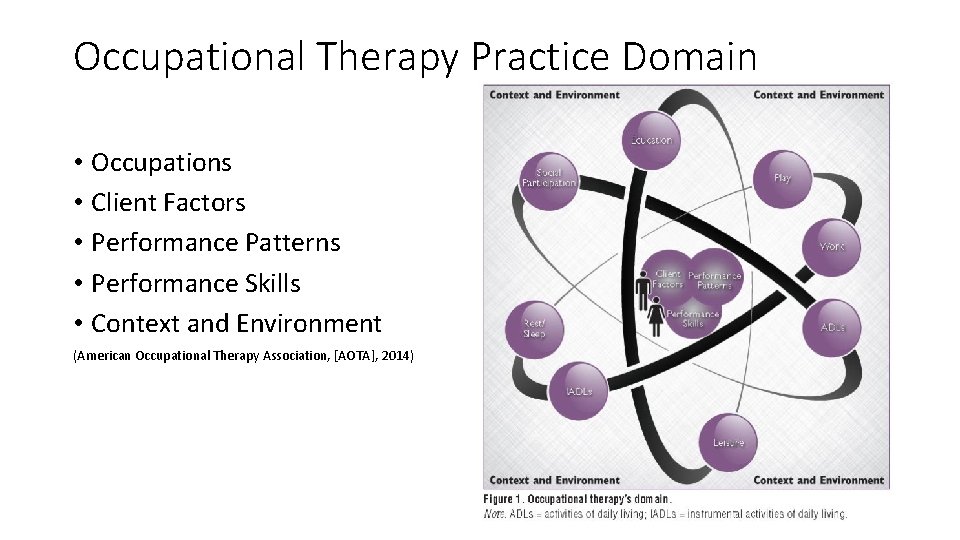
Occupational Therapy Practice Domain • Occupations • Client Factors • Performance Patterns • Performance Skills • Context and Environment (American Occupational Therapy Association, [AOTA], 2014)
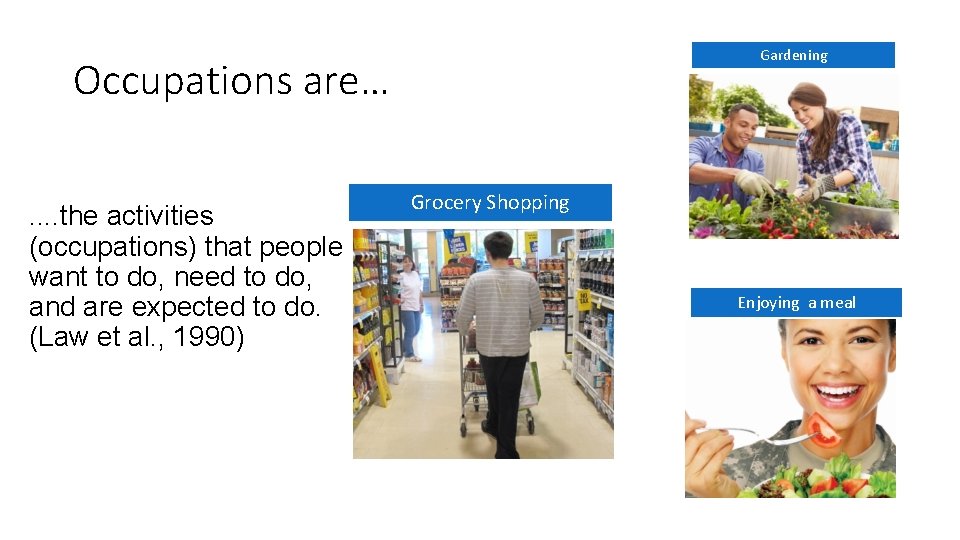
Gardening Occupations are…. . the activities (occupations) that people want to do, need to do, and are expected to do. (Law et al. , 1990) Grocery Shopping Enjoying a meal
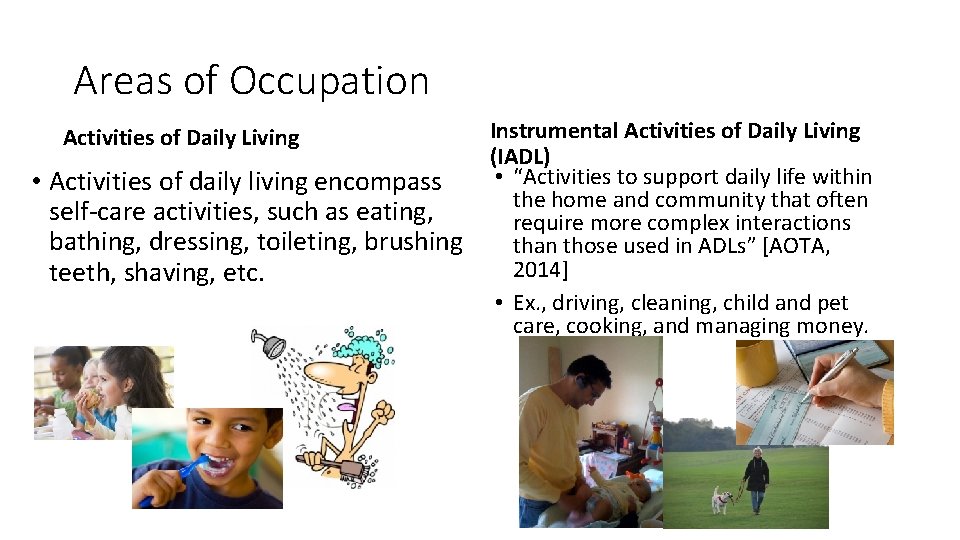
Areas of Occupation Activities of Daily Living • Activities of daily living encompass self-care activities, such as eating, bathing, dressing, toileting, brushing teeth, shaving, etc. Instrumental Activities of Daily Living (IADL) • “Activities to support daily life within the home and community that often require more complex interactions than those used in ADLs” [AOTA, 2014] • Ex. , driving, cleaning, child and pet care, cooking, and managing money.
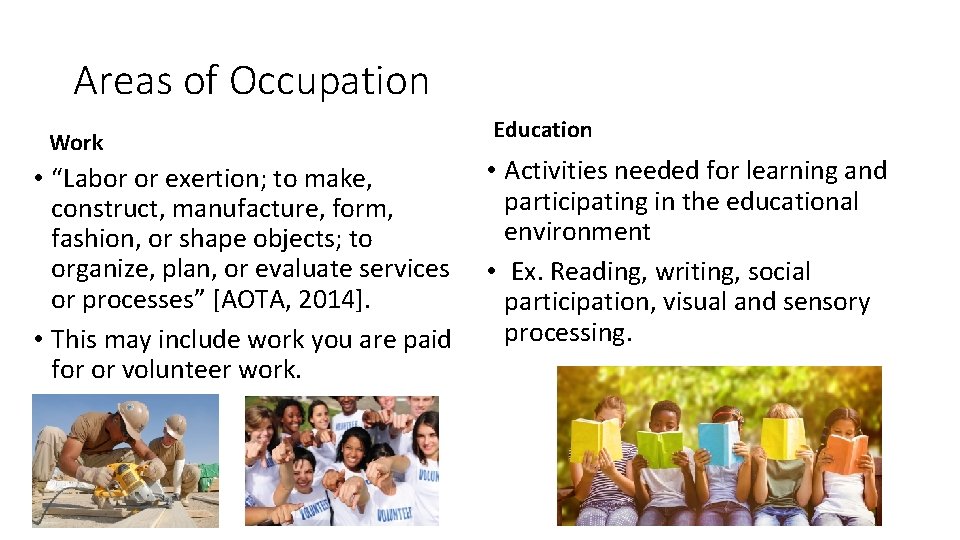
Areas of Occupation Work • “Labor or exertion; to make, construct, manufacture, form, fashion, or shape objects; to organize, plan, or evaluate services or processes” [AOTA, 2014]. • This may include work you are paid for or volunteer work. Education • Activities needed for learning and participating in the educational environment • Ex. Reading, writing, social participation, visual and sensory processing.
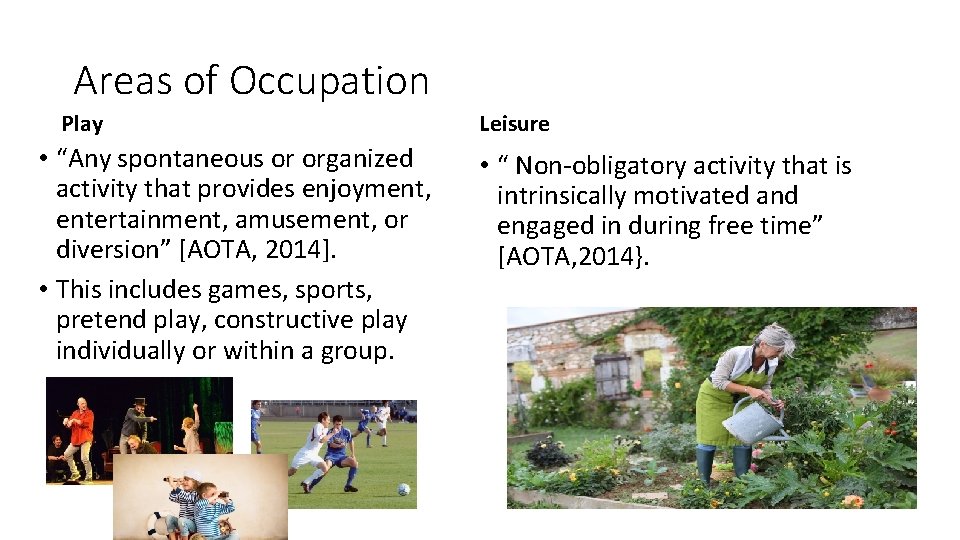
Areas of Occupation Play • “Any spontaneous or organized activity that provides enjoyment, entertainment, amusement, or diversion” [AOTA, 2014]. • This includes games, sports, pretend play, constructive play individually or within a group. Leisure • “ Non-obligatory activity that is intrinsically motivated and engaged in during free time” [AOTA, 2014}.
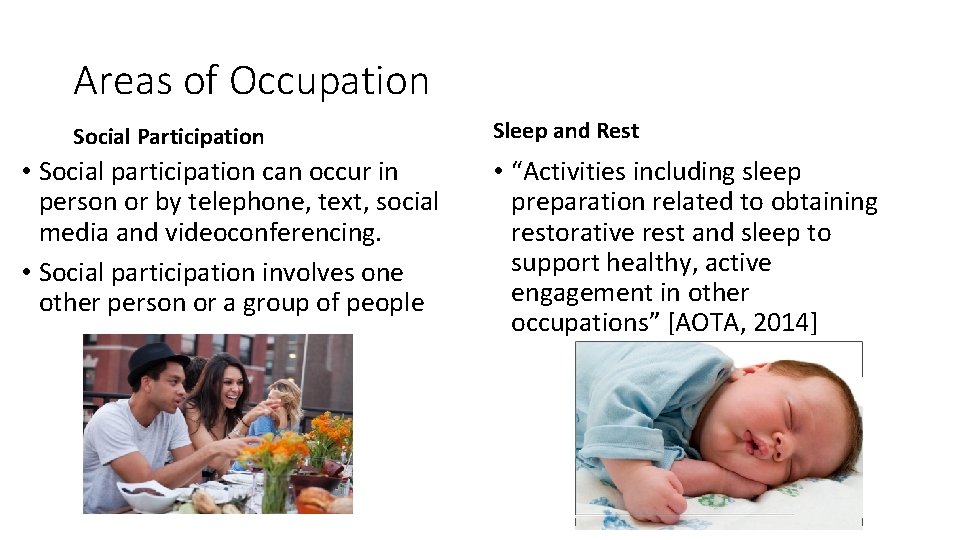
Areas of Occupation Social Participation • Social participation can occur in person or by telephone, text, social media and videoconferencing. • Social participation involves one other person or a group of people Sleep and Rest • “Activities including sleep preparation related to obtaining restorative rest and sleep to support healthy, active engagement in other occupations” [AOTA, 2014]
Reflection 1. What have you learned about occupational therapy from watching the film and reading the power points? Does anything in the film excite you about pursuing occupational therapy as a profession?
References • American Occupational Therapy Association. (2014). Occupational therapy practice framework: Domain and process (3 rd ed. ). American Journal of Occupational Therapy, 68(Suppl. 1), S 1 -S 48. https: //doi. org/10. 5014/ajot. 2014. 682006 • American Occupational Therapy Association. (2017). What can occupational therapy do for you? [Film]. American Occupational Therapy Association. https: //www. youtube. com/watch? v=jww. OXl. LYQ 4 Q • Law, M. , Baptiste, S. Mc. Coll, M. Opzoomer, A. , Polatajko, H. , Pollock, N. (1990). The Canadian occupational performance measure: An outcome measure for occupational therapy. Canadian Journal of Occupational Therapy, 57, 82 -87. Picture References • All pictures taken from creative commons and not subject to copyright.