
Targeting Daily Living Skills in Children and Adolescents
- Slides: 33
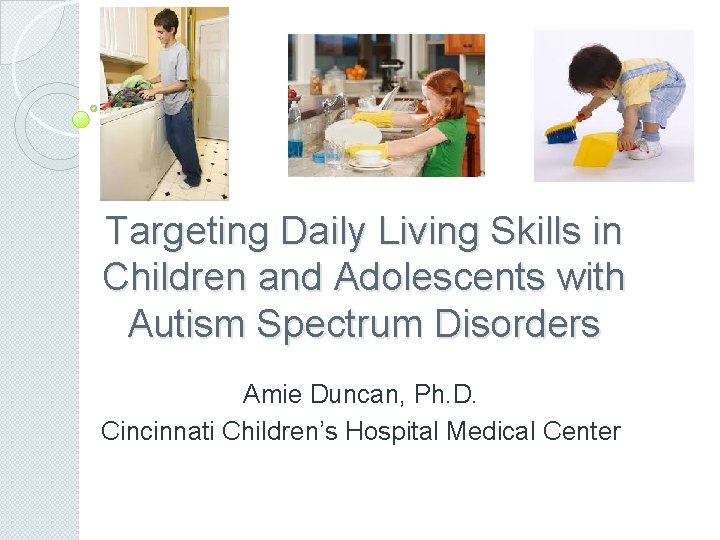
Targeting Daily Living Skills in Children and Adolescents with Autism Spectrum Disorders Amie Duncan, Ph. D. Cincinnati Children’s Hospital Medical Center
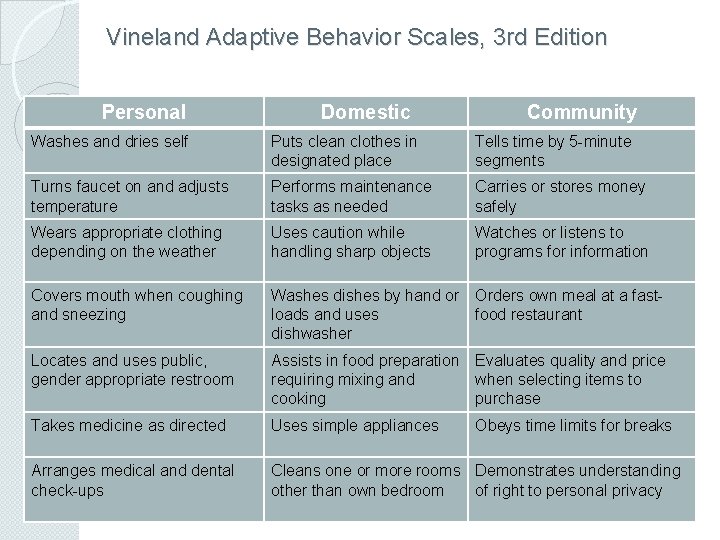
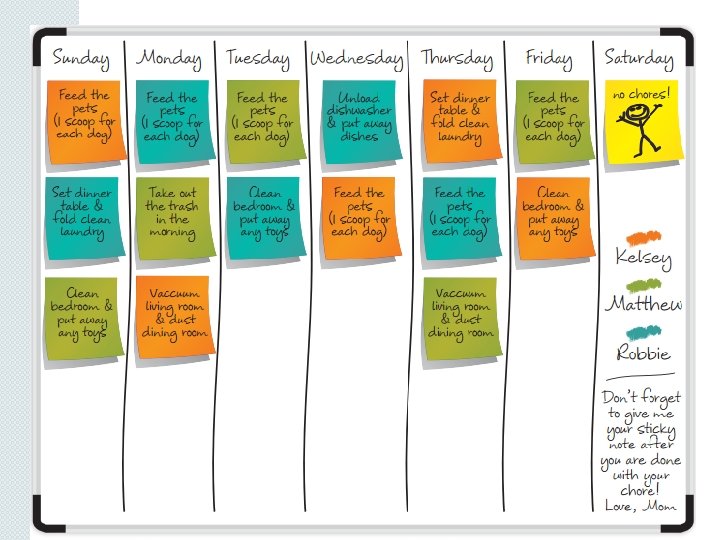
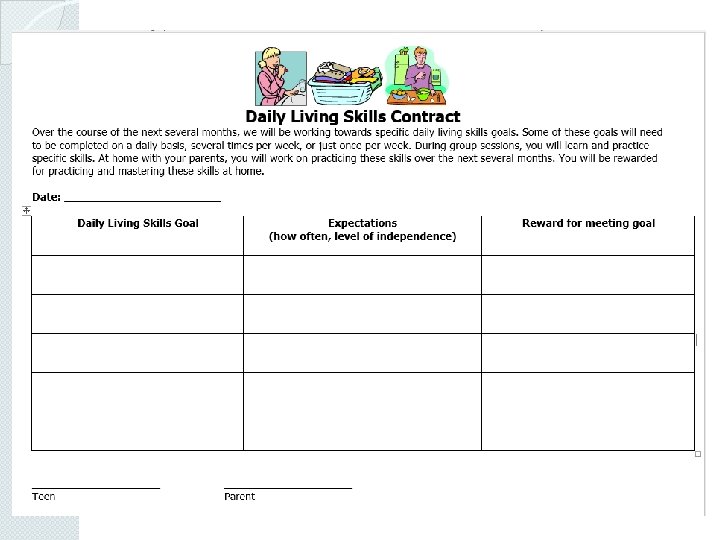
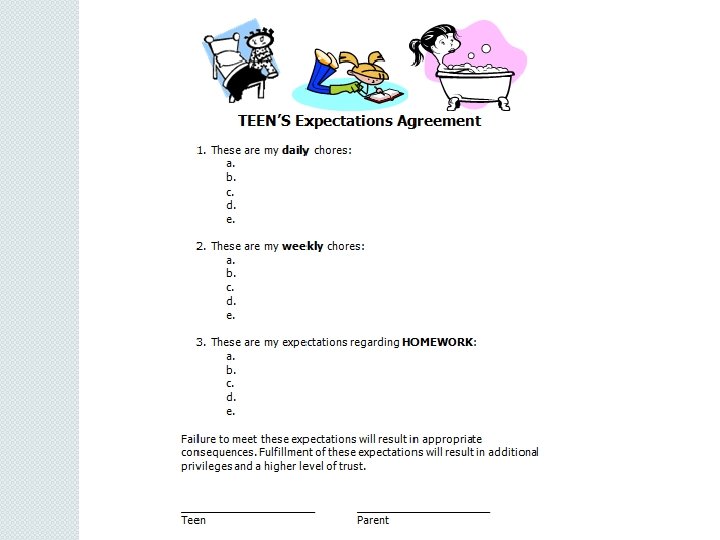
What are Daily Living Skills? �Self-care activities and tasks that take place at home, school, and in the community �“the things we normally do” to take care of ourselves
Vineland Adaptive Behavior Scales, 3 rd Edition Personal Domestic Community Washes and dries self Puts clean clothes in designated place Tells time by 5 -minute segments Turns faucet on and adjusts temperature Performs maintenance tasks as needed Carries or stores money safely Wears appropriate clothing depending on the weather Uses caution while handling sharp objects Watches or listens to programs for information Covers mouth when coughing and sneezing Washes dishes by hand or Orders own meal at a fastloads and uses food restaurant dishwasher Locates and uses public, gender appropriate restroom Assists in food preparation Evaluates quality and price requiring mixing and when selecting items to cooking purchase Takes medicine as directed Uses simple appliances Arranges medical and dental check-ups Cleans one or more rooms Demonstrates understanding other than own bedroom of right to personal privacy Obeys time limits for breaks
Potential Impact of Daily Living Skills �Daily living skills are not a core deficit or impairment for individuals with ASD. ◦ Many daily living skills require few (if any) social-communication skills �Daily living skills are tasks and activities that can be taught utilizing empirically based strategies. �Daily living skills have been linked to overall adult outcome (Farley et al. , 2009)
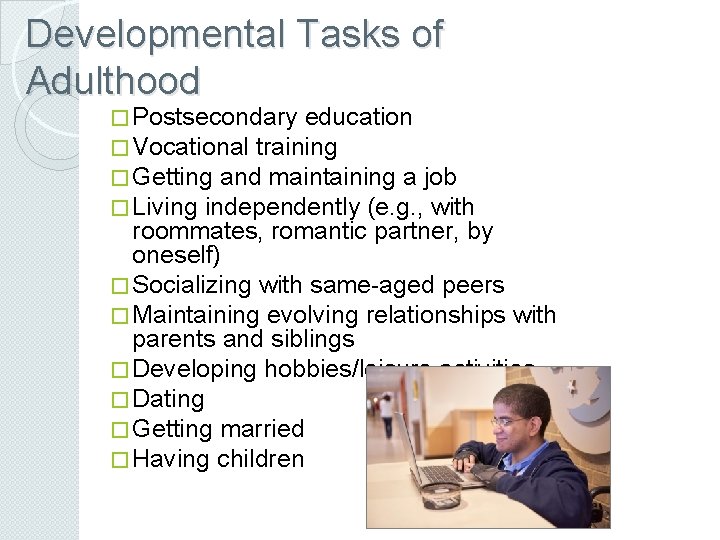
Developmental Tasks of Adulthood � Postsecondary education � Vocational training � Getting and maintaining a job � Living independently (e. g. , with roommates, romantic partner, by oneself) � Socializing with same-aged peers � Maintaining evolving relationships with parents and siblings � Developing hobbies/leisure activities � Dating � Getting married � Having children
Adult Outcomes �Occupational (Wagner, Newman, Cameto, Garza, & Levine, 2005; Newman et al. , 2011) ◦ Two years after leaving school, 50% of special needs students were employed compared to over 80% of non-special needs students ◦ Up to 60% within 8 years after leaving school �Independent Living ◦ Young adults with disabilities are more likely to be living with their parents after the age of 30 (Donkervoort, Wiegerink, Van Meeteren, Stam, & Roebroeck, 2009; Janus, 2009; Leiter & Waugh, 2009)
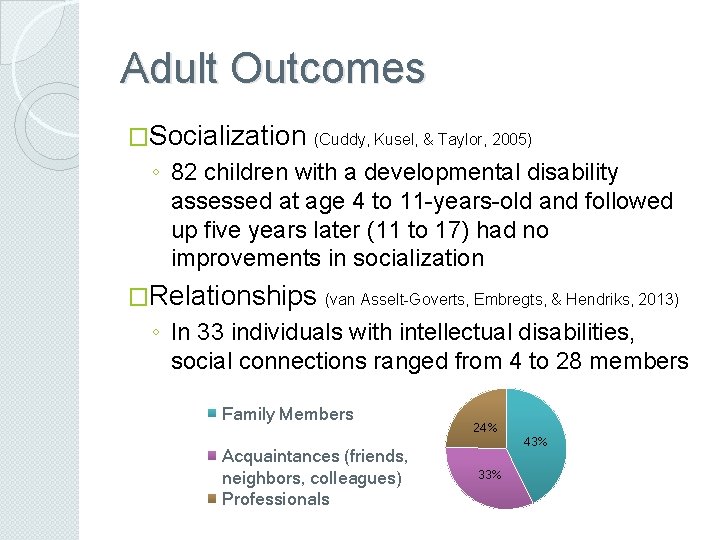
Adult Outcomes �Socialization (Cuddy, Kusel, & Taylor, 2005) ◦ 82 children with a developmental disability assessed at age 4 to 11 -years-old and followed up five years later (11 to 17) had no improvements in socialization �Relationships (van Asselt-Goverts, Embregts, & Hendriks, 2013) ◦ In 33 individuals with intellectual disabilities, social connections ranged from 4 to 28 members Family Members Acquaintances (friends, neighbors, colleagues) Professionals 24% 43% 33%
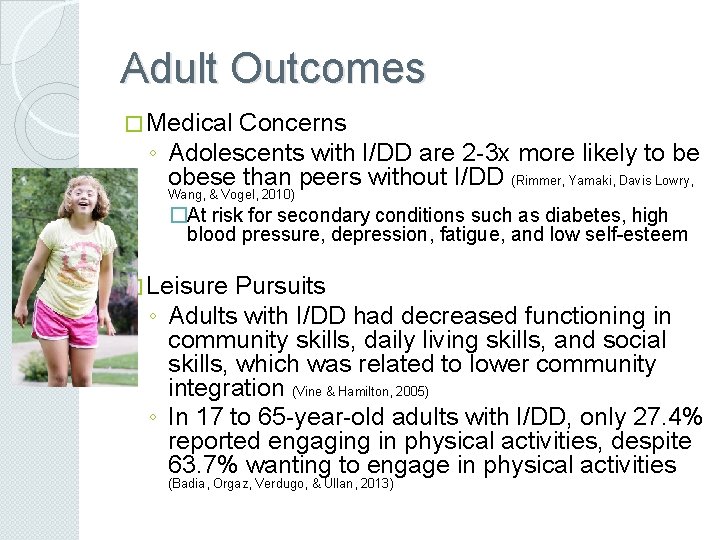
Adult Outcomes � Medical Concerns ◦ Adolescents with I/DD are 2 -3 x more likely to be obese than peers without I/DD (Rimmer, Yamaki, Davis Lowry, Wang, & Vogel, 2010) �At risk for secondary conditions such as diabetes, high blood pressure, depression, fatigue, and low self-esteem � Leisure Pursuits ◦ Adults with I/DD had decreased functioning in community skills, daily living skills, and social skills, which was related to lower community integration (Vine & Hamilton, 2005) ◦ In 17 to 65 -year-old adults with I/DD, only 27. 4% reported engaging in physical activities, despite 63. 7% wanting to engage in physical activities (Badia, Orgaz, Verdugo, & Ullan, 2013)
Additional challenges �Mental Health ◦ At least as common among people with intellectual disabilities as in the general population (Cooper, Smiley, Morrison, Williamson, & Allen, 2007) ◦ Comparing patients receiving mental health services, adults with I/DD had greater unmet needs (Durbin, Sirotich, Lunsky, & Durbin, 2017) �Adaptive functioning �Cognitive needs (self-care, education, transportation, and information on condition)
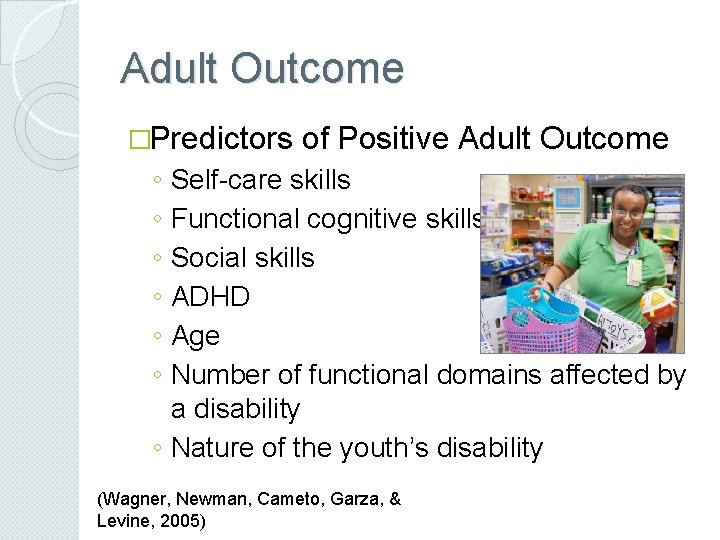
Adult Outcome �Predictors of Positive Adult Outcome ◦ ◦ ◦ Self-care skills Functional cognitive skills Social skills ADHD Age Number of functional domains affected by a disability ◦ Nature of the youth’s disability (Wagner, Newman, Cameto, Garza, & Levine, 2005)
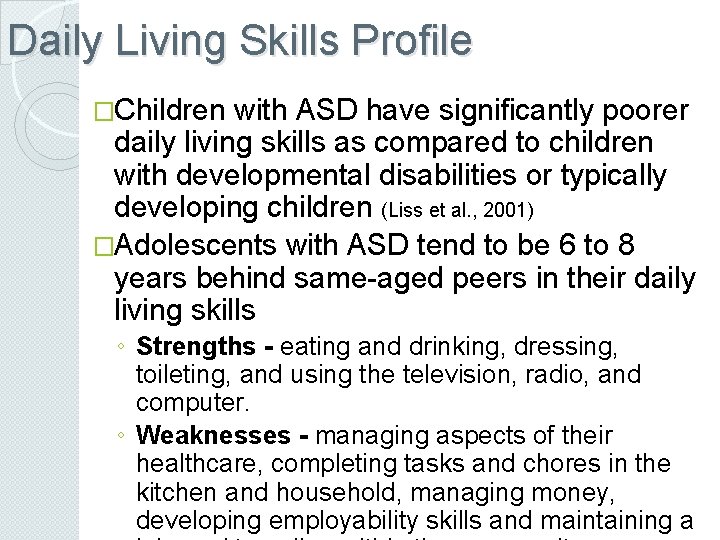
Daily Living Skills Profile �Children with ASD have significantly poorer daily living skills as compared to children with developmental disabilities or typically developing children (Liss et al. , 2001) �Adolescents with ASD tend to be 6 to 8 years behind same-aged peers in their daily living skills ◦ Strengths - eating and drinking, dressing, toileting, and using the television, radio, and computer. ◦ Weaknesses - managing aspects of their healthcare, completing tasks and chores in the kitchen and household, managing money, developing employability skills and maintaining a
Putting together a plan to tackle daily living skills
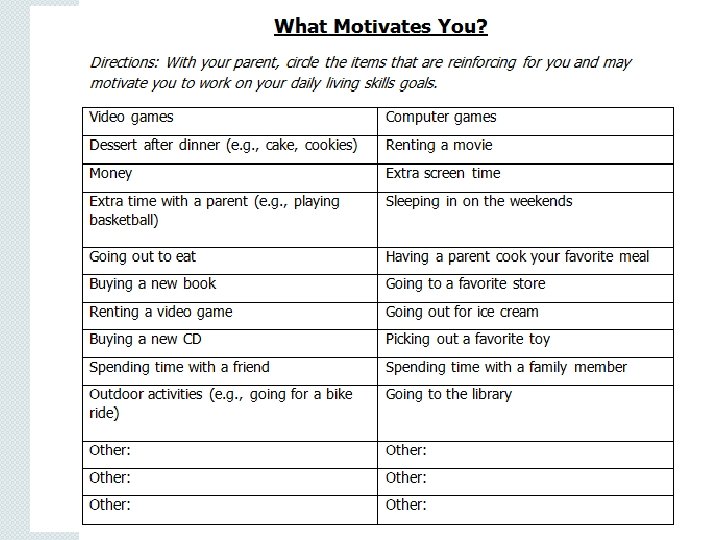
Prioritizing Skills to Target �It is critical to think through what skills you want to target at home, school, and/or in the community �Things to think through: ◦ What skills will have the largest impact? ◦ What skills may be the easiest to target? ◦ What skills may be most motivating for your teen?
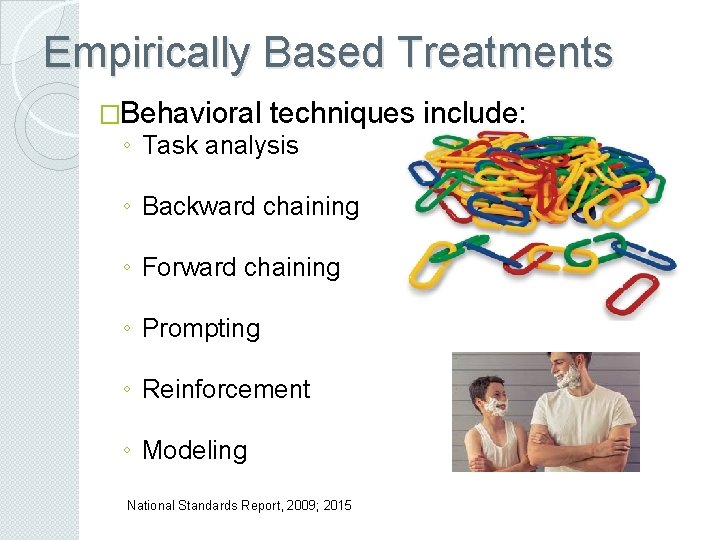
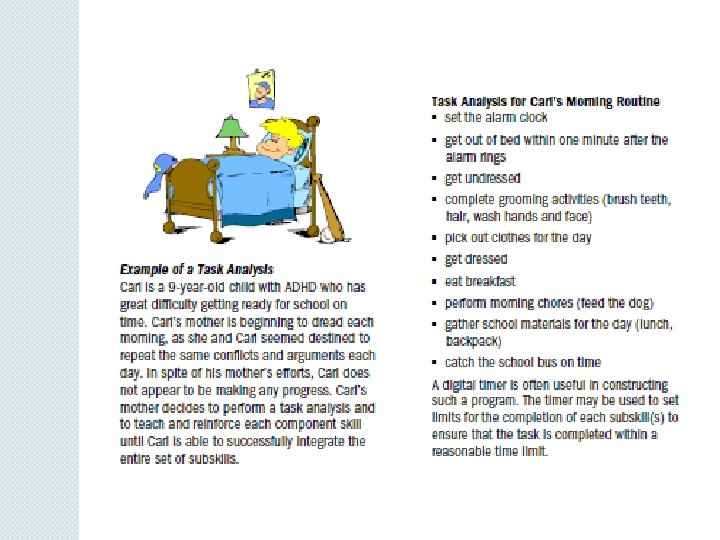
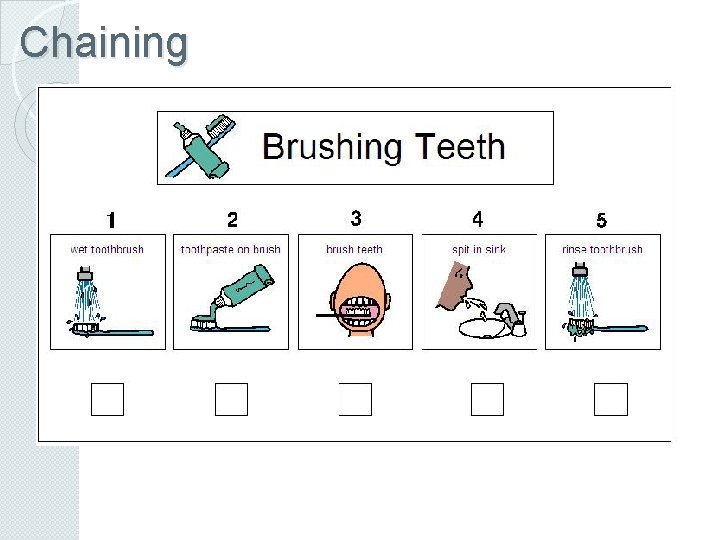
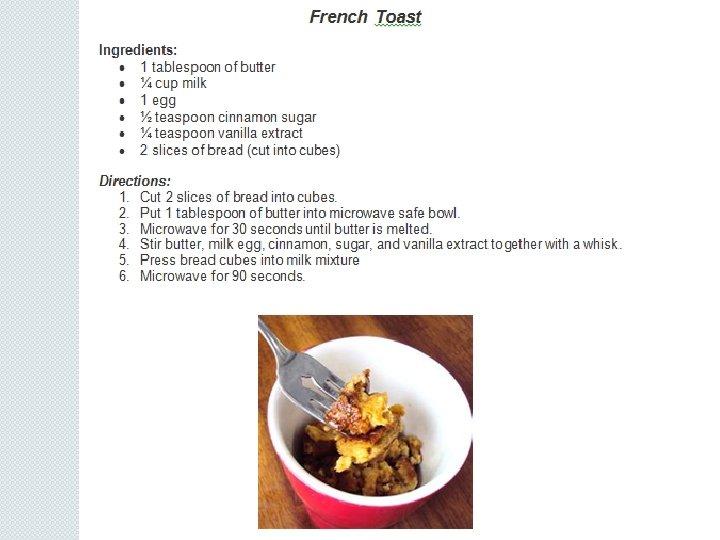
Empirically Based Treatments �Behavioral techniques include: ◦ Task analysis ◦ Backward chaining ◦ Forward chaining ◦ Prompting ◦ Reinforcement ◦ Modeling National Standards Report, 2009; 2015
Chaining
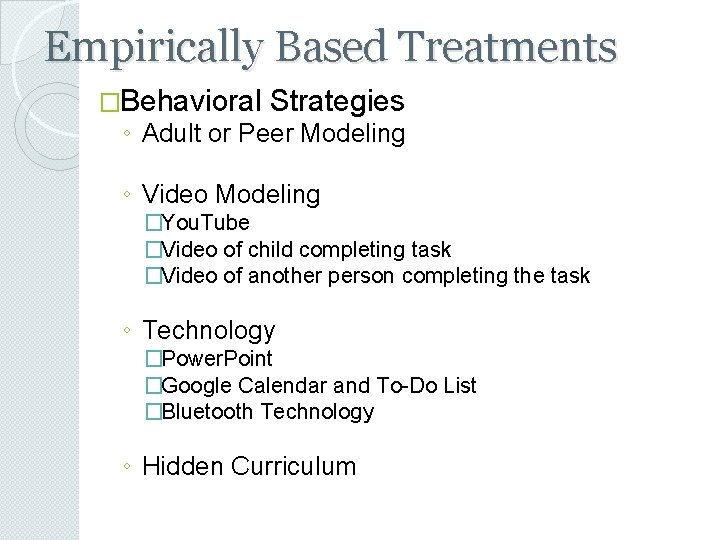
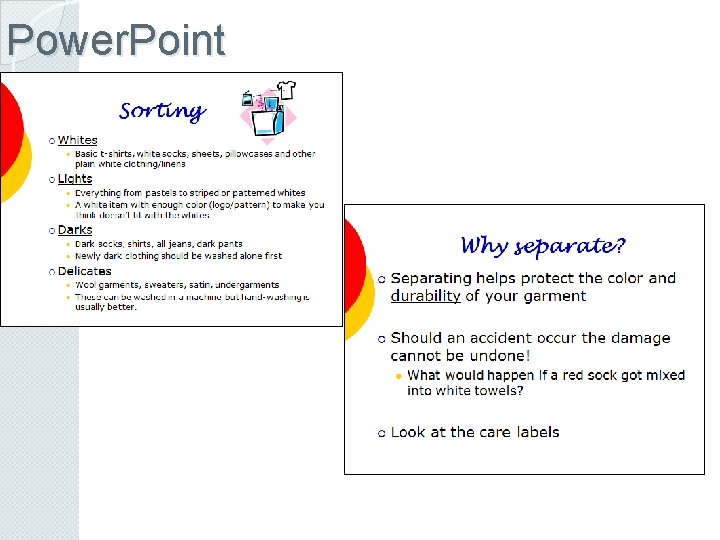
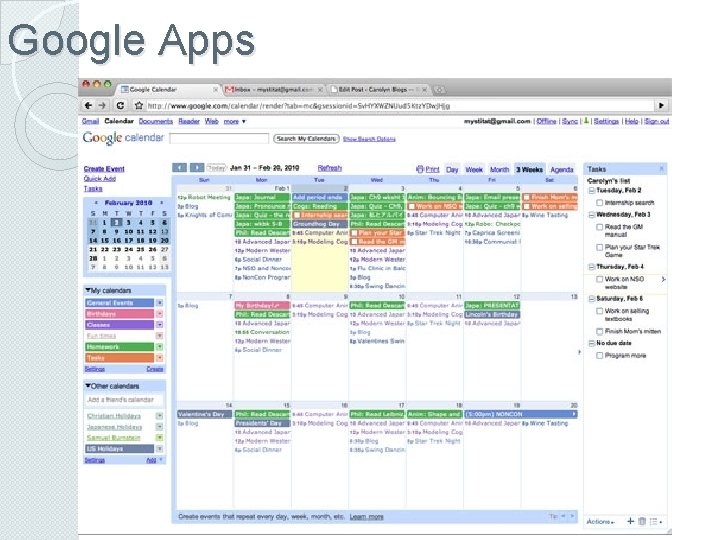
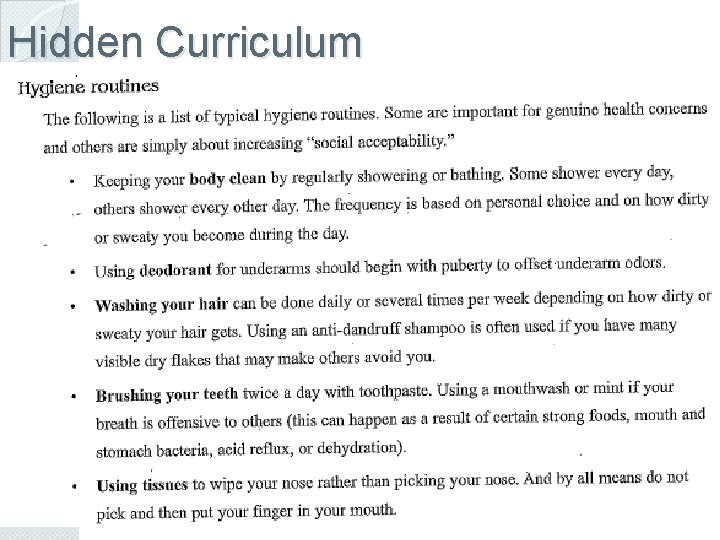
Empirically Based Treatments �Behavioral Strategies ◦ Adult or Peer Modeling ◦ Video Modeling �You. Tube �Video of child completing task �Video of another person completing the task ◦ Technology �Power. Point �Google Calendar and To-Do List �Bluetooth Technology ◦ Hidden Curriculum
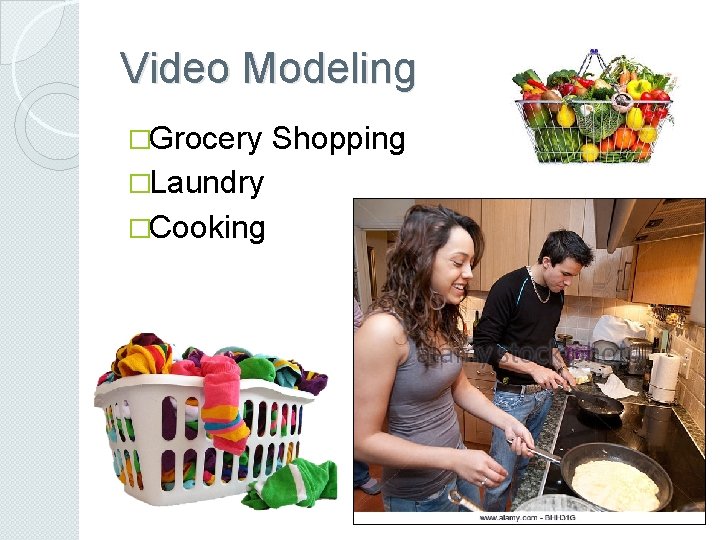
Video Modeling �Grocery �Laundry �Cooking Shopping
Power. Point
Google Apps
Hidden Curriculum
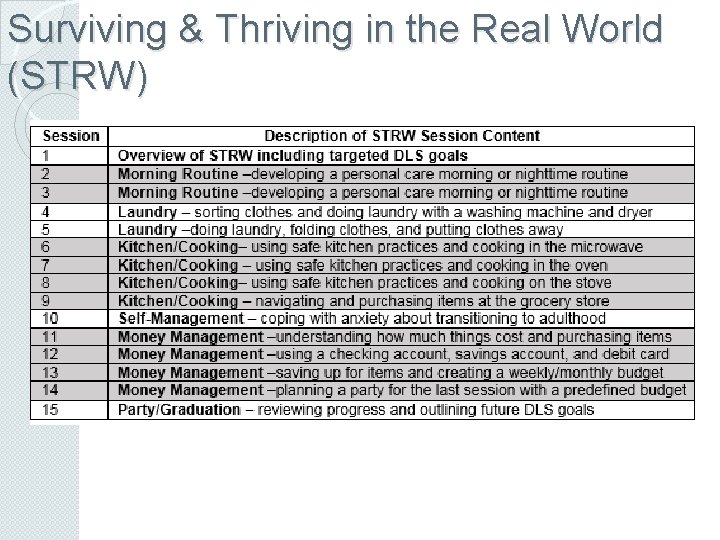
Surviving & Thriving in the Real World (STRW)
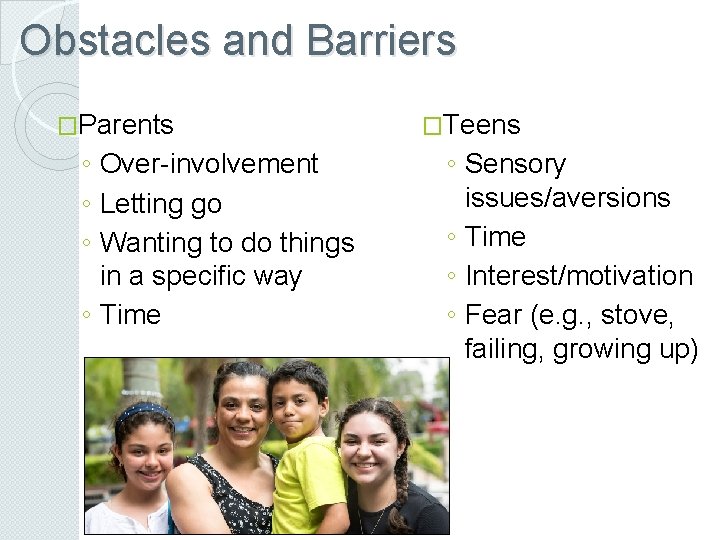
Obstacles and Barriers �Parents ◦ Over-involvement ◦ Letting go ◦ Wanting to do things in a specific way ◦ Time �Teens ◦ Sensory issues/aversions ◦ Time ◦ Interest/motivation ◦ Fear (e. g. , stove, failing, growing up)
Questions? Amie Duncan: Amie. Duncan@cchmc. org