Two Part Thesis Statements Argh What the heck

- Slides: 10
Two Part Thesis Statements Argh! What the heck is this!? !?
A Normal Paragraph 1. 2. 3. 4. Topic Sentence Lead-in Quote Analysis
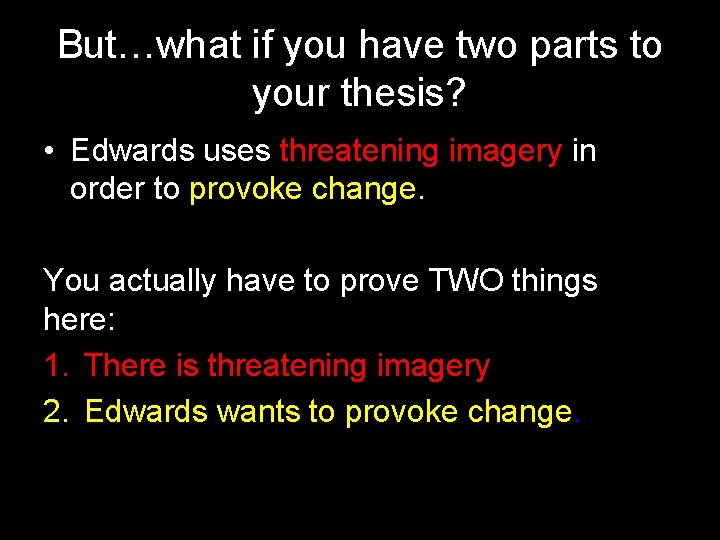
But…what if you have two parts to your thesis? • Edwards uses threatening imagery in order to provoke change. You actually have to prove TWO things here: 1. There is threatening imagery 2. Edwards wants to provoke change.
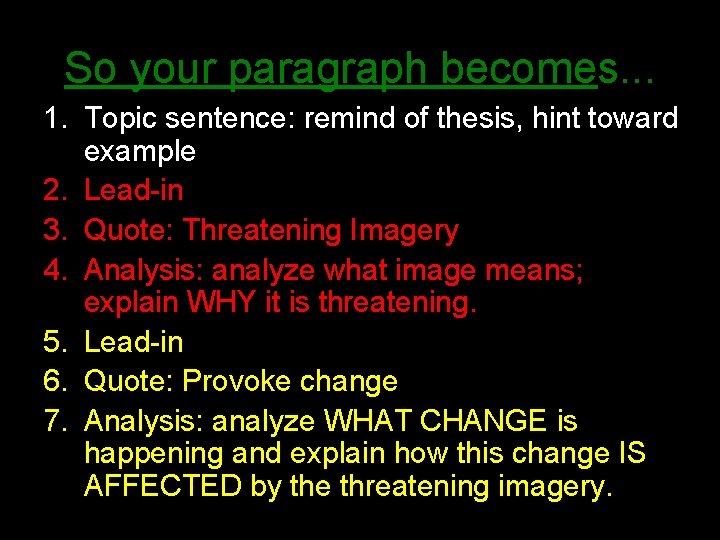
So your paragraph becomes. . . 1. Topic sentence: remind of thesis, hint toward example 2. Lead-in 3. Quote: Threatening Imagery 4. Analysis: analyze what image means; explain WHY it is threatening. 5. Lead-in 6. Quote: Provoke change 7. Analysis: analyze WHAT CHANGE is happening and explain how this change IS AFFECTED by the threatening imagery.
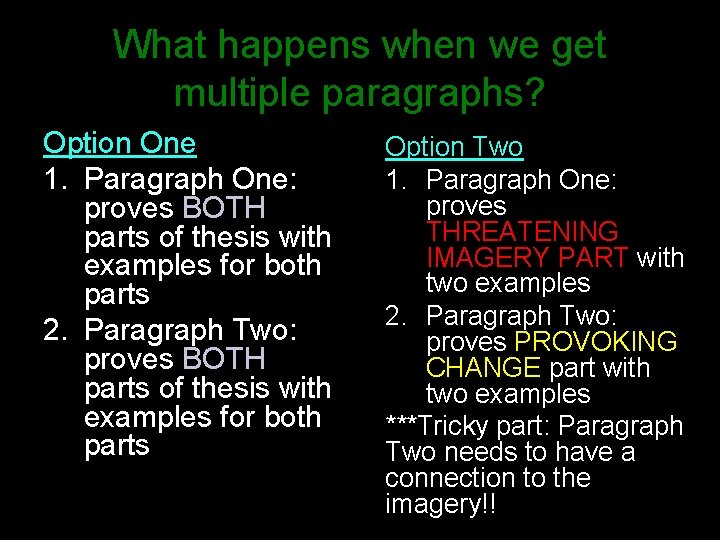
What happens when we get multiple paragraphs? Option One 1. Paragraph One: proves BOTH parts of thesis with examples for both parts 2. Paragraph Two: proves BOTH parts of thesis with examples for both parts Option Two 1. Paragraph One: proves THREATENING IMAGERY PART with two examples 2. Paragraph Two: proves PROVOKING CHANGE part with two examples ***Tricky part: Paragraph Two needs to have a connection to the imagery!!
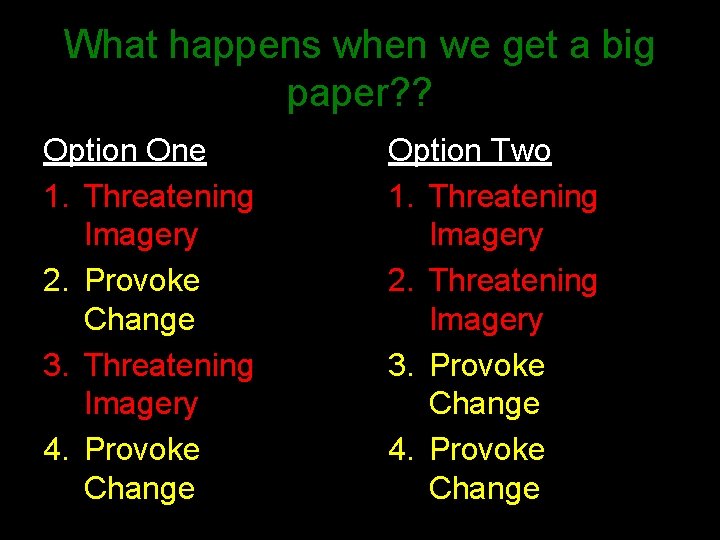
What happens when we get a big paper? ? Option One 1. Threatening Imagery 2. Provoke Change 3. Threatening Imagery 4. Provoke Change Option Two 1. Threatening Imagery 2. Threatening Imagery 3. Provoke Change 4. Provoke Change
Integrating Quotes A Review
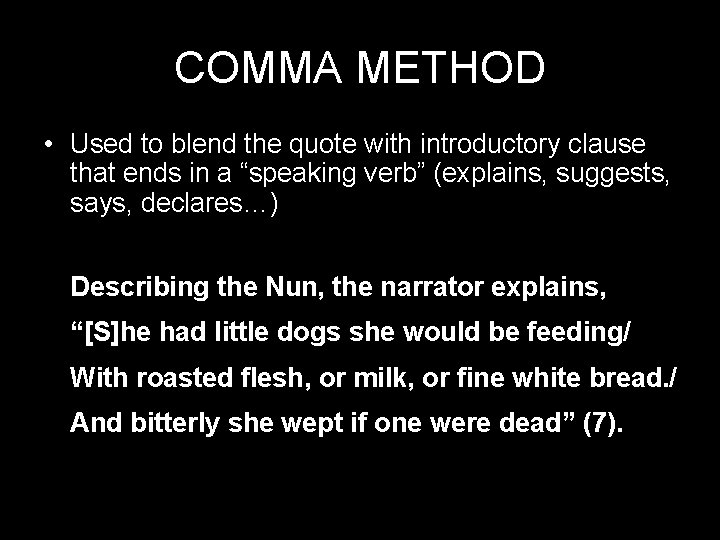
COMMA METHOD • Used to blend the quote with introductory clause that ends in a “speaking verb” (explains, suggests, says, declares…) Describing the Nun, the narrator explains, “[S]he had little dogs she would be feeding/ With roasted flesh, or milk, or fine white bread. / And bitterly she wept if one were dead” (7).
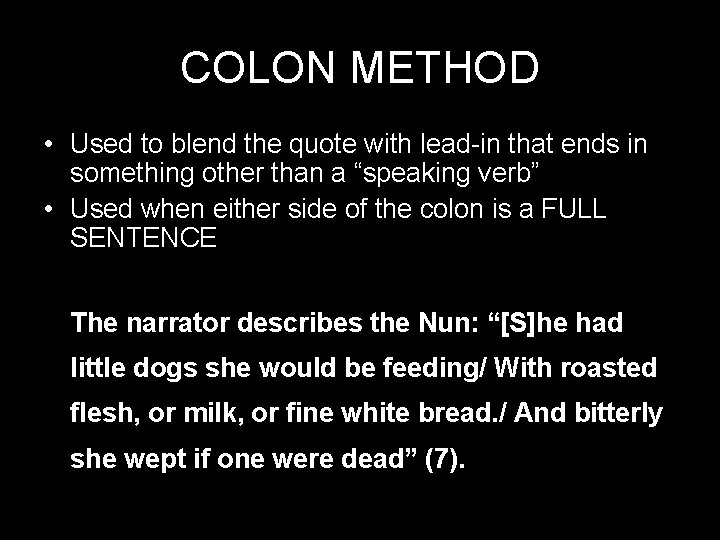
COLON METHOD • Used to blend the quote with lead-in that ends in something other than a “speaking verb” • Used when either side of the colon is a FULL SENTENCE The narrator describes the Nun: “[S]he had little dogs she would be feeding/ With roasted flesh, or milk, or fine white bread. / And bitterly she wept if one were dead” (7).
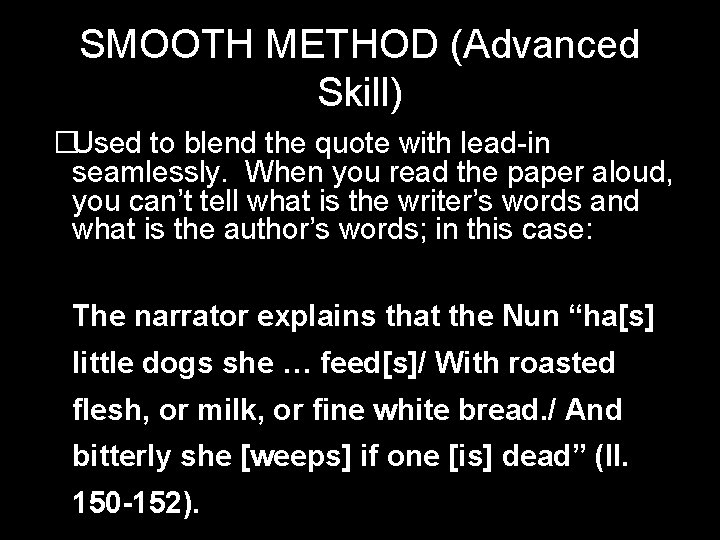
SMOOTH METHOD (Advanced Skill) �Used to blend the quote with lead-in seamlessly. When you read the paper aloud, you can’t tell what is the writer’s words and what is the author’s words; in this case: The narrator explains that the Nun “ha[s] little dogs she … feed[s]/ With roasted flesh, or milk, or fine white bread. / And bitterly she [weeps] if one [is] dead” (ll. 150 -152).