TOPIC Radioactivity Natural Transmuations Do Now Where on
- Slides: 18
TOPIC: Radioactivity & Natural Transmuations Do Now: Where on your reference table can you find radioactive particles?
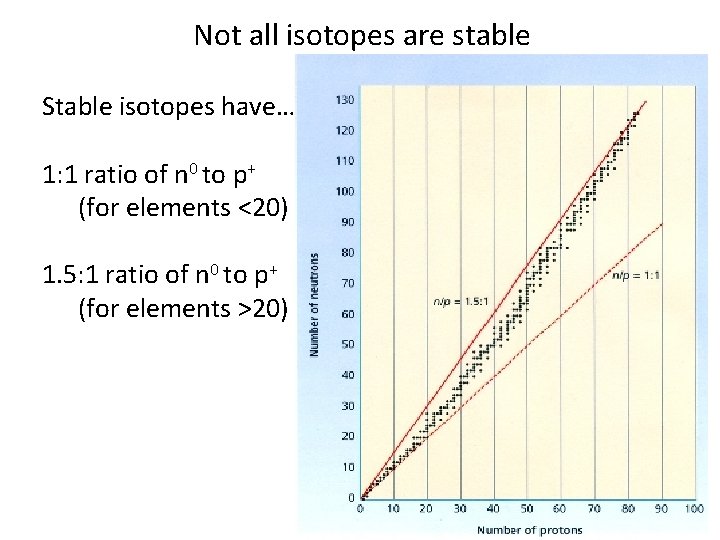
Not all isotopes are stable Stable isotopes have… 1: 1 ratio of n 0 to p+ (for elements <20) 1. 5: 1 ratio of n 0 to p+ (for elements >20)
Beyond Element 83 are very unstable (radioactive) • No amount neutrons can hold nucleus together once it has 83+ protons • All Elements 83 and above on PT are radioactive • Other elements may have radioactive isotopes applet
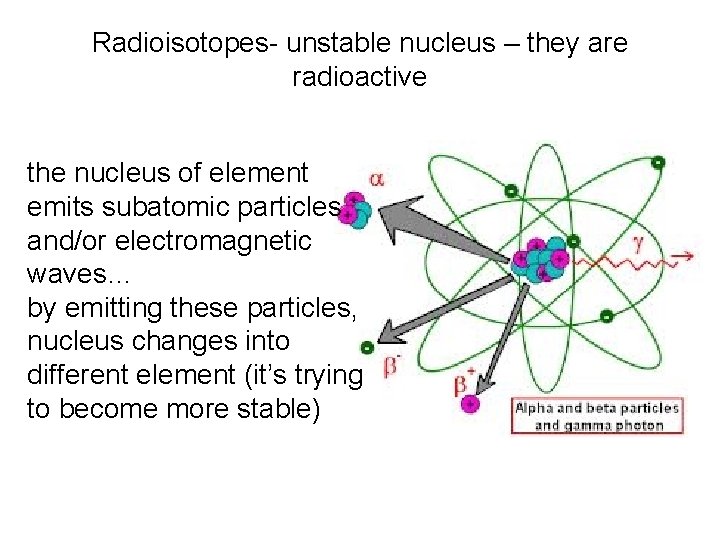
Radioisotopes- unstable nucleus – they are radioactive the nucleus of element emits subatomic particles and/or electromagnetic waves… by emitting these particles, nucleus changes into different element (it’s trying to become more stable)
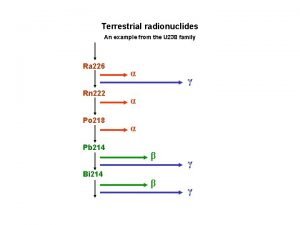
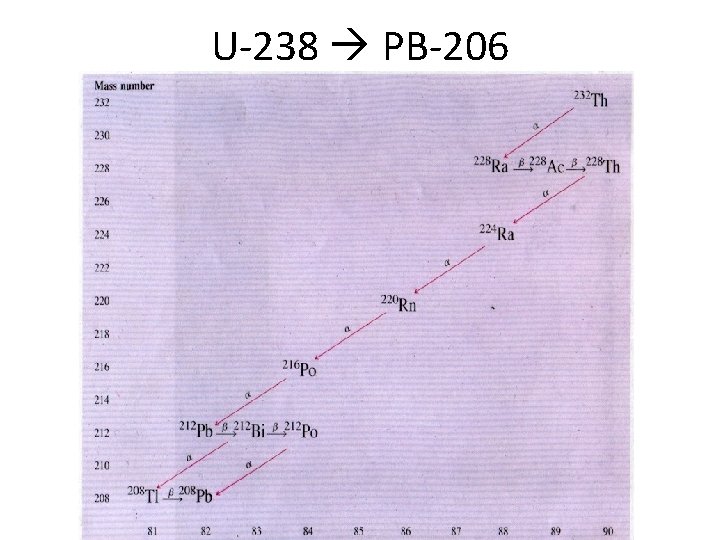
Radioactive Decay Series • Sometimes 1 transmutation isn’t enough to achieve stability • Some radioisotopes go through several changes before they achieve stability (and are no longer radioactive)
U-238 PB-206
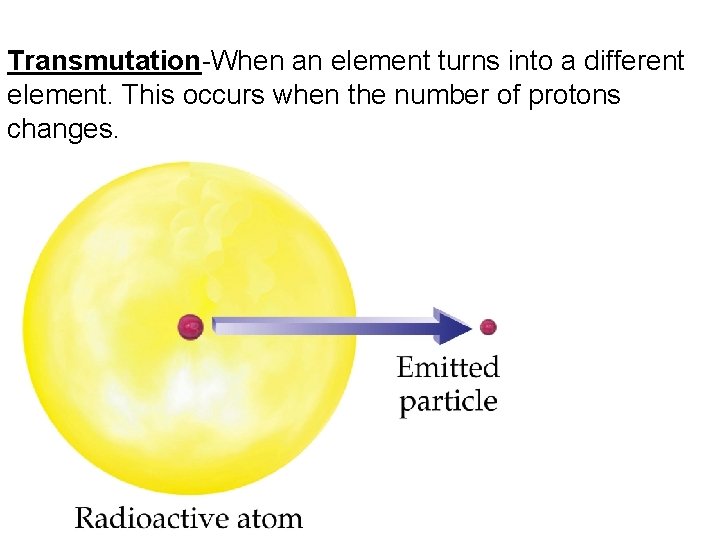
Transmutation-When an element turns into a different element. This occurs when the number of protons changes.
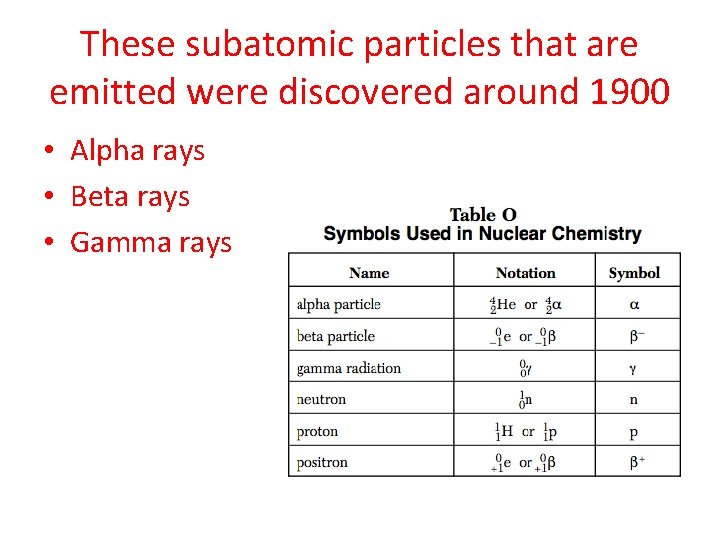
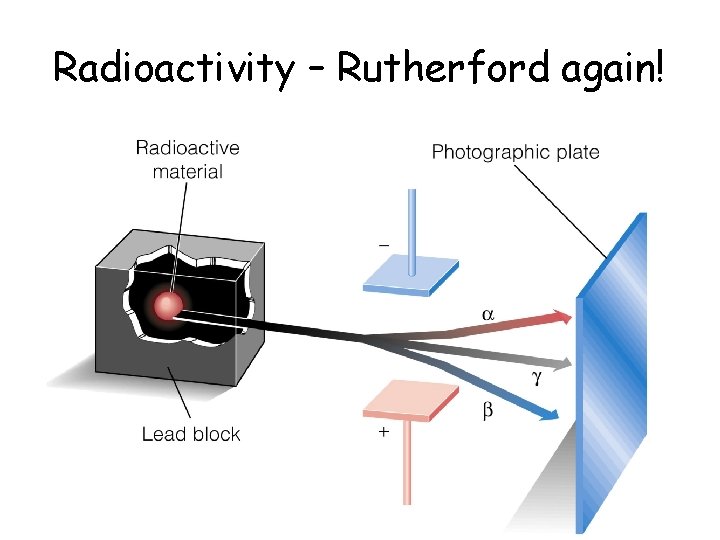
These subatomic particles that are emitted were discovered around 1900 • Alpha rays • Beta rays • Gamma rays
Radioactivity – Rutherford again!
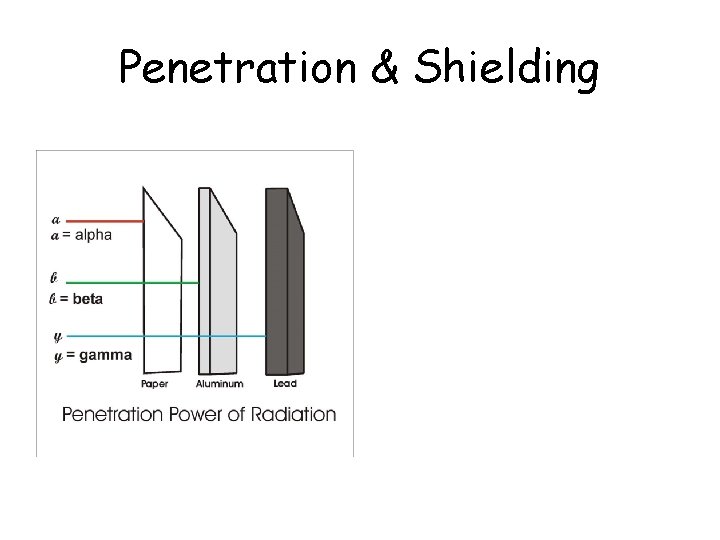
Penetration & Shielding
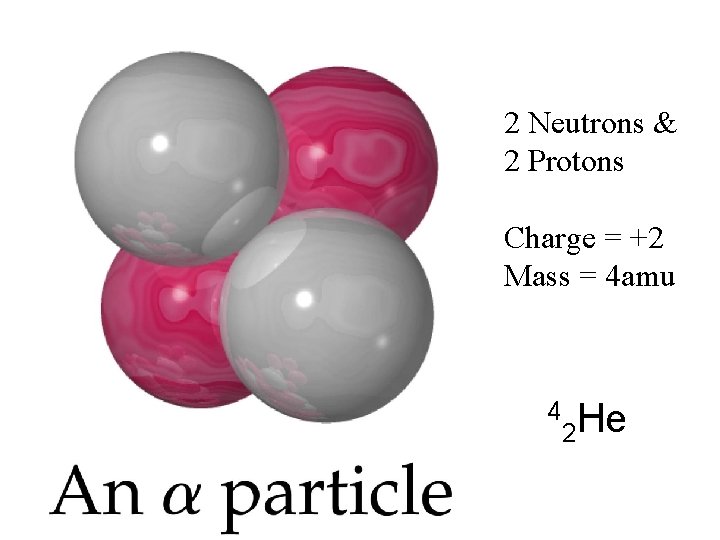
2 Neutrons & 2 Protons Charge = +2 Mass = 4 amu 4 2 He
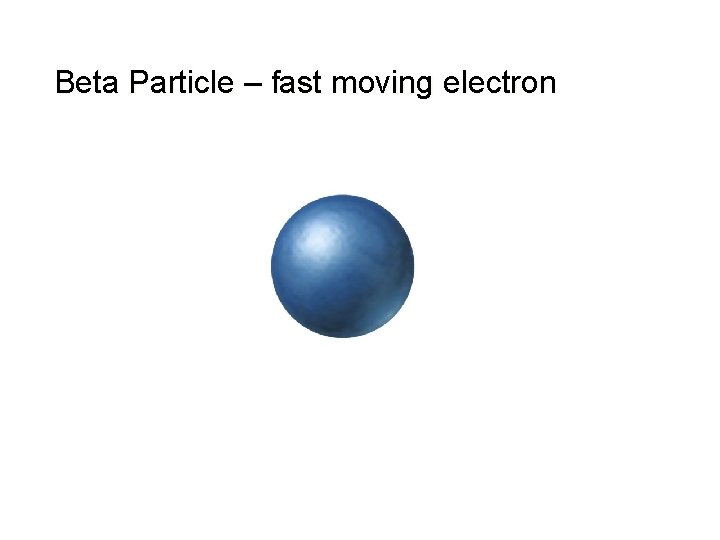
Beta Particle – fast moving electron
Transmutation • 2 types – Natural – Artificial
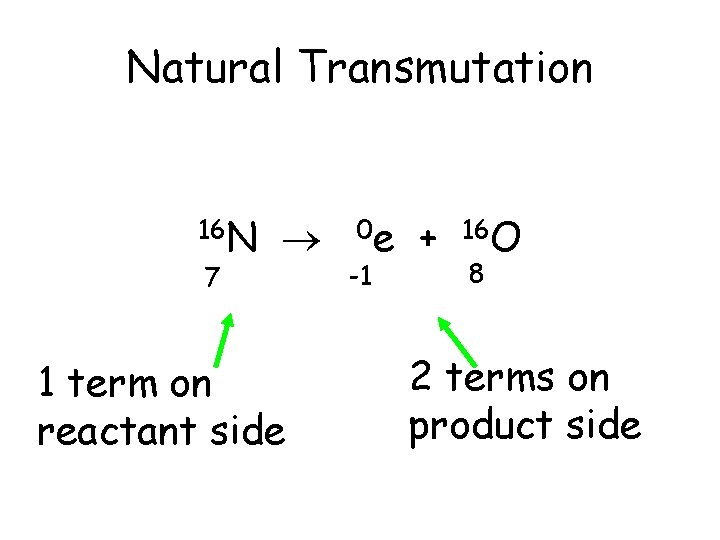
Natural Transmutation Happens all by itself (spontaneous) Not affected by anything in environment • 1 term on reactant side • Original isotope • 2 terms on product side • Emitted Particle • New Isotope
Natural Transmutation 16 N 7 1 term on reactant side 0 e -1 + 16 O 8 2 terms on product side
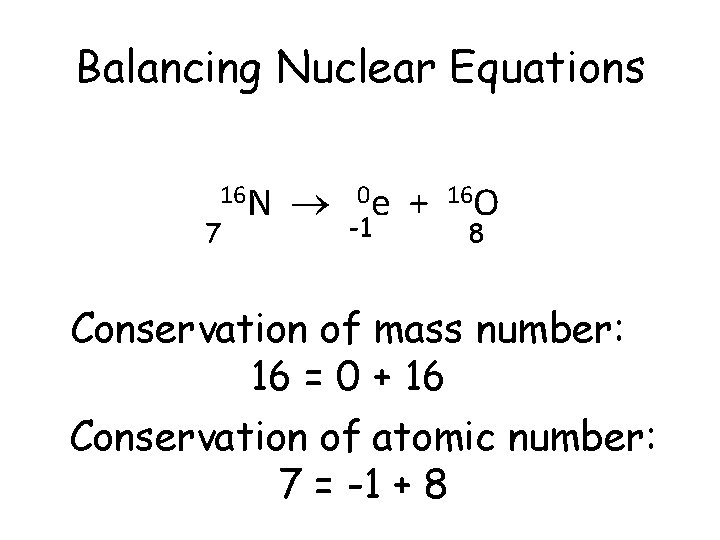
Balancing Nuclear Equations 16 N 7 0 e -1 + 16 O 8 Conservation of mass number: 16 = 0 + 16 Conservation of atomic number: 7 = -1 + 8
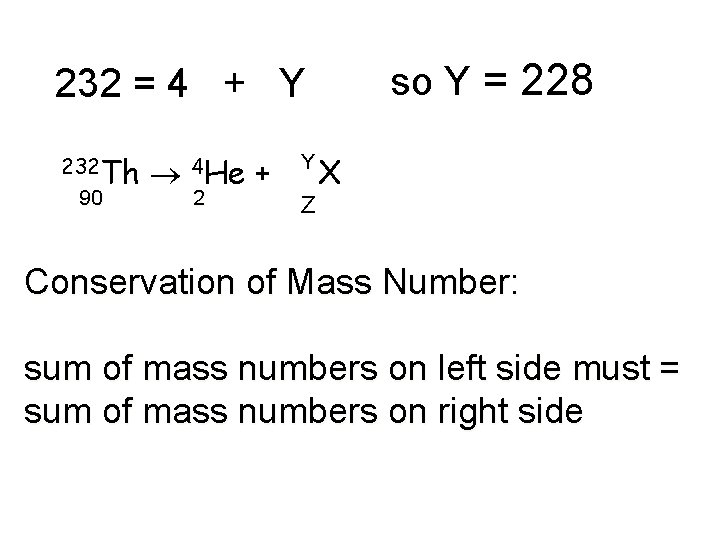
so Y = 228 232 = 4 + Y 232 Th 90 4 He + 2 Y Z X Conservation of Mass Number: sum of mass numbers on left side must = sum of mass numbers on right side
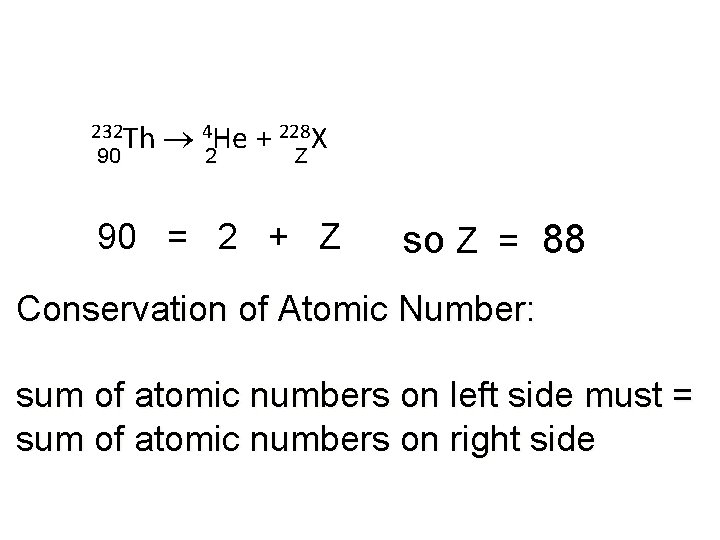
232 Th 90 42 He + 228 Z X 2 Z 90 = 2 + Z so Z = 88 Conservation of Atomic Number: sum of atomic numbers on left side must = sum of atomic numbers on right side