
Radioactivity Changes in the Nucleus Discovery of XRays
- Slides: 18
Radioactivity Changes in the Nucleus
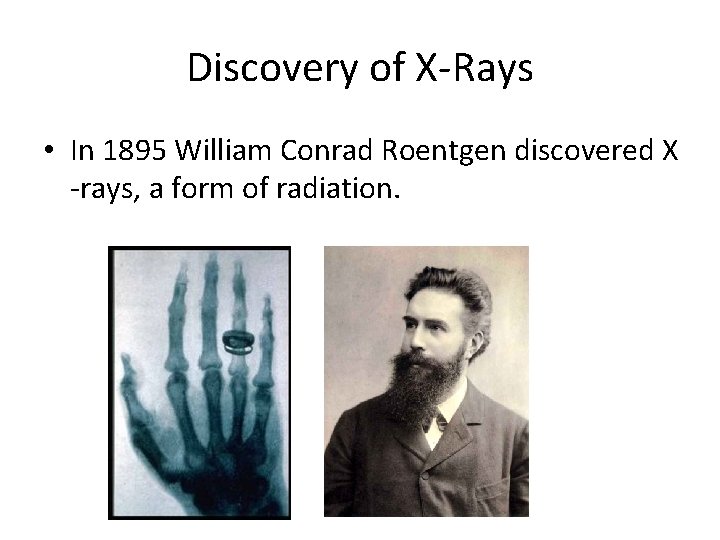
Discovery of X-Rays • In 1895 William Conrad Roentgen discovered X -rays, a form of radiation.
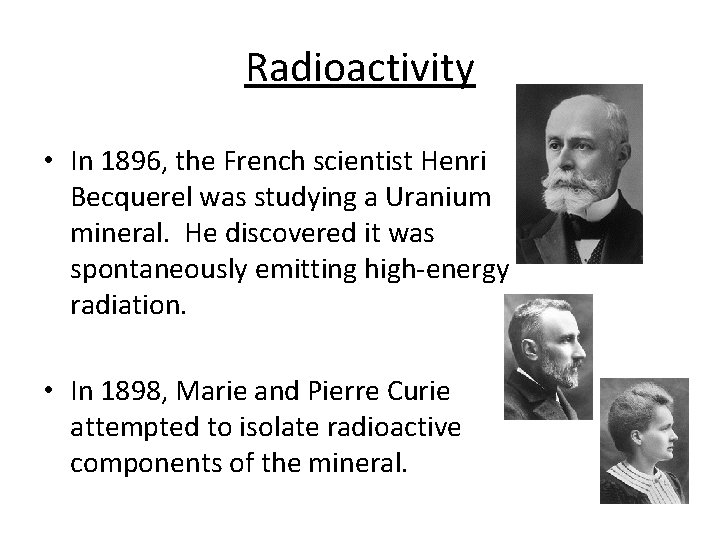
Radioactivity • In 1896, the French scientist Henri Becquerel was studying a Uranium mineral. He discovered it was spontaneously emitting high-energy radiation. • In 1898, Marie and Pierre Curie attempted to isolate radioactive components of the mineral.
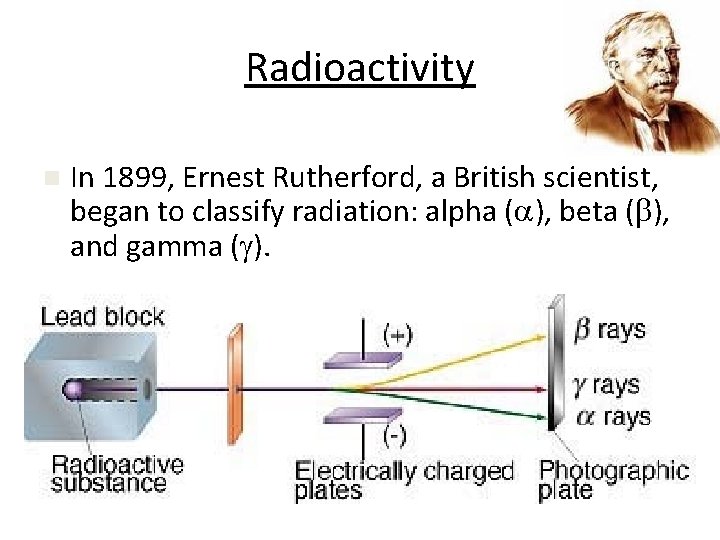
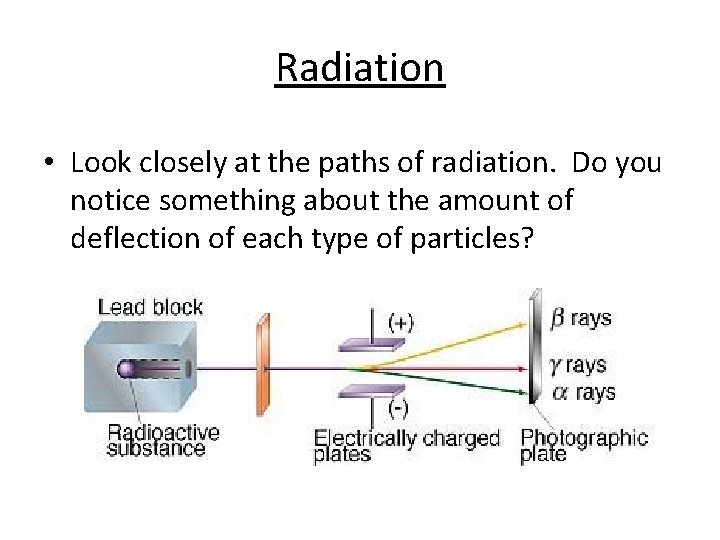
Radioactivity n In 1899, Ernest Rutherford, a British scientist, began to classify radiation: alpha (a), beta (b), and gamma (g).
Radiation • Look closely at the paths of radiation. Do you notice something about the amount of deflection of each type of particles?
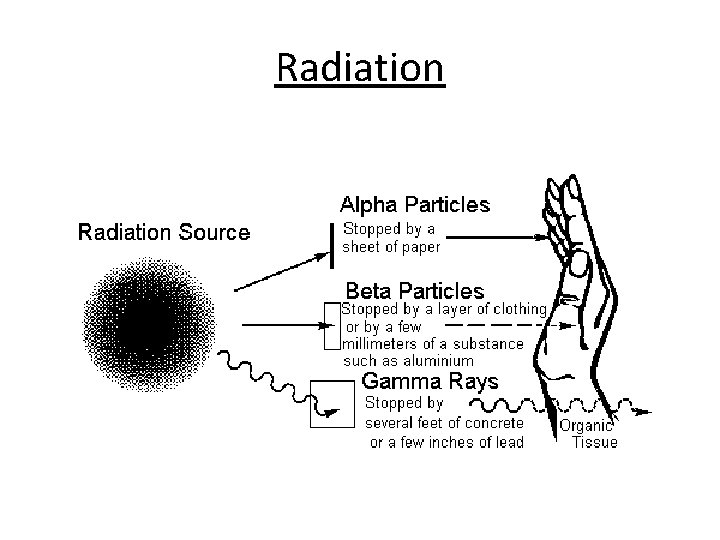
Radiation
Changes in the Nucleus Nuclear Reaction- changes that occur in the atom’s nucleus. • Nuclear reactions can change the composition of an atom’s nucleus permanently.
Types of Radiation Produced in Nuclear Reactions • Alpha (a) • Beta (b) • Gamma (g)
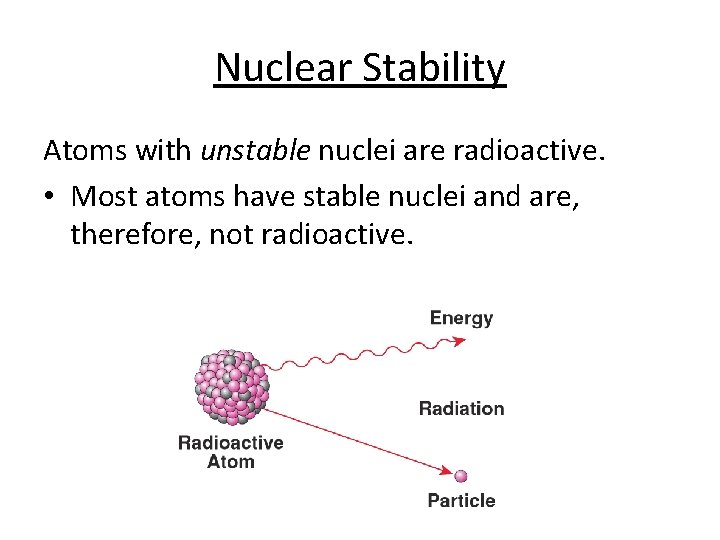
Nuclear Stability Atoms with unstable nuclei are radioactive. • Most atoms have stable nuclei and are, therefore, not radioactive.
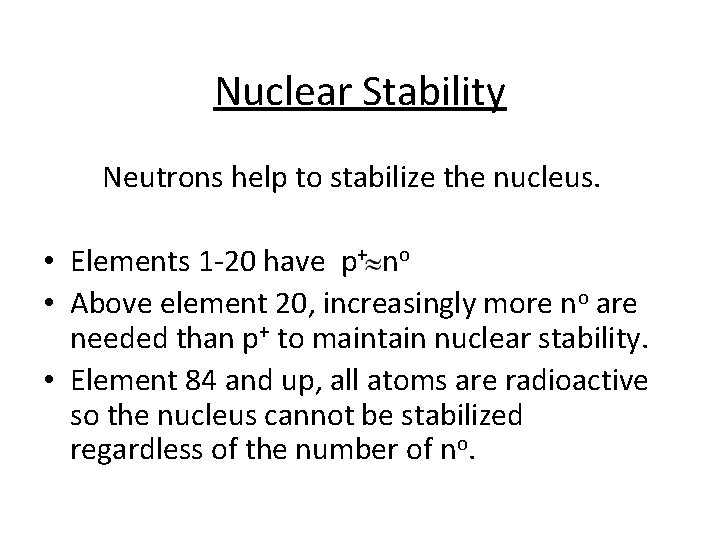
Nuclear Stability Neutrons help to stabilize the nucleus. • Elements 1 -20 have p+ no • Above element 20, increasingly more no are needed than p+ to maintain nuclear stability. • Element 84 and up, all atoms are radioactive so the nucleus cannot be stabilized regardless of the number of no.
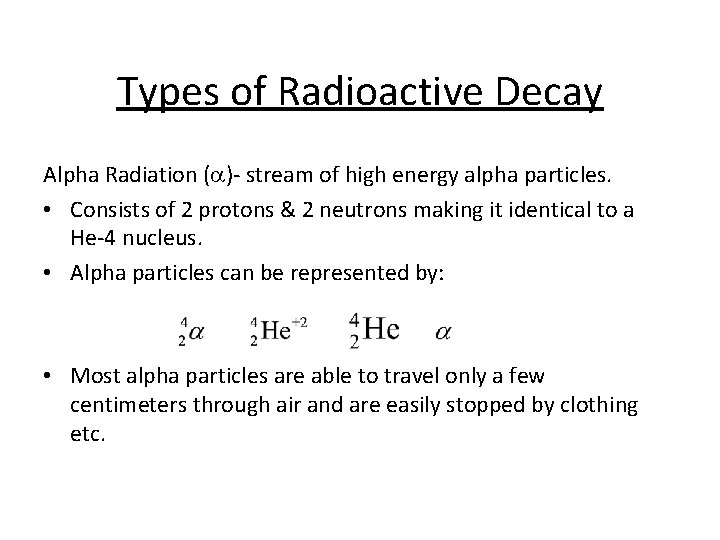
Types of Radioactive Decay Alpha Radiation (a)- stream of high energy alpha particles. • Consists of 2 protons & 2 neutrons making it identical to a He-4 nucleus. • Alpha particles can be represented by: • Most alpha particles are able to travel only a few centimeters through air and are easily stopped by clothing etc.
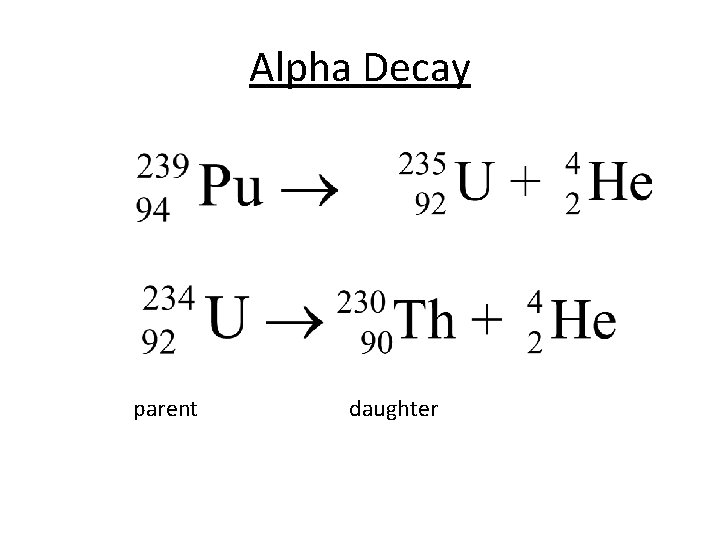
Alpha Decay parent daughter
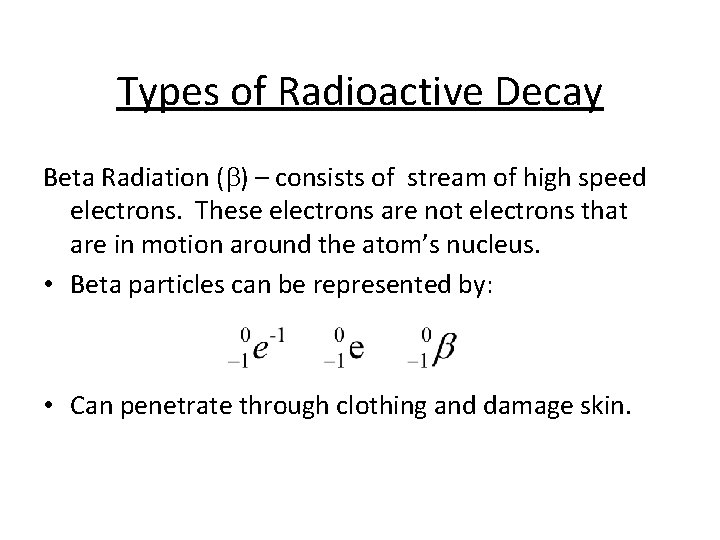
Types of Radioactive Decay Beta Radiation (b) – consists of stream of high speed electrons. These electrons are not electrons that are in motion around the atom’s nucleus. • Beta particles can be represented by: • Can penetrate through clothing and damage skin.
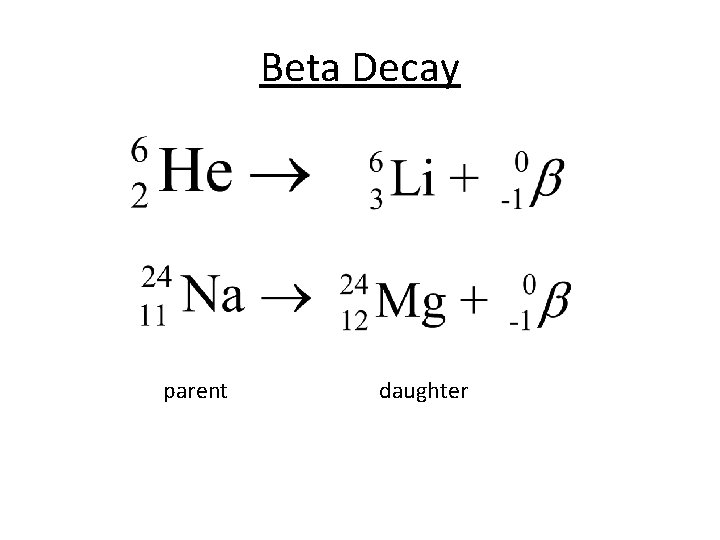
Beta Decay parent daughter
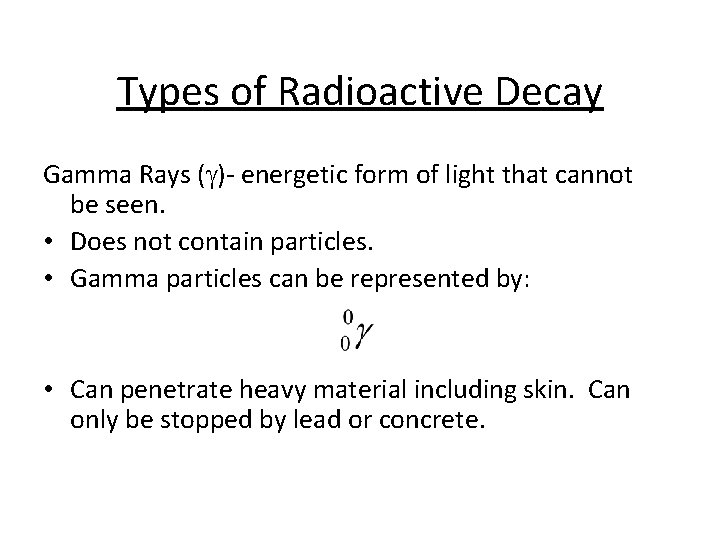
Types of Radioactive Decay Gamma Rays (g)- energetic form of light that cannot be seen. • Does not contain particles. • Gamma particles can be represented by: • Can penetrate heavy material including skin. Can only be stopped by lead or concrete.
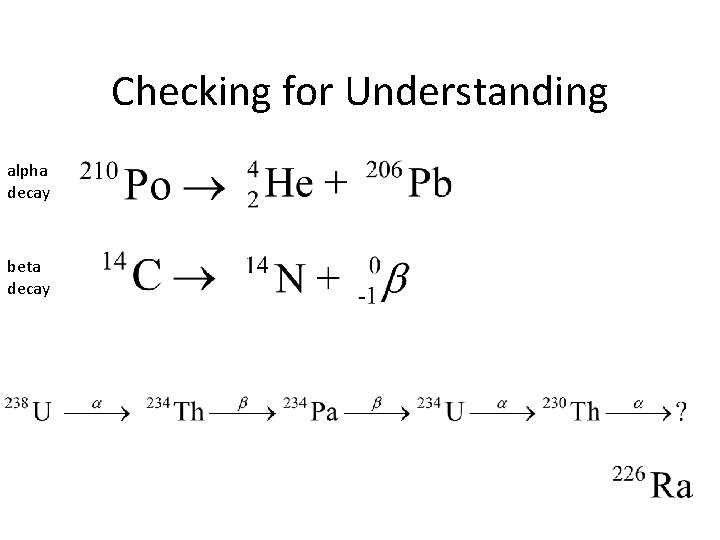
Checking for Understanding alpha decay beta decay
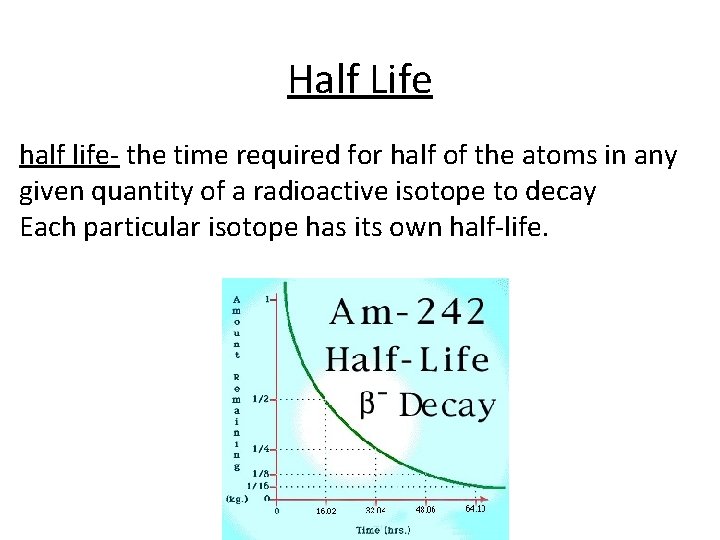
Half Life half life- the time required for half of the atoms in any given quantity of a radioactive isotope to decay Each particular isotope has its own half-life.
Half Life p. 689 Sample Problem B Phosphorus-32 has a half-life of 14. 3 days. How many milligrams of phosphorus-32 remain after 57. 2 days if you start with 4. 0 mg of the isotope? Ans: 0. 25 mg