Top Ten High Referral Quick Hits Miranda Falk


- Slides: 36
Top Ten High Referral Quick Hits Miranda Falk PA-C Center for Pediatric Orthopaedic Surgery Phoenix Children’s Hospital October 26, 2018 The Art and Practice of Pediatric Orthopedics
Top Ten Referral Quick Hits • No financial disclosures related to this topic
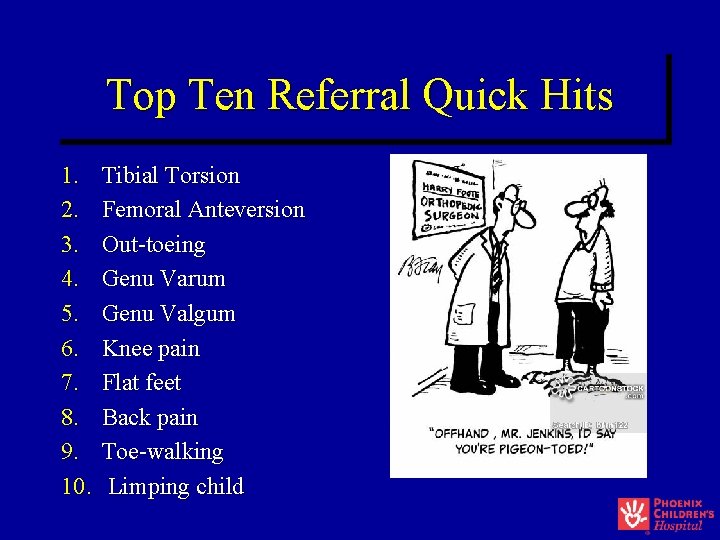
Top Ten Referral Quick Hits 1. 2. 3. 4. 5. 6. 7. 8. 9. 10. Tibial Torsion Femoral Anteversion Out-toeing Genu Varum Genu Valgum Knee pain Flat feet Back pain Toe-walking Limping child
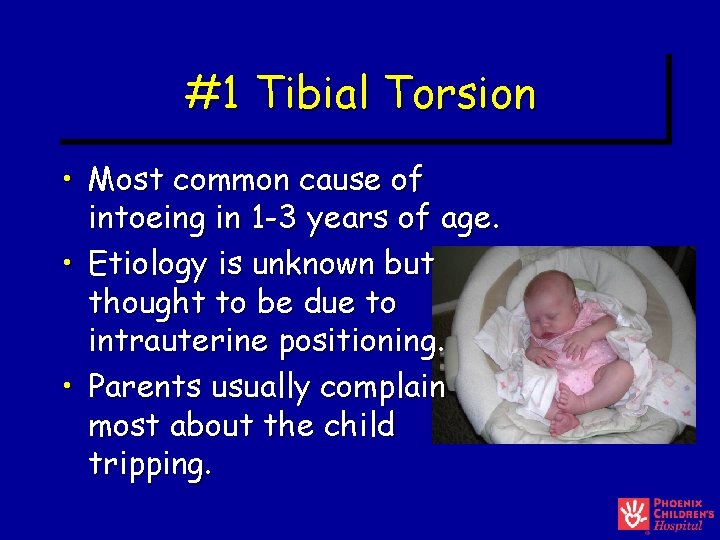
#1 Tibial Torsion • Most common cause of intoeing in 1 -3 years of age. • Etiology is unknown but thought to be due to intrauterine positioning. • Parents usually complain most about the child tripping.
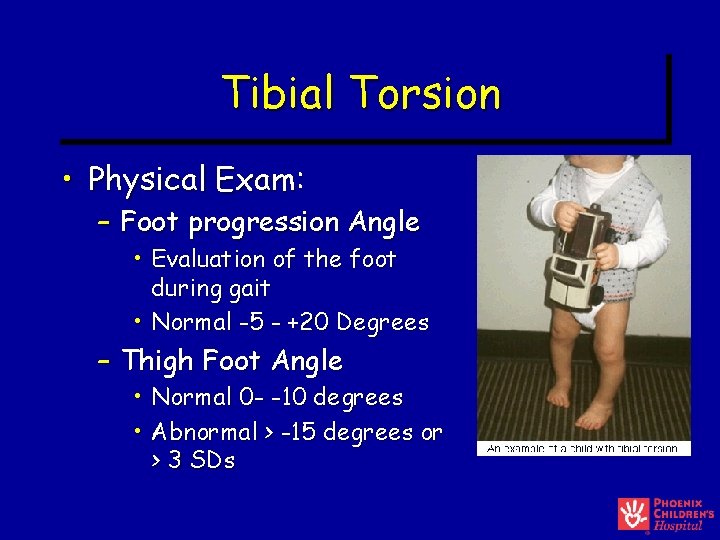
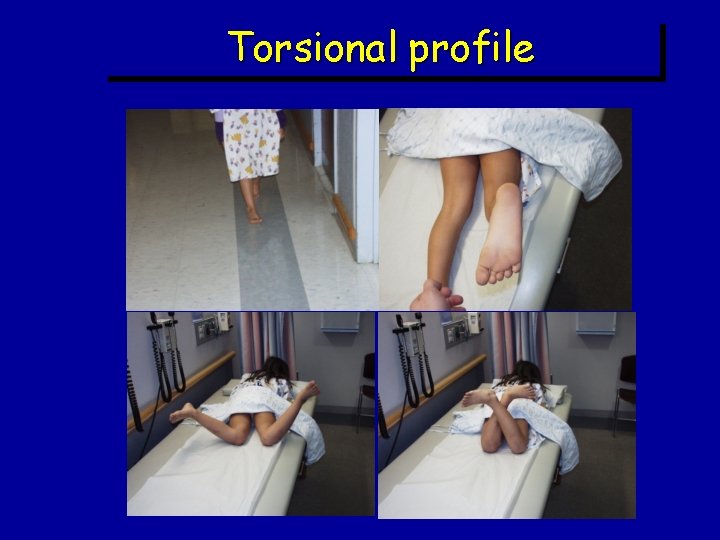
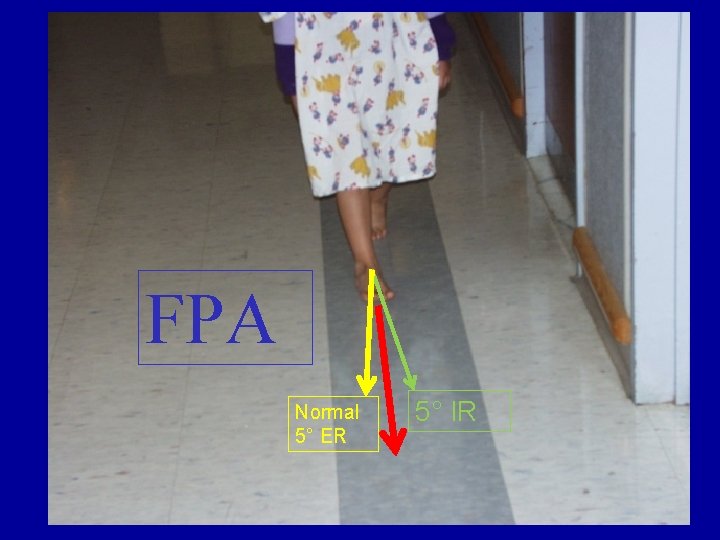
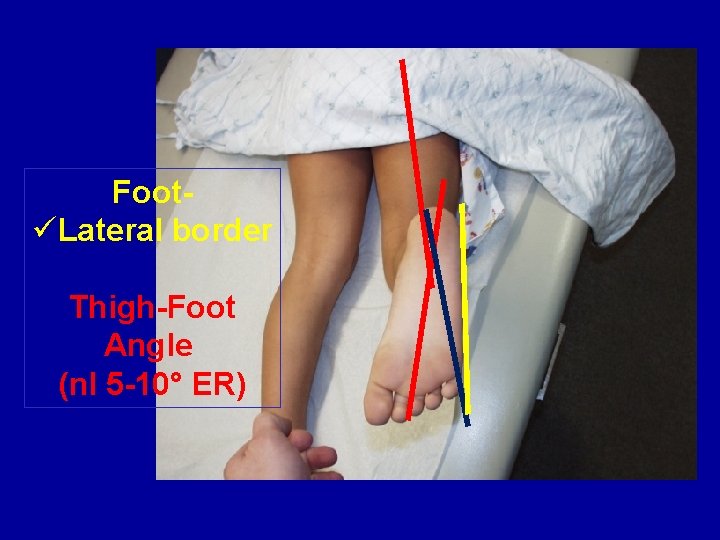
Tibial Torsion • Physical Exam: – Foot progression Angle • Evaluation of the foot during gait • Normal -5 - +20 Degrees – Thigh Foot Angle • Normal 0 - -10 degrees • Abnormal > -15 degrees or > 3 SDs
Torsional profile
FPA Normal 5° ER 5° IR
FootüLateral border Thigh-Foot Angle (nl 5 -10° ER)
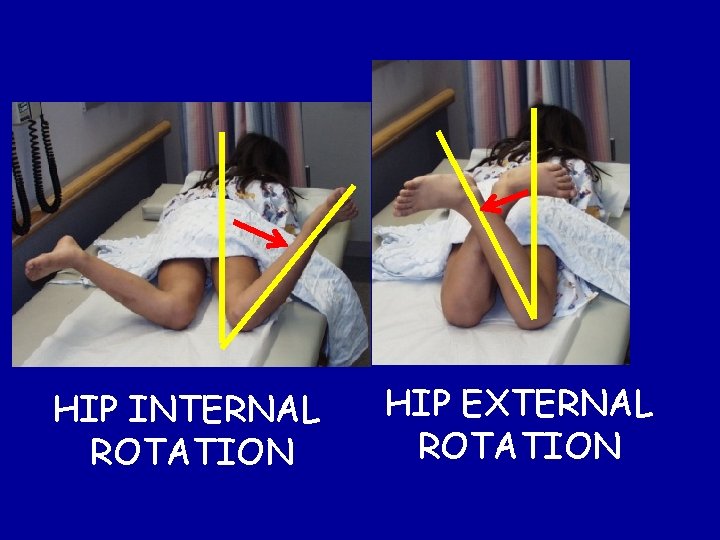
HIP INTERNAL ROTATION HIP EXTERNAL ROTATION
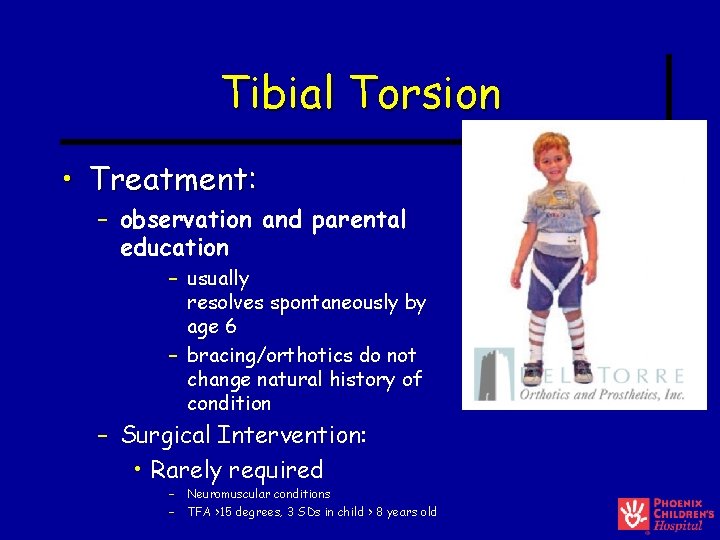
Tibial Torsion • Treatment: – observation and parental education – usually resolves spontaneously by age 6 – bracing/orthotics do not change natural history of condition – Surgical Intervention: • Rarely required – Neuromuscular conditions – TFA >15 degrees, 3 SDs in child > 8 years old
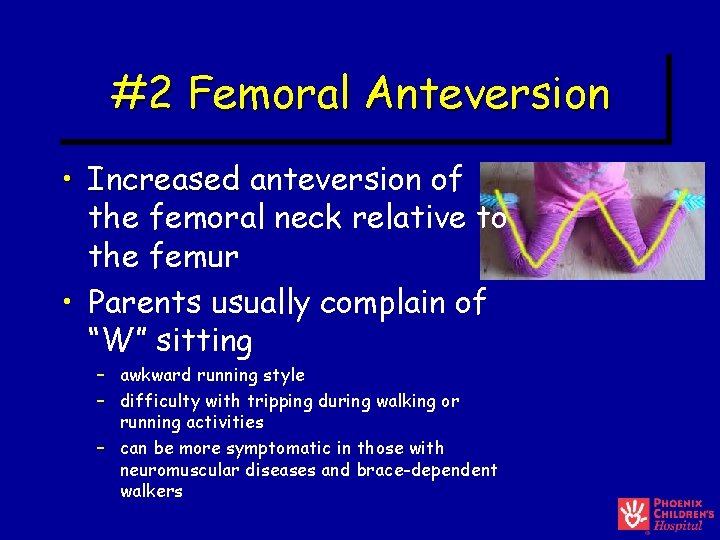
#2 Femoral Anteversion • Increased anteversion of the femoral neck relative to the femur • Parents usually complain of “W” sitting – awkward running style – difficulty with tripping during walking or running activities – can be more symptomatic in those with neuromuscular diseases and brace-dependent walkers
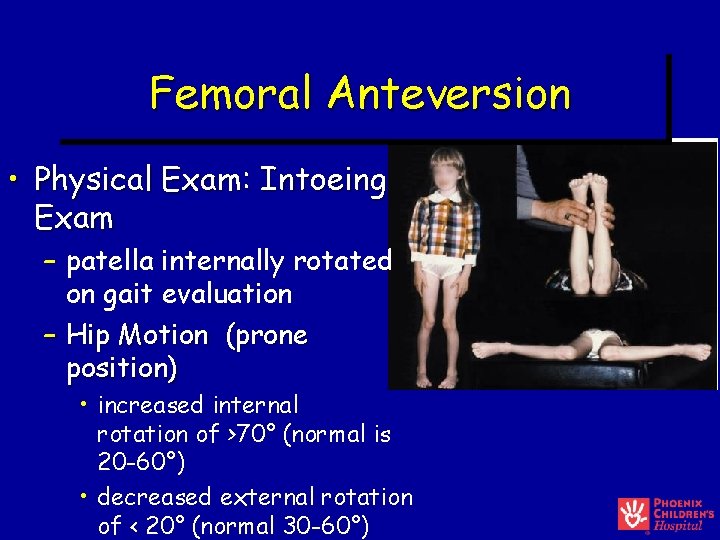
Femoral Anteversion • Physical Exam: Intoeing Exam – patella internally rotated on gait evaluation – Hip Motion (prone position) • increased internal rotation of >70° (normal is 20 -60°) • decreased external rotation of < 20° (normal 30 -60°)
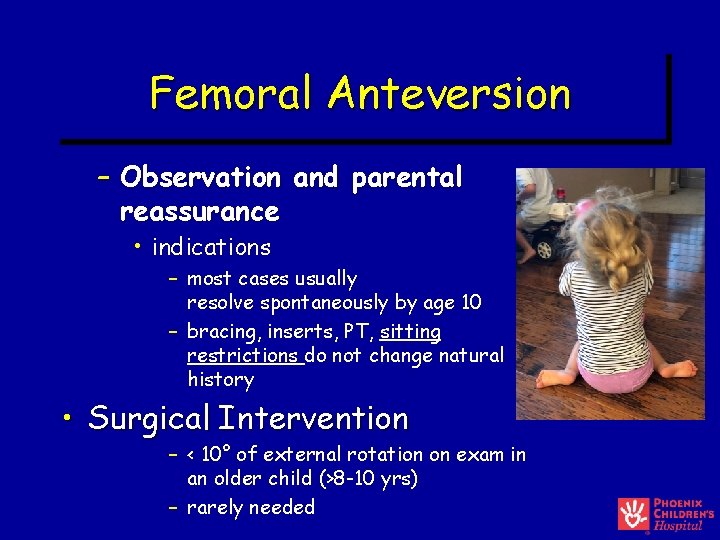
Femoral Anteversion – Observation and parental reassurance • indications – most cases usually resolve spontaneously by age 10 – bracing, inserts, PT, sitting restrictions do not change natural history • Surgical Intervention – < 10° of external rotation on exam in an older child (>8 -10 yrs) – rarely needed
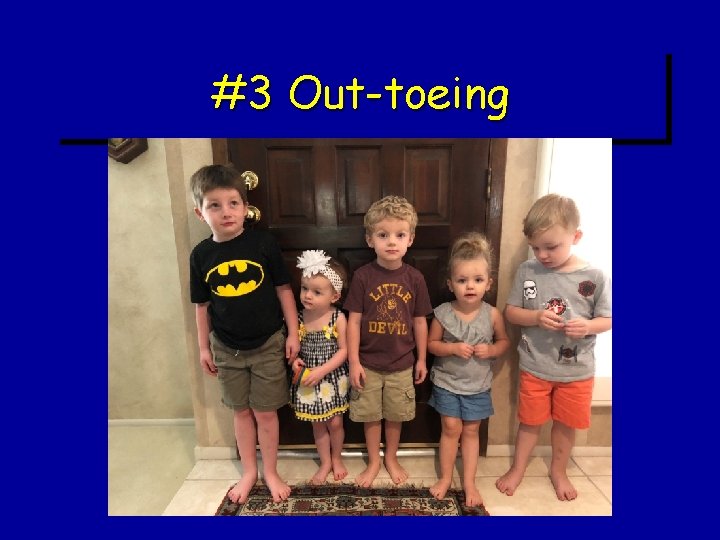
#3 Out-toeing
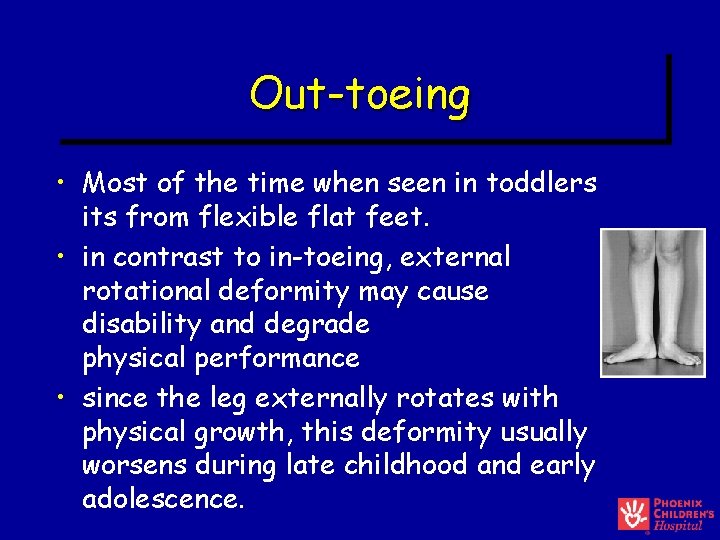
Out-toeing • Most of the time when seen in toddlers its from flexible flat feet. • in contrast to in-toeing, external rotational deformity may cause disability and degrade physical performance • since the leg externally rotates with physical growth, this deformity usually worsens during late childhood and early adolescence.
Out-toeing • Physical Exam: – Thigh Foot Angle – average during infancy is 5 degrees internal rotation, that slowly derotates – average at 8 years of age is 10 degrees external, ranging from -5 to +30 degrees • Treatment: – Observation & activity modification – Surgical Intervention: • >8 years of age with ETT > 3 SDs above mean ( >40 degrees external).
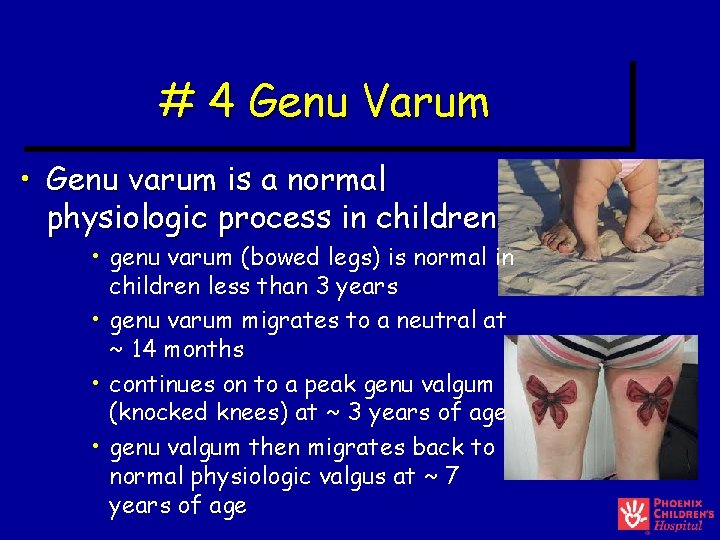
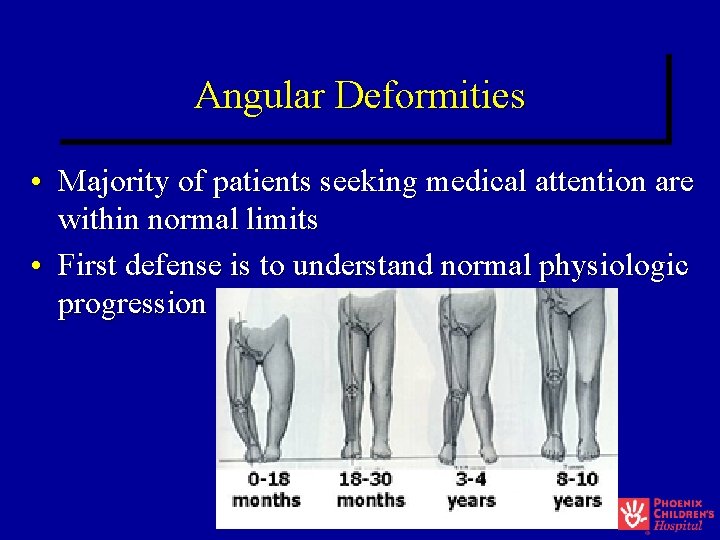
# 4 Genu Varum • Genu varum is a normal physiologic process in children • genu varum (bowed legs) is normal in children less than 3 years • genu varum migrates to a neutral at ~ 14 months • continues on to a peak genu valgum (knocked knees) at ~ 3 years of age • genu valgum then migrates back to normal physiologic valgus at ~ 7 years of age
Angular Deformities • Majority of patients seeking medical attention are within normal limits • First defense is to understand normal physiologic progression
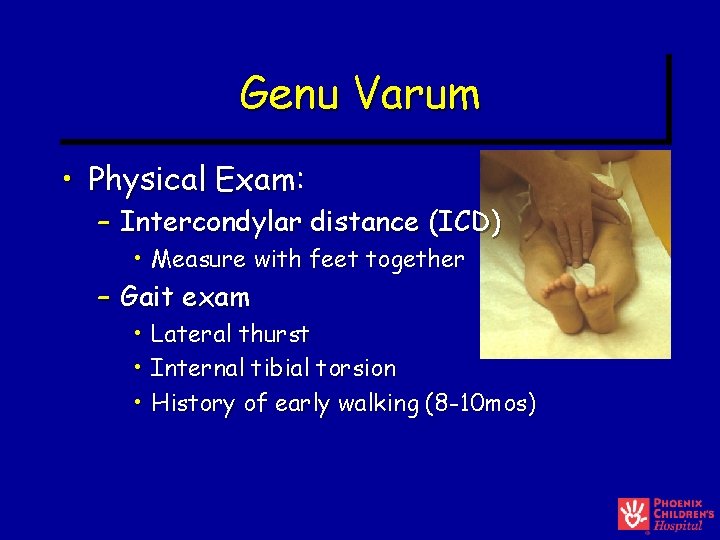
Genu Varum • Physical Exam: – Intercondylar distance (ICD) • Measure with feet together – Gait exam • Lateral thurst • Internal tibial torsion • History of early walking (8 -10 mos)
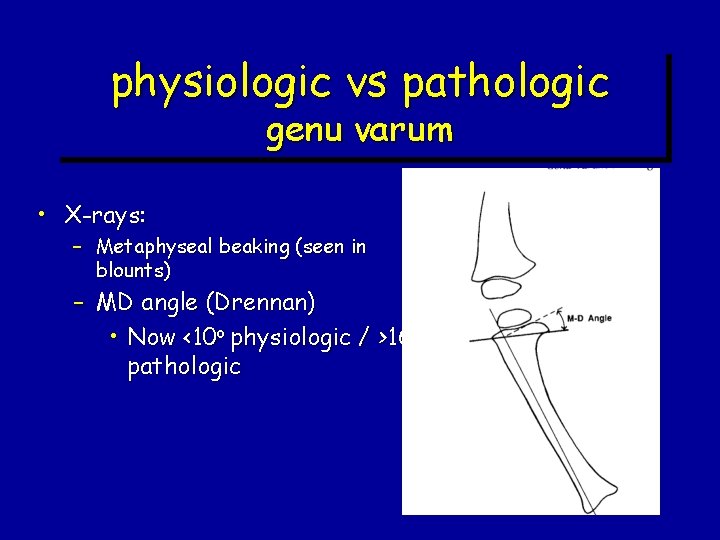
physiologic vs pathologic genu varum • X-rays: – Metaphyseal beaking (seen in blounts) – MD angle (Drennan) • Now <10 o physiologic / >16 o pathologic
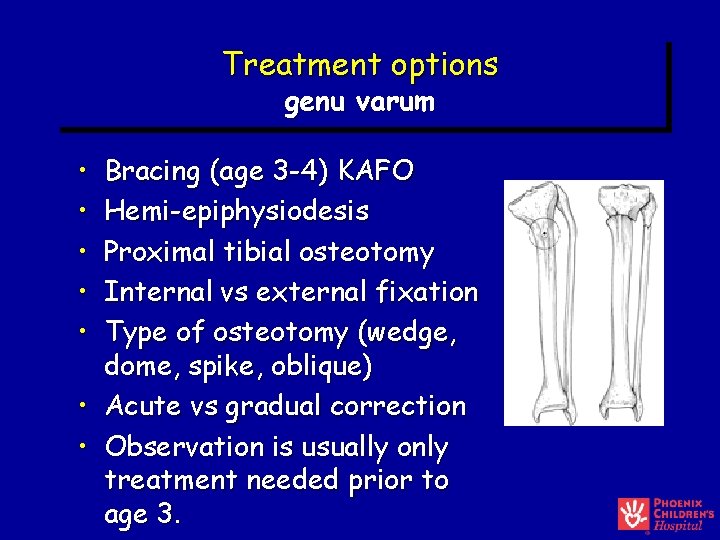
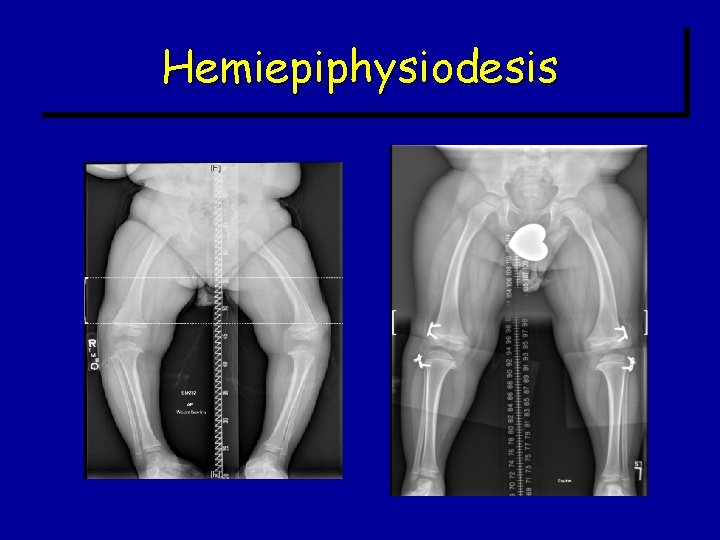
Treatment options genu varum • • Bracing (age 3 -4) KAFO Hemi-epiphysiodesis Proximal tibial osteotomy Internal vs external fixation Type of osteotomy (wedge, dome, spike, oblique) Acute vs gradual correction Observation is usually only treatment needed prior to age 3.
Hemiepiphysiodesis
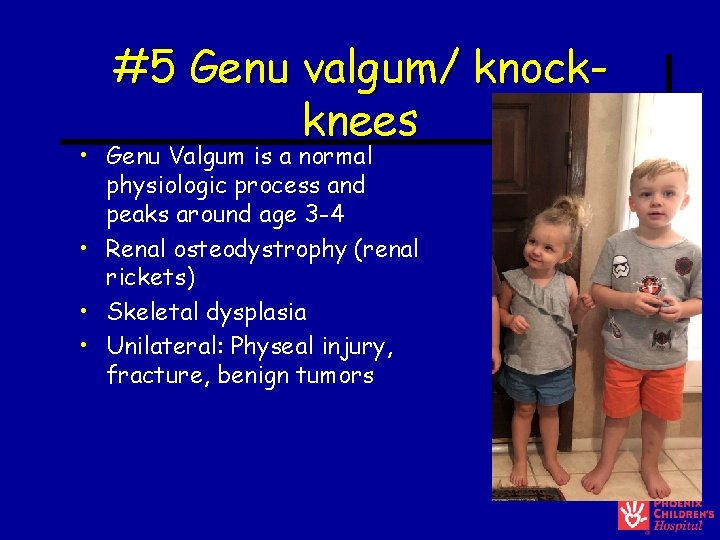
#5 Genu valgum/ knockknees • Genu Valgum is a normal physiologic process and peaks around age 3 -4 • Renal osteodystrophy (renal rickets) • Skeletal dysplasia • Unilateral: Physeal injury, fracture, benign tumors
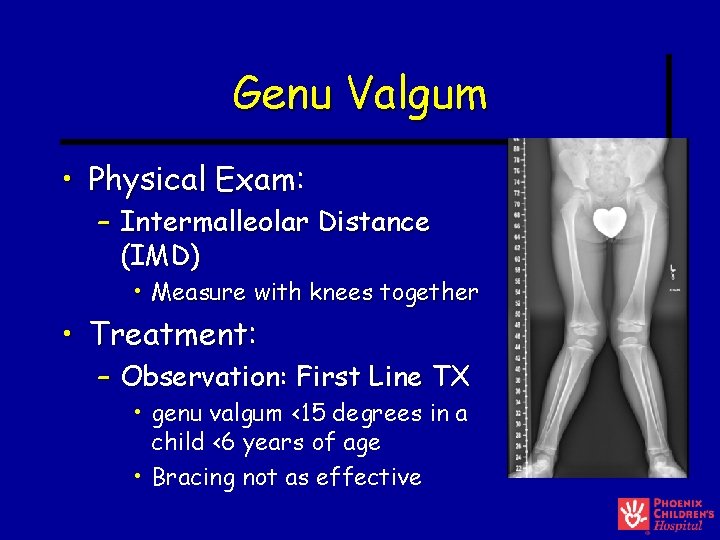
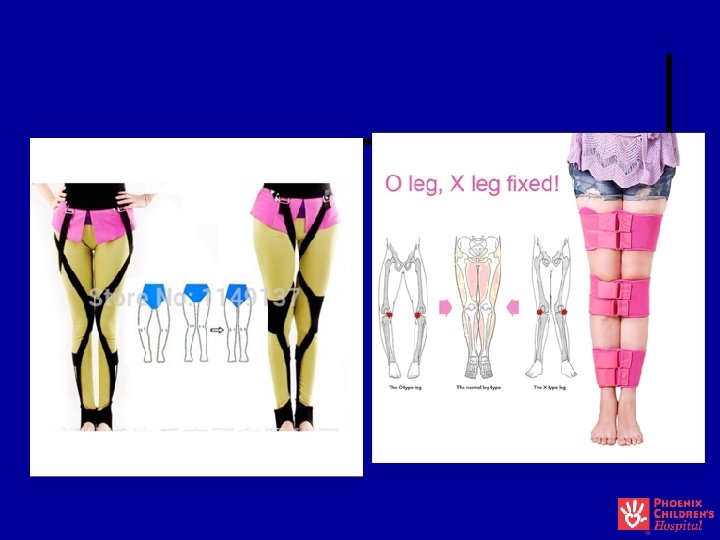
Genu Valgum • Physical Exam: – Intermalleolar Distance (IMD) • Measure with knees together • Treatment: – Observation: First Line TX • genu valgum <15 degrees in a child <6 years of age • Bracing not as effective
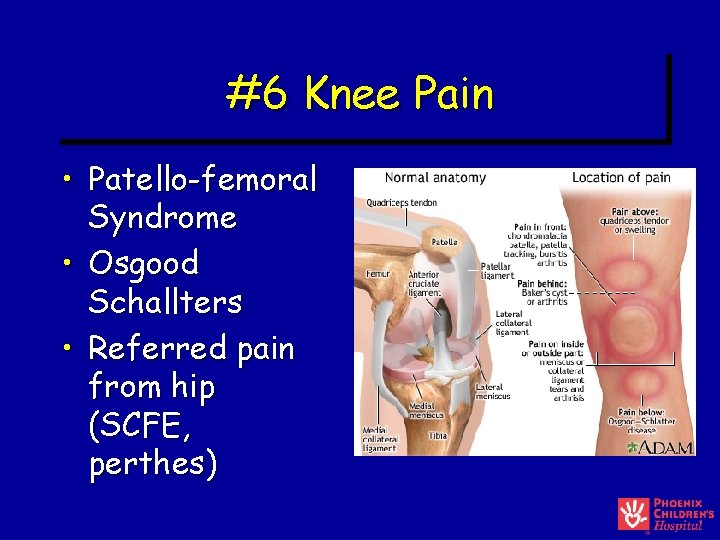
#6 Knee Pain • Patello-femoral Syndrome • Osgood Schallters • Referred pain from hip (SCFE, perthes)
Patello-femoral Syndrome • Also known as anterior knee pain • Most common in young adults and adolescents • More common in females • Usually aggravated by going up and down stairs, prolonged sitting or crawling • Pain with compression of the patella • Tx: Physical therapy and NSAIDs
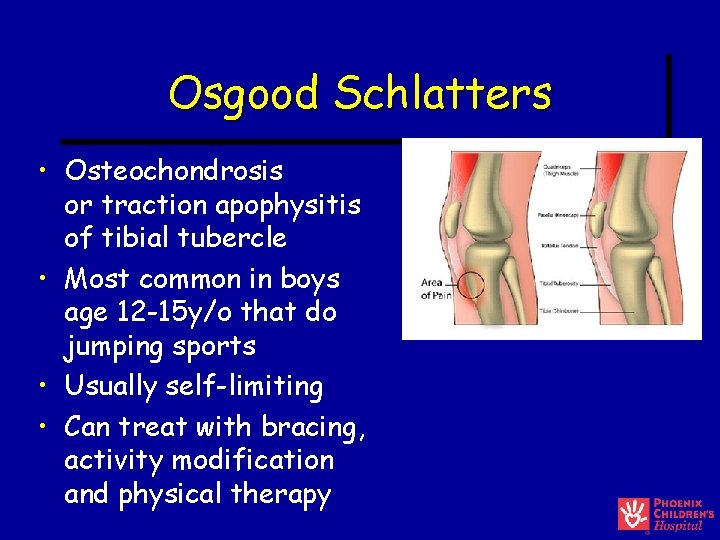
Osgood Schlatters • Osteochondrosis or traction apophysitis of tibial tubercle • Most common in boys age 12 -15 y/o that do jumping sports • Usually self-limiting • Can treat with bracing, activity modification and physical therapy
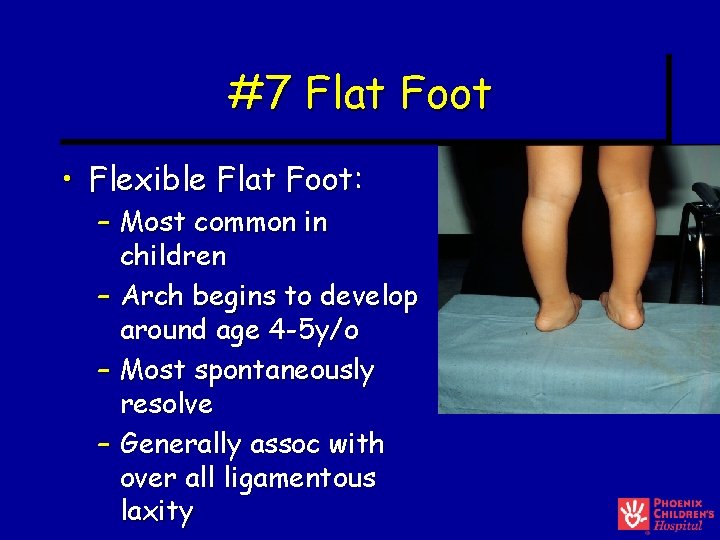
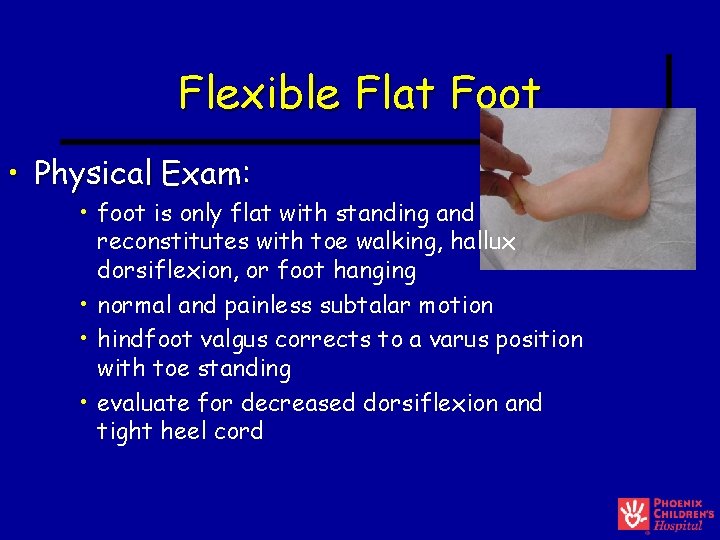
#7 Flat Foot • Flexible Flat Foot: – Most common in children – Arch begins to develop around age 4 -5 y/o – Most spontaneously resolve – Generally assoc with over all ligamentous laxity
Flexible Flat Foot • Physical Exam: • foot is only flat with standing and reconstitutes with toe walking, hallux dorsiflexion, or foot hanging • normal and painless subtalar motion • hindfoot valgus corrects to a varus position with toe standing • evaluate for decreased dorsiflexion and tight heel cord
#8 Back Pain • Most common cause of adolescent back pain is mechanical low back pain • Most complain of pain over the paraspinal muscles • Usually recommend physical therapy and home exercise program • May need further imaging if having neuro sx
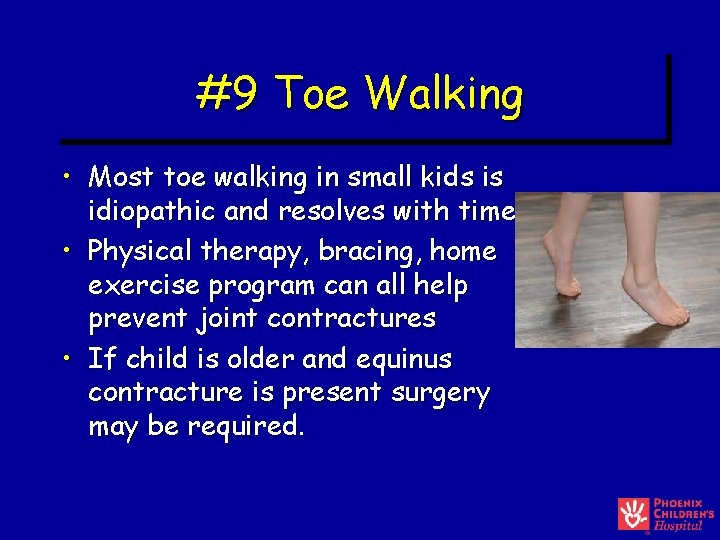
#9 Toe Walking • Most toe walking in small kids is idiopathic and resolves with time • Physical therapy, bracing, home exercise program can all help prevent joint contractures • If child is older and equinus contracture is present surgery may be required.
#10 Limping Child • Toddlers fracture • Transient synovitis
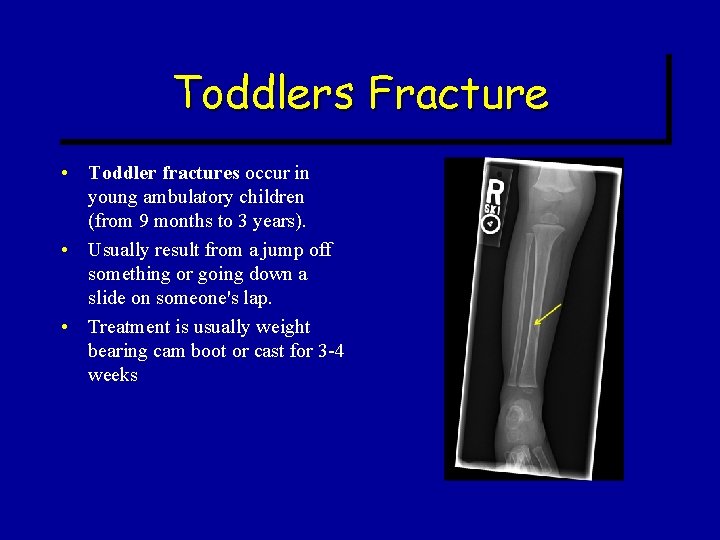
Toddlers Fracture • Toddler fractures occur in young ambulatory children (from 9 months to 3 years). • Usually result from a jump off something or going down a slide on someone's lap. • Treatment is usually weight bearing cam boot or cast for 3 -4 weeks
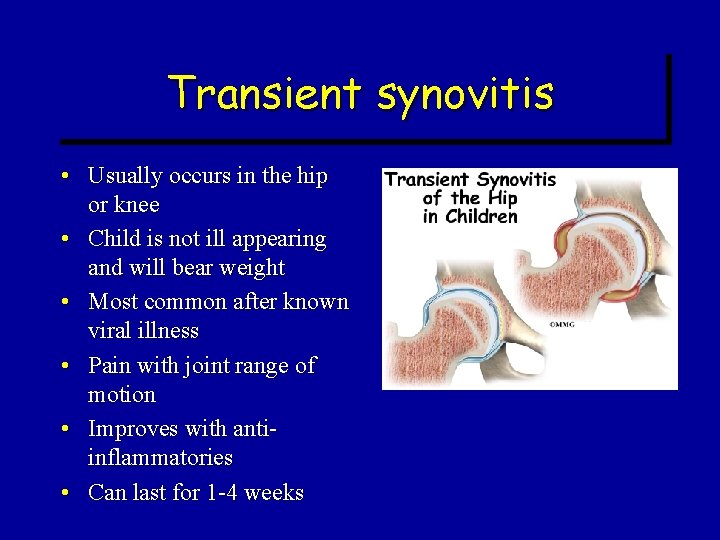
Transient synovitis • Usually occurs in the hip or knee • Child is not ill appearing and will bear weight • Most common after known viral illness • Pain with joint range of motion • Improves with antiinflammatories • Can last for 1 -4 weeks
Thank You