
Psychology of Incentives Based on Fehr Falk 2002
Psychology of Incentives Based on Fehr & Falk (2002)
Summary ▪ Economics based on a a naive view of ▪ incentives: effort and risk aversion Need to consider “preferences” for: ♦ Reciprocation ♦ Social approval ♦ Interesting work
I. Reciprocity ▪ Reciprocity as a source of voluntary ▪ ▪ ▪ cooperation Explicit incentives and voluntary cooperation Reciprocity as a source of incentives Incentives based on reciprocity and repetition
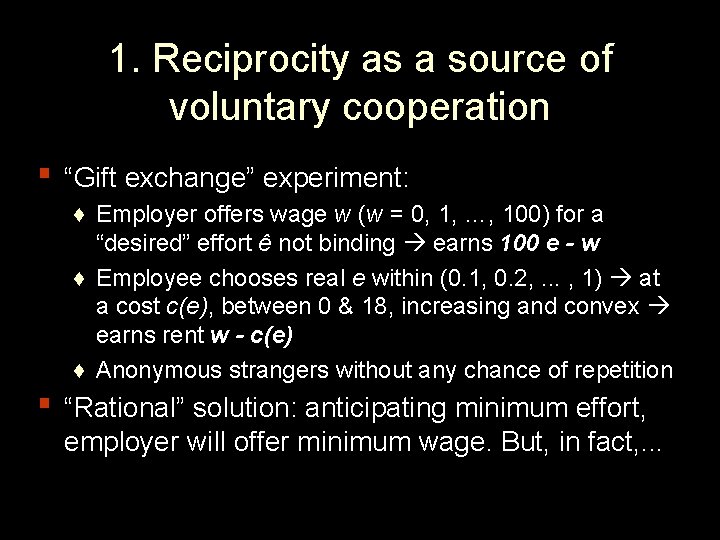
1. Reciprocity as a source of voluntary cooperation ▪ “Gift exchange” experiment: ♦ Employer offers wage w (w = 0, 1, …, 100) for a “desired” effort ê not binding earns 100 e - w ♦ Employee chooses real e within (0. 1, 0. 2, . . . , 1) at a cost c(e), between 0 & 18, increasing and convex earns rent w - c(e) ♦ Anonymous strangers without any chance of repetition ▪ “Rational” solution: anticipating minimum effort, employer will offer minimum wage. But, in fact, . . .
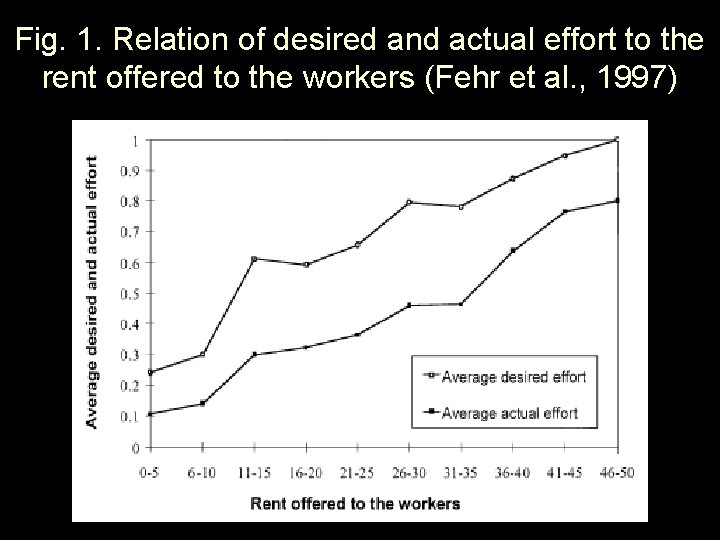
Fig. 1. Relation of desired and actual effort to the rent offered to the workers (Fehr et al. , 1997)
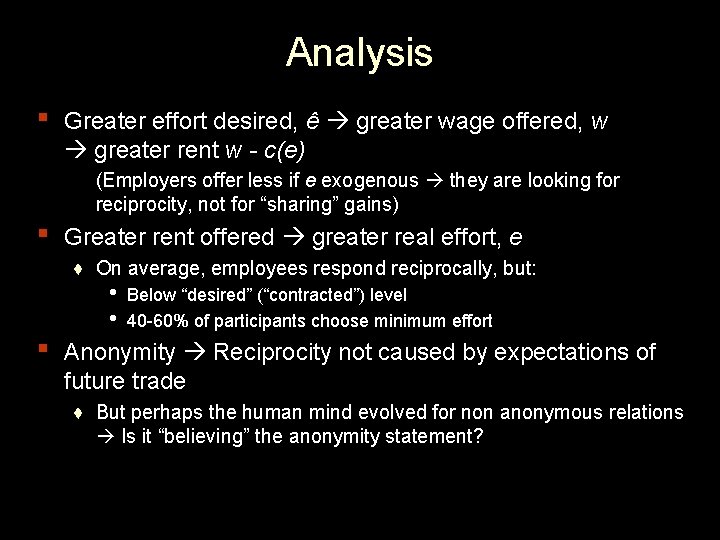
Analysis ▪ ▪ Greater effort desired, ê greater wage offered, w greater rent w - c(e) (Employers offer less if e exogenous they are looking for reciprocity, not for “sharing” gains) Greater rent offered greater real effort, e ♦ On average, employees respond reciprocally, but: ▪ • Below “desired” (“contracted”) level • 40 -60% of participants choose minimum effort Anonymity Reciprocity not caused by expectations of future trade ♦ But perhaps the human mind evolved for non anonymous relations Is it “believing” the anonymity statement?
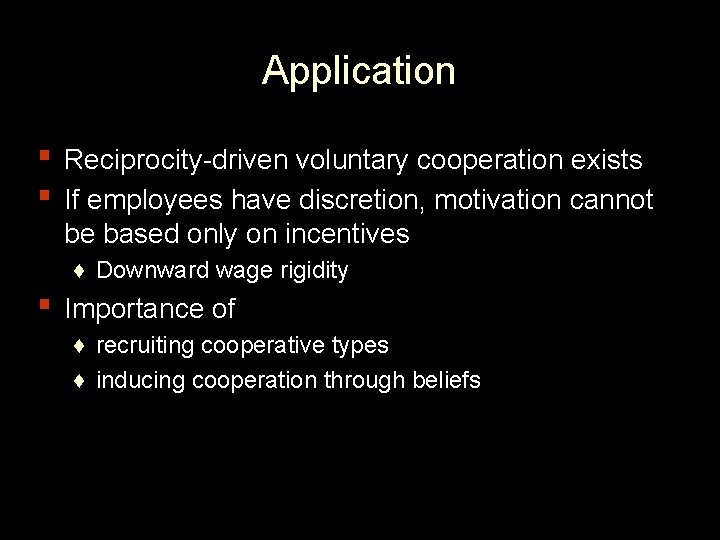
Application ▪ Reciprocity-driven voluntary cooperation exists ▪ If employees have discretion, motivation cannot be based only on incentives ♦ Downward wage rigidity ▪ Importance of ♦ recruiting cooperative types ♦ inducing cooperation through beliefs
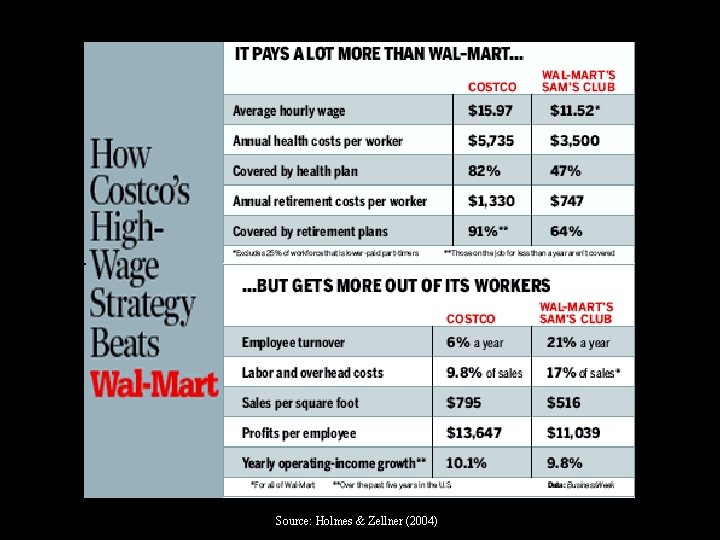
Source: Holmes & Zellner (2004)
Reciprocity in public goods ▪ Experiments: ♦ Individuals contribute money to a common pool, expecting an equal share in a multiple of the pool • • People start contributing more but their contributions decay with time and approach zero at the end When cooperators can punish free-riders even at a cost (“strong reciprocity”), they do it, motivating cooperation ♦ Depending on punishing circumstances, ▪ • cheaters lead cooperators incapable to retaliate to cheat • cooperators willing to incur costly retaliation lead cheaters to cooperate Managerial applications ♦ Management of expectations ♦ Dismissal of shirkers ♦ Selection on the basis of loyalty
2. Explicit incentives and voluntary cooperation ▪ Experiment with employers that contract: ♦ As before (“no incentive”) ♦ With “fines” charged with probability 1/3 to shirkers (“negatively framed”) ♦ With bonus (“positively framed”) producing the same compensation function as fines
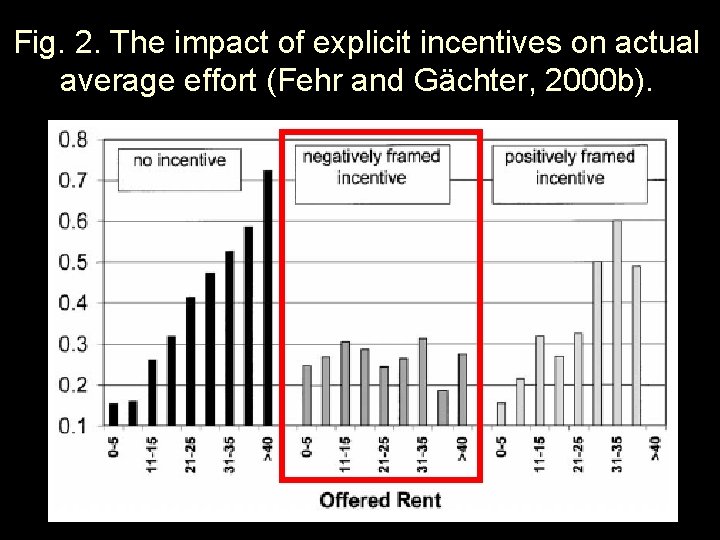
Fig. 2. The impact of explicit incentives on actual average effort (Fehr and Gächter, 2000 b).
Analysis ▪ Fines ♦ Most choose the maximum (69%) ♦ Voluntary cooperation disappears (“crowding out”) • • Lower surplus Redistribution: lower wages, higher profits ♦ Why does voluntary cooperation disappear? • ▪ Introducing a fine is seen as and/or reveals distrust: contradiction between fine and generosity Logic from Evolutionary Psychology: type identification • Bonuses ♦ Small effect, but worst than without incentives
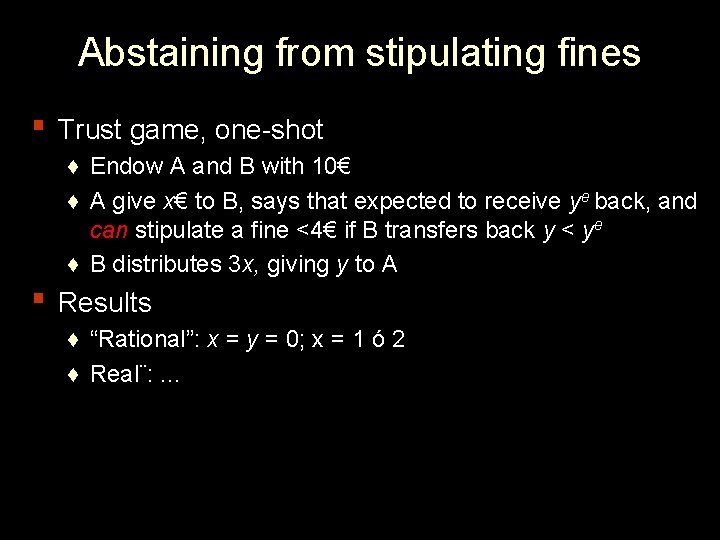
Abstaining from stipulating fines ▪ Trust game, one-shot ♦ Endow A and B with 10€ ♦ A give x€ to B, says that expected to receive ye back, and can stipulate a fine <4€ if B transfers back y < ye ♦ B distributes 3 x, giving y to A ▪ Results ♦ “Rational”: x = y = 0; x = 1 ó 2 ♦ Real¨: . . .
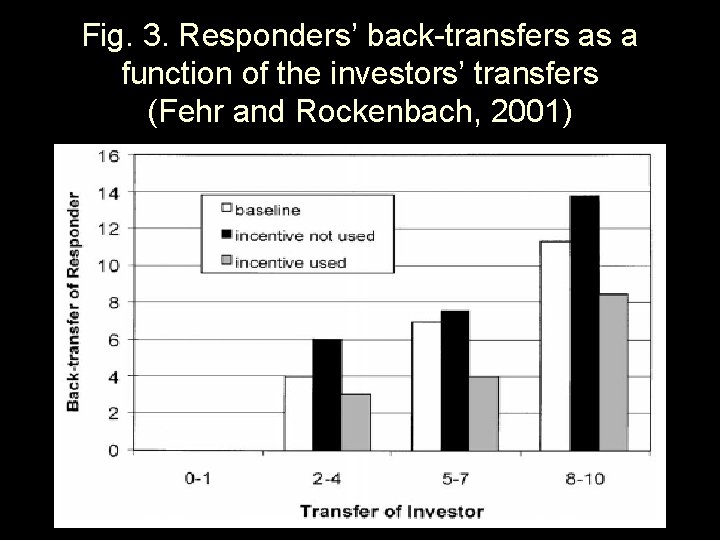
Fig. 3. Responders’ back-transfers as a function of the investors’ transfers (Fehr and Rockenbach, 2001)
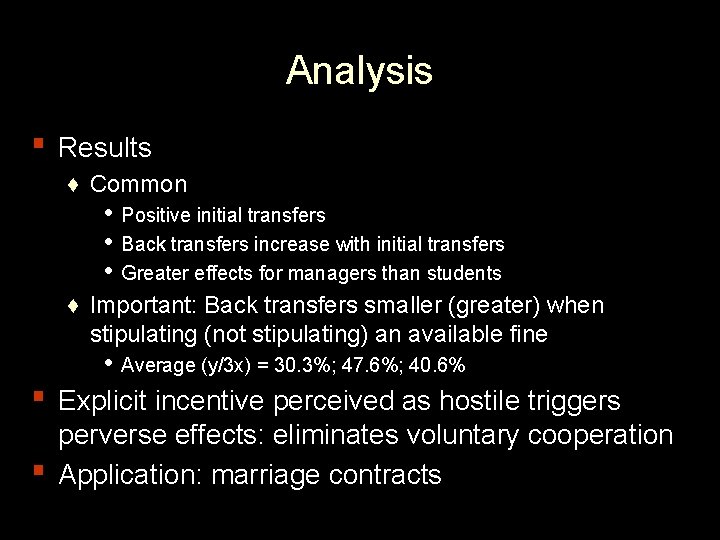
Analysis ▪ Results ♦ Common • • • Positive initial transfers Back transfers increase with initial transfers Greater effects for managers than students ♦ Important: Back transfers smaller (greater) when stipulating (not stipulating) an available fine ▪ ▪ • Average (y/3 x) = 30. 3%; 47. 6%; 40. 6% Explicit incentive perceived as hostile triggers perverse effects: eliminates voluntary cooperation Application: marriage contracts
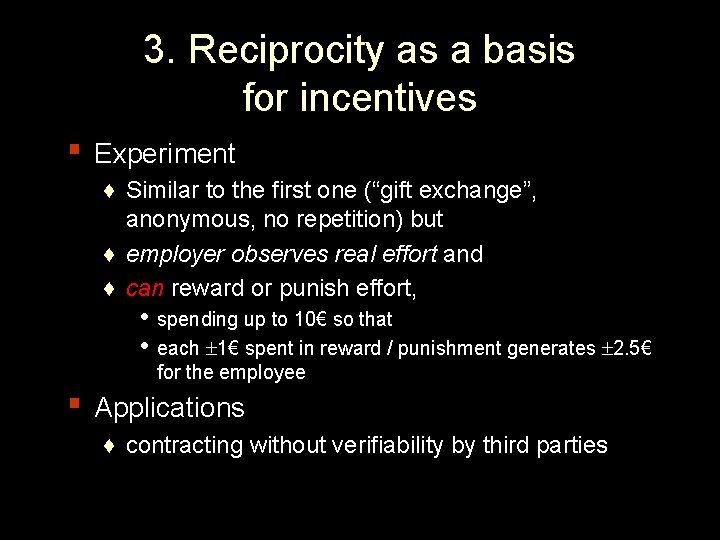
3. Reciprocity as a basis for incentives ▪ Experiment ♦ Similar to the first one (“gift exchange”, anonymous, no repetition) but ♦ employer observes real effort and ♦ can reward or punish effort, • • spending up to 10€ so that each 1€ spent in reward / punishment generates 2. 5€ for the employee ▪ Applications ♦ contracting without verifiability by third parties
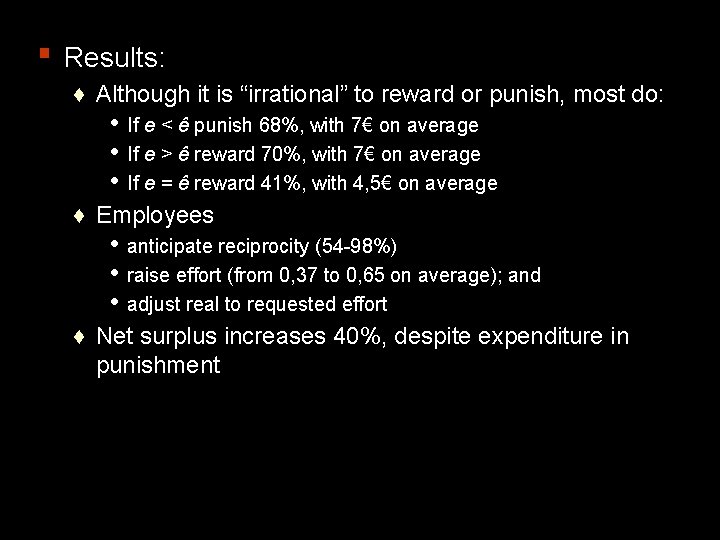
▪ Results: ♦ Although it is “irrational” to reward or punish, most do: • • • If e < ê punish 68%, with 7€ on average If e > ê reward 70%, with 7€ on average If e = ê reward 41%, with 4, 5€ on average ♦ Employees • • • anticipate reciprocity (54 -98%) raise effort (from 0, 37 to 0, 65 on average); and adjust real to requested effort ♦ Net surplus increases 40%, despite expenditure in punishment
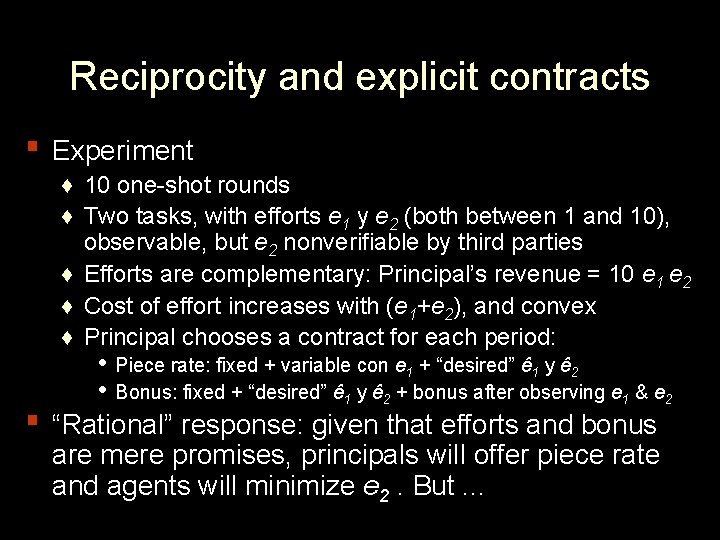
Reciprocity and explicit contracts ▪ Experiment ♦ 10 one-shot rounds ♦ Two tasks, with efforts e 1 y e 2 (both between 1 and 10), observable, but e 2 nonverifiable by third parties ♦ Efforts are complementary: Principal’s revenue = 10 e 1 e 2 ♦ Cost of effort increases with (e 1+e 2), and convex ♦ Principal chooses a contract for each period: ▪ • Piece rate: fixed + variable con e 1 + “desired” ê 1 y ê 2 • Bonus: fixed + “desired” ê 1 y ê 2 + bonus after observing e 1 & e 2 “Rational” response: given that efforts and bonus are mere promises, principals will offer piece rate and agents will minimize e 2. But. . .
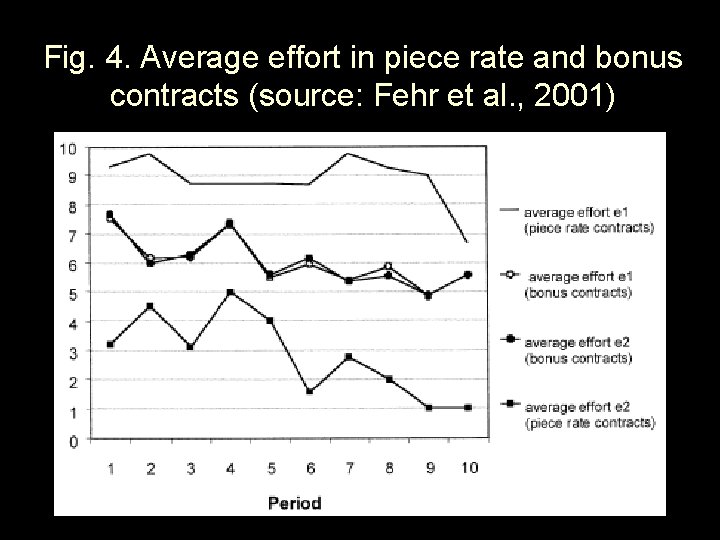
Fig. 4. Average effort in piece rate and bonus contracts (source: Fehr et al. , 2001)
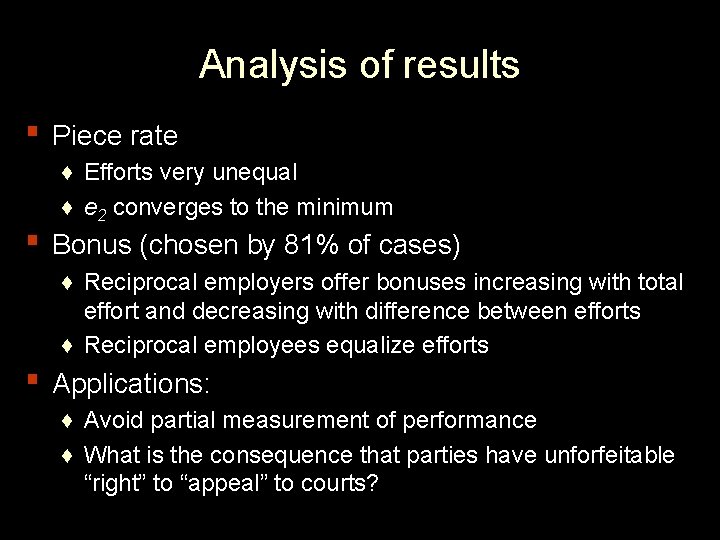
Analysis of results ▪ Piece rate ♦ Efforts very unequal ♦ e 2 converges to the minimum ▪ Bonus (chosen by 81% of cases) ♦ Reciprocal employers offer bonuses increasing with total effort and decreasing with difference between efforts ♦ Reciprocal employees equalize efforts ▪ Applications: ♦ Avoid partial measurement of performance ♦ What is the consequence that parties have unforfeitable “right” to “appeal” to courts?
Incentives based on reciprocity and repetition ▪ Experiment as in the first experiment (“gift ▪ ▪ exchange”), comparing: one-shot repeated interaction ♦ Repeated 15 times with traders identified with an ID number ♦ Offers include wage, w; desired effort, ê, employer ID) and can be • Private to as specific worker long term relationship • Public to all workers ♦ 7 employers, 10 workers “firing” is a punishment ♦ Will the availability of firing crowd out cooperation?
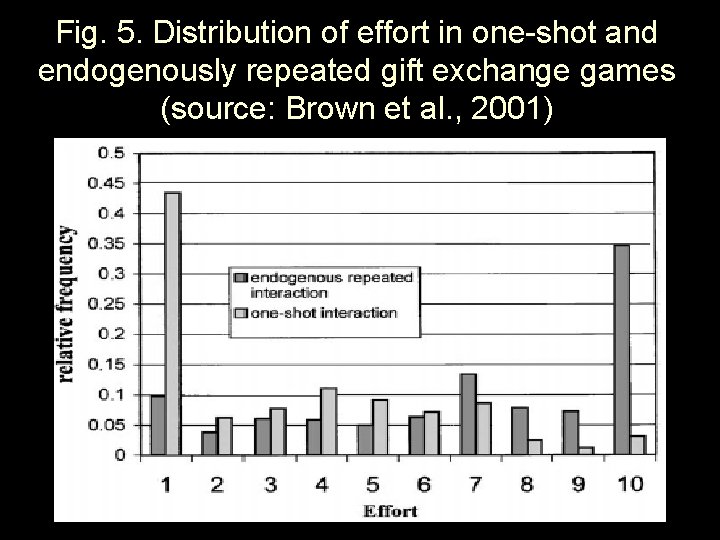
Fig. 5. Distribution of effort in one-shot and endogenously repeated gift exchange games (source: Brown et al. , 2001)
Analysis of results ▪ One shot ♦ Mode at minimum effort (43% of selfish workers) ♦ Majority of efforts at greater than minimum ▪ Repeated ♦ Mode at maximum effort (35% of selfish workers) ♦ Majority of efforts lower than maximum ▪ Applications: ♦ Conventional reciprocity has a substantial effect ♦ Firing did not crowd out voluntary cooperation Punishments should be implemented implicitly, without “offending” cooperators nor signaling to be a bad type
II. Social approval ▪ ▪ Social approval and disapproval modifies conduct, not only because generates future benefits but because triggers emotions Experiment ♦ Each one of 10 strangers contributes x€ to a common pool, the pool is doubled and divided equally among the 10 ♦ Two cases, depending on contributions being: ▪ ▪ • Anonymous contribute 34% of endowment • Public idem 68% Multiple equilibriums possible (Figure) ¿Is it possible that human beings suffer excessive instinctive aversion to ostracism?
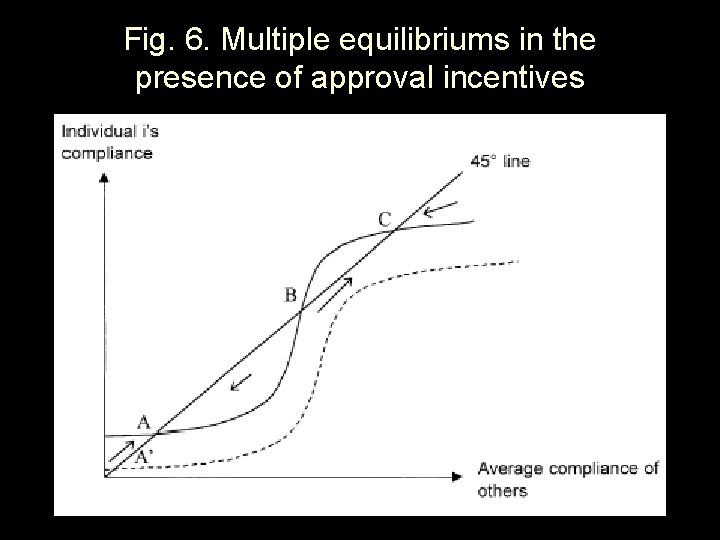
Fig. 6. Multiple equilibriums in the presence of approval incentives
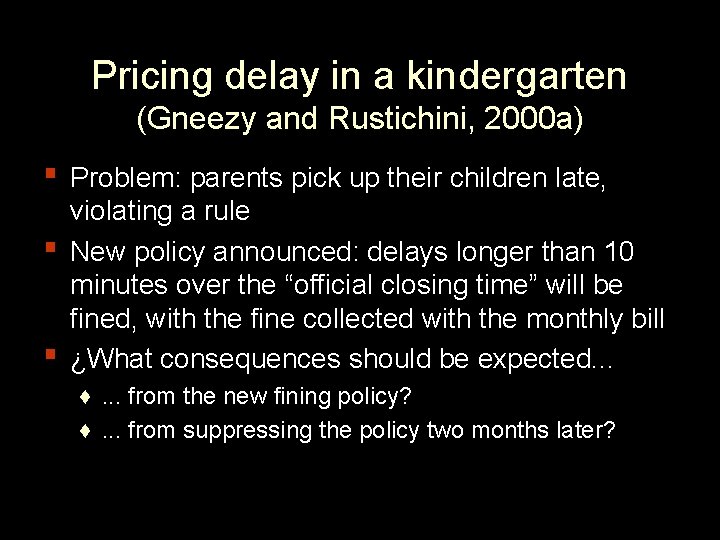
Pricing delay in a kindergarten (Gneezy and Rustichini, 2000 a) ▪ Problem: parents pick up their children late, ▪ ▪ violating a rule New policy announced: delays longer than 10 minutes over the “official closing time” will be fined, with the fine collected with the monthly bill ¿What consequences should be expected. . . ♦. . . from the new fining policy? ♦. . . from suppressing the policy two months later?
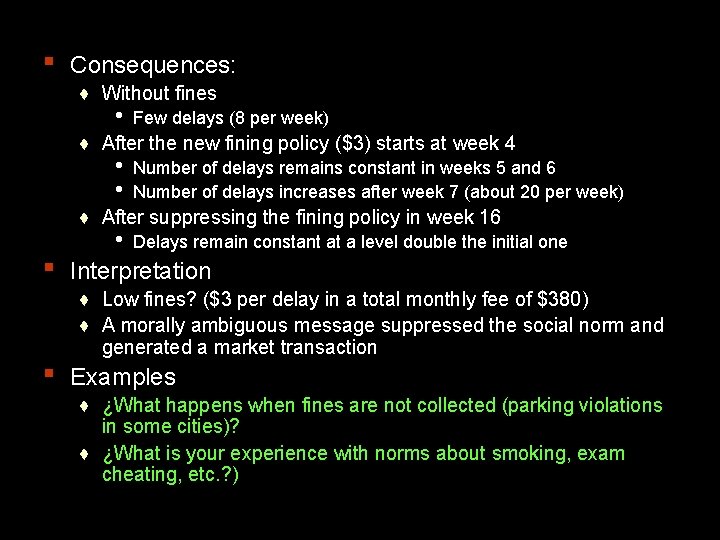
▪ Consequences: ♦ Without fines • Few delays (8 per week) ♦ After the new fining policy ($3) starts at week 4 • • Number of delays remains constant in weeks 5 and 6 Number of delays increases after week 7 (about 20 per week) ♦ After suppressing the fining policy in week 16 ▪ ▪ • Delays remain constant at a level double the initial one Interpretation ♦ Low fines? ($3 per delay in a total monthly fee of $380) ♦ A morally ambiguous message suppressed the social norm and generated a market transaction Examples ♦ ¿What happens when fines are not collected (parking violations in some cities)? ♦ ¿What is your experience with norms about smoking, exam cheating, etc. ? )
III. Interesting work ▪ ▪ Crowding out of “intrinsic” motivation (enjoying work): it is alleged that it disappears when explicit incentives are introduced Weak evidence ♦ Inappropriate situations, in which compensation is usual ♦ Does separate the “disappointment” effect ♦ Paying signals work should be paid It is often confused with ♦ Reciprocity and ♦ Social norms Need to manage and self-manage “effort”
- Slides: 28