Theories Informing Leadership Developed from the Contents of

- Slides: 14
Theories Informing Leadership
Developed from the Contents of Reginald Leon Green’s Practicing the Art of Leadership: A Problembased Approach to Implementing the ISLLC Standards Chapter 3
The Theoretical Base n The behavior of school leaders is informed by a solid theoretical base.
Theory n A body of organized and tested knowledge that presents a systematic view of phenomena n Explains the relationship between and among interrelated concepts, assumptions, and generalizations
Theory n Using theories, school leaders can describe, explain, and predict behavior.
Some Major Theories Informing Leadership n Organizational Theories n Leadership Theories n Motivational Theories n Contemporary Theories
Organizational Theories n n Classical Human Relations Social Systems Open System
Leadership Theories n Theory X Theory Y n Trait Theories n Behavior Theories
Leadership Theories n Contingency Theories n Transformational and Charismatic Theories n Self Leadership Theories
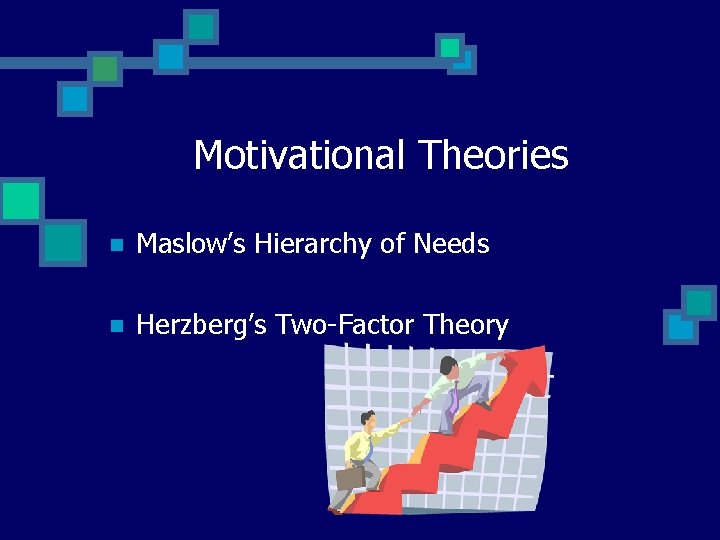
Motivational Theories n Maslow’s Hierarchy of Needs n Herzberg’s Two-Factor Theory
Motivational Theories n House’s Path-Goal Theory n Expectancy Theory n Equity Theory
Major Leadership Processes Used By School Leaders
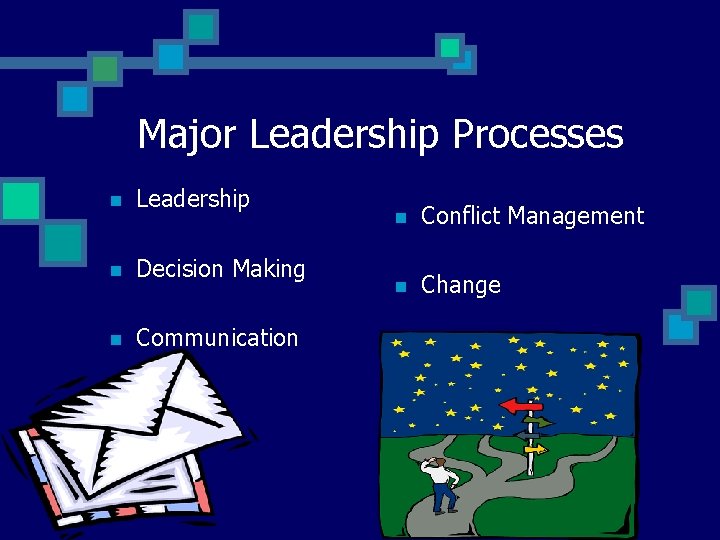
Major Leadership Processes n Leadership n Decision Making n Communication n Conflict Management n Change
Reference n Hoy, Wayne K. and Miskel, Cecil G. (1991). Educational administration: Theory, research, practice, 4 th ed. New York: Mc. Graw-Hill.