The Rwandan Genocide Daniela Aguero Nnenna Ezera Rwanda


- Slides: 10
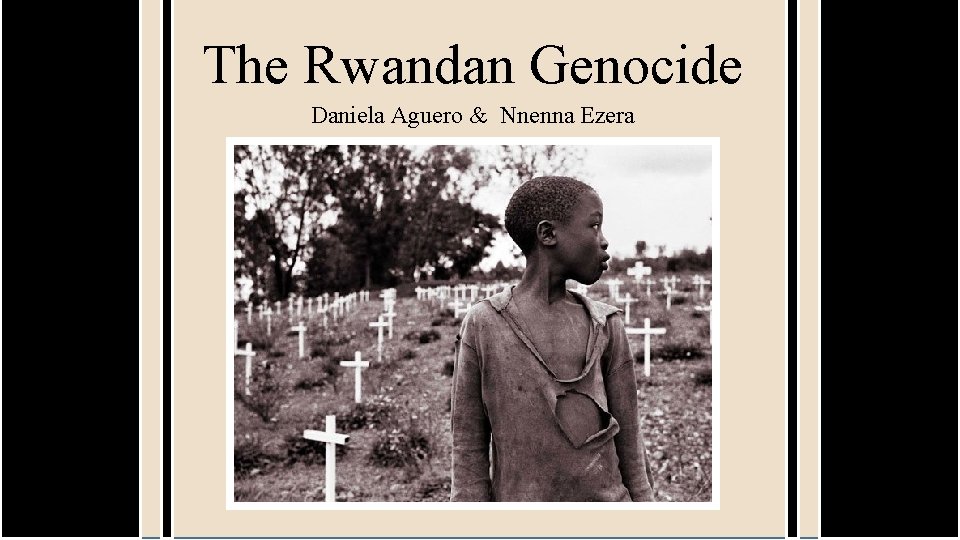
The Rwandan Genocide Daniela Aguero & Nnenna Ezera
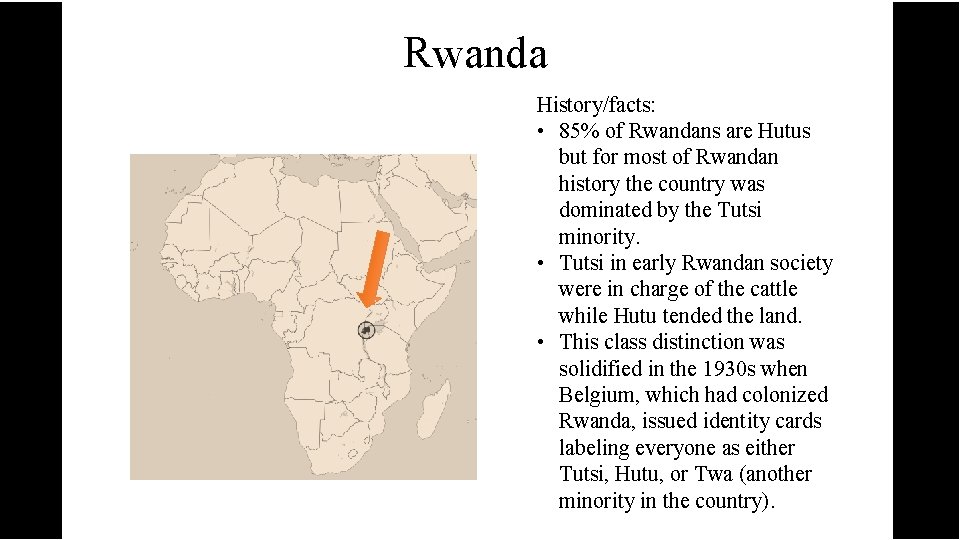
Rwanda History/facts: • 85% of Rwandans are Hutus but for most of Rwandan history the country was dominated by the Tutsi minority. • Tutsi in early Rwandan society were in charge of the cattle while Hutu tended the land. • This class distinction was solidified in the 1930 s when Belgium, which had colonized Rwanda, issued identity cards labeling everyone as either Tutsi, Hutu, or Twa (another minority in the country).
Rising Tensions • In 1959, the Hutu majority overthrew the Tutsi minority • A Tutsi rebel group (Rwandan Patriotic Front a. k. a. RPF) invaded Rwanda in 1990 until a peace deal was signed in 1993. • Hutu extremists blamed the whole Tutsi population for the country’s problems.
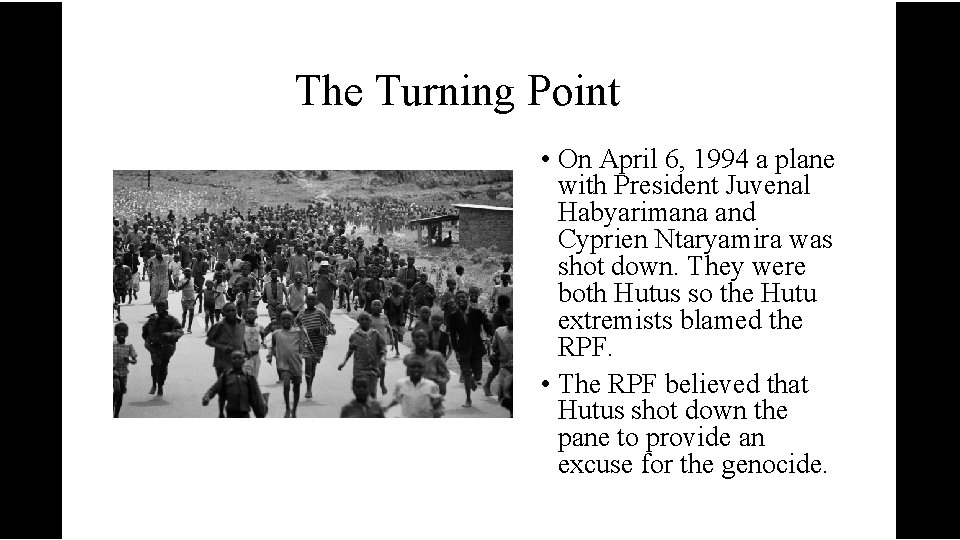
The Turning Point • On April 6, 1994 a plane with President Juvenal Habyarimana and Cyprien Ntaryamira was shot down. They were both Hutus so the Hutu extremists blamed the RPF. • The RPF believed that Hutus shot down the pane to provide an excuse for the genocide.
Beginning of the Conflict • Hutu extremists launched a campaign to eliminate the Tutsi minority. • First they killed more moderate political leaders who could have possibly taken charge to stop the genocide. • People were identified as Tutsi on their ID cards, so roadblocks were set up to prevent escape.
Genocide • April – July 1994 • lasted 100 days. • Propaganda was broadcasted over the radio encouraging all Hutus to kill Tutsis. • Killing was mainly carried out with machetes. • Neighbors and even family members killed each other. 800, 000 men, women, and children died
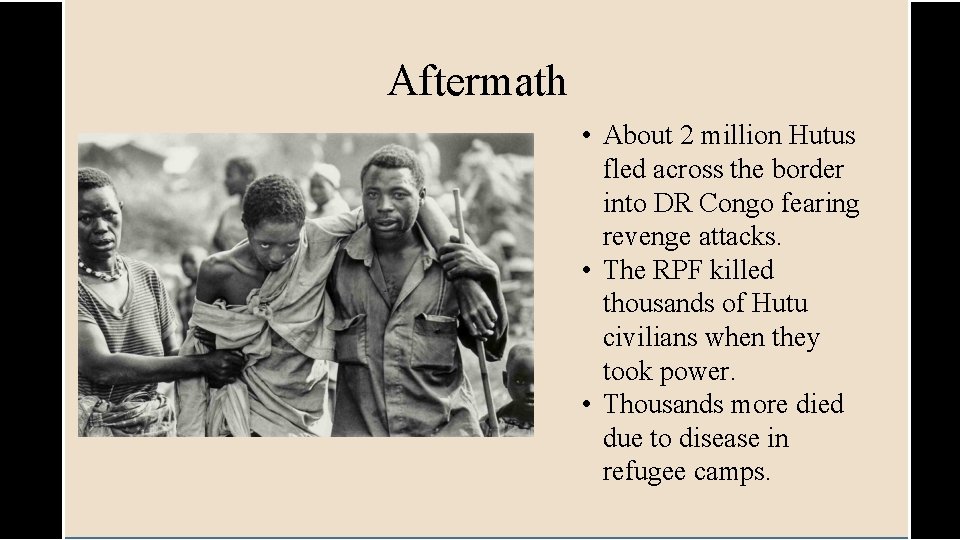
Aftermath • About 2 million Hutus fled across the border into DR Congo fearing revenge attacks. • The RPF killed thousands of Hutu civilians when they took power. • Thousands more died due to disease in refugee camps.
Aftermath (Continued) • The refugees in the Democratic Republic of the Congo (then known as Zaire) directly led to the conflicts the country faced for the next two decades. • The was little to no international intervention in this genocide. • Almost 2 million people were tried in local courts for their role in the genocide. • It is now illegal to talk about ethnicity in Rwanda in order to avoid conflict.
How to Support • There are many organizations and foundations in which one can donate to in order to support those affected by the genocide. • Example: http: //survivors-fund. org. uk/ (lists many organizations that one could donate to in order to support Rwanda and its people) • The United Nation also has an outreach program for those interested in supporting the survivors. Found at: http: //www. un. org/en/preventgenocide/rwanda/about/support. shtml
Works Cited • Image 1 - http: //endgenocide. org/learn/past-genocides/the-rwandan-genocide/ • Image 2 - https: //commons. wikimedia. org/wiki/File: Rwanda_in_Africa_(special_marker)_(-mini_map_rivers). svg • Image 3 - https: //2 ndperiodaphug. files. wordpress. com/2015/02/674_1 jp_rwanda_scaler_16. jpg • Image 4 - https: //www. emaze. com/@AOIWOLIQ/The-Genocide-Of-Rwanda • Image 5 - http: //rwanda. worldvisionmagazine. org/#!introduction • http: //www. bbc. com/news/world-africa-26875506 • http: //www. unitedhumanrights. org/Genocide/genocide_in_rwanda. htm • http: //survivors-fund. org. uk/ • http: //www. un. org/en/preventgenocide/rwanda/about/support. shtml