THE RISE OF CORPORATE AMERICA INDUSTRIALIZATION GROWS Growing


- Slides: 13
THE RISE OF CORPORATE AMERICA
INDUSTRIALIZATION GROWS • Growing populations, expansion west and integrated economies help large corporations become the dominant form of business. • Management Revolution • Systems to help manage massive new industries • Departmentalization, increased communication, executive division • Took advantage of North America’s natural resources • Gustavus Swift invented the assembly line: increase production at lower costs
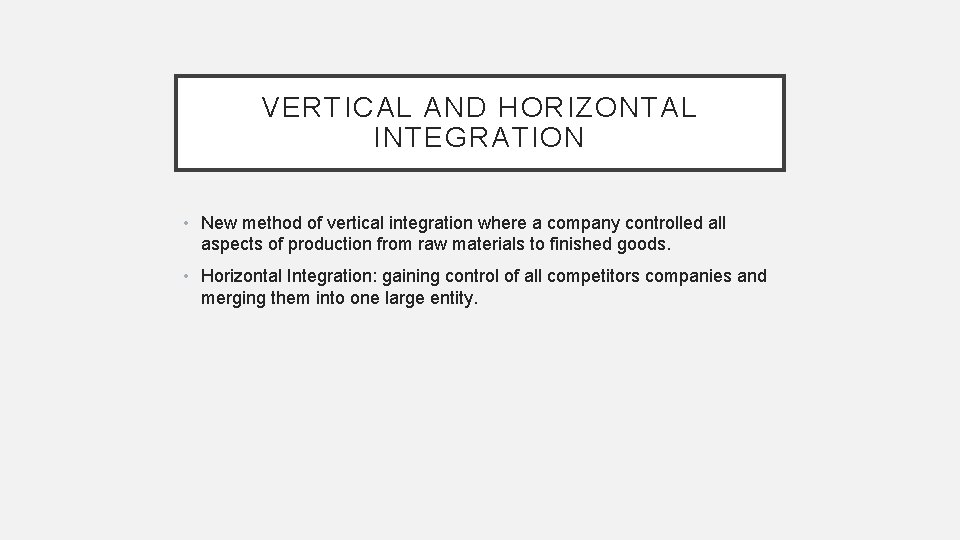
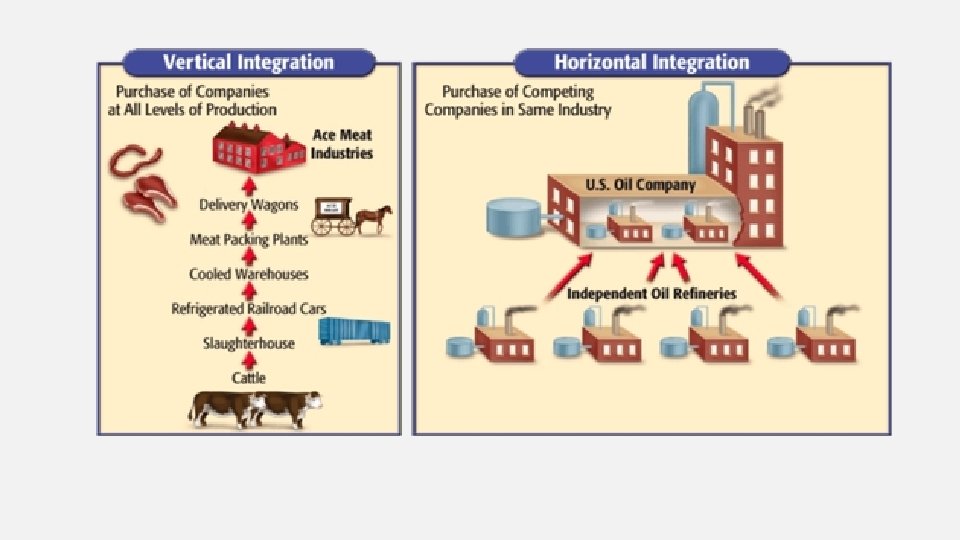
VERTICAL AND HORIZONTAL INTEGRATION • New method of vertical integration where a company controlled all aspects of production from raw materials to finished goods. • Horizontal Integration: gaining control of all competitors companies and merging them into one large entity.
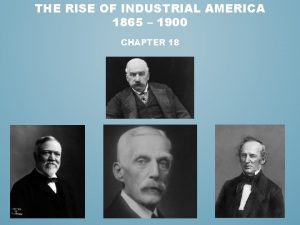
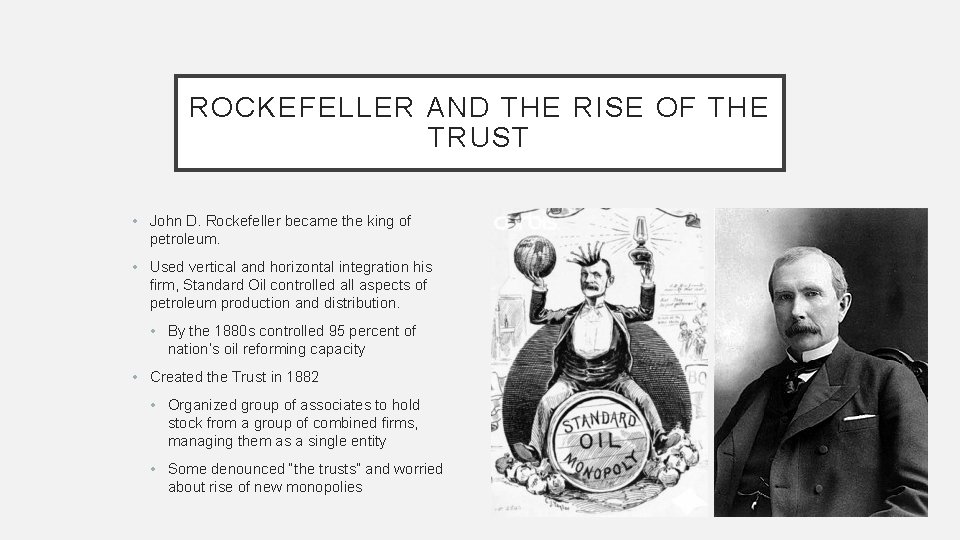
ROCKEFELLER AND THE RISE OF THE TRUST • John D. Rockefeller became the king of petroleum. • Used vertical and horizontal integration his firm, Standard Oil controlled all aspects of petroleum production and distribution. • By the 1880 s controlled 95 percent of nation’s oil reforming capacity • Created the Trust in 1882 • Organized group of associates to hold stock from a group of combined firms, managing them as a single entity • Some denounced “the trusts” and worried about rise of new monopolies
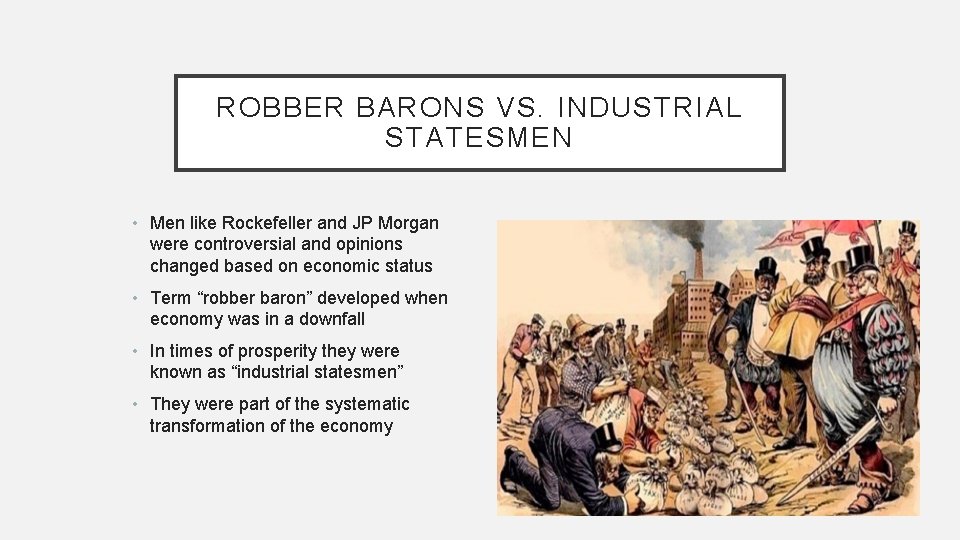
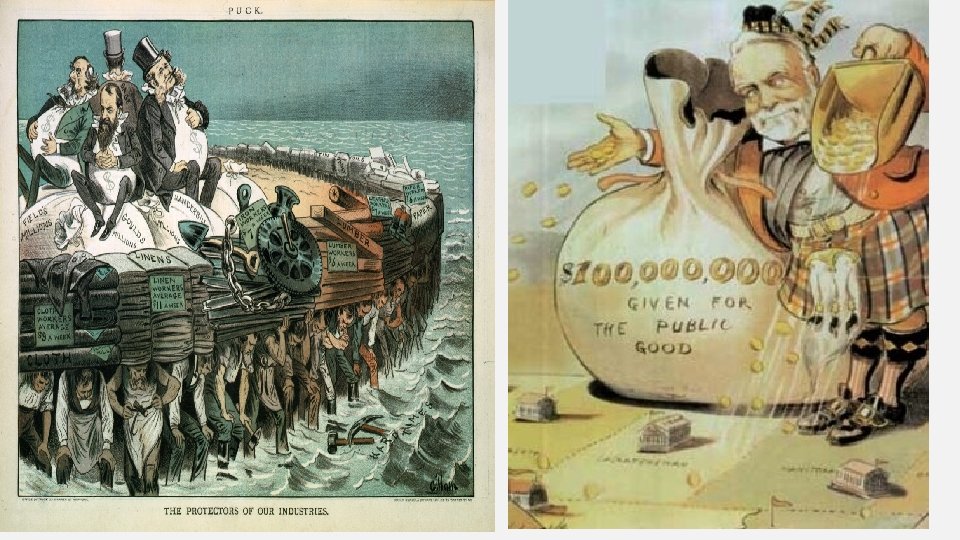
ROBBER BARONS VS. INDUSTRIAL STATESMEN • Men like Rockefeller and JP Morgan were controversial and opinions changed based on economic status • Term “robber baron” developed when economy was in a downfall • In times of prosperity they were known as “industrial statesmen” • They were part of the systematic transformation of the economy
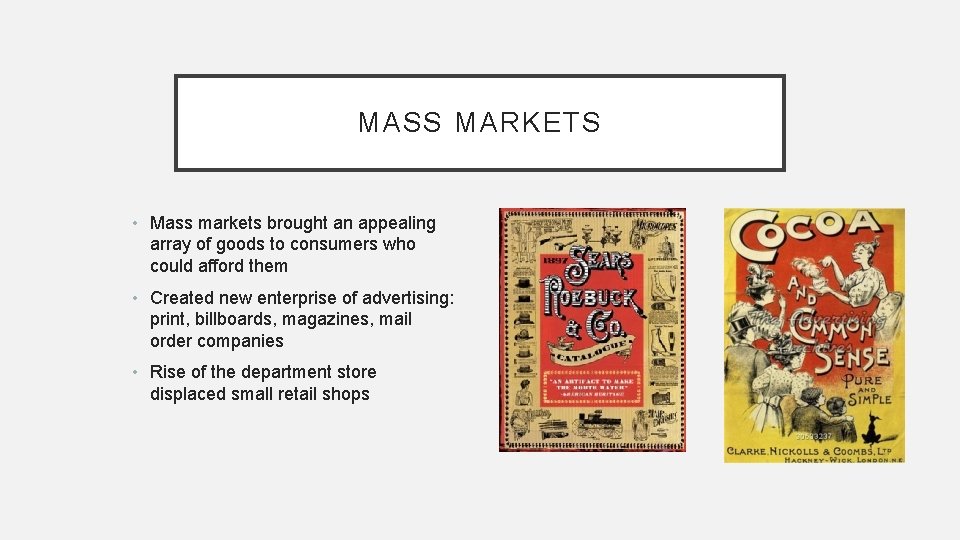
MASS MARKETS • Mass markets brought an appealing array of goods to consumers who could afford them • Created new enterprise of advertising: print, billboards, magazines, mail order companies • Rise of the department store displaced small retail shops
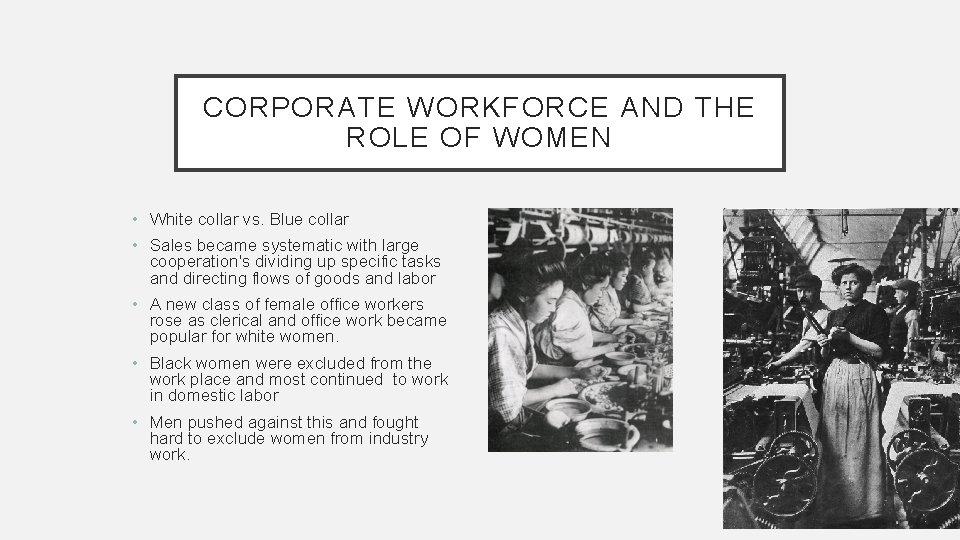
CORPORATE WORKFORCE AND THE ROLE OF WOMEN • White collar vs. Blue collar • Sales became systematic with large cooperation's dividing up specific tasks and directing flows of goods and labor • A new class of female office workers rose as clerical and office work became popular for white women. • Black women were excluded from the work place and most continued to work in domestic labor • Men pushed against this and fought hard to exclude women from industry work.
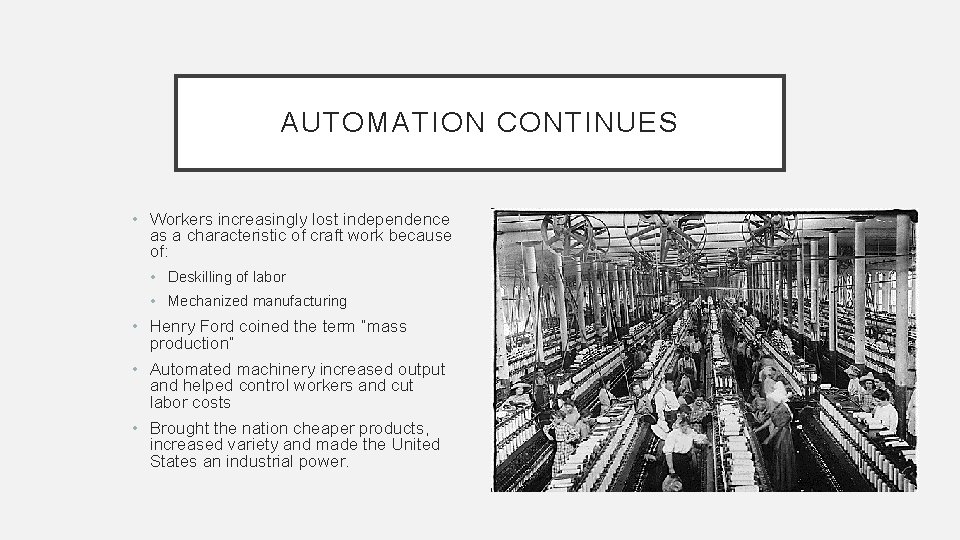
AUTOMATION CONTINUES • Workers increasingly lost independence as a characteristic of craft work because of: • Deskilling of labor • Mechanized manufacturing • Henry Ford coined the term ”mass production” • Automated machinery increased output and helped control workers and cut labor costs • Brought the nation cheaper products, increased variety and made the United States an industrial power.
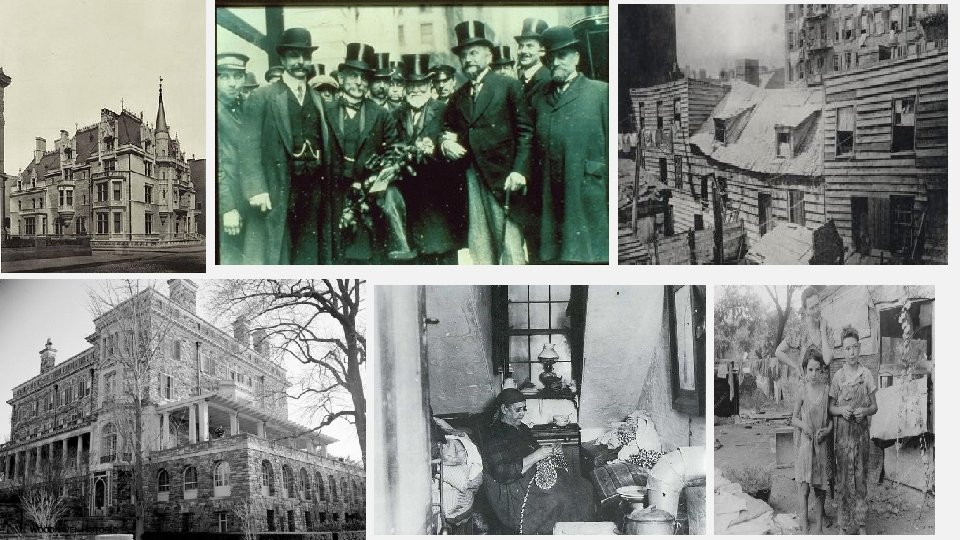
THE RICH AND THE POOR • Cooperation's created a wide gap between the managers (white collar) and laborers (blue collar). • Blue collar workers had little freedom to negotiate and working conditions deteriorated as mass production grew. • Three economic classes • The wealthy elite • Emerging self defined middle class • Struggling working class • Increased debate of inequality
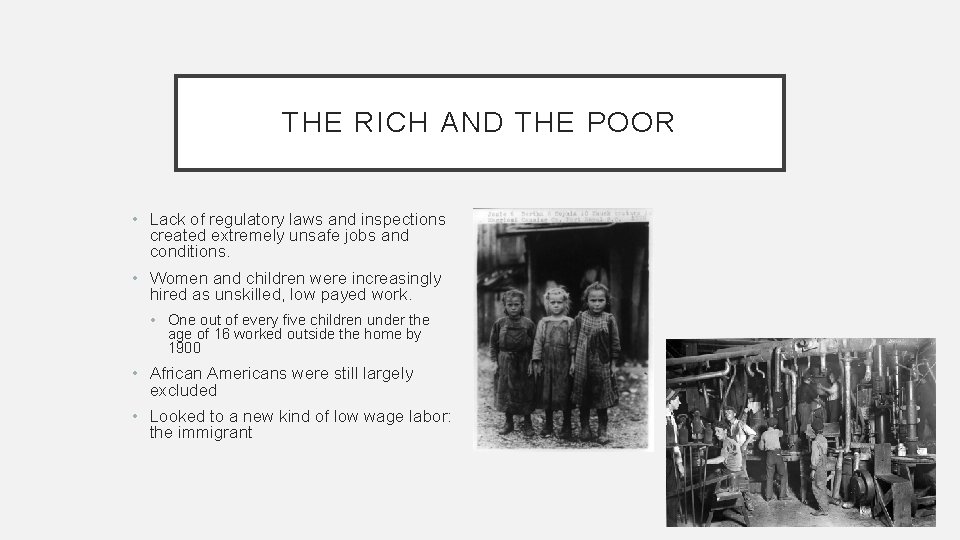
THE RICH AND THE POOR • Lack of regulatory laws and inspections created extremely unsafe jobs and conditions. • Women and children were increasingly hired as unskilled, low payed work. • One out of every five children under the age of 16 worked outside the home by 1900 • African Americans were still largely excluded • Looked to a new kind of low wage labor: the immigrant