THE PRONUNCIATION OF THE AFFIX s The affix
- Slides: 8
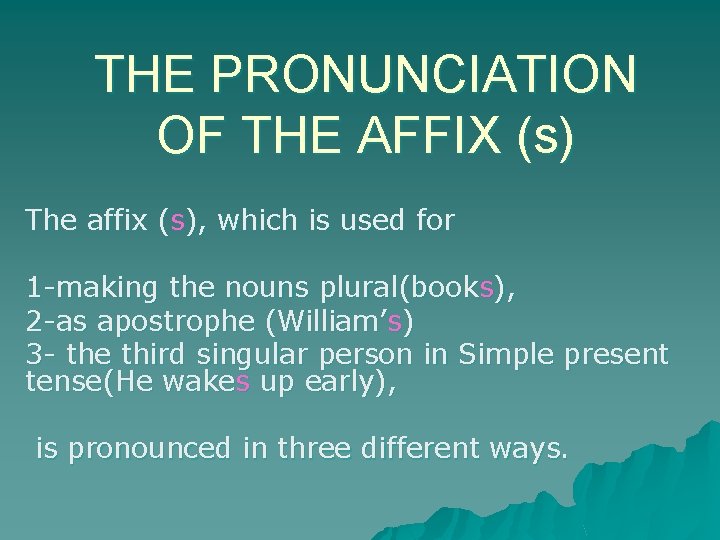
THE PRONUNCIATION OF THE AFFIX (s) The affix (s), which is used for 1 -making the nouns plural(books), 2 -as apostrophe (William’s) 3 - the third singular person in Simple present tense(He wakes up early), is pronounced in three different ways.
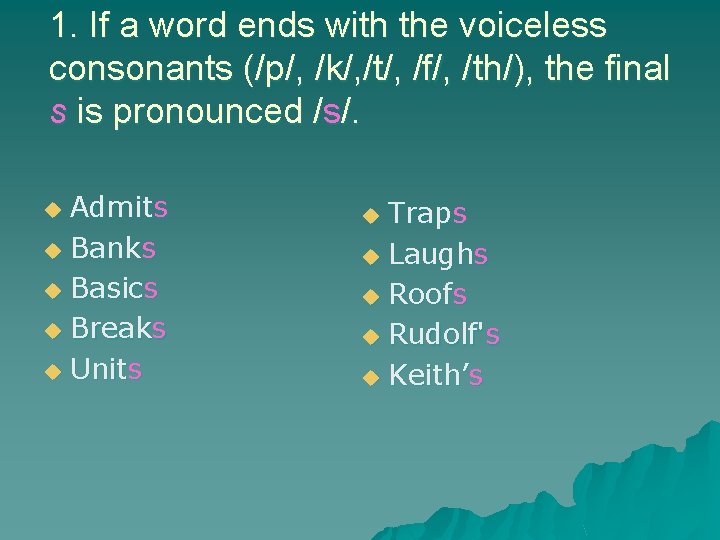
1. If a word ends with the voiceless consonants (/p/, /k/, /t/, /f/, /th/), the final s is pronounced /s/. Admits u Banks u Basics u Breaks u Units u Traps u Laughs u Roofs u Rudolf's u Keith’s u
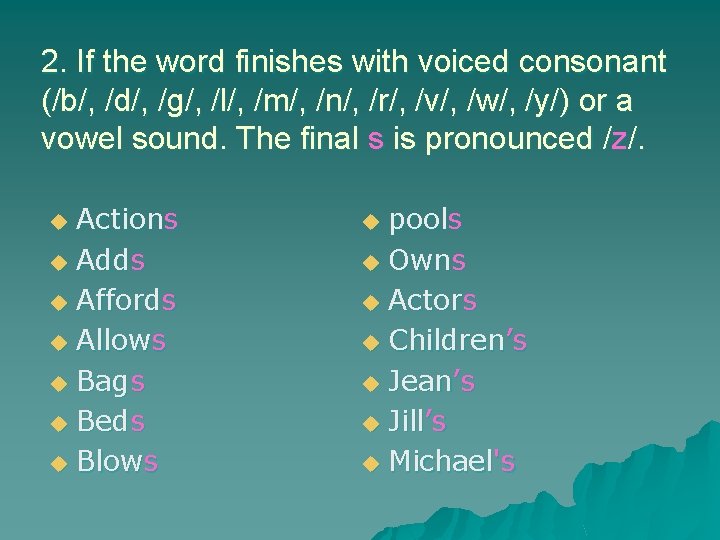
2. If the word finishes with voiced consonant (/b/, /d/, /g/, /l/, /m/, /n/, /r/, /v/, /w/, /y/) or a vowel sound. The final s is pronounced /z/. Actions u Adds u Affords u Allows u Bags u Beds u Blows u pools u Owns u Actors u Children’s u Jean’s u Jill’s u Michael's u
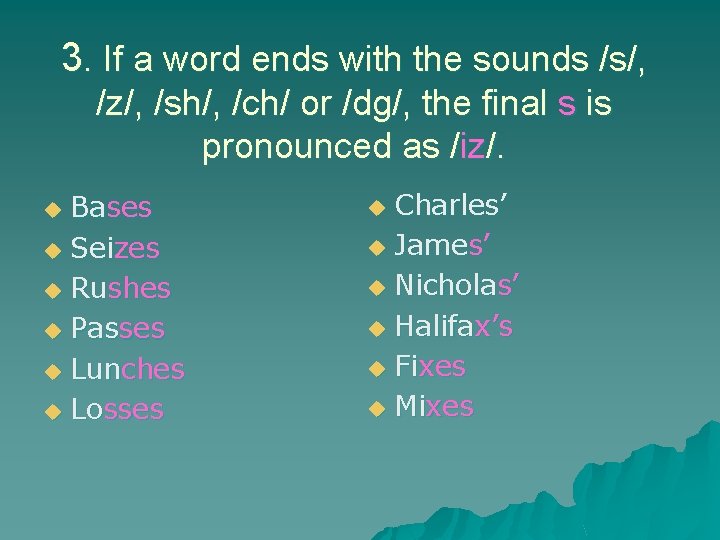
3. If a word ends with the sounds /s/, /z/, /sh/, /ch/ or /dg/, the final s is pronounced as /iz/. Bases u Seizes u Rushes u Passes u Lunches u Losses u Charles’ u James’ u Nicholas’ u Halifax’s u Fixes u Mixes u
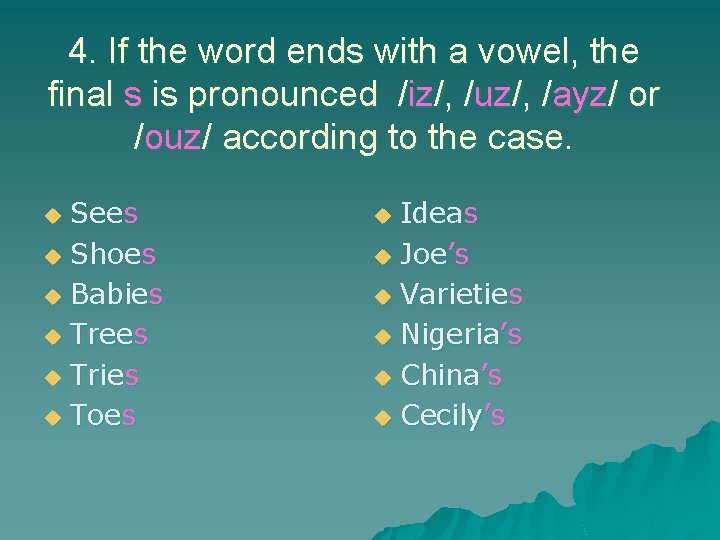
4. If the word ends with a vowel, the final s is pronounced /iz/, /uz/, /ayz/ or /ouz/ according to the case. Sees u Shoes u Babies u Trees u Tries u Toes u Ideas u Joe’s u Varieties u Nigeria’s u China’s u Cecily’s u
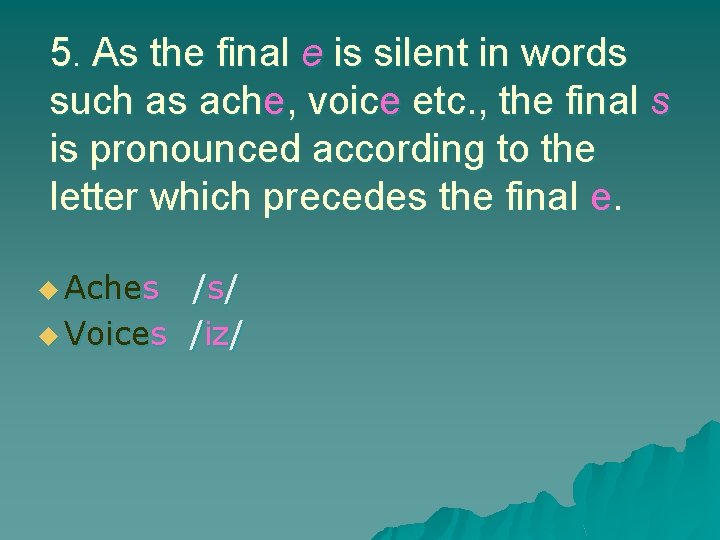
5. As the final e is silent in words such as ache, voice etc. , the final s is pronounced according to the letter which precedes the final e. u Aches /s / u Voices /iz/
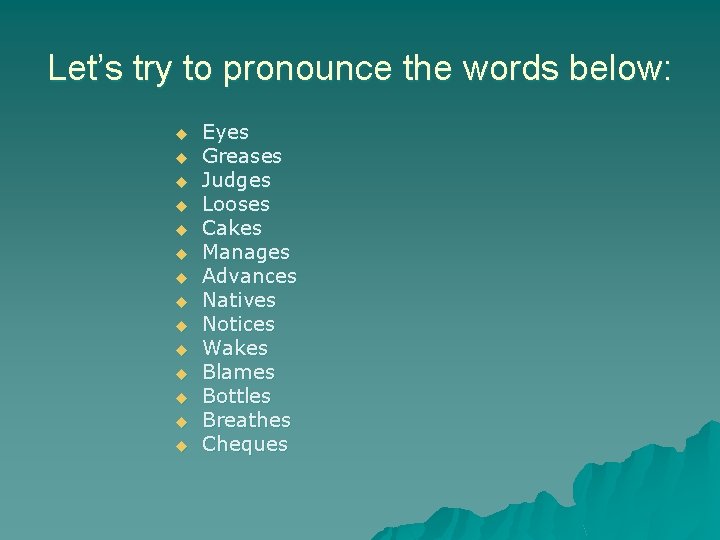
Let’s try to pronounce the words below: u u u u Eyes Greases Judges Looses Cakes Manages Advances Natives Notices Wakes Blames Bottles Breathes Cheques
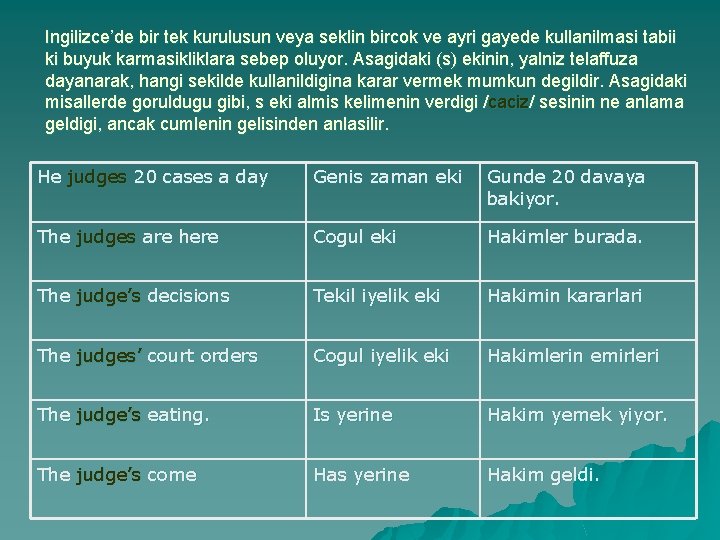
Ingilizce’de bir tek kurulusun veya seklin bircok ve ayri gayede kullanilmasi tabii ki buyuk karmasikliklara sebep oluyor. Asagidaki (s) ekinin, yalniz telaffuza dayanarak, hangi sekilde kullanildigina karar vermek mumkun degildir. Asagidaki misallerde goruldugu gibi, s eki almis kelimenin verdigi /caciz/ sesinin ne anlama geldigi, ancak cumlenin gelisinden anlasilir. He judges 20 cases a day Genis zaman eki Gunde 20 davaya bakiyor. The judges are here Cogul eki Hakimler burada. The judge’s decisions Tekil iyelik eki Hakimin kararlari The judges’ court orders Cogul iyelik eki Hakimlerin emirleri The judge’s eating. Is yerine Hakim yemek yiyor. The judge’s come Has yerine Hakim geldi.