The Present Perfect Used to express 1 An

- Slides: 12
The Present Perfect
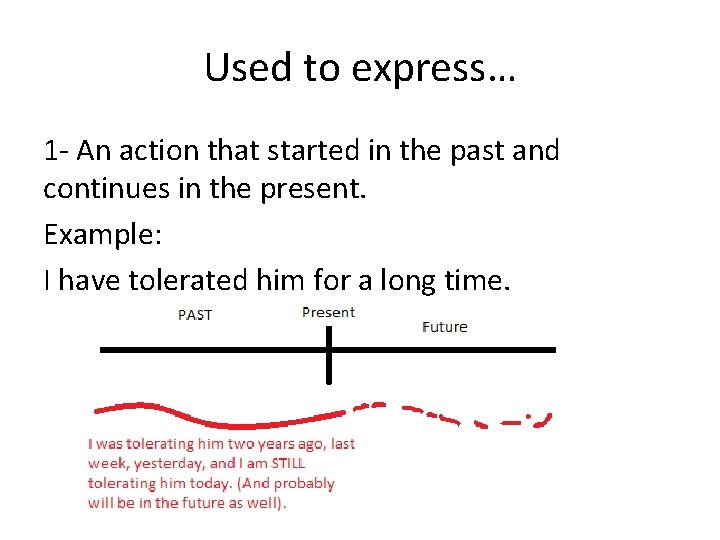
Used to express… 1 - An action that started in the past and continues in the present. Example: I have tolerated him for a long time.
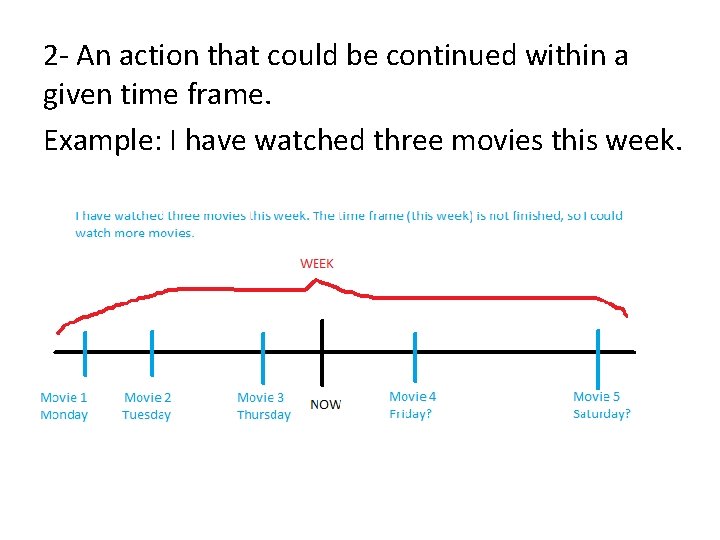
2 - An action that could be continued within a given time frame. Example: I have watched three movies this week.
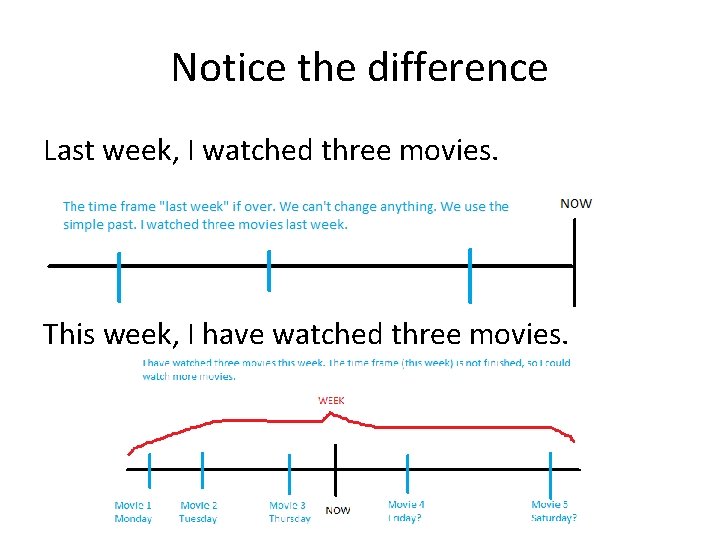
Notice the difference Last week, I watched three movies. This week, I have watched three movies.
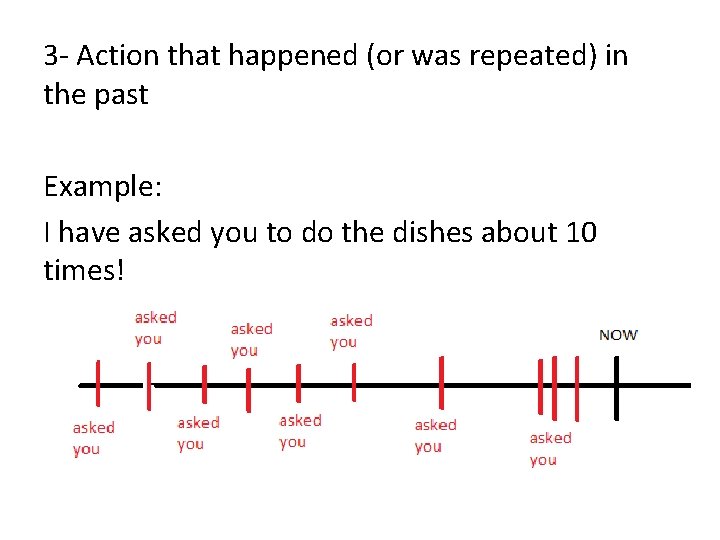
3 - Action that happened (or was repeated) in the past Example: I have asked you to do the dishes about 10 times!
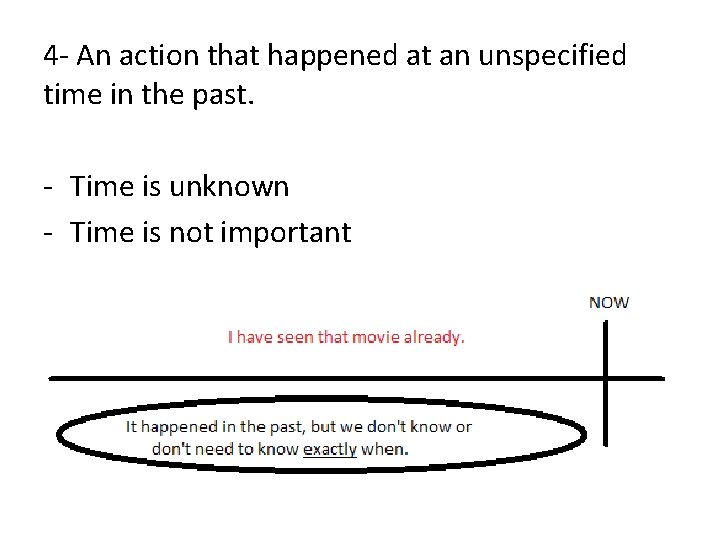
4 - An action that happened at an unspecified time in the past. - Time is unknown - Time is not important
Notice the difference I saw that movie yesterday. I have seen that movie already.
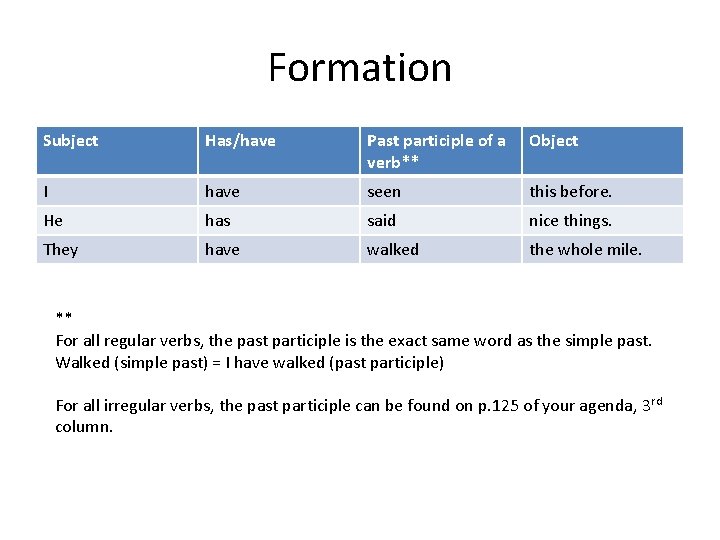
Formation Subject Has/have Past participle of a verb** Object I have seen this before. He has said nice things. They have walked the whole mile. ** For all regular verbs, the past participle is the exact same word as the simple past. Walked (simple past) = I have walked (past participle) For all irregular verbs, the past participle can be found on p. 125 of your agenda, 3 rd column.
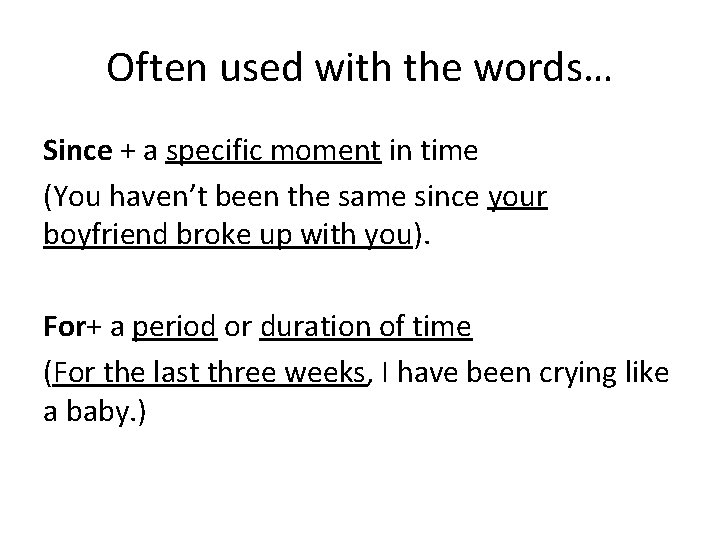
Often used with the words… Since + a specific moment in time (You haven’t been the same since your boyfriend broke up with you). For+ a period or duration of time (For the last three weeks, I have been crying like a baby. )
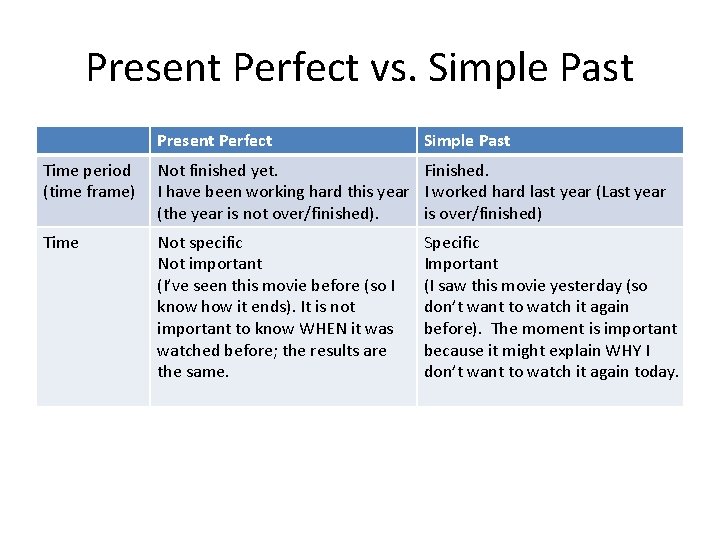
Present Perfect vs. Simple Past Present Perfect Simple Past Time period (time frame) Not finished yet. Finished. I have been working hard this year I worked hard last year (Last year (the year is not over/finished). is over/finished) Time Not specific Not important (I’ve seen this movie before (so I know how it ends). It is not important to know WHEN it was watched before; the results are the same. Specific Important (I saw this movie yesterday (so don’t want to watch it again before). The moment is important because it might explain WHY I don’t want to watch it again today.
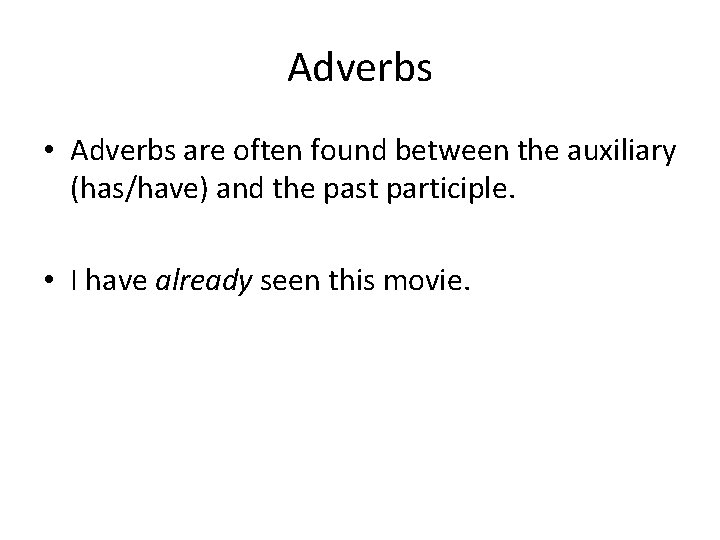
Adverbs • Adverbs are often found between the auxiliary (has/have) and the past participle. • I have already seen this movie.
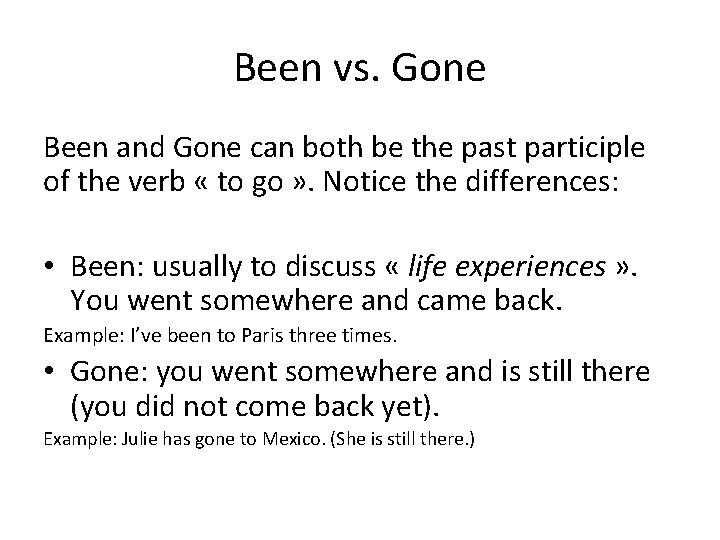
Been vs. Gone Been and Gone can both be the past participle of the verb « to go » . Notice the differences: • Been: usually to discuss « life experiences » . You went somewhere and came back. Example: I’ve been to Paris three times. • Gone: you went somewhere and is still there (you did not come back yet). Example: Julie has gone to Mexico. (She is still there. )