The Present Continuous Tense Sample sentences Please hold
- Slides: 19
The Present Continuous Tense
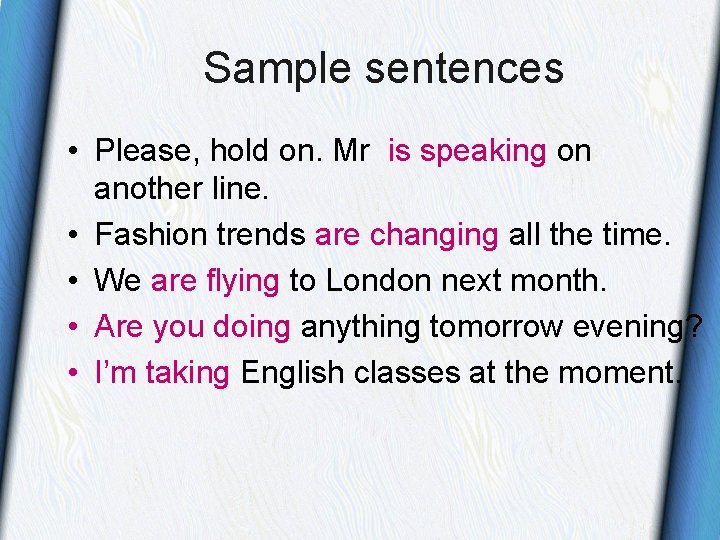
Sample sentences • Please, hold on. Mr is speaking on another line. • Fashion trends are changing all the time. • We are flying to London next month. • Are you doing anything tomorrow evening? • I’m taking English classes at the moment.
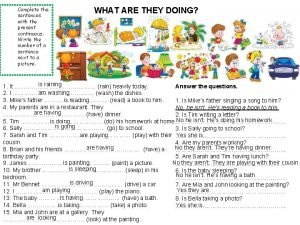
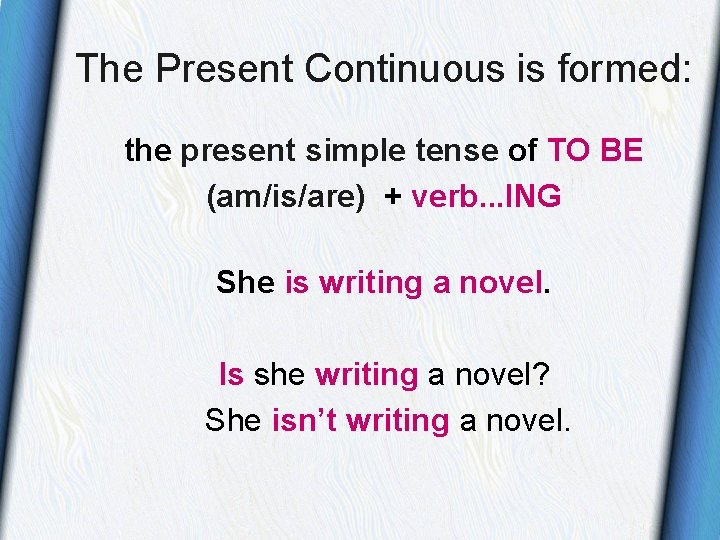
The Present Continuous is formed: the present simple tense of TO BE (am/is/are) + verb. . . ING She is writing a novel. Is she writing a novel? She isn’t writing a novel.
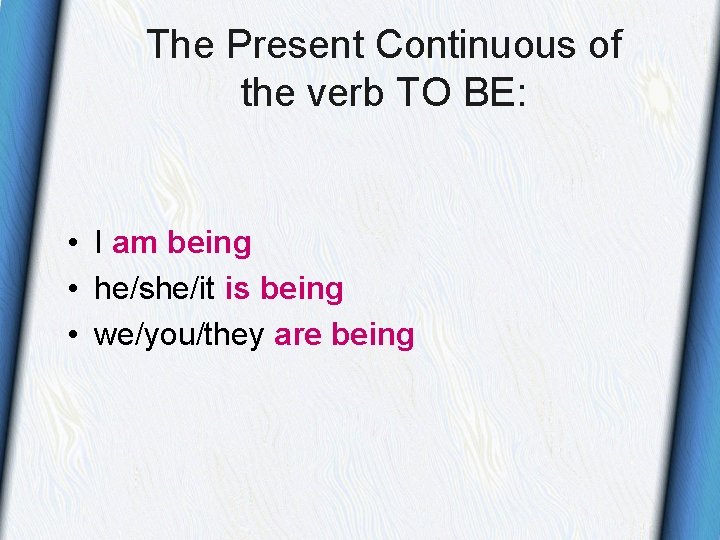
The Present Continuous of the verb TO BE: • I am being • he/she/it is being • we/you/they are being
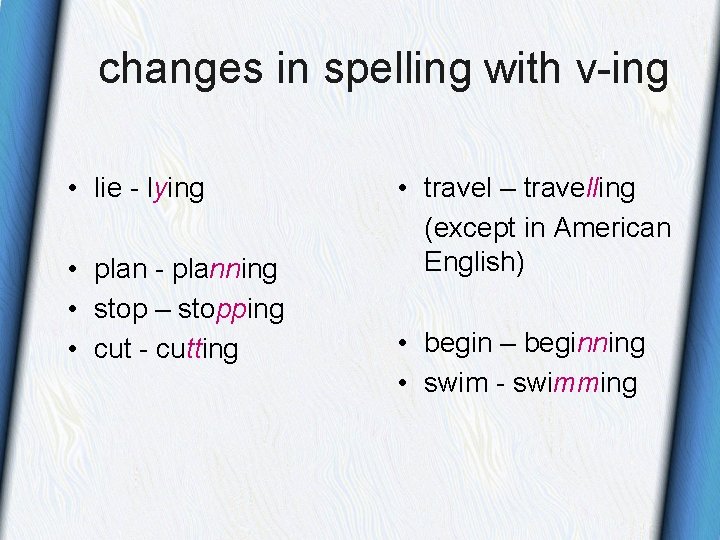
changes in spelling with v-ing • lie - lying • plan - planning • stop – stopping • cut - cutting • travel – travelling (except in American English) • begin – beginning • swim - swimming
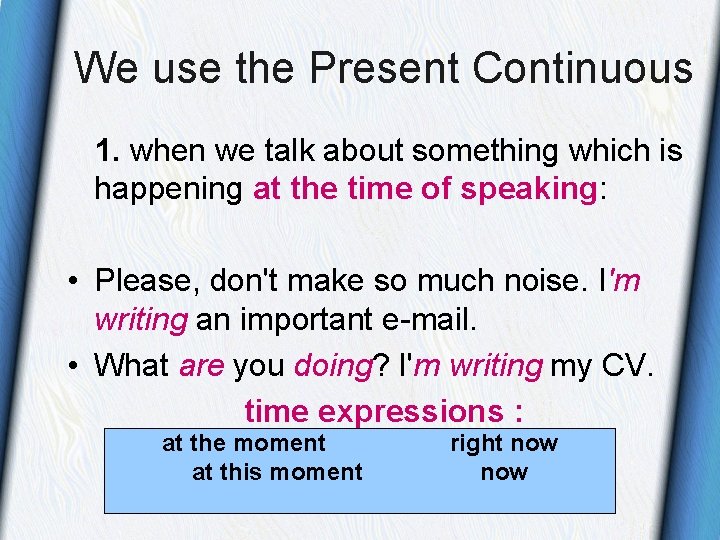
We use the Present Continuous 1. when we talk about something which is happening at the time of speaking: • Please, don't make so much noise. I'm writing an important e-mail. • What are you doing? I'm writing my CV. time expressions : at the moment at this moment right now
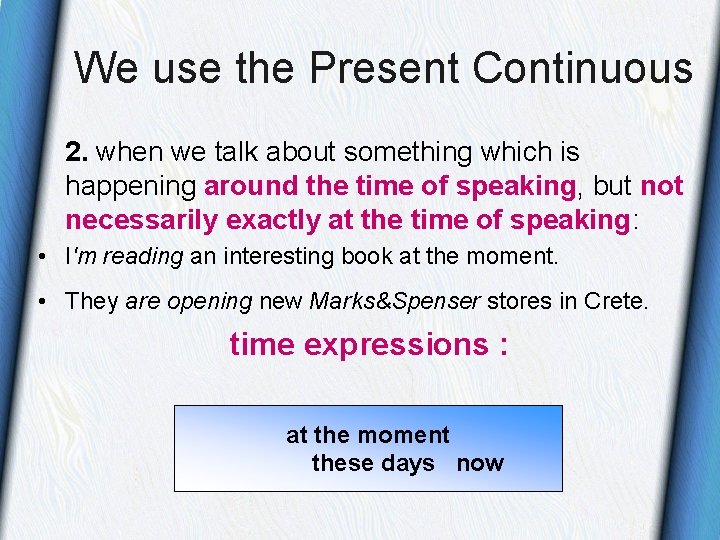
We use the Present Continuous 2. when we talk about something which is happening around the time of speaking, but not necessarily exactly at the time of speaking: • I'm reading an interesting book at the moment. • They are opening new Marks&Spenser stores in Crete. time expressions : at the moment these days now
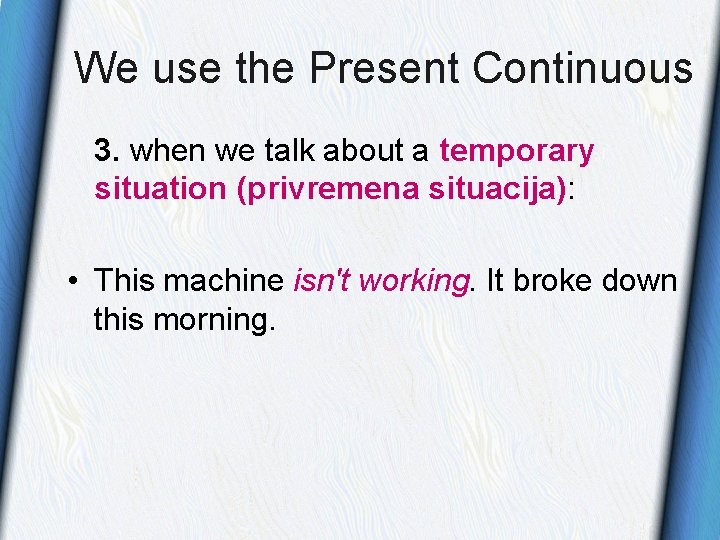
We use the Present Continuous 3. when we talk about a temporary situation (privremena situacija): • This machine isn't working. It broke down this morning.
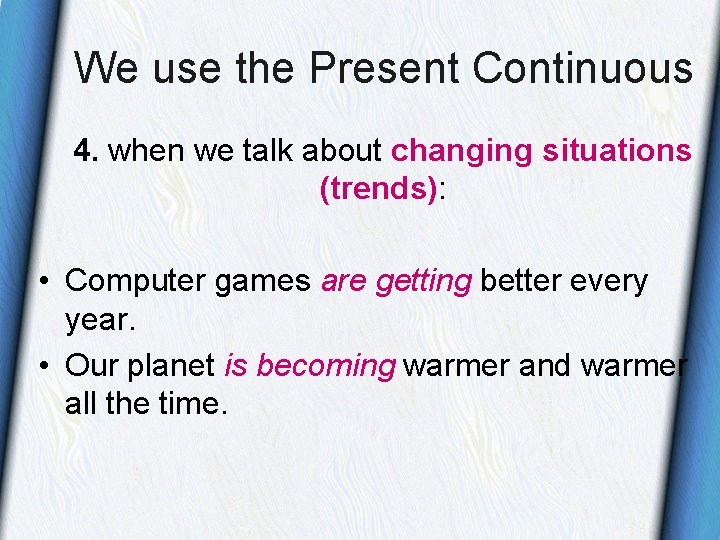
We use the Present Continuous 4. when we talk about changing situations (trends): • Computer games are getting better every year. • Our planet is becoming warmer and warmer all the time.
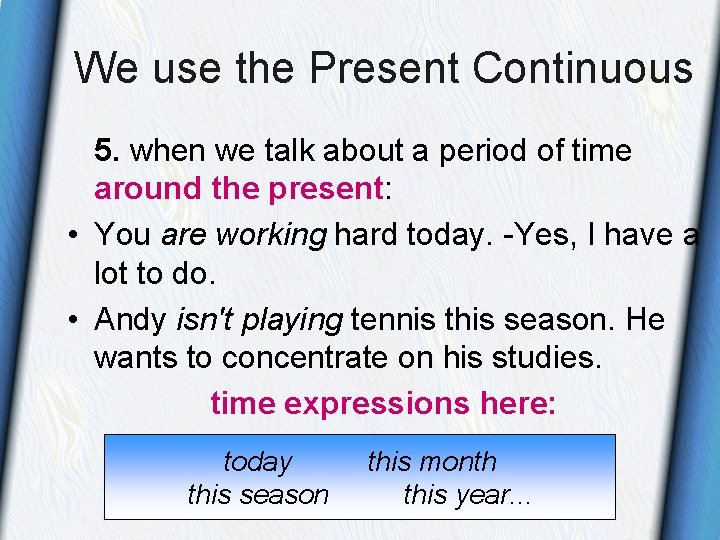
We use the Present Continuous 5. when we talk about a period of time around the present: • You are working hard today. -Yes, I have a lot to do. • Andy isn't playing tennis this season. He wants to concentrate on his studies. time expressions here: today this season this month this year. . .
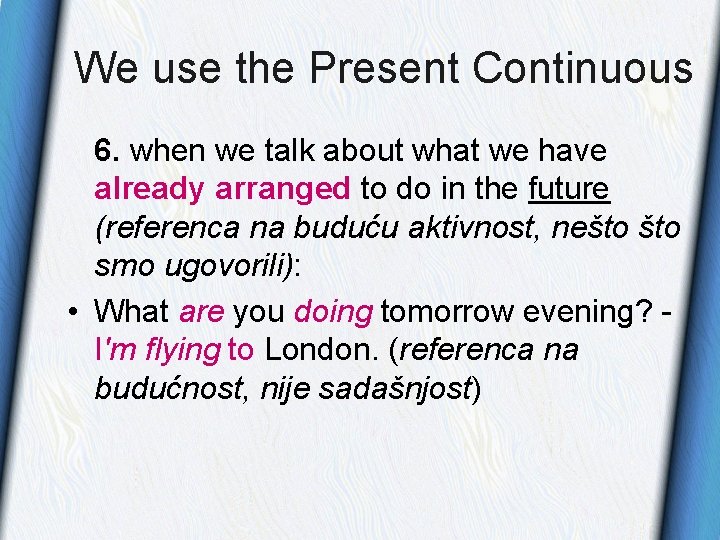
We use the Present Continuous 6. when we talk about what we have already arranged to do in the future (referenca na buduću aktivnost, nešto smo ugovorili): • What are you doing tomorrow evening? I'm flying to London. (referenca na budućnost, nije sadašnjost)
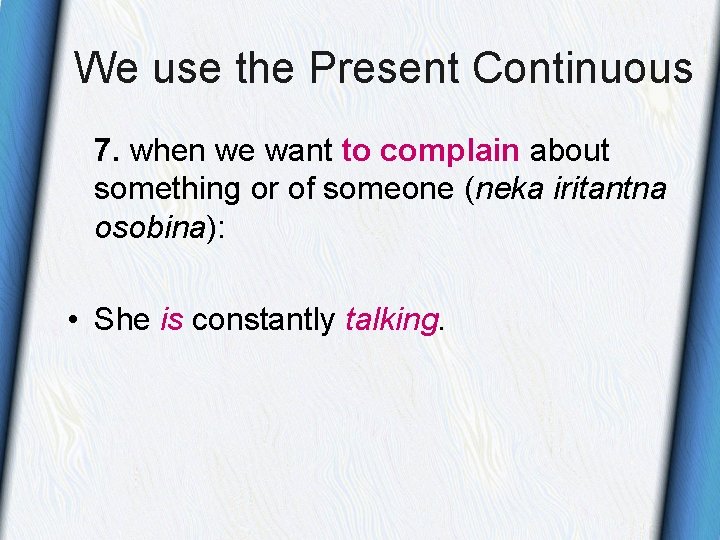
We use the Present Continuous 7. when we want to complain about something or of someone (neka iritantna osobina): • She is constantly talking.
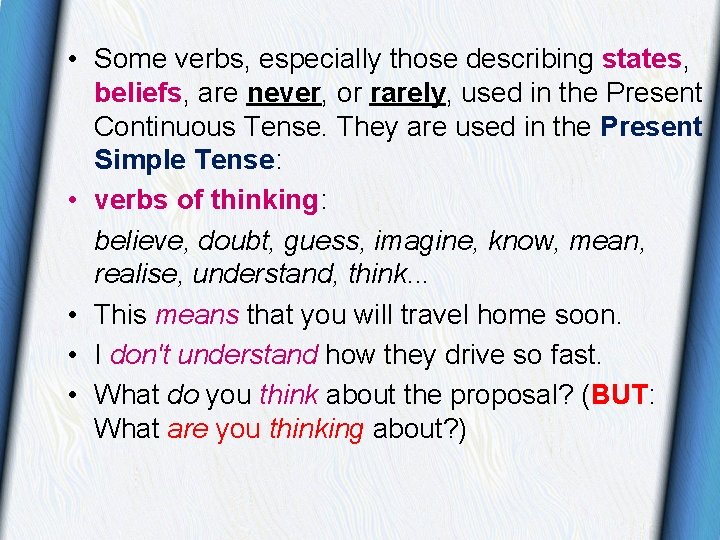
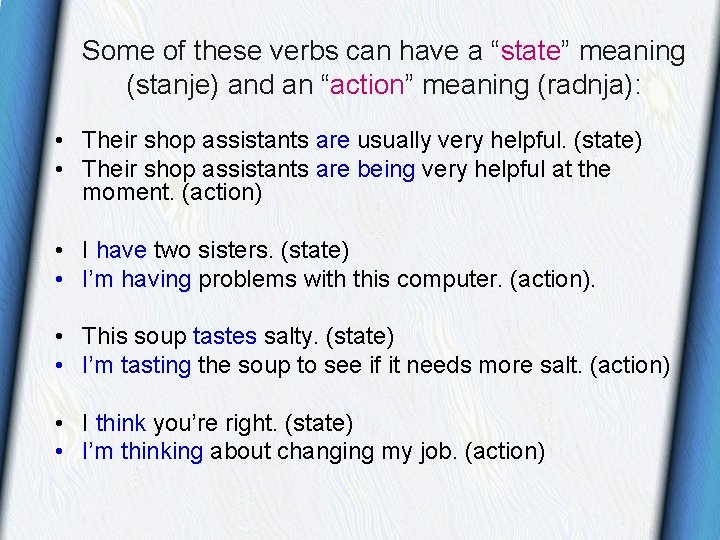
• Some verbs, especially those describing states, beliefs, are never, or rarely, used in the Present Continuous Tense. They are used in the Present Simple Tense: • verbs of thinking: believe, doubt, guess, imagine, know, mean, realise, understand, think. . . • This means that you will travel home soon. • I don't understand how they drive so fast. • What do you think about the proposal? (BUT: What are you thinking about? )
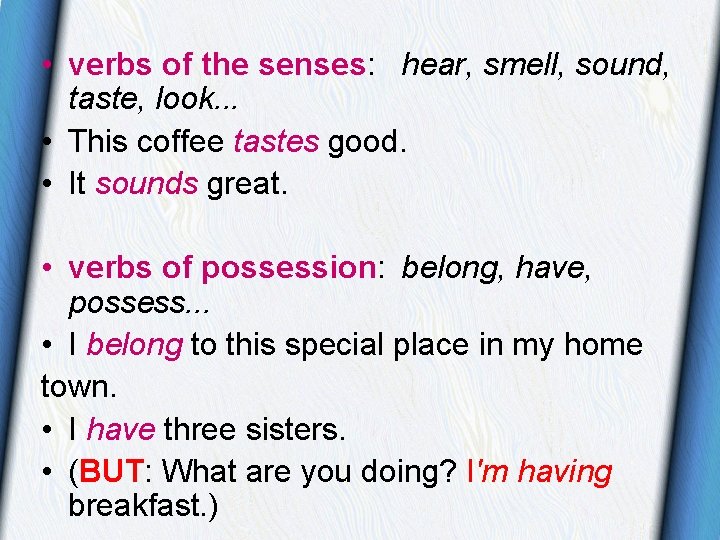
• verbs of the senses: hear, smell, sound, taste, look. . . • This coffee tastes good. • It sounds great. • verbs of possession: belong, have, possess. . . • I belong to this special place in my home town. • I have three sisters. • (BUT: What are you doing? I'm having breakfast. )
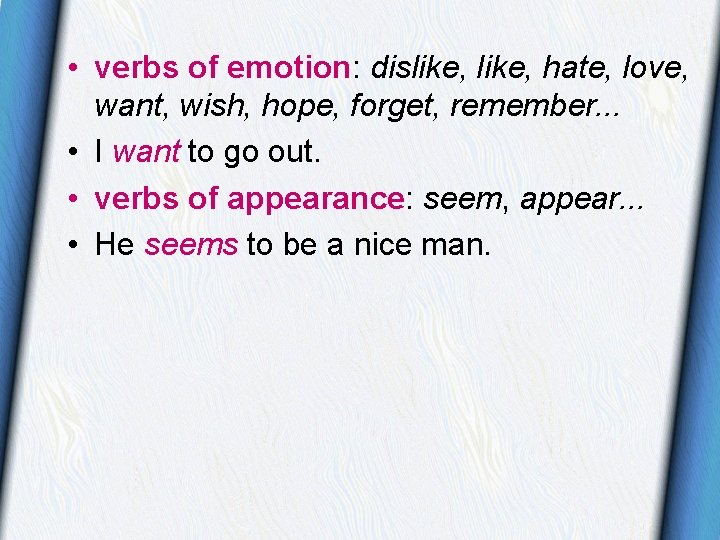
• verbs of emotion: dislike, hate, love, want, wish, hope, forget, remember. . . • I want to go out. • verbs of appearance: seem, appear. . . • He seems to be a nice man.
Some of these verbs can have a “state” meaning (stanje) and an “action” meaning (radnja): • Their shop assistants are usually very helpful. (state) • Their shop assistants are being very helpful at the moment. (action) • I have two sisters. (state) • I’m having problems with this computer. (action). • This soup tastes salty. (state) • I’m tasting the soup to see if it needs more salt. (action) • I think you’re right. (state) • I’m thinking about changing my job. (action)
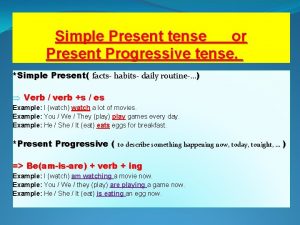
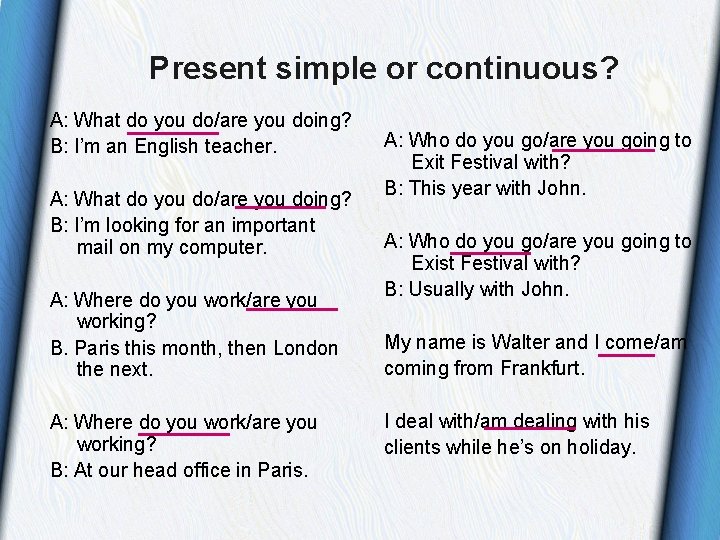
Present simple or continuous? A: What do you do/are you doing? B: I’m an English teacher. A: What do you do/are you doing? B: I’m looking for an important mail on my computer. A: Where do you work/are you working? B. Paris this month, then London the next. A: Where do you work/are you working? B: At our head office in Paris. A: Who do you go/are you going to Exit Festival with? B: This year with John. A: Who do you go/are you going to Exist Festival with? B: Usually with John. My name is Walter and I come/am coming from Frankfurt. I deal with/am dealing with his clients while he’s on holiday.
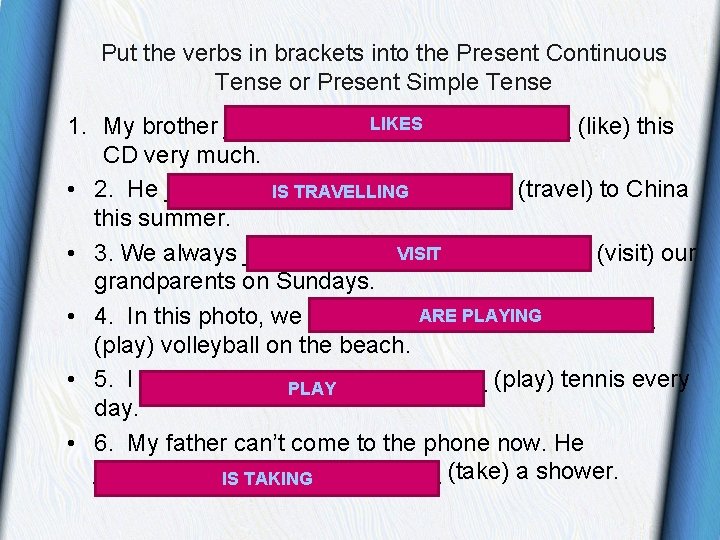
Put the verbs in brackets into the Present Continuous Tense or Present Simple Tense LIKES 1. My brother _____________ (like) this CD very much. • 2. He _____________ (travel) to China IS TRAVELLING this summer. VISIT • 3. We always _____________ (visit) our grandparents on Sundays. ARE PLAYING • 4. In this photo, we _____________ (play) volleyball on the beach. • 5. I _____________ (play) tennis every PLAY day. • 6. My father can’t come to the phone now. He _____________ (take) a shower. IS TAKING
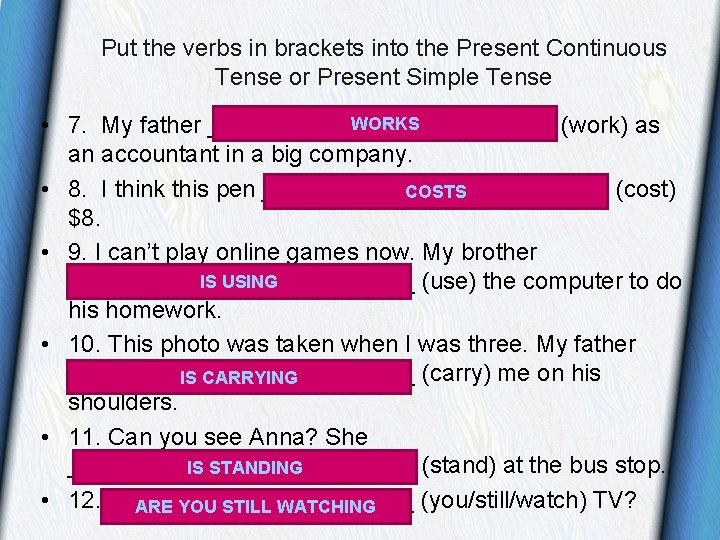
Put the verbs in brackets into the Present Continuous Tense or Present Simple Tense WORKS • 7. My father _____________ (work) as an accountant in a big company. • 8. I think this pen _____________ (cost) COSTS $8. • 9. I can’t play online games now. My brother IS USING _____________ (use) the computer to do his homework. • 10. This photo was taken when I was three. My father _____________ (carry) me on his IS CARRYING shoulders. • 11. Can you see Anna? She _____________ (stand) at the bus stop. IS STANDING • 12. ____________ (you/still/watch) TV? ARE YOU STILL WATCHING