The intergroup contact hypothesis An introduction Dr Lindsey

- Slides: 12
The intergroup contact hypothesis An introduction Dr Lindsey Cameron School of Psychology, University of Kent Researcher in Residence, Linking Network
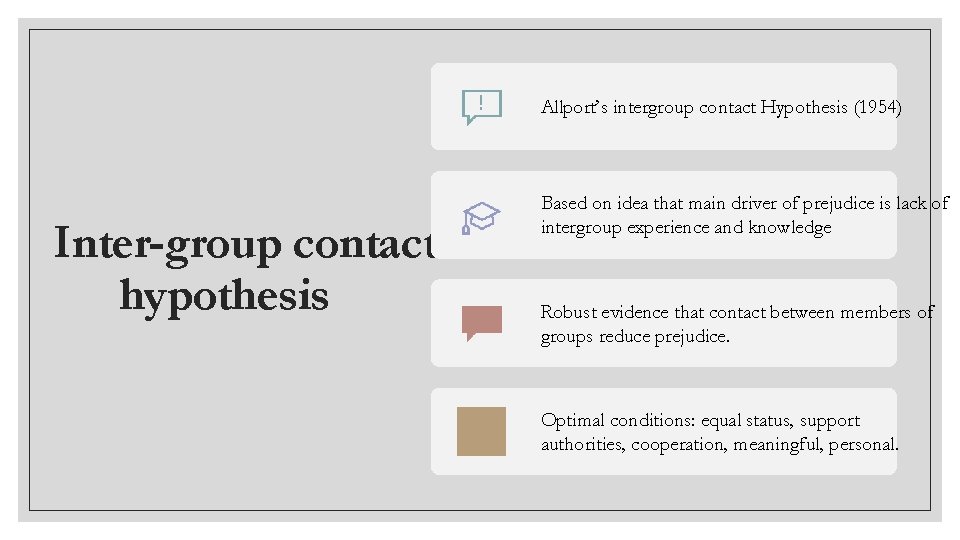
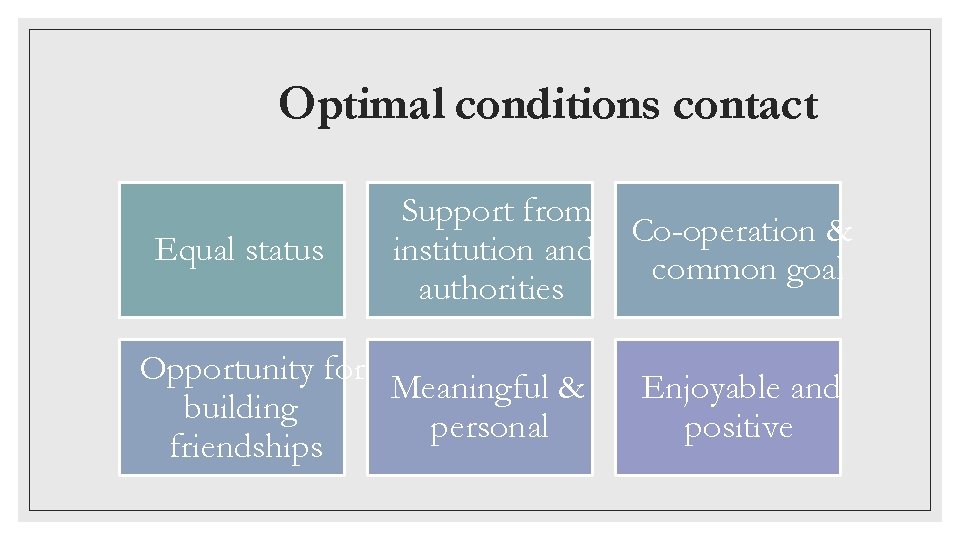
Allport’s intergroup contact Hypothesis (1954) Inter-group contact hypothesis Based on idea that main driver of prejudice is lack of intergroup experience and knowledge Robust evidence that contact between members of groups reduce prejudice. Optimal conditions: equal status, support authorities, cooperation, meaningful, personal.
Optimal conditions contact Equal status Support from Co-operation & institution and common goal authorities Opportunity for Meaningful & building personal friendships Enjoyable and positive
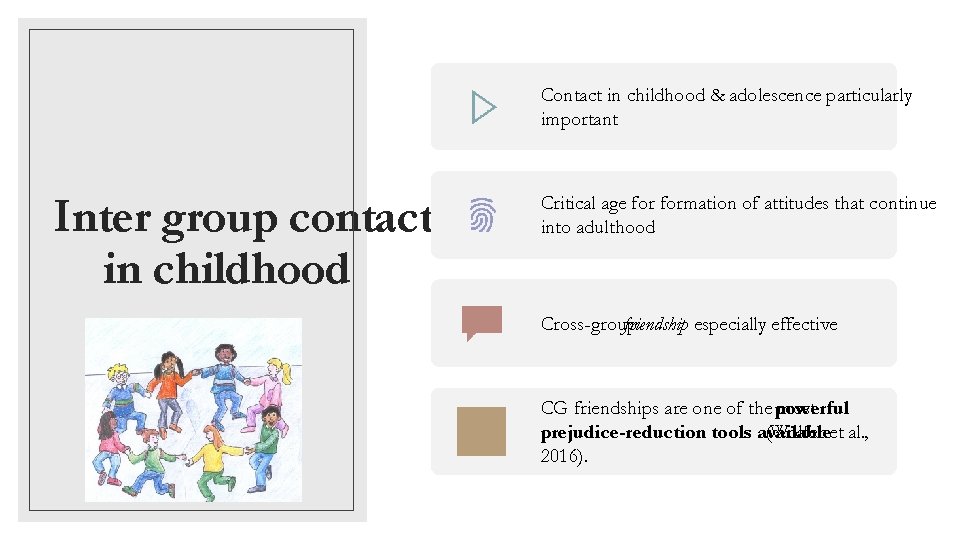
Contact in childhood & adolescence particularly important Inter group contact in childhood Critical age formation of attitudes that continue into adulthood Cross-group friendship especially effective CG friendships are one of the powerful most prejudice-reduction tools available (Wölfer et al. , 2016).
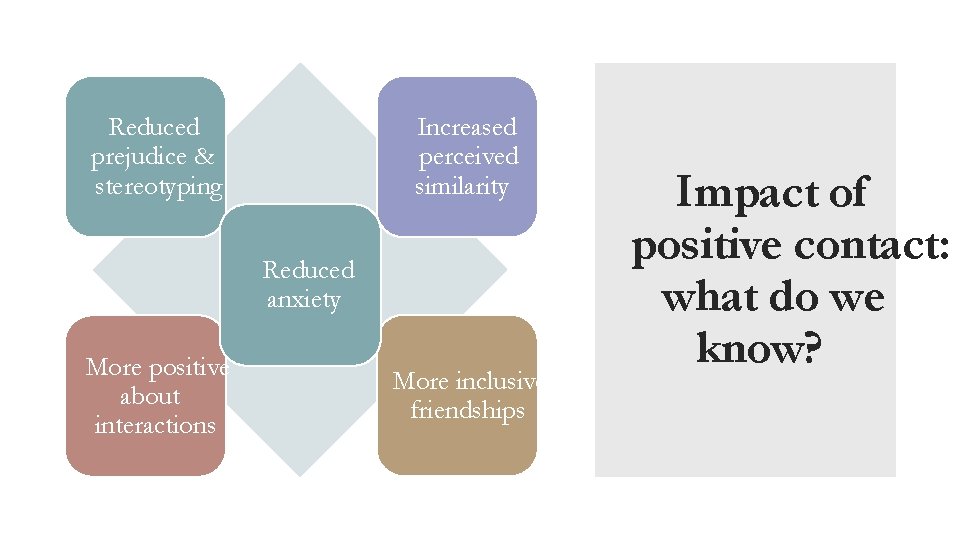
Reduced prejudice & stereotyping Increased perceived similarity Reduced Rewarding anxiety More positive about interactions More inclusive friendships Impact of positive contact: what do we know?
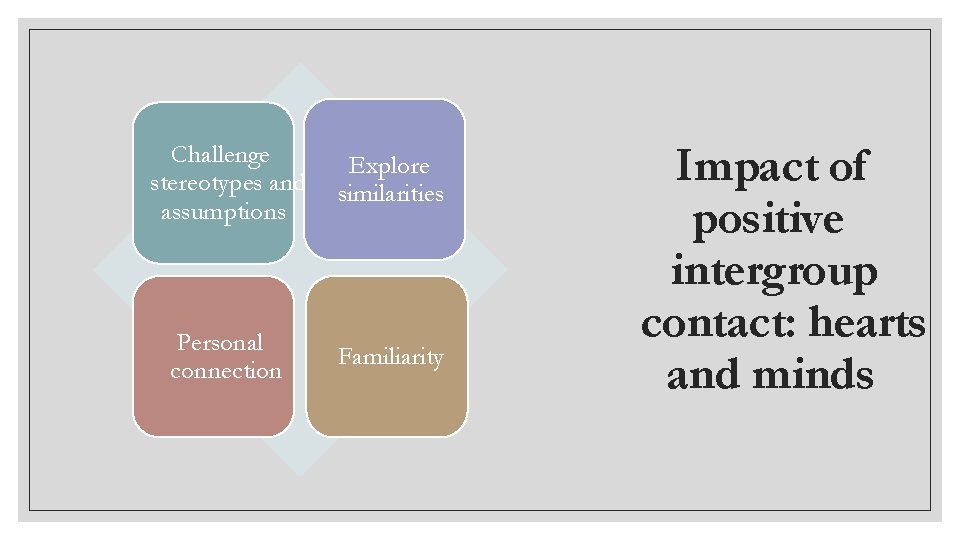
Challenge stereotypes and assumptions Explore similarities Personal connection Familiarity Impact of positive intergroup contact: hearts and minds
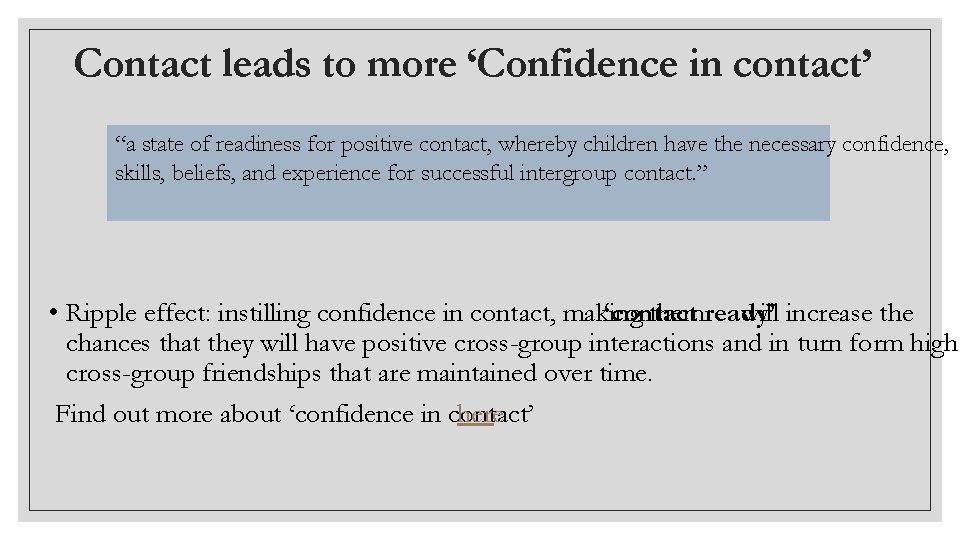
Contact leads to more ‘Confidence in contact’ “a state of readiness for positive contact, whereby children have the necessary confidence, skills, beliefs, and experience for successful intergroup contact. ” • Ripple effect: instilling confidence in contact, making ‘contact themready’ will increase the chances that they will have positive cross-group interactions and in turn form high cross-group friendships that are maintained over time. Find out more about ‘confidence in contact’ here
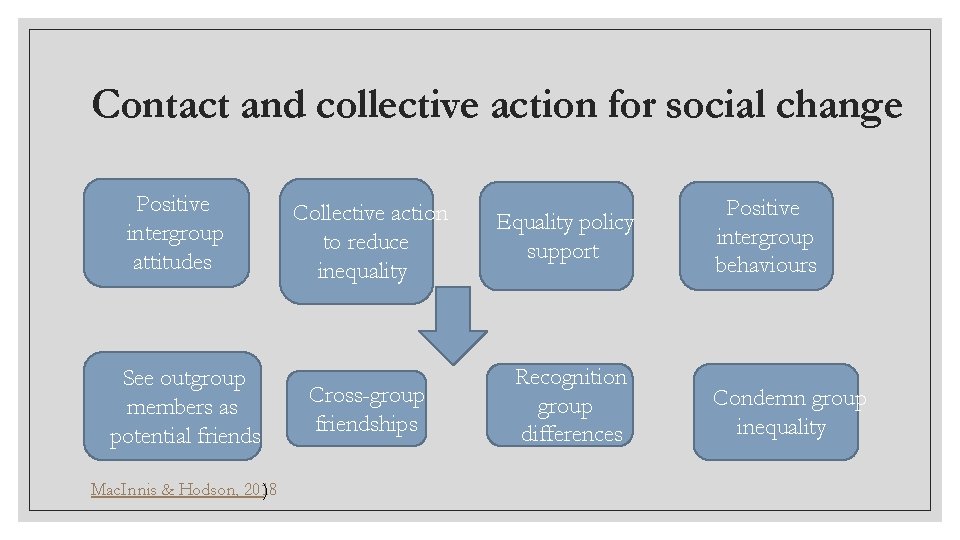
Contact and collective action for social change Positive intergroup attitudes See outgroup members as potential friends Mac. Innis & Hodson, 2018 ) Collective action to reduce inequality Equality policy support Cross-group friendships Recognition group differences Positive intergroup behaviours Condemn group inequality
One of most powerful tools we have for tackling prejudice and stereotypes (Wölfer et al. , 2016) Inter-group contact hypothesis Foundation of the Linking Network Brings schools together to change minds
Building confidence through experience of positive interaction School linking network: a source of confidence Builds self-belief in ability to hold successful interactions Practice in a safe and carefully managed space! Remember this when considering future intergroup interactions
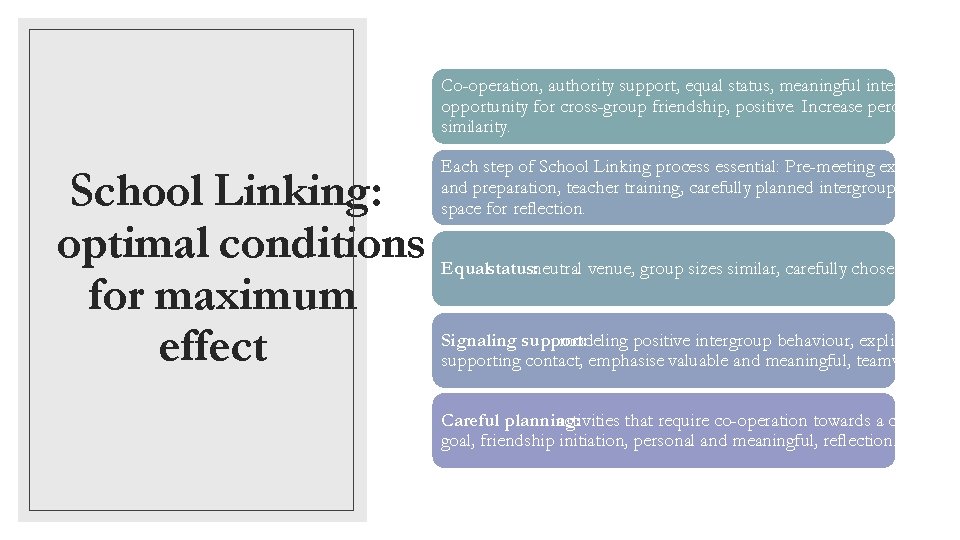
Co-operation, authority support, equal status, meaningful interactions, opportunity for cross-group friendship, positive. Increase perceived similarity. School Linking: optimal conditions for maximum effect Each step of School Linking process essential: Pre-meeting exchange and preparation, teacher training, carefully planned intergroup contact, space for reflection. Equalstatus: neutral venue, group sizes similar, carefully chosen tasks Signaling support: modeling positive intergroup behaviour, explicitly supporting contact, emphasise valuable and meaningful, teamwork Careful planning: activities that require co-operation towards a common goal, friendship initiation, personal and meaningful, reflection.
Thank you for your attention! L. Cameron@kent. ac. uk Senior Lecturer in Psychology Researcher in Residence at Linking Network School of Psychology