The Integumentary System THE DERMIS Pages 116 119
- Slides: 8
The Integumentary System THE DERMIS Pages 116 -119
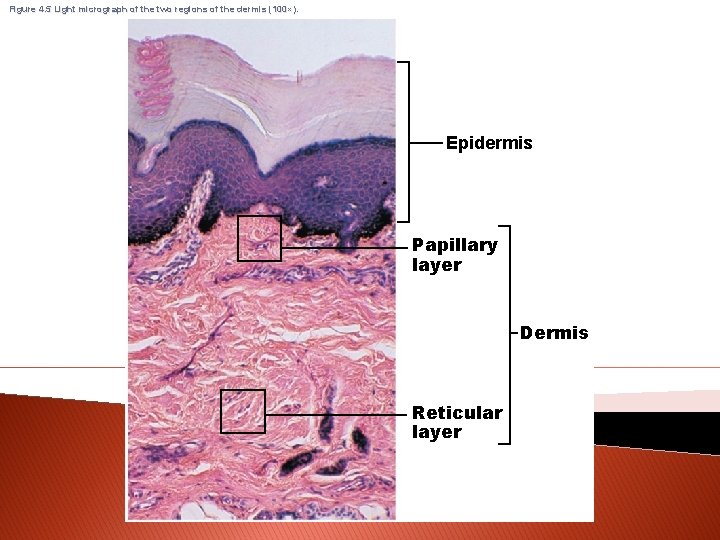
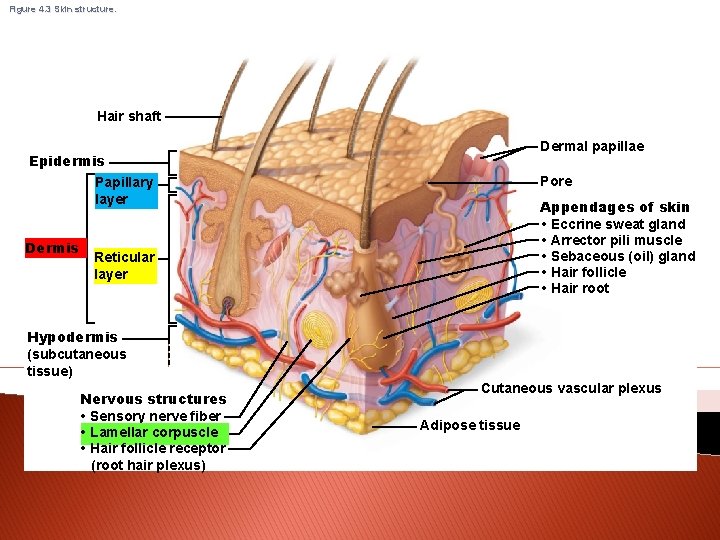
The Dermis and its layers � Dense � Two connective tissue of varying thickness layers: ◦ Papillary (upper) ◦ Reticular (lower)
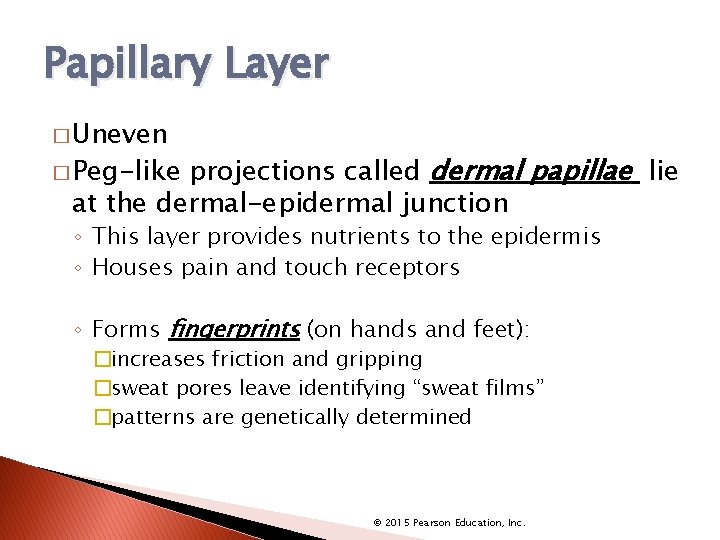
Papillary Layer � Uneven projections called dermal papillae lie at the dermal-epidermal junction � Peg-like ◦ This layer provides nutrients to the epidermis ◦ Houses pain and touch receptors ◦ Forms fingerprints (on hands and feet): �increases friction and gripping �sweat pores leave identifying “sweat films” �patterns are genetically determined © 2015 Pearson Education, Inc.
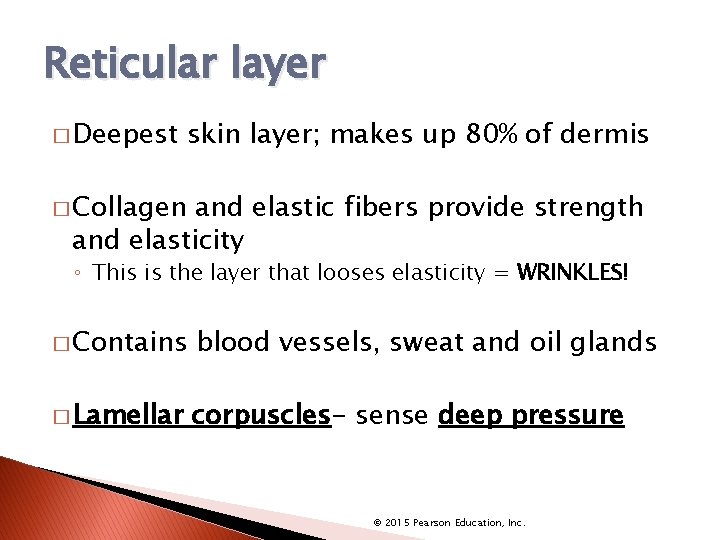
Reticular layer � Deepest skin layer; makes up 80% of dermis � Collagen and elastic fibers provide strength and elasticity ◦ This is the layer that looses elasticity = WRINKLES! � Contains blood vessels, sweat and oil glands � Lamellar corpuscles- sense deep pressure © 2015 Pearson Education, Inc.
Figure 4. 5 Light micrograph of the two regions of the dermis (100 ×). (100× Epidermis Papillary layer Dermis Reticular layer
Figure 4. 3 Skin structure. Hair shaft Dermal papillae Epidermis Pore Papillary layer Dermis Appendages of skin • Eccrine sweat gland • Arrector pili muscle • Sebaceous (oil) gland • Hair follicle • Hair root Reticular layer Hypodermis (subcutaneous tissue) Nervous structures • Sensory nerve fiber • Lamellar corpuscle • Hair follicle receptor (root hair plexus) Cutaneous vascular plexus Adipose tissue
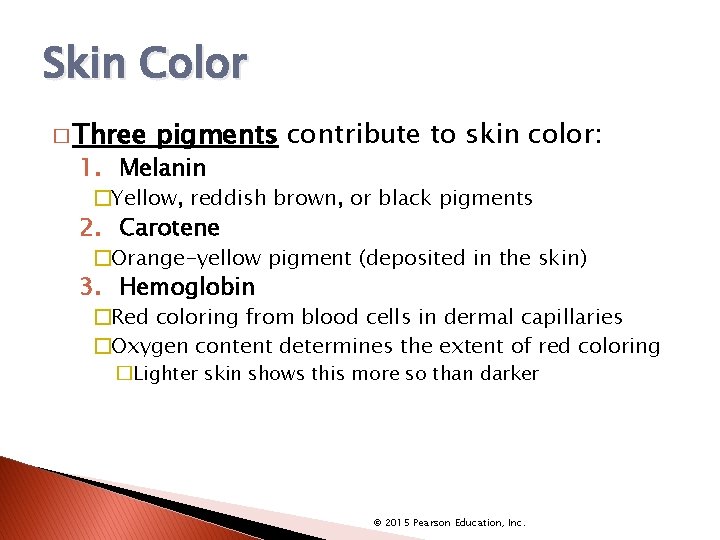
Skin Color � Three pigments contribute to skin color: 1. Melanin �Yellow, reddish brown, or black pigments 2. Carotene �Orange-yellow pigment (deposited in the skin) 3. Hemoglobin �Red coloring from blood cells in dermal capillaries �Oxygen content determines the extent of red coloring �Lighter skin shows this more so than darker © 2015 Pearson Education, Inc.
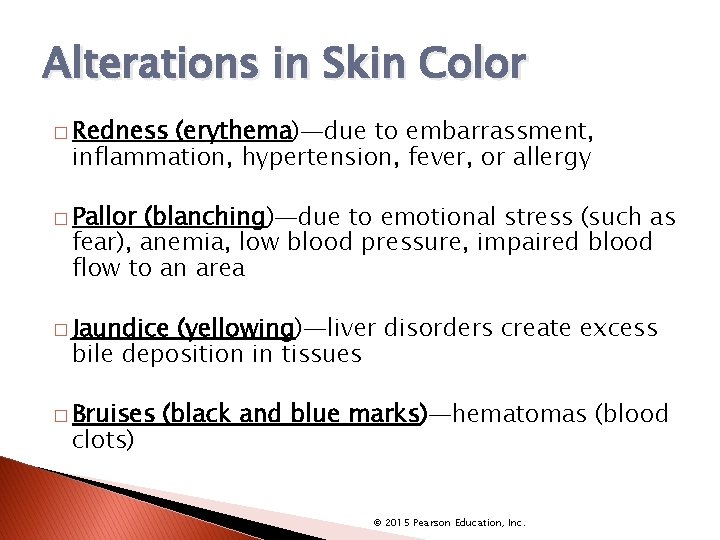
Alterations in Skin Color � Redness (erythema)—due to embarrassment, inflammation, hypertension, fever, or allergy � Pallor (blanching)—due to emotional stress (such as fear), anemia, low blood pressure, impaired blood flow to an area � Jaundice (yellowing)—liver disorders create excess bile deposition in tissues � Bruises clots) (black and blue marks)—hematomas (blood © 2015 Pearson Education, Inc.