THE INSTITUTE OF CHARTERED ACCOUNTANTS OF SRI LANKA

- Slides: 22
THE INSTITUTE OF CHARTERED ACCOUNTANTS OF SRI LANKA POSTGRADUATE DIPLOMA IN BUSINESS AND FINANCE - 2015/2016 Principles of Financial and Cost Accounting Thilanka Warnakulasooriya B. Com Special, ACA, MBA-Fin
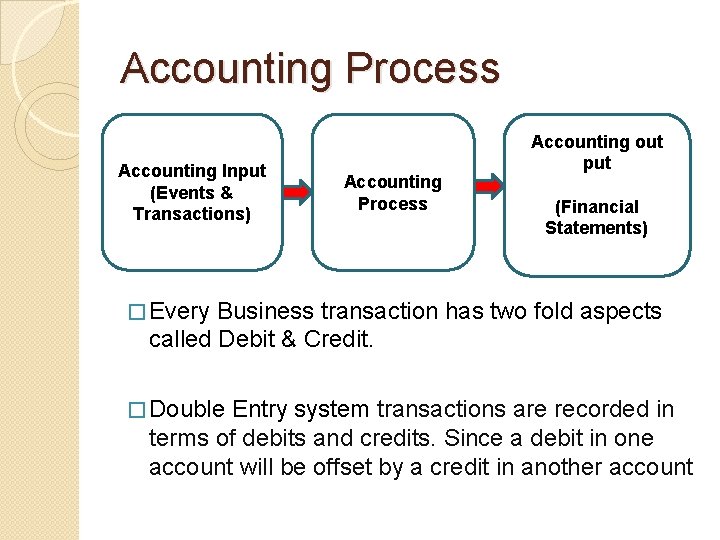
Accounting Process Accounting Input (Events & Transactions) Accounting Process Accounting out put (Financial Statements) � Every Business transaction has two fold aspects called Debit & Credit. � Double Entry system transactions are recorded in terms of debits and credits. Since a debit in one account will be offset by a credit in another account
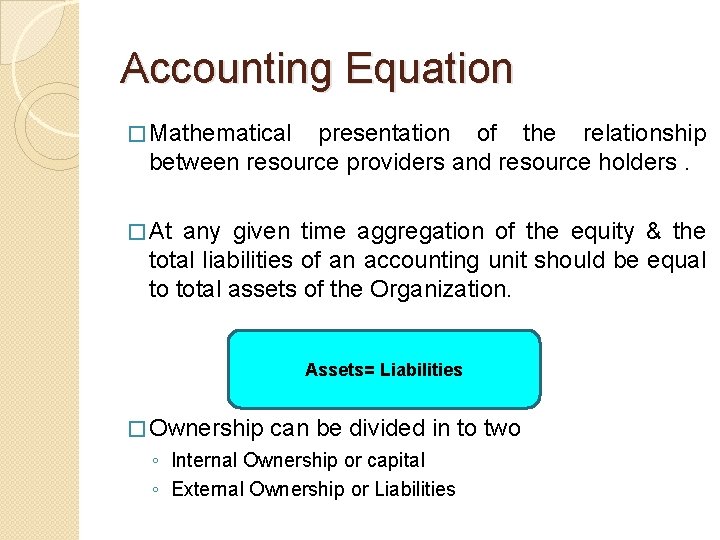
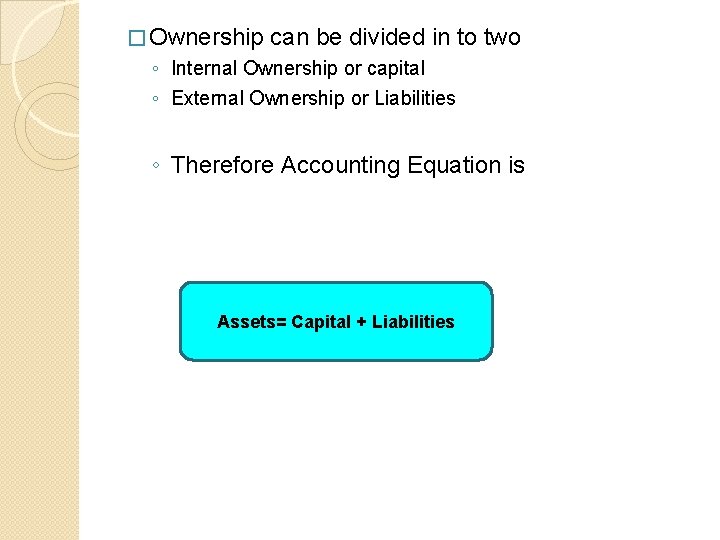
Accounting Equation � Mathematical presentation of the relationship between resource providers and resource holders. � At any given time aggregation of the equity & the total liabilities of an accounting unit should be equal to total assets of the Organization. Assets= Liabilities � Ownership can be divided in to two ◦ Internal Ownership or capital ◦ External Ownership or Liabilities
� Ownership can be divided in to two ◦ Internal Ownership or capital ◦ External Ownership or Liabilities ◦ Therefore Accounting Equation is Assets= Capital + Liabilities
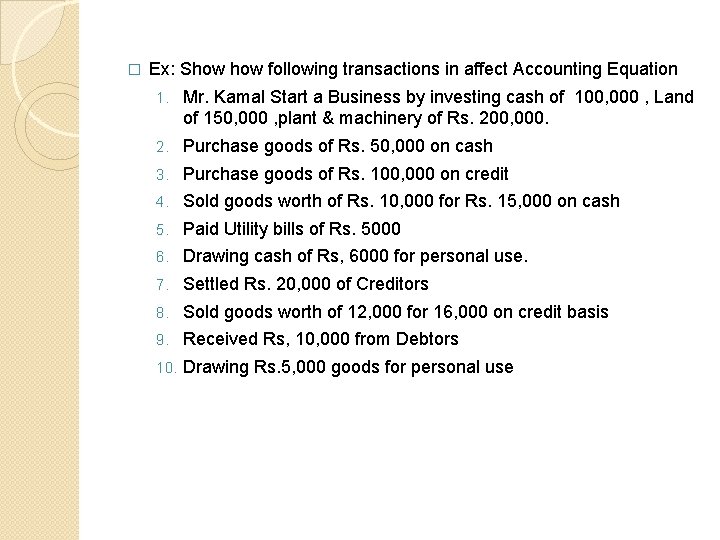
� Ex: Show following transactions in affect Accounting Equation 1. Mr. Kamal Start a Business by investing cash of 100, 000 , Land of 150, 000 , plant & machinery of Rs. 200, 000. 2. Purchase goods of Rs. 50, 000 on cash 3. Purchase goods of Rs. 100, 000 on credit 4. Sold goods worth of Rs. 10, 000 for Rs. 15, 000 on cash 5. Paid Utility bills of Rs. 5000 6. Drawing cash of Rs, 6000 for personal use. 7. Settled Rs. 20, 000 of Creditors 8. Sold goods worth of 12, 000 for 16, 000 on credit basis 9. Received Rs, 10, 000 from Debtors 10. Drawing Rs. 5, 000 goods for personal use
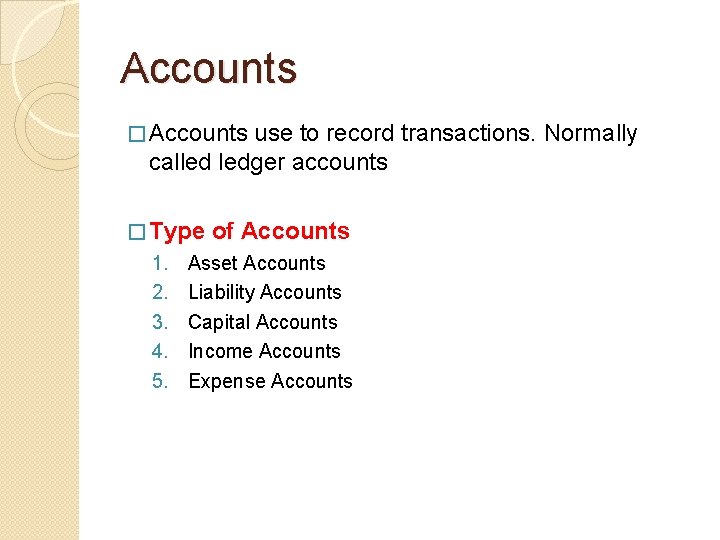
Accounts � Accounts use to record transactions. Normally called ledger accounts � Type 1. 2. 3. 4. 5. of Accounts Asset Accounts Liability Accounts Capital Accounts Income Accounts Expense Accounts
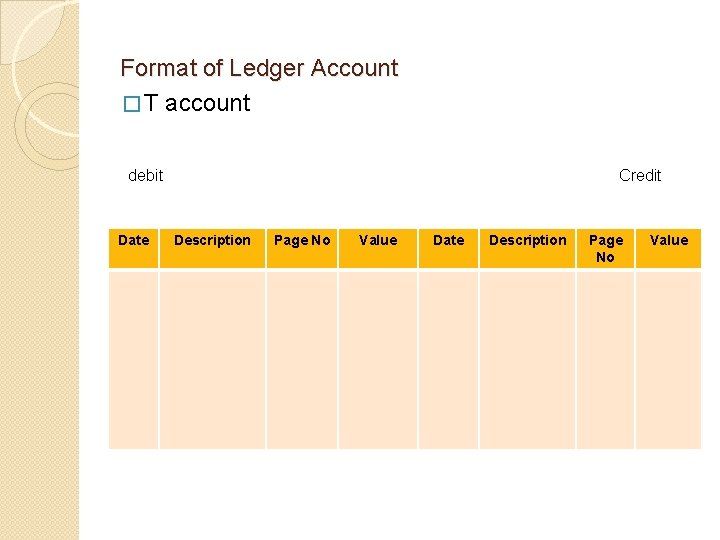
Format of Ledger Account � T account debit Date Credit Description Page No Value Date Description Page No Value
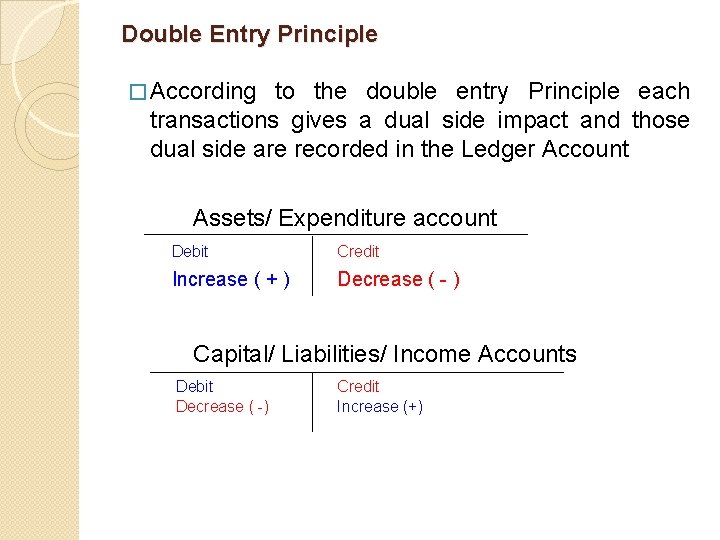
Double Entry Principle � According to the double entry Principle each transactions gives a dual side impact and those dual side are recorded in the Ledger Account Assets/ Expenditure account Debit Credit Increase ( + ) Decrease ( - ) Capital/ Liabilities/ Income Accounts Debit Decrease ( -) Credit Increase (+)
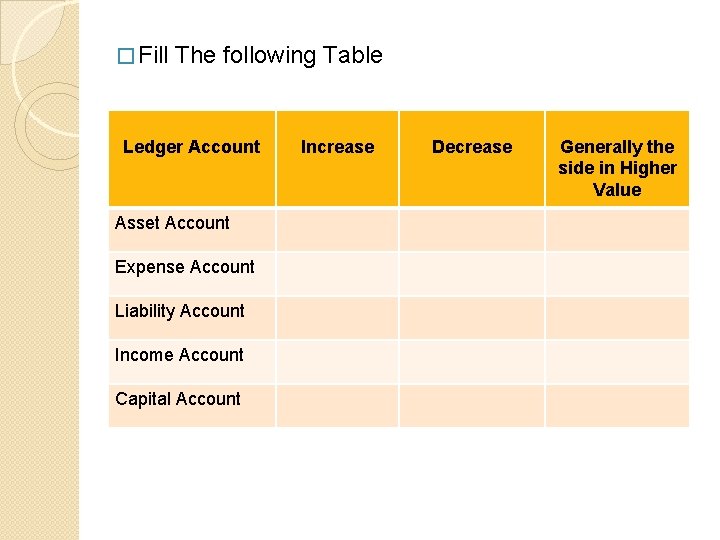
� Fill The following Table Ledger Account Asset Account Expense Account Liability Account Income Account Capital Account Increase Decrease Generally the side in Higher Value
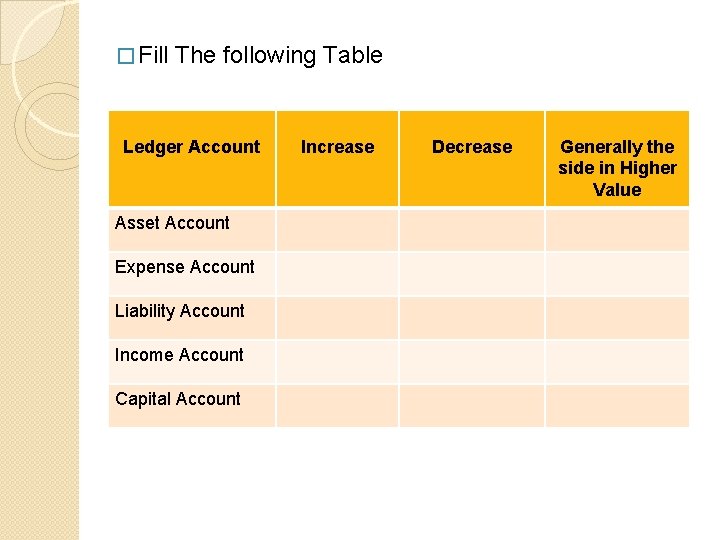
� Fill The following Table Ledger Account Asset Account Expense Account Liability Account Income Account Capital Account Increase Decrease Generally the side in Higher Value
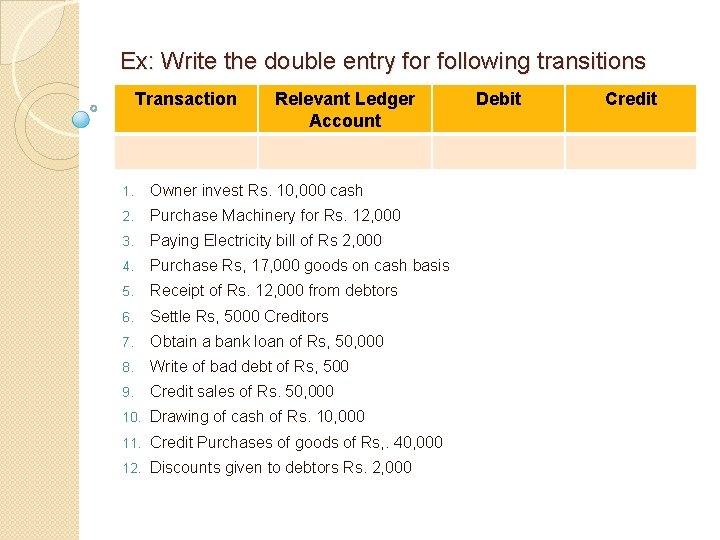
Ex: Write the double entry for following transitions Transaction Relevant Ledger Account 1. Owner invest Rs. 10, 000 cash 2. Purchase Machinery for Rs. 12, 000 3. Paying Electricity bill of Rs 2, 000 4. Purchase Rs, 17, 000 goods on cash basis 5. Receipt of Rs. 12, 000 from debtors 6. Settle Rs, 5000 Creditors 7. Obtain a bank loan of Rs, 50, 000 8. Write of bad debt of Rs, 500 9. Credit sales of Rs. 50, 000 10. Drawing of cash of Rs. 10, 000 11. Credit Purchases of goods of Rs, . 40, 000 12. Discounts given to debtors Rs. 2, 000 Debit Credit
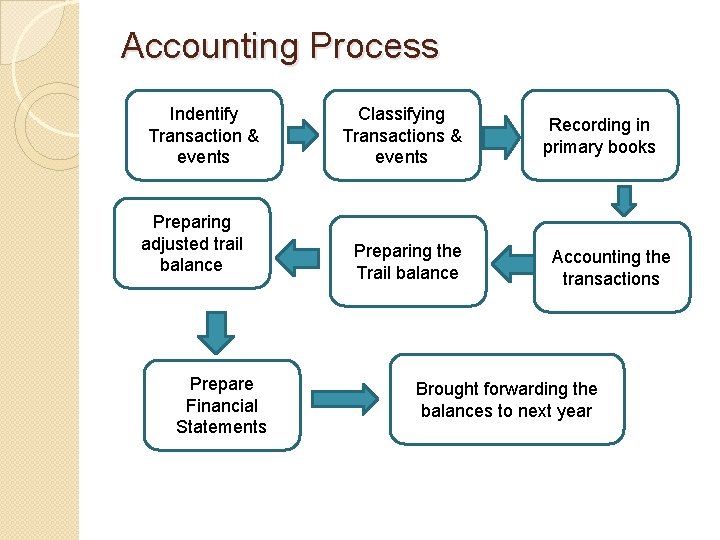
Accounting Process Indentify Transaction & events Preparing adjusted trail balance Prepare Financial Statements Classifying Transactions & events Preparing the Trail balance Recording in primary books Accounting the transactions Brought forwarding the balances to next year
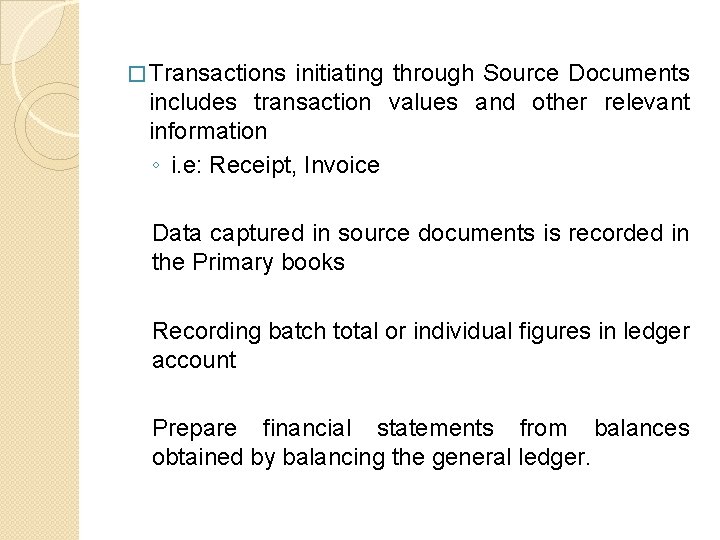
� Transactions initiating through Source Documents includes transaction values and other relevant information ◦ i. e: Receipt, Invoice Data captured in source documents is recorded in the Primary books Recording batch total or individual figures in ledger account Prepare financial statements from balances obtained by balancing the general ledger.
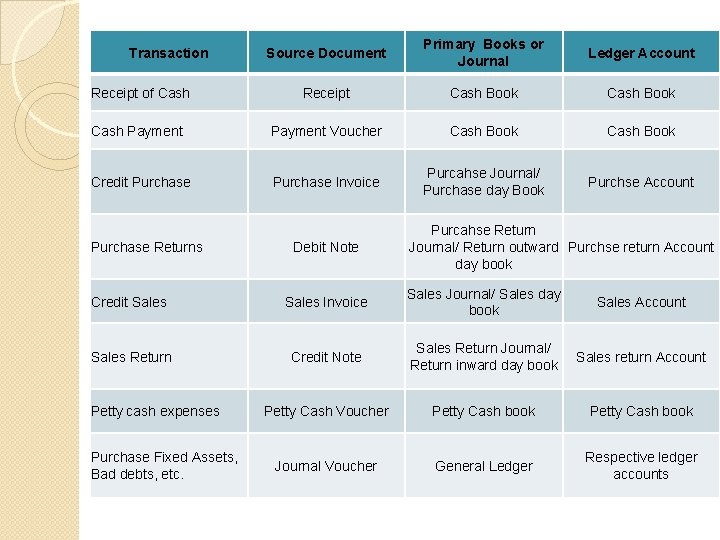
Source Document Primary Books or Journal Ledger Account Receipt of Cash Receipt Cash Book Cash Payment Voucher Cash Book Credit Purchase Invoice Purcahse Journal/ Purchase day Book Purchse Account Transaction Purchase Returns Debit Note Purcahse Return Journal/ Return outward Purchse return Account day book Credit Sales Invoice Sales Journal/ Sales day book Sales Account Sales Return Credit Note Sales Return Journal/ Return inward day book Sales return Account Petty Cash Voucher Petty Cash book Journal Voucher General Ledger Respective ledger accounts Petty cash expenses Purchase Fixed Assets, Bad debts, etc.
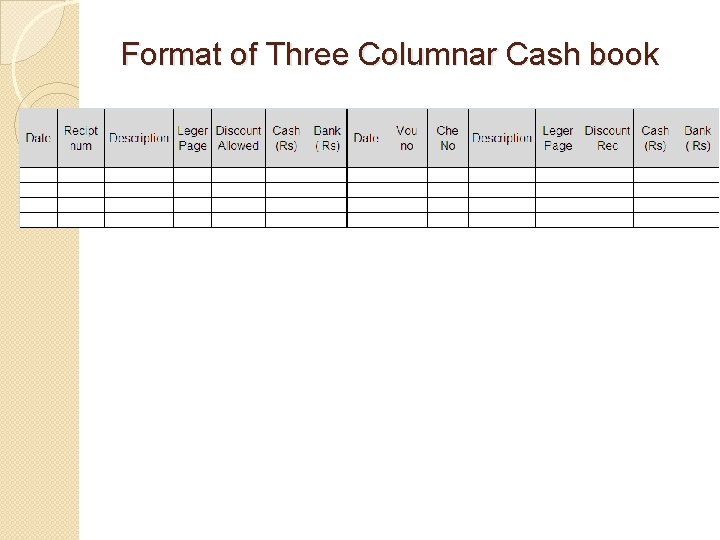
Format of Three Columnar Cash book
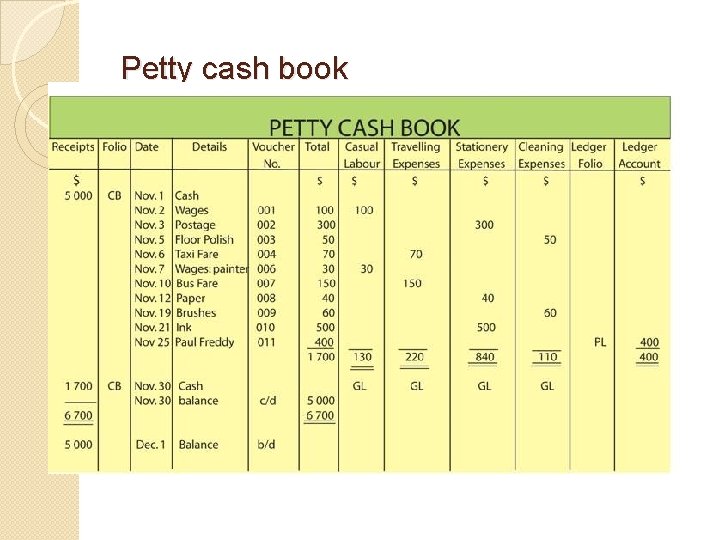
Petty cash book
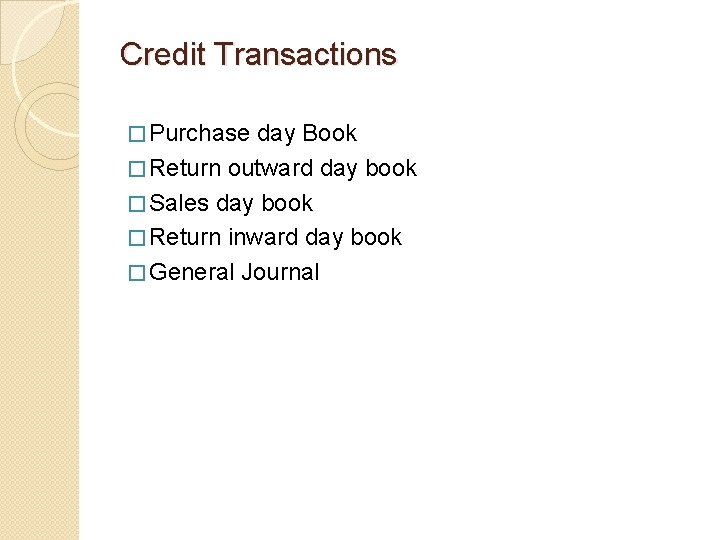
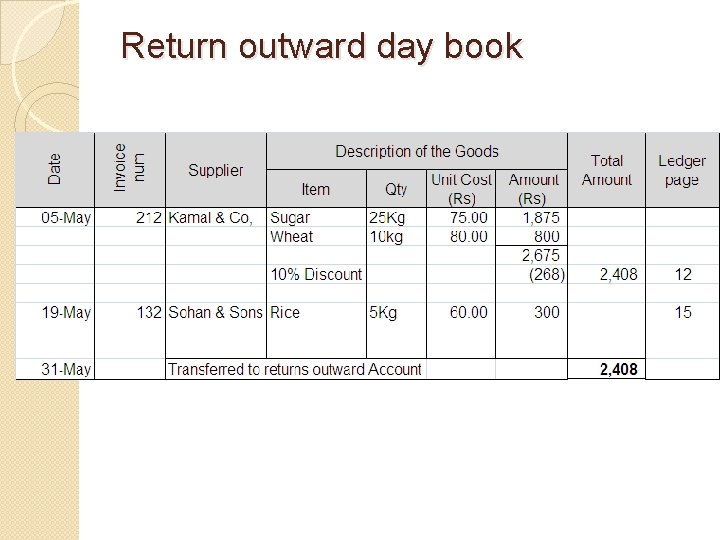
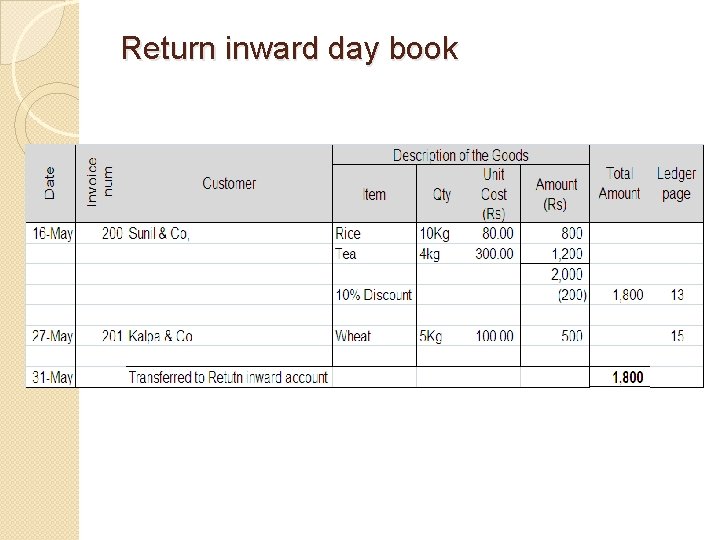
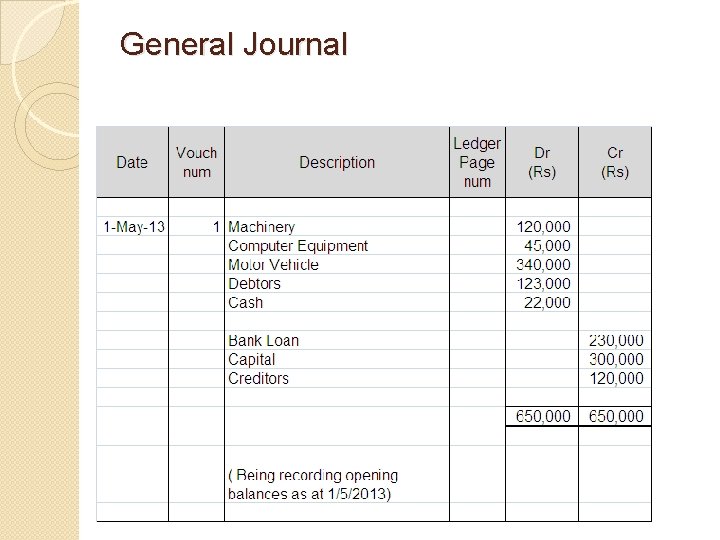
Credit Transactions � Purchase day Book � Return outward day book � Sales day book � Return inward day book � General Journal
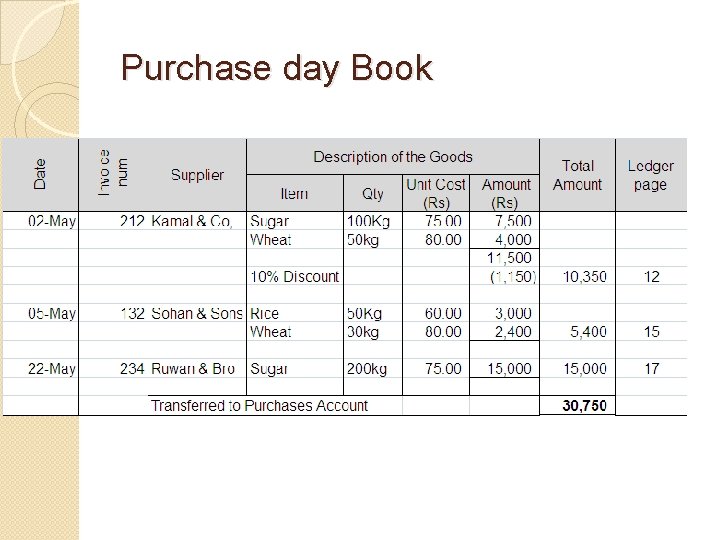
Purchase day Book
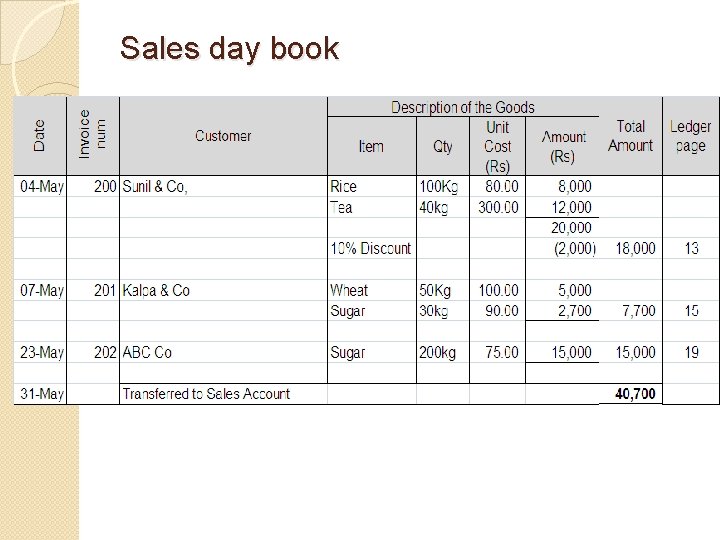
Sales day book
Return outward day book
Return inward day book
General Journal