The House on Mango Street Author Date of
- Slides: 14
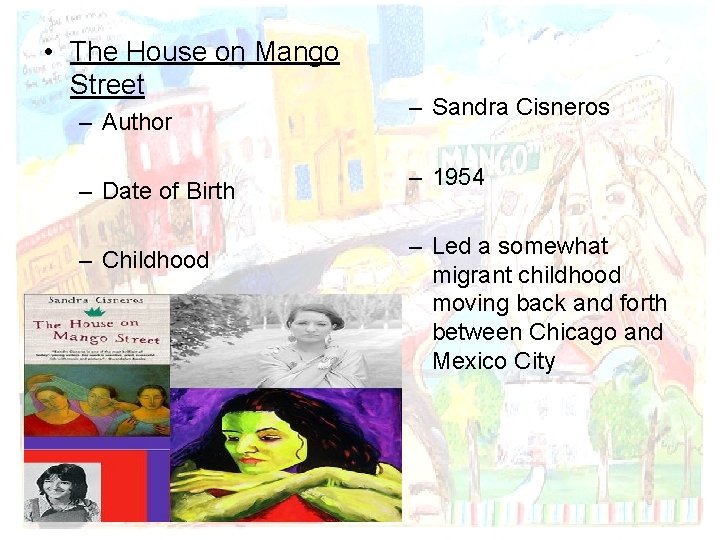
• The House on Mango Street – Author – Date of Birth – Childhood – Sandra Cisneros – 1954 – Led a somewhat migrant childhood moving back and forth between Chicago and Mexico City
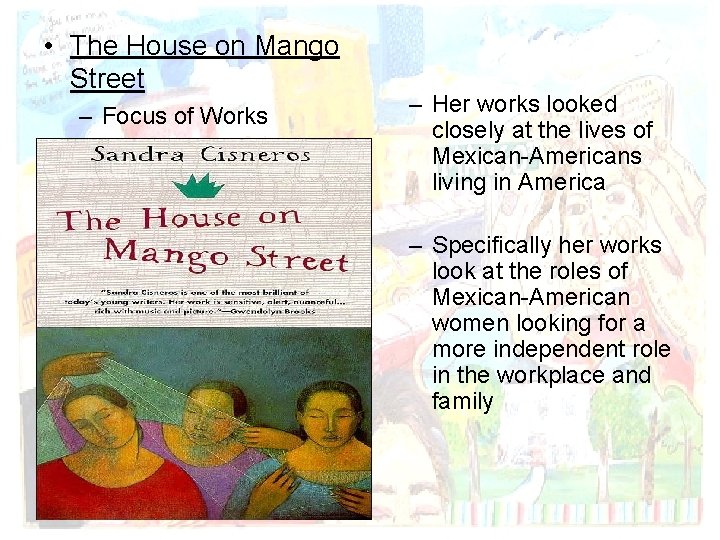
• The House on Mango Street – Focus of Works – Her works looked closely at the lives of Mexican-Americans living in America – Specifically her works look at the roles of Mexican-American women looking for a more independent role in the workplace and family
• The House on Mango Street – Background • The book was received with critical fanfare • Perhaps more notably it was a commercial success, a rare accomplishment for a Hispanic writer at the time of its release • Winner of “Before Columbus American Book Award”
• The House on Mango Street – Highlighting the Novel • Chicano literature relates the values and traditions of Mexican. American values • The House on Mango Street is a collection of over 40 vignettes • These short stories give readers a true sense of what it is like to live in a Mexican. American neighborhood
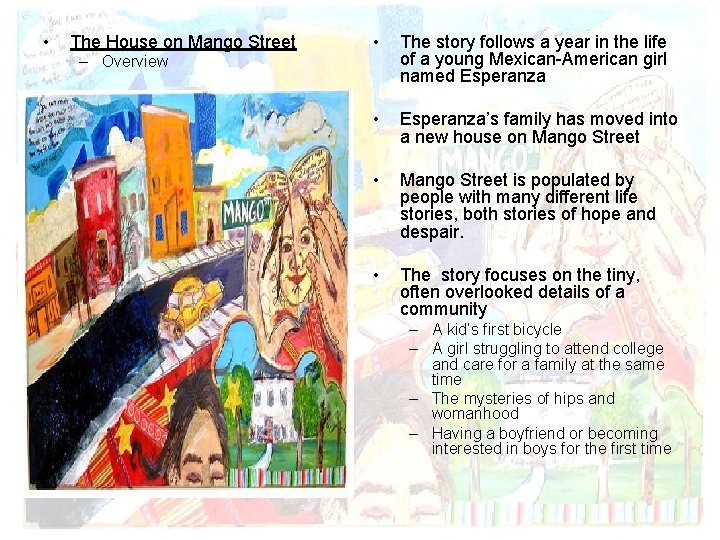
• The House on Mango Street • The story follows a year in the life of a young Mexican-American girl named Esperanza • Esperanza’s family has moved into a new house on Mango Street • Mango Street is populated by people with many different life stories, both stories of hope and despair. • The story focuses on the tiny, often overlooked details of a community – Overview – A kid’s first bicycle – A girl struggling to attend college and care for a family at the same time – The mysteries of hips and womanhood – Having a boyfriend or becoming interested in boys for the first time
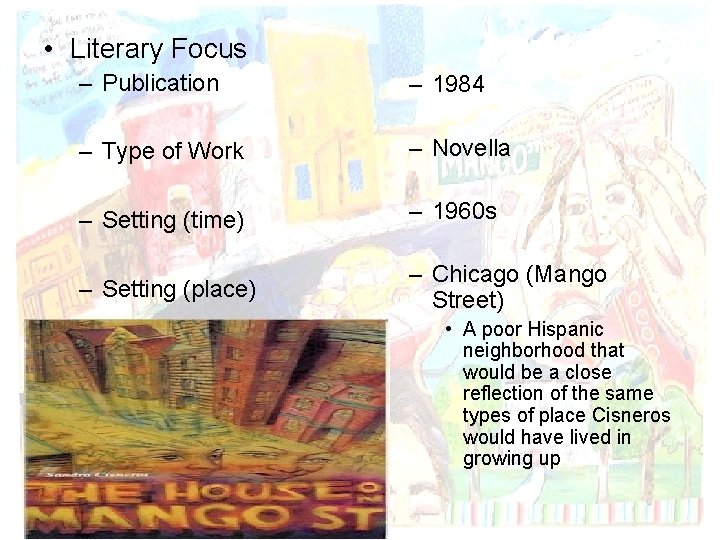
• Literary Focus – Publication – 1984 – Type of Work – Novella – Setting (time) – 1960 s – Setting (place) – Chicago (Mango Street) • A poor Hispanic neighborhood that would be a close reflection of the same types of place Cisneros would have lived in growing up
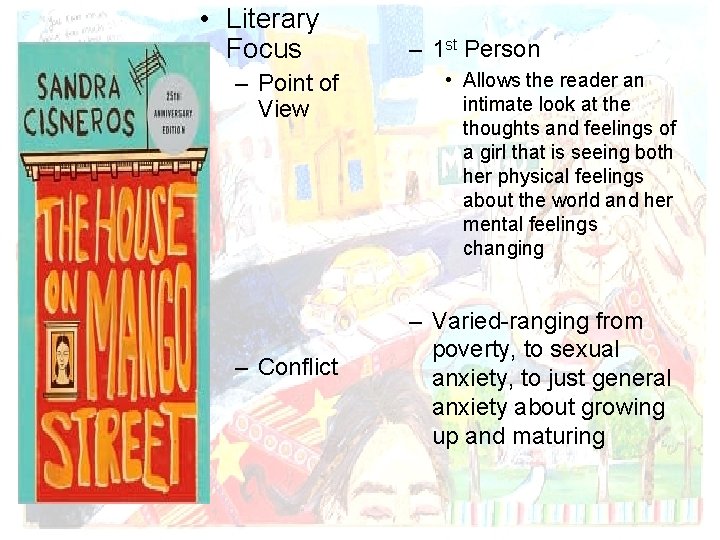
• Literary Focus – Point of View – Conflict – 1 st Person • Allows the reader an intimate look at the thoughts and feelings of a girl that is seeing both her physical feelings about the world and her mental feelings changing – Varied-ranging from poverty, to sexual anxiety, to just general anxiety about growing up and maturing
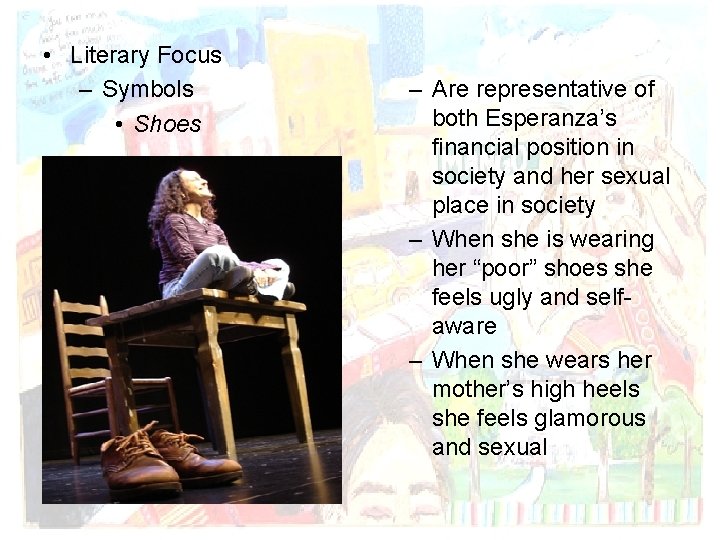
• Literary Focus – Symbols • Shoes – Are representative of both Esperanza’s financial position in society and her sexual place in society – When she is wearing her “poor” shoes she feels ugly and selfaware – When she wears her mother’s high heels she feels glamorous and sexual
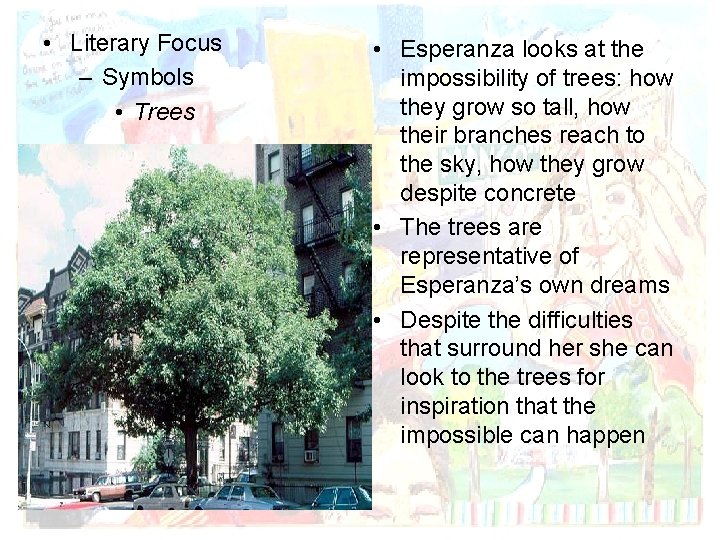
• Literary Focus – Symbols • Trees • Esperanza looks at the impossibility of trees: how they grow so tall, how their branches reach to the sky, how they grow despite concrete • The trees are representative of Esperanza’s own dreams • Despite the difficulties that surround her she can look to the trees for inspiration that the impossible can happen
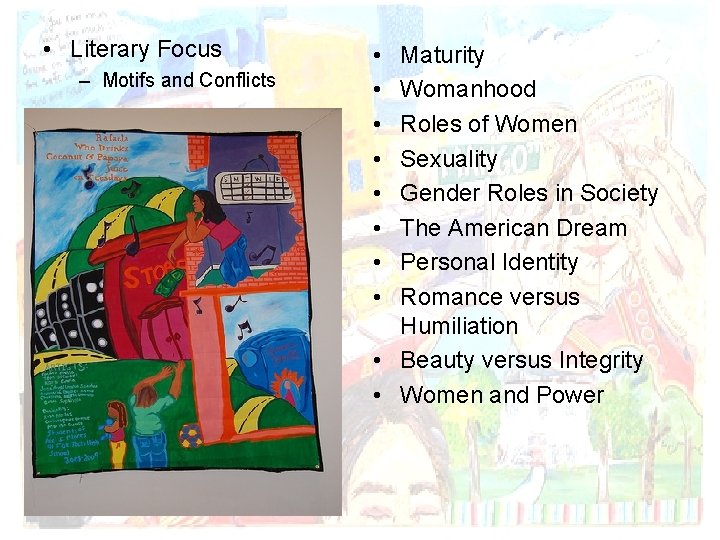
• Literary Focus – Motifs and Conflicts • • Maturity Womanhood Roles of Women Sexuality Gender Roles in Society The American Dream Personal Identity Romance versus Humiliation • Beauty versus Integrity • Women and Power
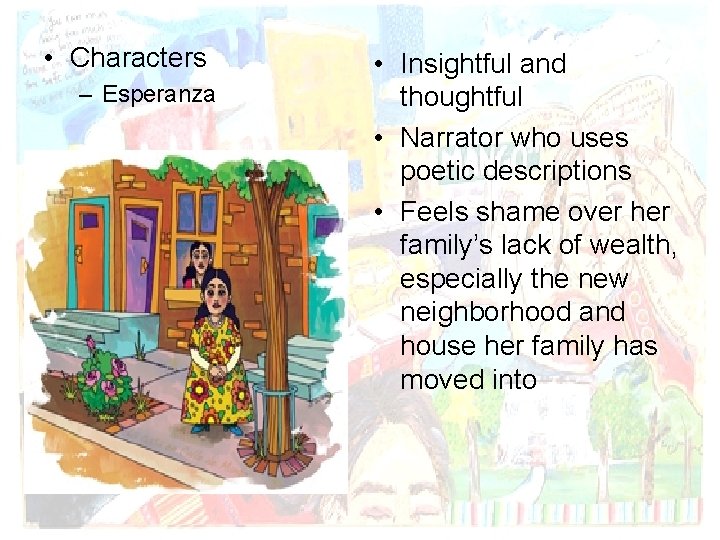
• Characters – Esperanza • Insightful and thoughtful • Narrator who uses poetic descriptions • Feels shame over her family’s lack of wealth, especially the new neighborhood and house her family has moved into
• Characters – Nenny • Esperanza’s younger sister and closest companion • Some division with her sister because their separation in age prevents Nenny from knowing the physical and emotional changes her older sister is having to cope with in her life
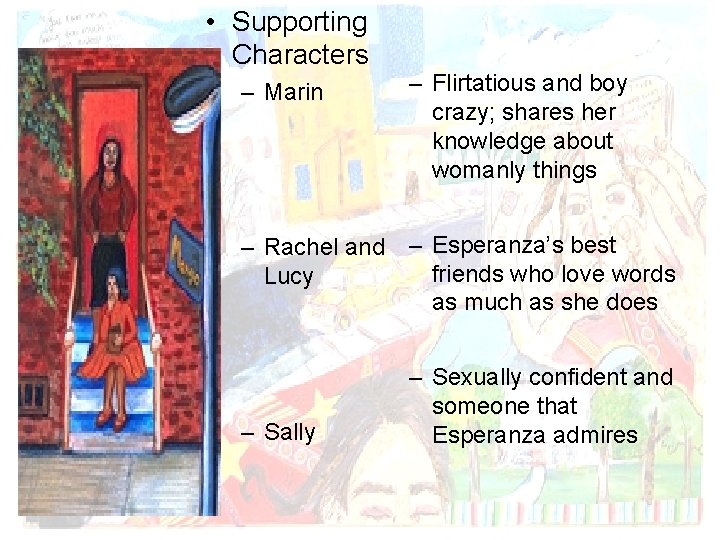
• Supporting Characters – Marin – Flirtatious and boy crazy; shares her knowledge about womanly things – Rachel and – Esperanza’s best friends who love words Lucy as much as she does – Sally – Sexually confident and someone that Esperanza admires