
Elements of Style in The House on Mango

- Slides: 9
Elements of Style in The House on Mango Street
Elements of Style in The House on Mango Street l Style—the distinctive way in which a writer uses language, from how he or she puts sentences together to the choice of vocabulary and use of literary devices.
Elements of Style in The House on Mango Street l Metaphor—a comparison between two things that are basically dissimilar in which one thing becomes another. • Example: “But my mother’s hair. . . is the warm smell of bread before you bake it. ”
Elements of Style in The House on Mango Street l Simile—a comparison between two things that are basically dissimilar using “like” or “as” to make the comparison. • Example: “My papa’s hair is like a broom. ”
Elements of Style in The House on Mango Street l Personification—the act of giving human qualities to something that is not human. • Example: “And me, my hair is lazy. ” Metaphor, simile, and personification are all types of figurative language. There are other types of figurative language; we’ll discuss them in the future.
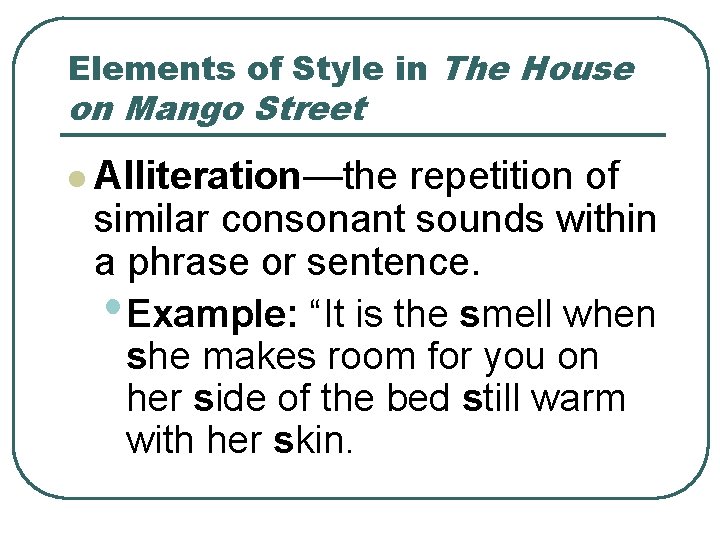
Elements of Style in The House on Mango Street l Alliteration—the repetition of similar consonant sounds within a phrase or sentence. • Example: “It is the smell when she makes room for you on her side of the bed still warm with her skin.
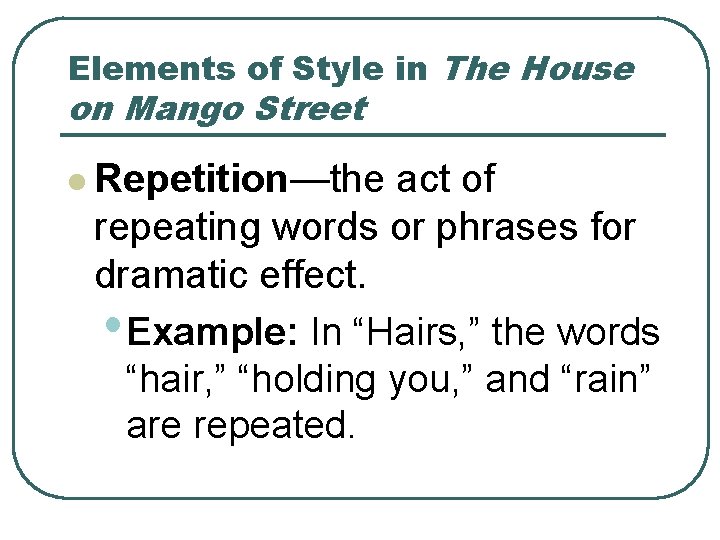
Elements of Style in The House on Mango Street l Repetition—the act of repeating words or phrases for dramatic effect. • Example: In “Hairs, ” the words “hair, ” “holding you, ” and “rain” are repeated.
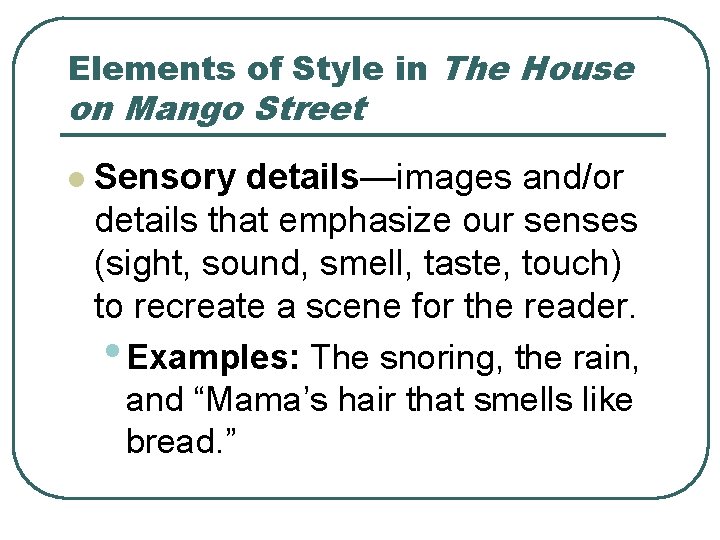
Elements of Style in The House on Mango Street l Sensory details—images and/or details that emphasize our senses (sight, sound, smell, taste, touch) to recreate a scene for the reader. • Examples: The snoring, the rain, and “Mama’s hair that smells like bread. ”
Summary l Style l Metaphor l Simile l Personification l Alliteration l Repetition l Sensory Details