The Colonial and PreColonial Origins of the Modern
- Slides: 13
The Colonial and Pre-Colonial Origins of the Modern Middle East Prof. M. Cammett POLS 1270 Feb. 2 & 7, 2012
Birth of Islam • Why is it important to understand the origins of Islam? • Prophet Mohammed (570 -632) • Relationship of Islam with Judaism & Christianity • What was so revolutionary about Islam? – Monotheism – Unity of tribes; one god (Allah) – Social Justice
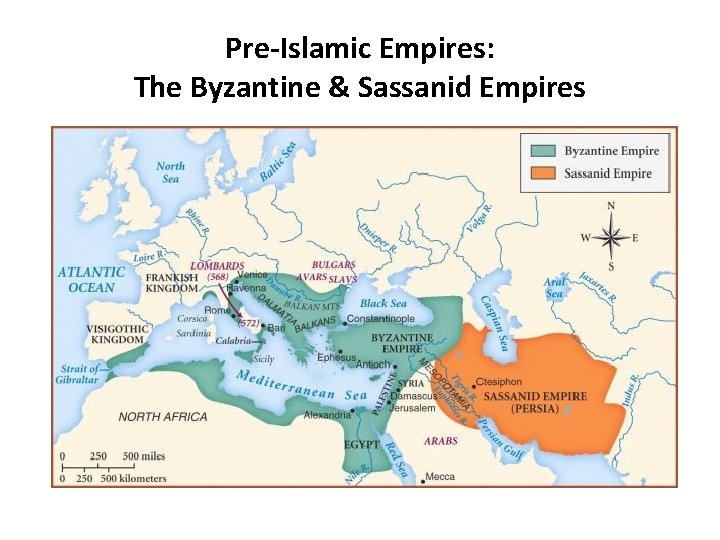
Pre-Islamic Empires: The Byzantine & Sassanid Empires
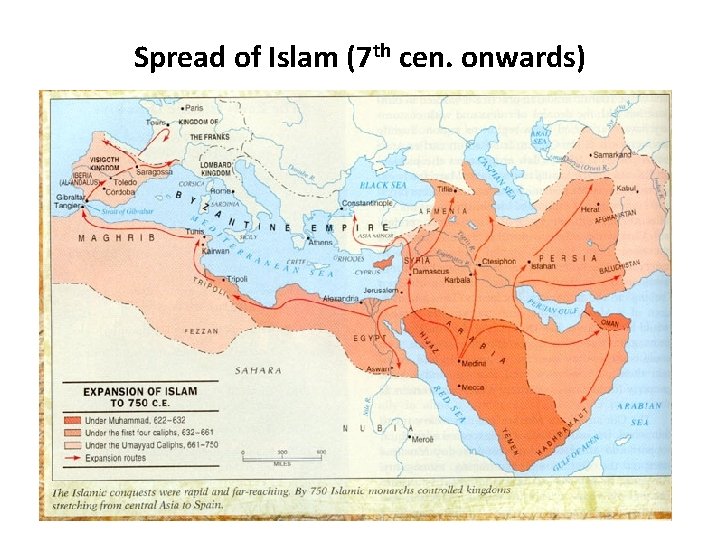
Spread of Islam (7 th cen. onwards)
Development of Islam • Why conversion? Multiple motivations • Splits within Islam: Sunnis & Shi’a • Islamic “law” or guiding principles Sharia: (Qur’an, Sunna, Hadith) • Islamic Jurisprudence & Schools of Thought
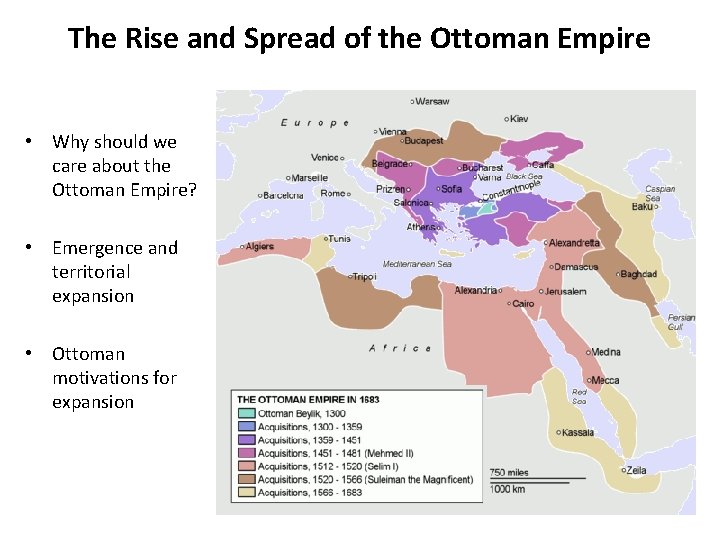
The Rise and Spread of the Ottoman Empire • Why should we care about the Ottoman Empire? • Emergence and territorial expansion • Ottoman motivations for expansion
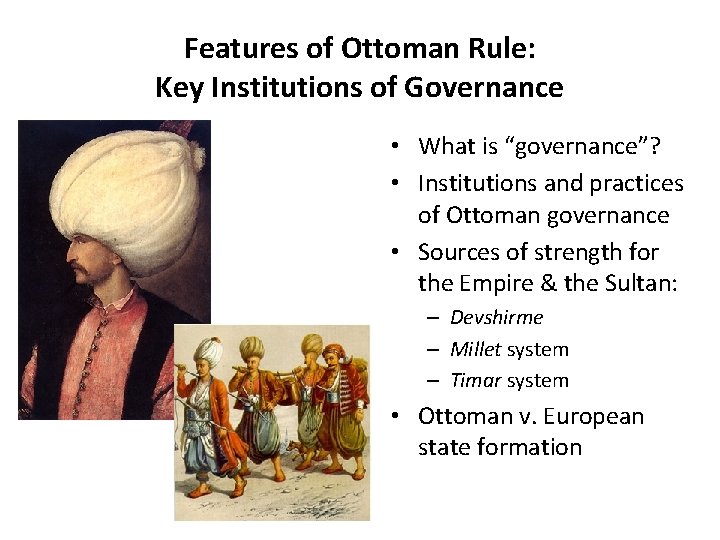
Features of Ottoman Rule: Key Institutions of Governance • What is “governance”? • Institutions and practices of Ottoman governance • Sources of strength for the Empire & the Sultan: – Devshirme – Millet system – Timar system • Ottoman v. European state formation
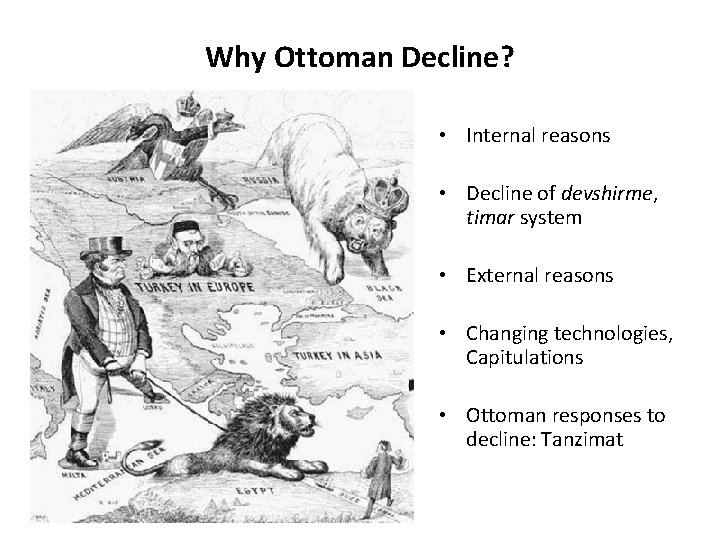
Why Ottoman Decline? • Internal reasons • Decline of devshirme, timar system • External reasons • Changing technologies, Capitulations • Ottoman responses to decline: Tanzimat
Ottoman Legacies • Economic (and then political) subordination of the Middle East to European powers • Enduring organizational features – Millet system – Decentralized power indirect rule
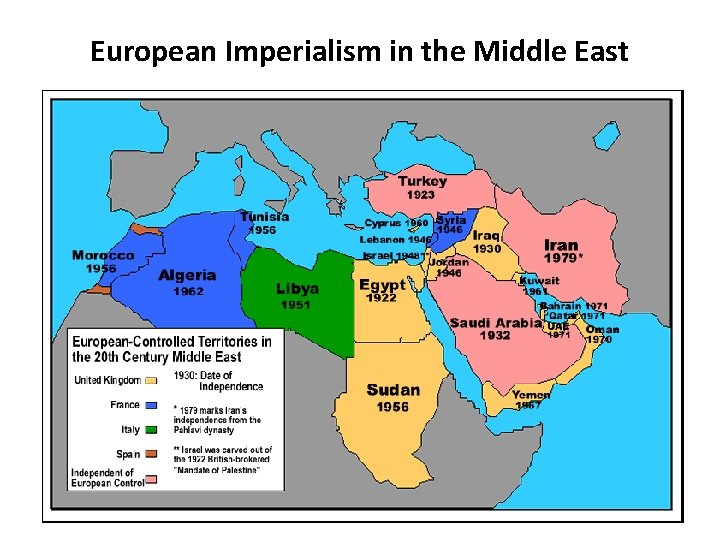
European Imperialism in the Middle East
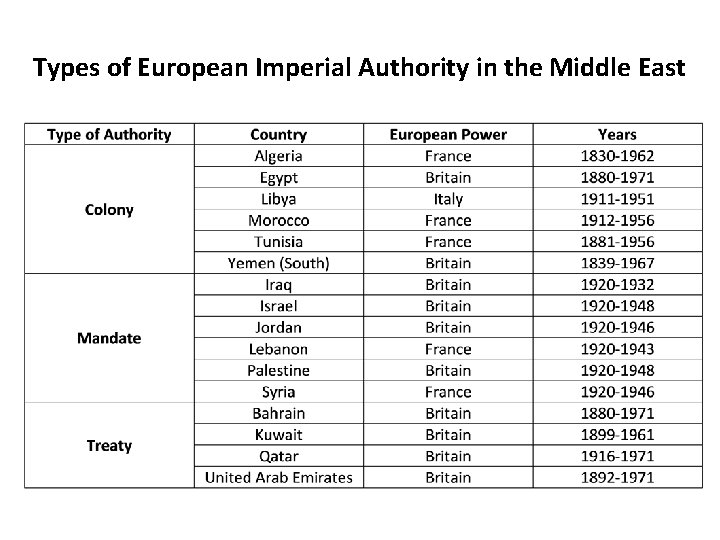
Types of European Imperial Authority in the Middle East
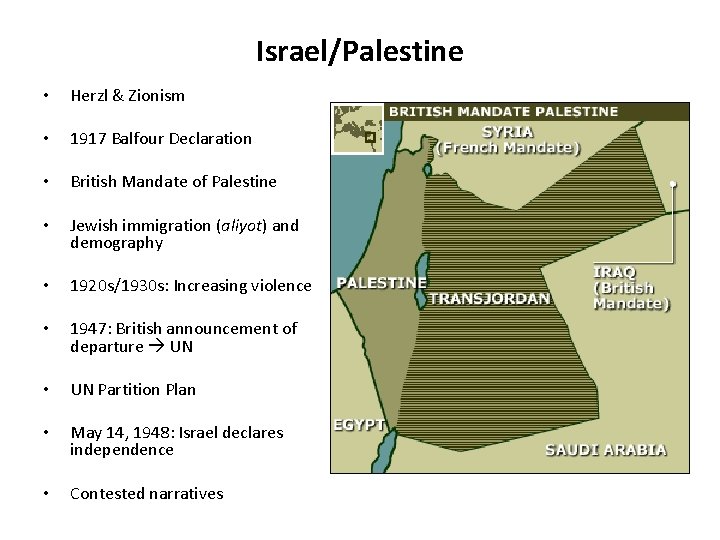
Israel/Palestine • Herzl & Zionism • 1917 Balfour Declaration • British Mandate of Palestine • Jewish immigration (aliyot) and demography • 1920 s/1930 s: Increasing violence • 1947: British announcement of departure UN • UN Partition Plan • May 14, 1948: Israel declares independence • Contested narratives
Lasting Legacies of Colonial Rule • National territorial legacies – Problems of legitimacy and national identity formation • Creation of key political institutions – Military, bureaucracy – Role of minorities • Economic legacies • Domestic social cleavages (rural/urban)