The Articles of Confederation p 158 p 159
- Slides: 35
The Articles of Confederation
p 158
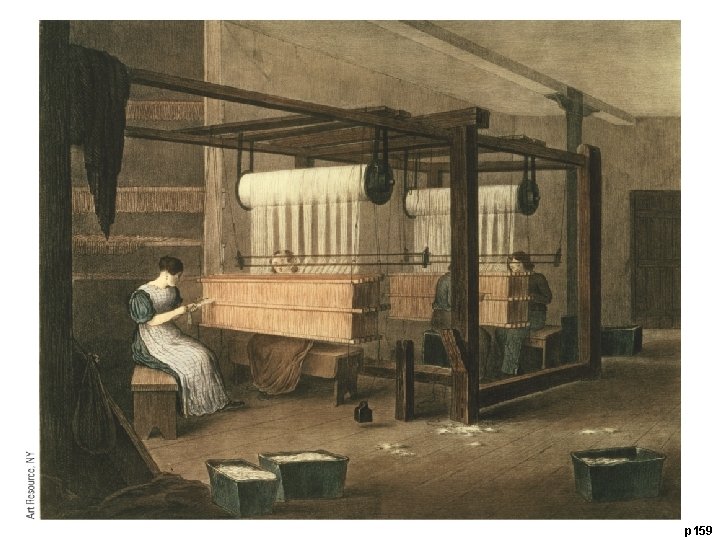
p 159
I. A Shaky Start Toward Union • Disruptive forces stalked the land: – Departed Tories left political system inclined toward experimentation and innovation – Economy stumbled post-Revolution • Yet thirteen sovereign states: – Shared similar political structures – Enjoyed rich political inheritance – Were blessed with good political leaders
II. Constitution Making in the States • Constitutional Congress in 1776 called on colonies to draft new state constitutions: – Asked colonies to summon themselves into being as new states – Sovereignty of new states would rest on authority of the people – Connecticut and Rhode Island merely retouched their colonial charters – Others would write new constitutions
II. Constitution Making in the States (cont. ) • Massachusetts called for special convention to draft its constitution and then submitted final draft to the people for ratification: – Once adopted, constitution could only be changed by another constitutional convention – Its constitution remained longest-lived constitution in world
II. Constitution Making in the States (cont. ) • Common constitutional features: – As written documents, constitutions represented fundamental law, superior to ordinary legislation – Most contained bills of rights— protect prized liberties against legislative encroachment – Most required annual election of legislators – All created weak executive and judicial branches
II. Constitution Making in the States (cont. ) • In new governments, legislatures were granted sweeping powers: – Democratic character reflected by presence of many from recently enfranchised western districts – Their influence was demonstrated when some states moved capitals into interior
III. Economic Crosscurrents • Economic changes: – States seized control of former crown lands – Land was cheap and easily available – In America, economic democracy preceded political democracy – Revolution also stimulated manufacturing
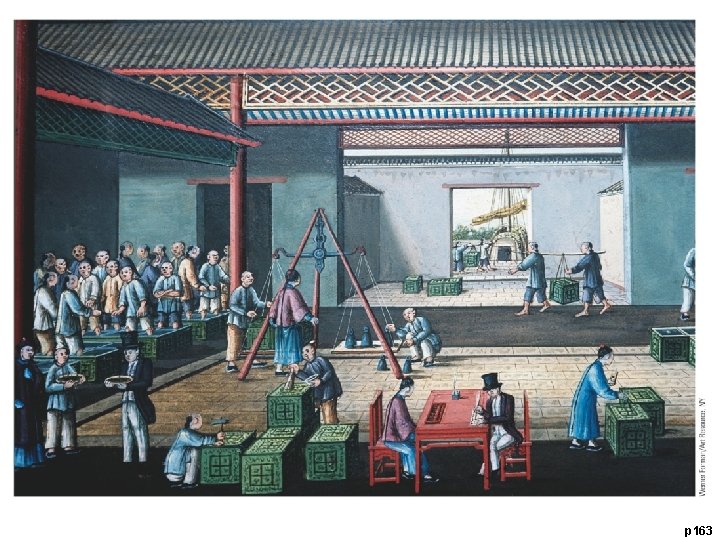
III. Economic Crosscurrents (cont. ) • Drawbacks of economic independence: – Most British commerce reserved for loyal parts of the empire – American ships now barred from British and British West Indies harbors – Fisheries were disrupted • Americans could freely trade with foreign nations – New commercial outlets (e. g. , China in 1784) partially compensated for loss of old ones
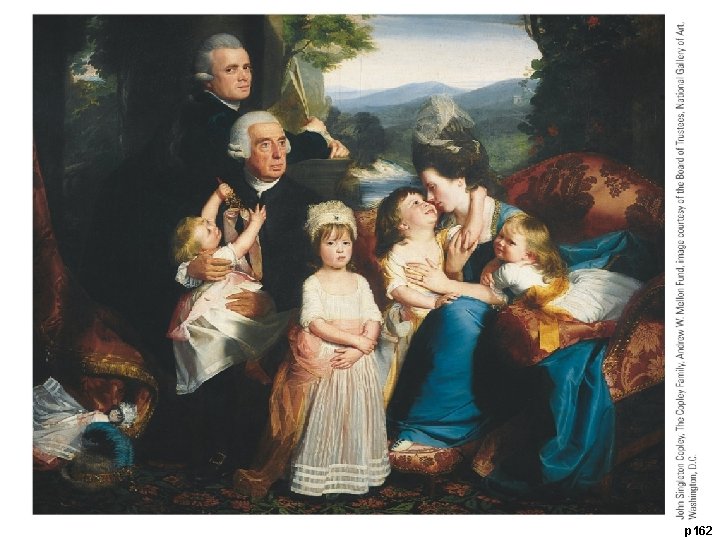
p 162
p 163
III. Economic Crosscurrents (cont. ) • War spawned demoralizing speculation and profiteering. • State governments borrowed more than they could repay. • Runaway inflation ruined many. • Average citizen was worse off financially at the end of Revolution than at start.
III. Economic Crosscurrents (cont. ) • Whole economic and social atmosphere was unhealthy: – A newly rich class of profiteers was conspicuous – Once-wealthy people were destitute • Controversies leading to Revolution had bred: – keen distaste for taxes – encouraged disrespect for laws in general
IV. Creating a Confederation • Second Continental Congress: – Little more than a conference of ambassadors – Was totally without constitutional authority – Asserted some control over military and foreign policy • In all respects, thirteen states were sovereign: – Coined money – Raised armies and navies – Erected tariff barriers
IV. Creating a Confederation (cont. ) • Articles of Confederation: – Adopted by Congress in 1777, but not ratified by states until 1781 • Chief point of contention was western lands: – 6 states had no holdings beyond Allegheny Mtns – 7 (esp. New York & Virginia) held huge acreage – Land-rich states could use trans-Allegheny tracts to pay off debts
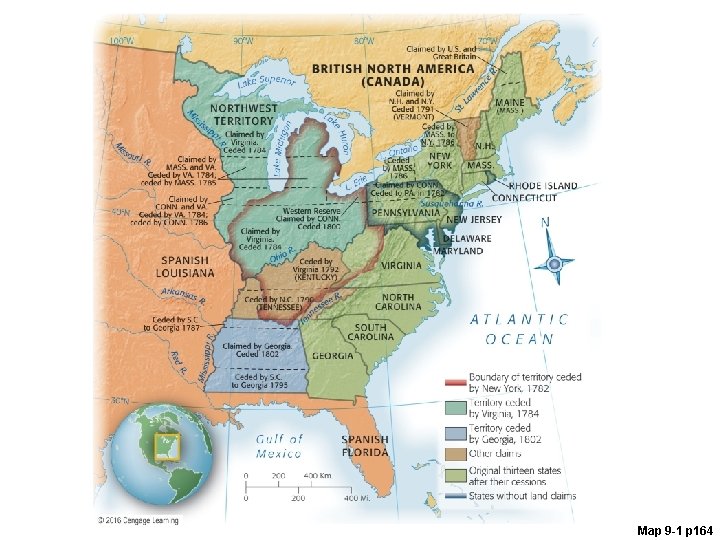
IV. Creating a Confederation (cont. ) – Unanimous approval of Articles by all thirteen states was required: • Maryland held out until March 1781 to get agreement by New York to surrender its western lands • Congress pledged to dispose of these vast areas for “common benefit” • Promised to carve out a number of “republican” states, which overtime would be admitted to union • Pledge redeemed in Northwest Ordinance of 1787 (see Map 9. 1). • Disposal of western lands helped encourage union
Map 9 -1 p 164
V. The Articles of Confederation: America's First Constitution • Articles of Confederation: – Provided for loose confederation or “firm league of friendship” – thirteen independent states linked together to deal with common problems, such as foreign affairs – Congress was chief agency – No executive branch – Judicial issues left almost exclusively to states
V. The Articles of Confederation: America's First Constitution (cont. ) • Congress, though dominant, was hobbled: – Each state had a single vote – All important bills required support of nine states – Any amendment to Articles required unanimous ratification – Congress was weak—and was purposely designed to be weak
V. The Articles of Confederation: America's First Constitution (cont. ) • Two major weakness of Articles: – Congress had no power to regulate commerce – Congress could not enforce its own tax-collection • Congress could advise, advocate, and appeal: – In dealing with states, it could not coerce or control – Nor could it act directly on individuals
V. The Articles of Confederation: America's First Constitution (cont. ) • New Congress, with paper power, was less effective than Continental Congress. • Yet, Articles proved to be a landmark: – As first written constitution of Republic, Articles were significant step toward later Constitution – Outlined general powers of national government – Kept alive ideal of union and held states together – Witho Articles, great leap from old Association of 1774 to current Constitution not possible
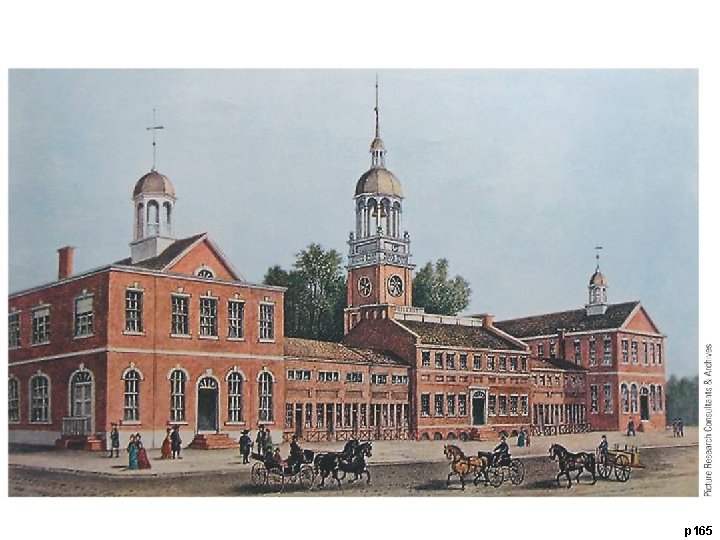
p 165
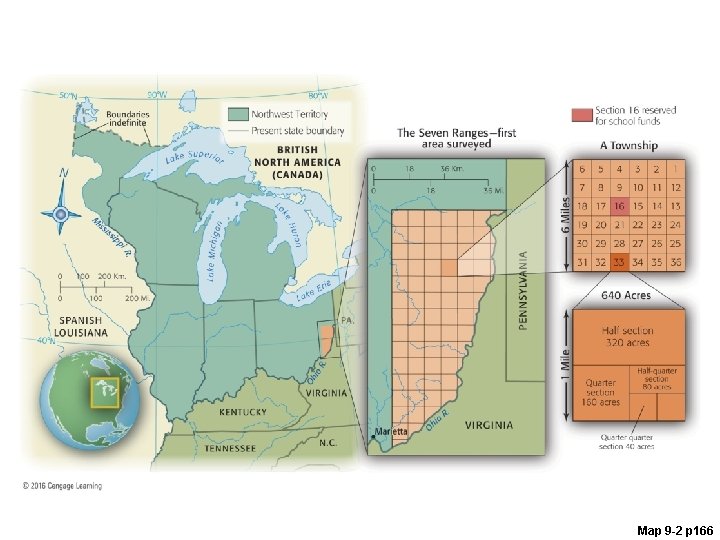
VI. Landmarks in Land Laws • Passages of public domain legislation: – Old Northwest = area northwest of Ohio River, east of Mississippi River, south of Great Lakes – Land Ordinance of 1785 (see Map 9. 2) set up orderly process to sell land in Old Northwest and use proceeds to pay national debt: • After surveyed, land divided into townships, then into sections • Sixteenth section sold to fund education
Map 9 -2 p 166
VI. Landmarks in Land Laws (cont. ) • Northwest Ordinance of 1787: – Governance of old Northwest -- how nation would deal with its colonies: • First temporary tutelage, then permanent equality • First, two evolutionary territorial stages under subordination to federal government • Once a territory had 60, 000 inhabitants, it could be admitted by Congress as a state • Ordinance forbad slavery in old Northwest
VII. The World's Ugly Duckling • Relations with Britain remained troubled: – England refused to send a minister to America – Declined to negotiate a commercial treaty or to repeal Navigation Laws – Closed West Indies trade to the states – Tried, with help of Allen brothers of Vermont, to annex rebellious area to Canada – Maintained a chain of trading posts on U. S. soil – Continued fur trade with Indians
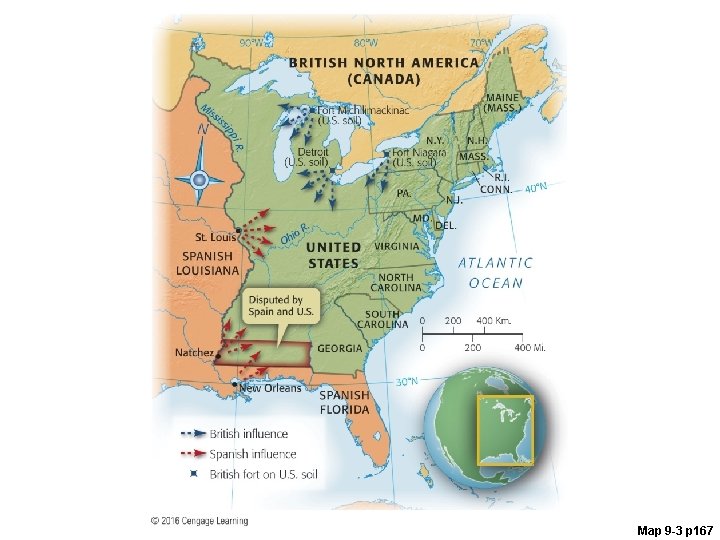
VII. The World's Ugly Duckling: (cont. ) • Spain was openly hostile to new Republic: • Controlled all-important Mississippi River on which pioneers shipped their produce • In 1784 Spain closed river to American commerce threatening West with strangulation • Claimed large areas north of Gulf of Mexico • Schemed with Indians to keep Americans east of Appalachians • Because Spain & Britain influenced Indians, America unable to exercise control over half of its territory (see Map 9. 3).
Map 9 -3 p 167
VII. The World's Ugly Duckling (cont. ) • France, America's friend, cooled off now that Britain humbled • North African pirates ravaged America's Mediterranean commence • New nation too weak to fight pirates and too poor to pay bribes.
VII. The Horrid Specter of Anarchy • Economic problems, mid-1780 s: – System of raising tax money was breaking down – Interest on public debt was escalating – Some states were levying their own duties – Some were printing depreciated paper money • Shays's Rebellion in western Massachusetts: – Impoverished farmers lost land through mortgage foreclosures and tax delinquencies
VII. The Horrid Specter of Anarchy (cont. ) • Led by Captain Daniel Shays, desperate debtors demanded: – State issue paper money, lighten taxes, and suspend property takeovers – Hundreds attempted to enforce demands – Massachusetts authorities responded by raising small army and skirmishes occurred – After 3 Shaysites killed and one wounded, movement collapsed
VII. The Horrid Specter of Anarchy (cont. ) • Shays's followers were crushed, but memory remained: – Massachusetts passed debtor-relief laws – Shays's outburst caused fear among propertied class – Civic virtue insufficient to rein in self-interest – Needed stronger central government to block “mobocracy”
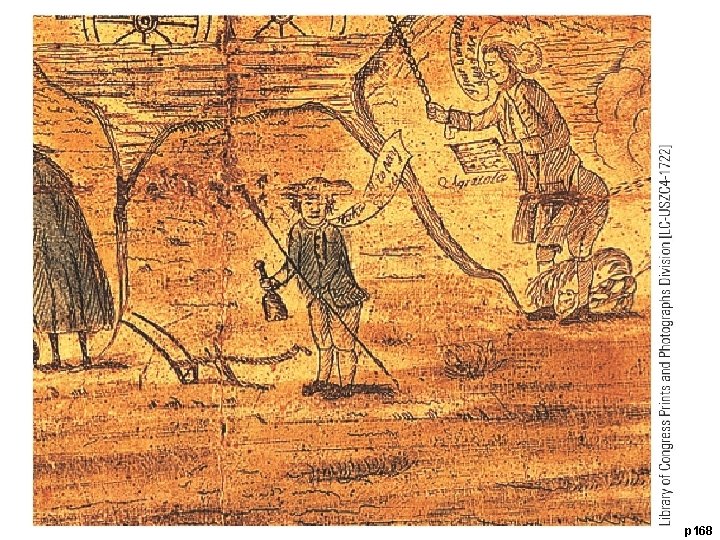
p 168
VII. The Horrid Specter of Anarchy (cont. ) • How critical were conditions under Articles? – Conservatives, protecting their wealth, exaggerated seriousness of nation's plight – They sought to amend Articles to create more muscular central government – Both friends and critics of the Confederation agreed it needed strengthening, but disagreed over how much its powers should be increased – Economy actually improved, late 1780 s