
Rough Sailing Ahead Political Cartoons n CCaptions n
- Slides: 14
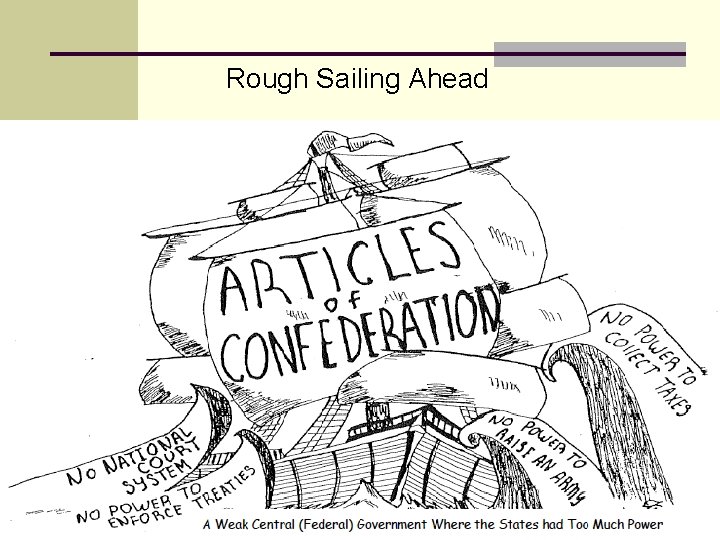
Rough Sailing Ahead
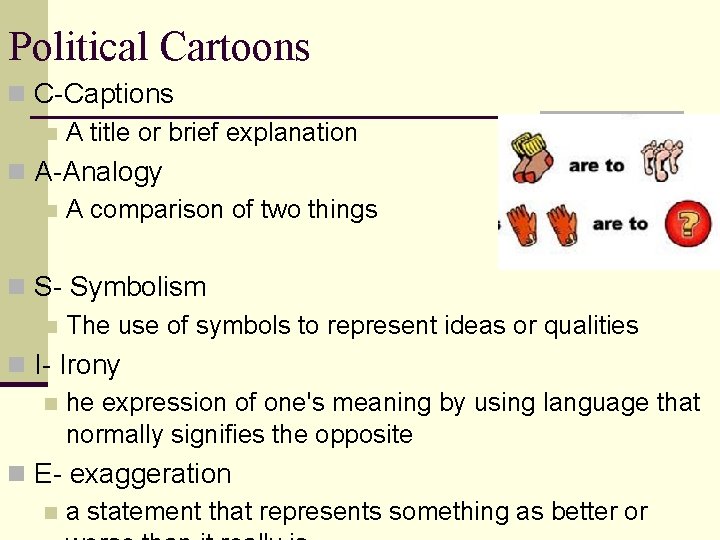
Political Cartoons n C-Captions n A title or brief explanation n A-Analogy n A comparison of two things n S- Symbolism n The use of symbols to represent ideas or qualities n I- Irony n he expression of one's meaning by using language that normally signifies the opposite n E- exaggeration n a statement that represents something as better or
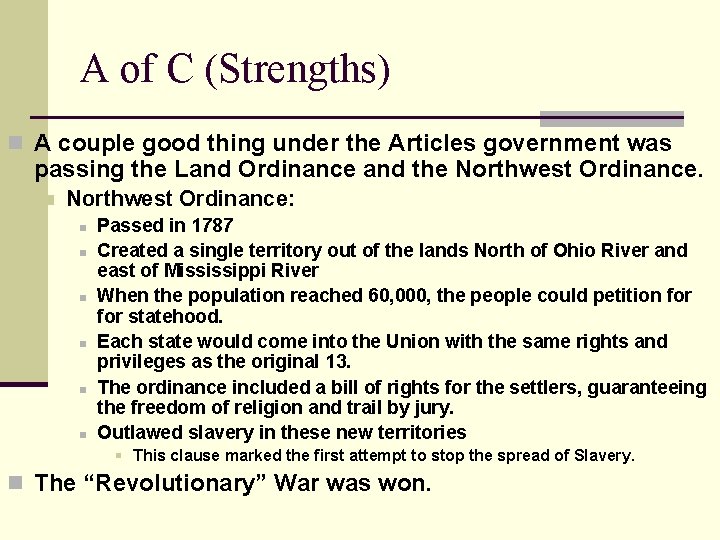
A of C (Strengths) n A couple good thing under the Articles government was passing the Land Ordinance and the Northwest Ordinance. n Northwest Ordinance: n n n Passed in 1787 Created a single territory out of the lands North of Ohio River and east of Mississippi River When the population reached 60, 000, the people could petition for statehood. Each state would come into the Union with the same rights and privileges as the original 13. The ordinance included a bill of rights for the settlers, guaranteeing the freedom of religion and trail by jury. Outlawed slavery in these new territories § This clause marked the first attempt to stop the spread of Slavery. n The “Revolutionary” War was won.
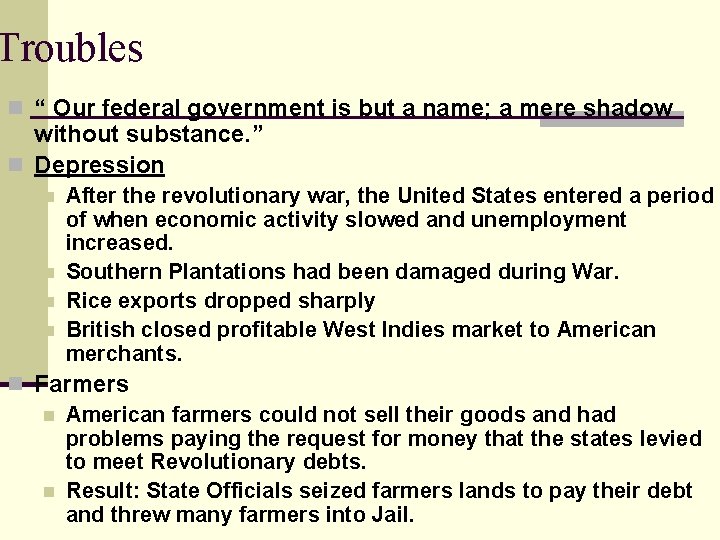
Troubles n “ Our federal government is but a name; a mere shadow without substance. ” n Depression n n After the revolutionary war, the United States entered a period of when economic activity slowed and unemployment increased. Southern Plantations had been damaged during War. Rice exports dropped sharply British closed profitable West Indies market to American merchants. n Farmers n American farmers could not sell their goods and had problems paying the request for money that the states levied to meet Revolutionary debts. n Result: State Officials seized farmers lands to pay their debt and threw many farmers into Jail.
Shay’s Rebellion (1786 -1787) n Revolt by farmers in Mass. Led by Daniel Shay n In 1786 Angry farmers lashed out and they forced courts in Western Massachusetts to close so judges could not confiscate farmers’ lands. n In January 1787 Shay led more than 1, 000 farmers toward the federal arsenal of Springfield, Mass. , for arms and ammunitions. n Militia stopped rebellion and killed 4 rebels in the process. n Opinion of political leaders n “mankind, when left to themselves, are unfit for their own government. ”- George Washington n “A little rebellion now and then is a good thing. ”Thomas Jefferson
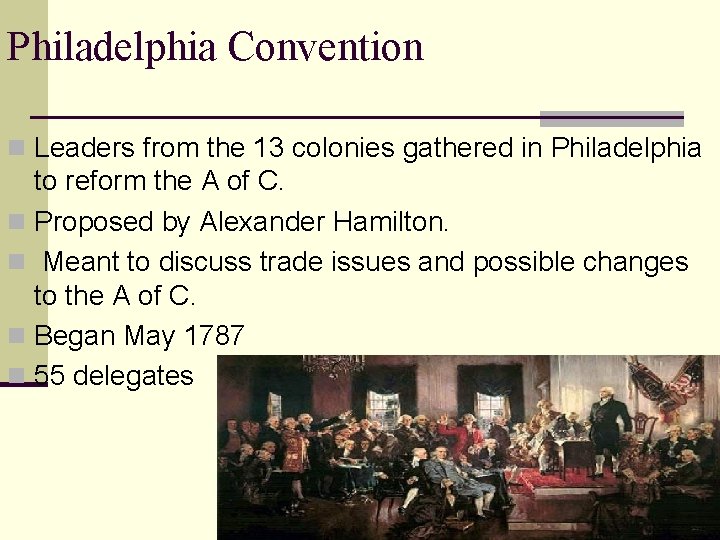
Philadelphia Convention n Leaders from the 13 colonies gathered in Philadelphia to reform the A of C. n Proposed by Alexander Hamilton. n Meant to discuss trade issues and possible changes to the A of C. n Began May 1787 n 55 delegates
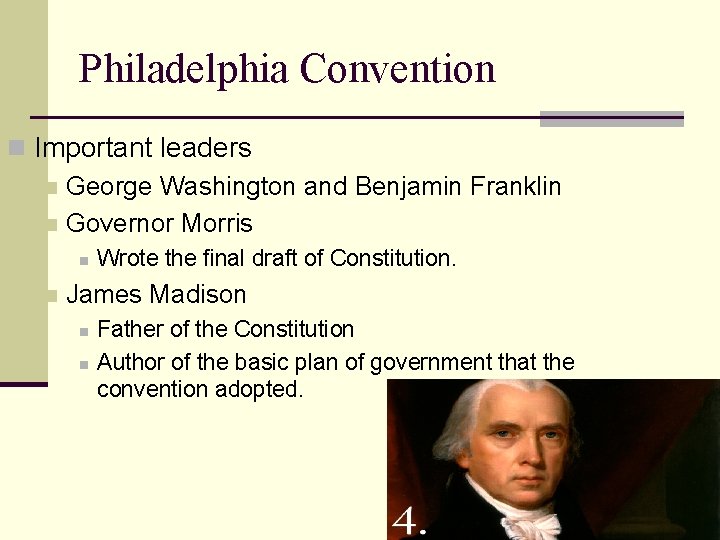
Philadelphia Convention n Important leaders n George Washington and Benjamin Franklin n Governor Morris n n Wrote the final draft of Constitution. James Madison n n Father of the Constitution Author of the basic plan of government that the convention adopted.
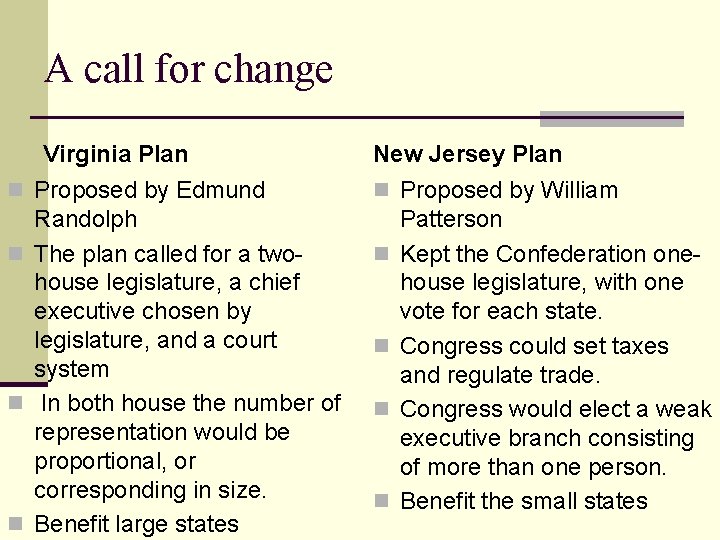
A call for change n n Virginia Plan Proposed by Edmund Randolph The plan called for a twohouse legislature, a chief executive chosen by legislature, and a court system In both house the number of representation would be proportional, or corresponding in size. Benefit large states New Jersey Plan n Proposed by William n n Patterson Kept the Confederation onehouse legislature, with one vote for each state. Congress could set taxes and regulate trade. Congress would elect a weak executive branch consisting of more than one person. Benefit the small states
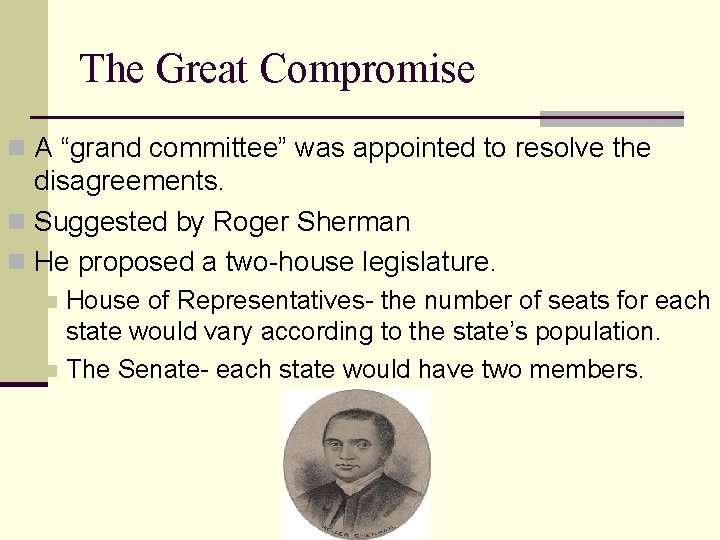
The Great Compromise n A “grand committee” was appointed to resolve the disagreements. n Suggested by Roger Sherman n He proposed a two-house legislature. House of Representatives- the number of seats for each state would vary according to the state’s population. n The Senate- each state would have two members. n
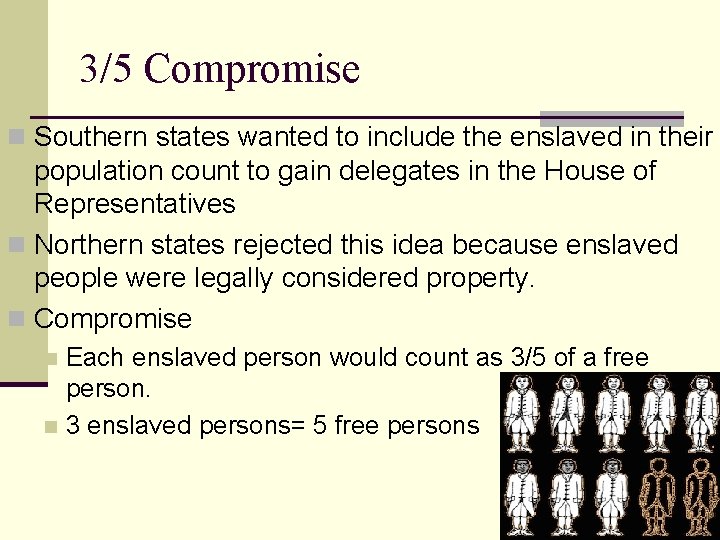
3/5 Compromise n Southern states wanted to include the enslaved in their population count to gain delegates in the House of Representatives n Northern states rejected this idea because enslaved people were legally considered property. n Compromise Each enslaved person would count as 3/5 of a free person. n 3 enslaved persons= 5 free persons n
Letter n Write a letter to the delegates at the Constitutional Convention explaining why the Great Compromise is needed. The letter should include details about the need for the compromise and the issues surrounding the Virginia Plan and the New Jersey Plan n Letter must be ½ page and have NO GRAMMATICAL ERRORS.
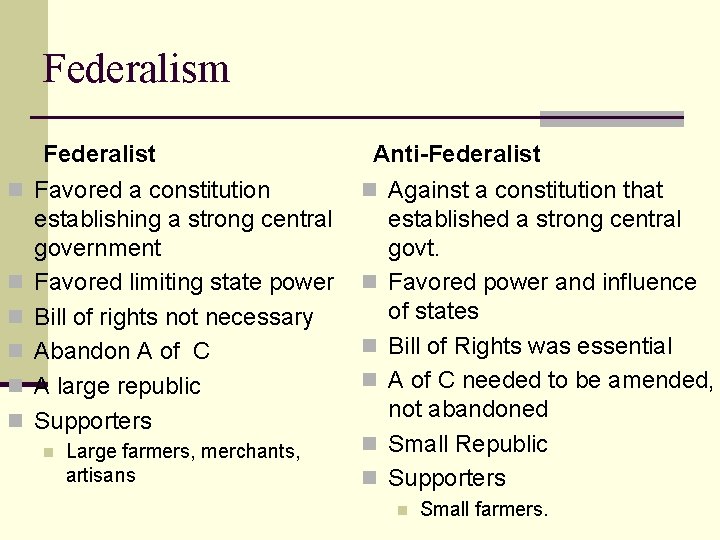
Federalism n n n Federalist Favored a constitution establishing a strong central government Favored limiting state power Bill of rights not necessary Abandon A of C A large republic Supporters n Large farmers, merchants, artisans Anti-Federalist n Against a constitution that n n n established a strong central govt. Favored power and influence of states Bill of Rights was essential A of C needed to be amended, not abandoned Small Republic Supporters n Small farmers.
Federalist Papers n The Federalist, commonly referred to as the Federalist Papers, is a series of 85 essays written by Alexander Hamilton, John Jay, and James Madison between October 1787 and May 1788. n The essays were published anonymously, under the pen name "Publius, " in various New York state newspapers of the time.
Federalist Papers n The Federalist Papers were written and published to urge New Yorkers to ratify the proposed United States Constitution, which was drafted in Philadelphia in the summer of 1787.