th 20 century architecture De Stijl style Dutch
- Slides: 27
th 20 century architecture
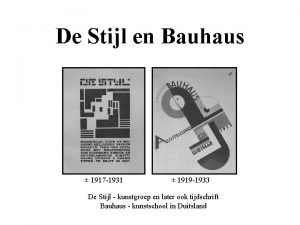
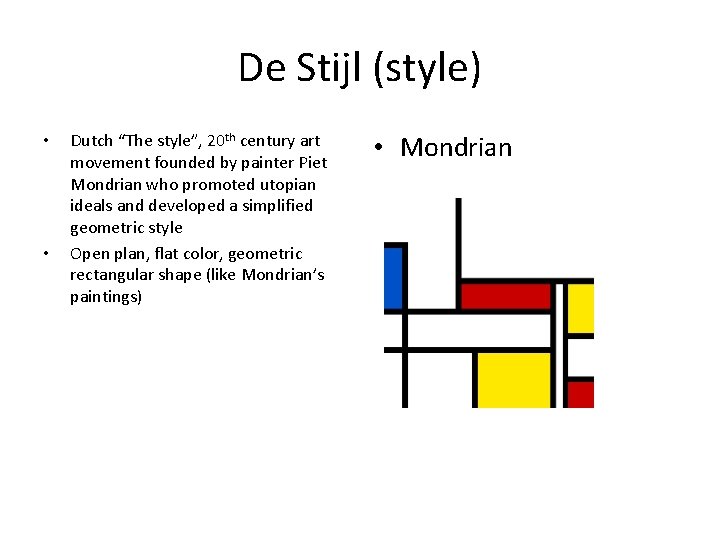
De Stijl (style) • • Dutch “The style”, 20 th century art movement founded by painter Piet Mondrian who promoted utopian ideals and developed a simplified geometric style Open plan, flat color, geometric rectangular shape (like Mondrian’s paintings) • Mondrian
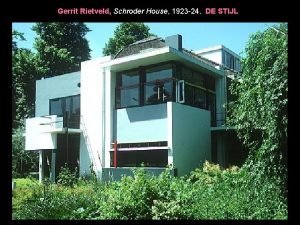
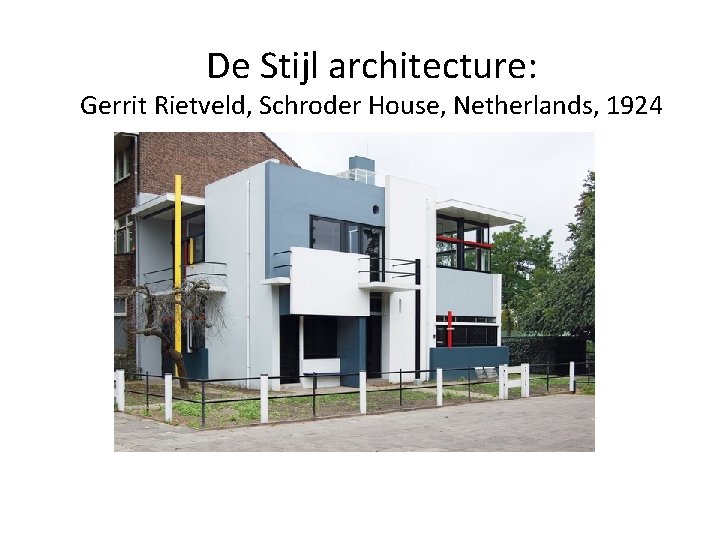
De Stijl architecture: Gerrit Rietveld, Schroder House, Netherlands, 1924
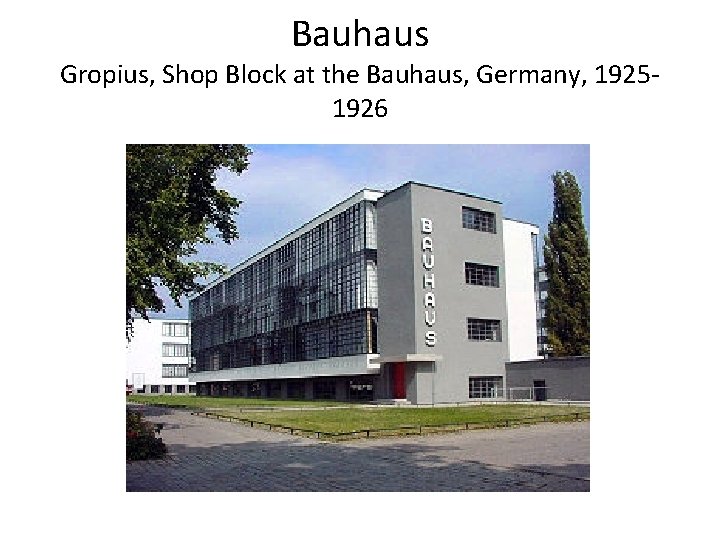
Bauhaus (style) • A school of art and design, promoting unity between architecture, art and design • Like de stijl, bauhaus was rooted in utopian principles • Avoids all embellishments • Simple and geometric
Bauhaus Gropius, Shop Block at the Bauhaus, Germany, 19251926
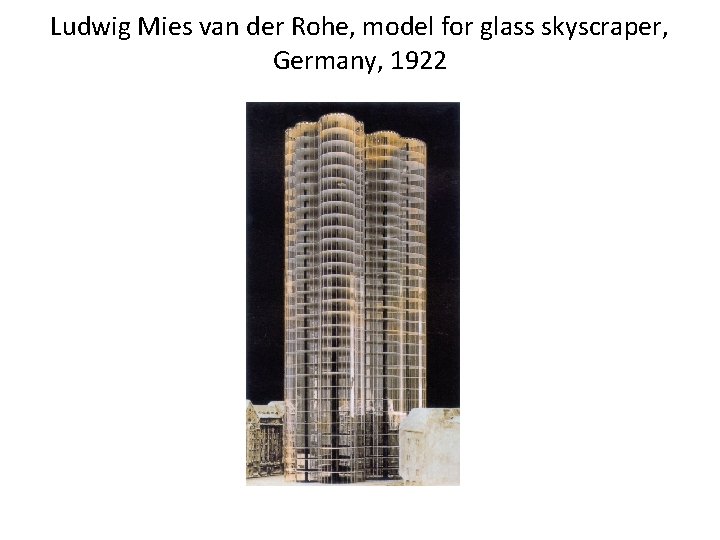
Ludwig Mies van der Rohe, model for glass skyscraper, Germany, 1922
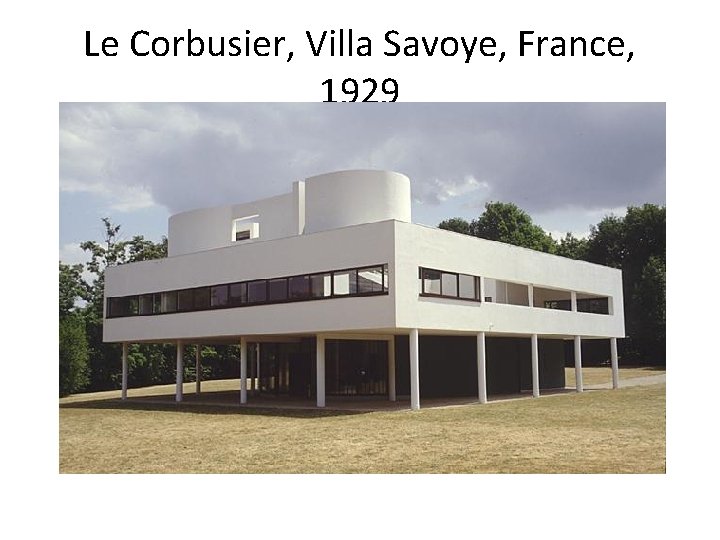
International Style • Bauhaus eventually became known as the International Style due to widespread popularity • “machine for living”
Le Corbusier, Villa Savoye, France, 1929
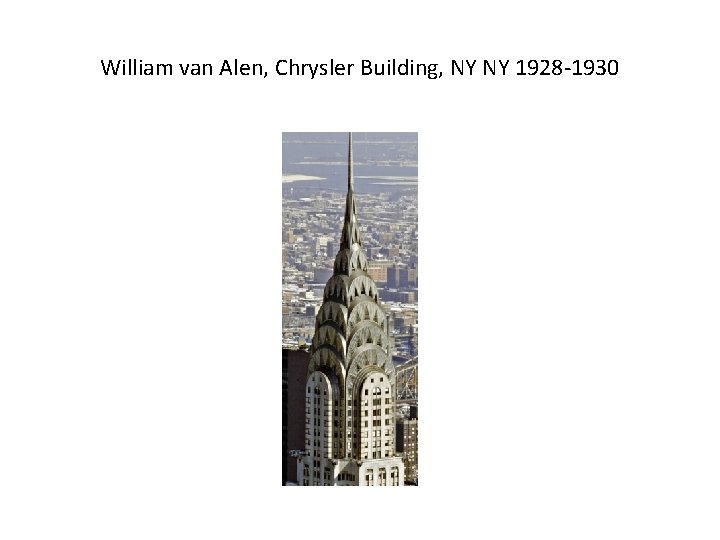
Art Deco (America) • America embraced Bauhaus, which rejected ornament, but also embraced other styles • Universal term that applies to architecture, interior, furniture, jewelry, fashion etc. • Streamlines, elongated look, symmetrical, simple flat shapes • Chrysler Building has a diminishing fan design, streamlined and flat, popular design in 1920’s
William van Alen, Chrysler Building, NY NY 1928 -1930
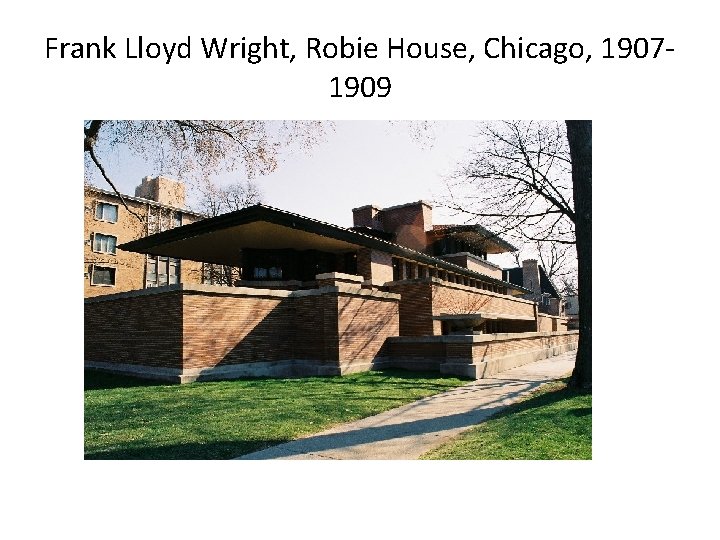
Prairie Style • Associated with Frank Lloyd Wright, who believed architecture was natural and organic • Roofs extend beyond the walls, nonsymmetrical design, interacts with its natural surroundings • Wandering plan, captures the expansive, natural environment
Frank Lloyd Wright, Robie House, Chicago, 19071909
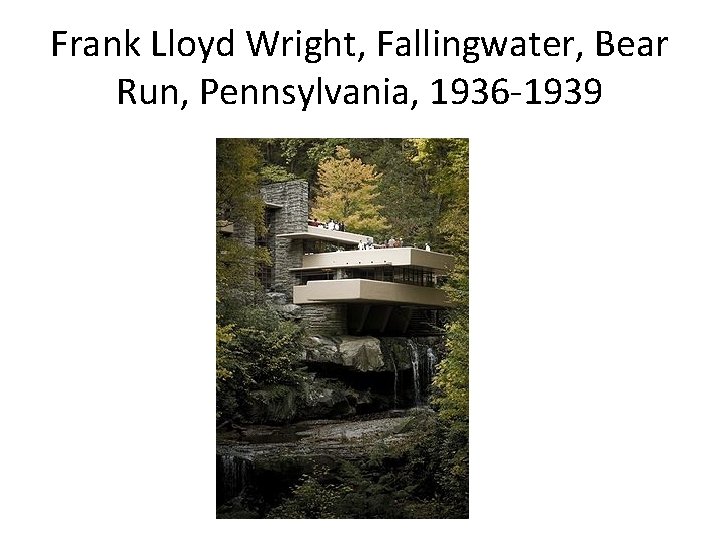
Frank Lloyd Wright, Fallingwater, Bear Run, Pennsylvania, 1936 -1939
Modernism • Architecture style that developed after WWII • Concerned with formalism and simplicity • Buildings have intriguing organic sculptural qualities
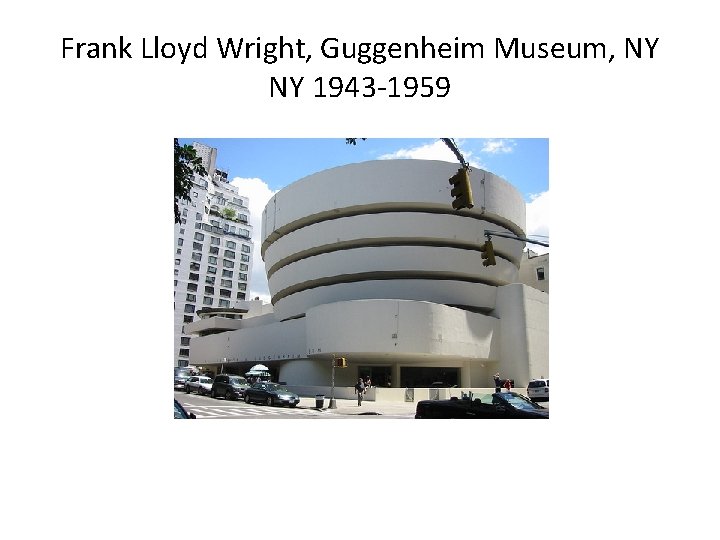
Frank Lloyd Wright, Guggenheim Museum, NY NY 1943 -1959
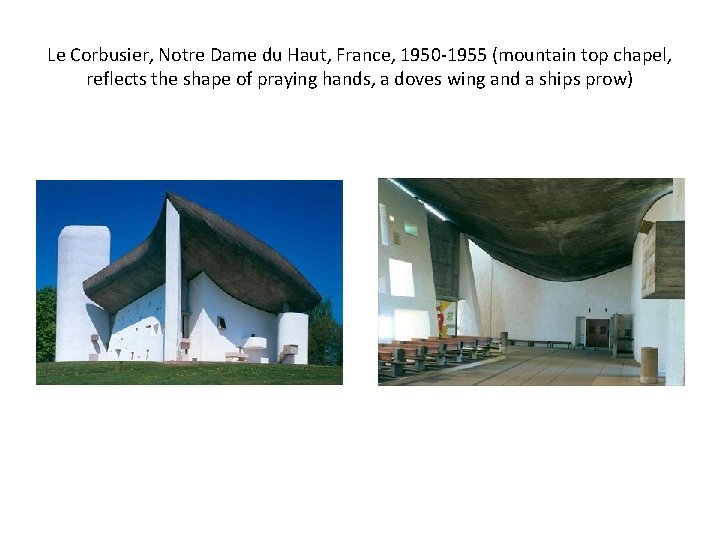
Le Corbusier, Notre Dame du Haut, France, 1950 -1955 (mountain top chapel, reflects the shape of praying hands, a doves wing and a ships prow)
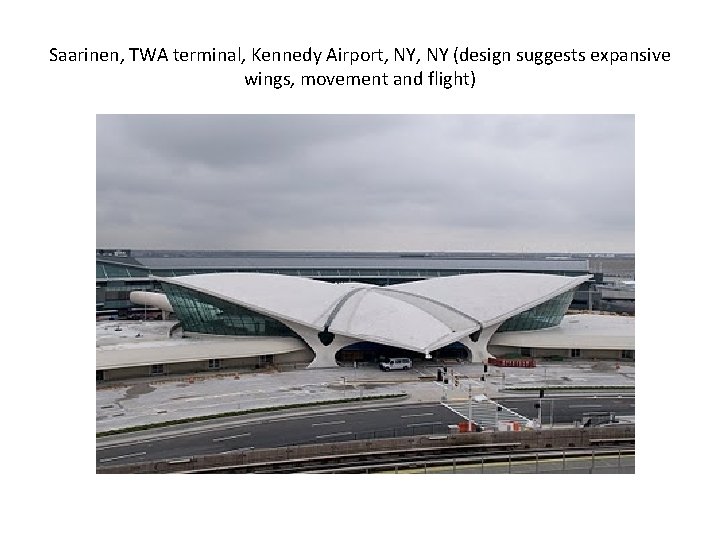
Saarinen, TWA terminal, Kennedy Airport, NY (design suggests expansive wings, movement and flight)
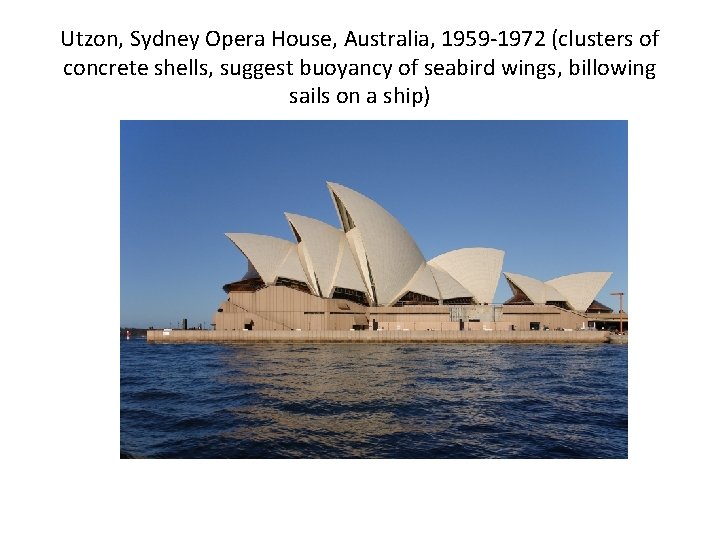
Utzon, Sydney Opera House, Australia, 1959 -1972 (clusters of concrete shells, suggest buoyancy of seabird wings, billowing sails on a ship)
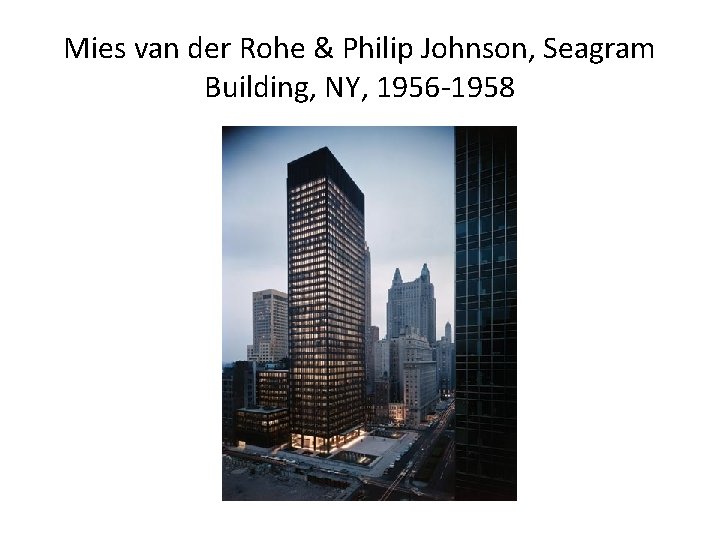
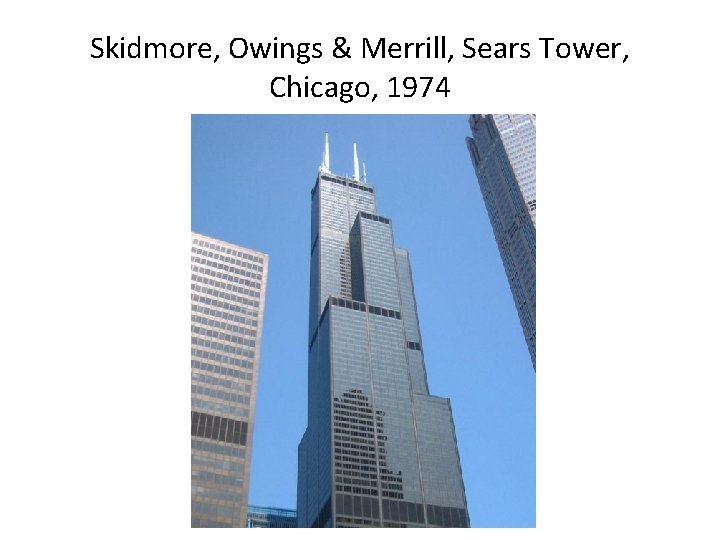
Minimalist style of modern architecture • Based on bauhaus style less is more • Powerful and heroic looking buildings in an urban landscape • Giant corporate skyscrapers • Sleek, rigid, geometric
Mies van der Rohe & Philip Johnson, Seagram Building, NY, 1956 -1958
Skidmore, Owings & Merrill, Sears Tower, Chicago, 1974
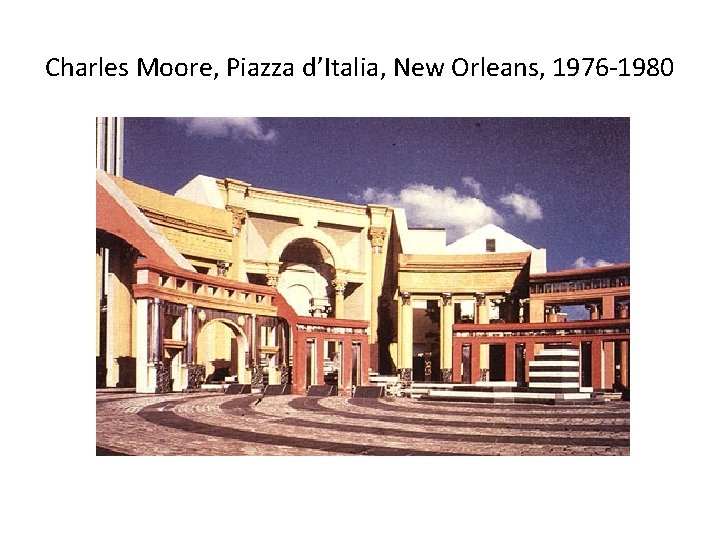
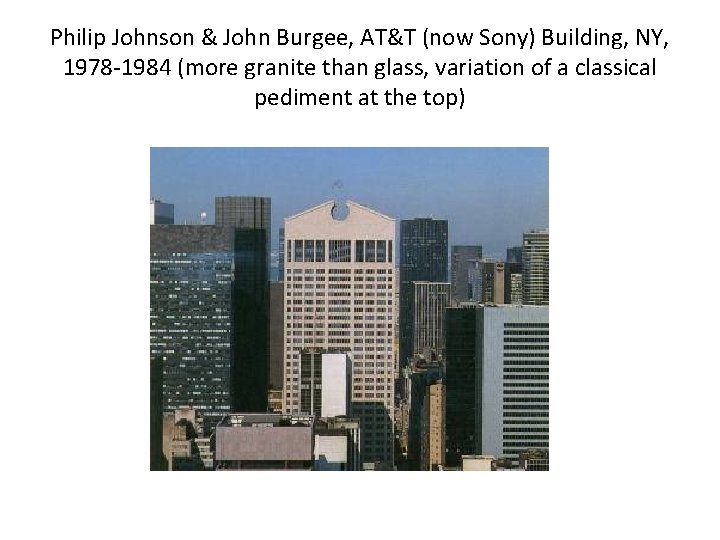
Post. Modernism (style) • A rejection of the conservative style of modernism • More expansive and inclusive in design • Can draw in some inspiration from the past, such as Rome, temple designs etc.
Charles Moore, Piazza d’Italia, New Orleans, 1976 -1980
Philip Johnson & John Burgee, AT&T (now Sony) Building, NY, 1978 -1984 (more granite than glass, variation of a classical pediment at the top)
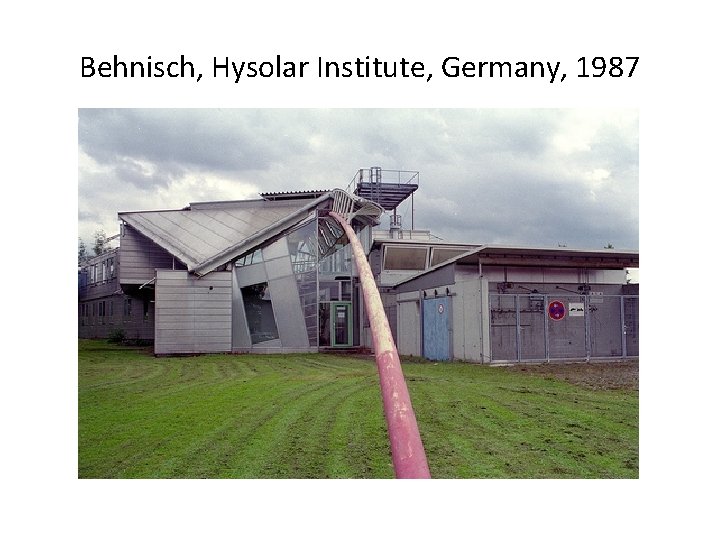
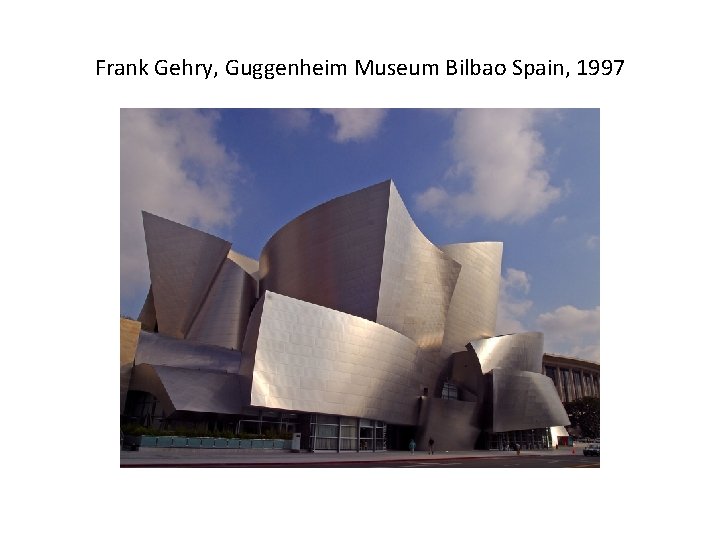
Deconstructivism (style) • Disorients the observer • Unstable, imbalance, assymmetry, irregularity
Behnisch, Hysolar Institute, Germany, 1987
Frank Gehry, Guggenheim Museum Bilbao Spain, 1997