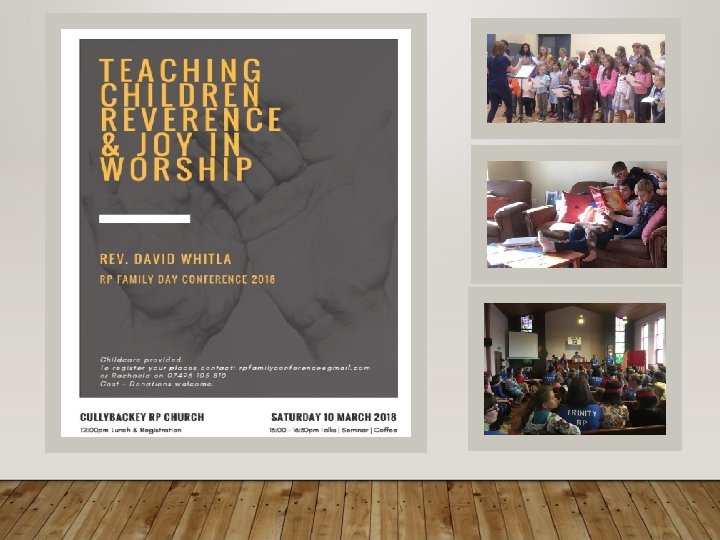
TEACHING CHILDREN REVERENCE AND JOY IN WORSHIP SESSION
- Slides: 11
TEACHING CHILDREN REVERENCE AND JOY IN WORSHIP SESSION ONE SESSION TWO • Reverence and Joy for Parents • Reverence and Joy for Beginners
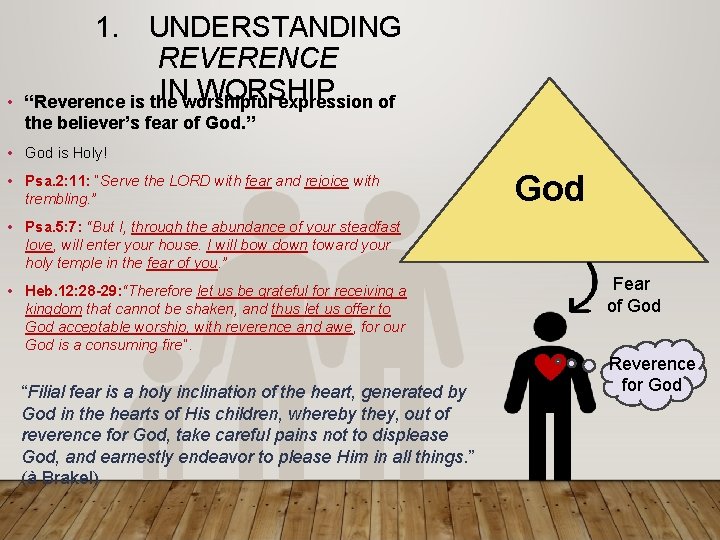
1. • UNDERSTANDING REVERENCE INworshipful WORSHIP “Reverence is the expression of the believer’s fear of God. ” • God is Holy! • Psa. 2: 11: “Serve the LORD with fear and rejoice with trembling. ” God • Psa. 5: 7: “But I, through the abundance of your steadfast love, will enter your house. I will bow down toward your holy temple in the fear of you. ” • Heb. 12: 28 -29: “Therefore let us be grateful for receiving a kingdom that cannot be shaken, and thus let us offer to God acceptable worship, with reverence and awe, for our God is a consuming fire”. “Filial fear is a holy inclination of the heart, generated by God in the hearts of His children, whereby they, out of reverence for God, take careful pains not to displease God, and earnestly endeavor to please Him in all things. ” (à Brakel) Fear of God Reverence for God
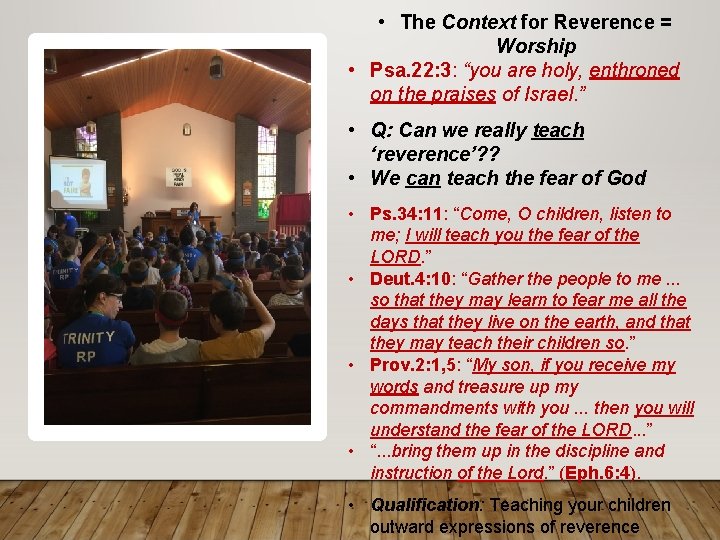
• The Context for Reverence = Worship • Psa. 22: 3: “you are holy, enthroned on the praises of Israel. ” • Q: Can we really teach ‘reverence’? ? • We can teach the fear of God • Ps. 34: 11: “Come, O children, listen to me; I will teach you the fear of the LORD. ” • Deut. 4: 10: “Gather the people to me. . . so that they may learn to fear me all the days that they live on the earth, and that they may teach their children so. ” • Prov. 2: 1, 5: “My son, if you receive my words and treasure up my commandments with you. . . then you will understand the fear of the LORD. . . ” • “. . . bring them up in the discipline and instruction of the Lord. ” (Eph. 6: 4). • Qualification: Teaching your children outward expressions of reverence
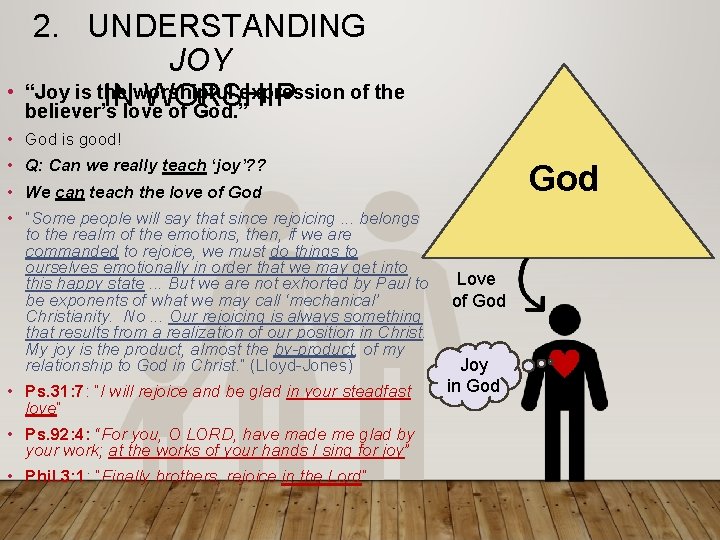
• 2. UNDERSTANDING JOY “Joy is the worshipful expression of the IN WORSHIP believer’s love of God. ” • God is good! • Q: Can we really teach ‘joy’? ? God • We can teach the love of God • “Some people will say that since rejoicing. . . belongs to the realm of the emotions, then, if we are commanded to rejoice, we must do things to ourselves emotionally in order that we may get into this happy state. . . But we are not exhorted by Paul to be exponents of what we may call ‘mechanical’ Christianity. No. . . Our rejoicing is always something that results from a realization of our position in Christ. My joy is the product, almost the by-product, of my relationship to God in Christ. ” (Lloyd-Jones) • Ps. 31: 7: “I will rejoice and be glad in your steadfast love” • Ps. 92: 4: “For you, O LORD, have made me glad by your work; at the works of your hands I sing for joy” • Phil. 3: 1: “Finally brothers, rejoice in the Lord” Love of God Joy in God
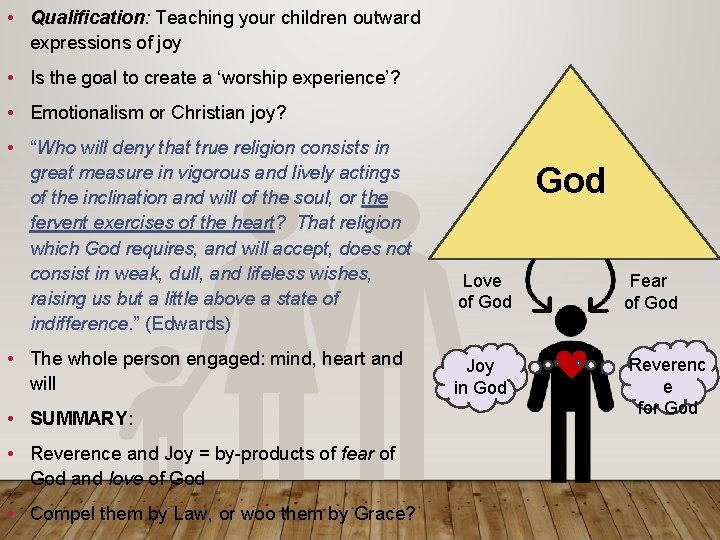
• Qualification: Teaching your children outward expressions of joy • Is the goal to create a ‘worship experience’? • Emotionalism or Christian joy? • “Who will deny that true religion consists in great measure in vigorous and lively actings of the inclination and will of the soul, or the fervent exercises of the heart? That religion which God requires, and will accept, does not consist in weak, dull, and lifeless wishes, raising us but a little above a state of indifference. ” (Edwards) • The whole person engaged: mind, heart and will • SUMMARY: • Reverence and Joy = by-products of fear of God and love of God • Compel them by Law, or woo them by Grace? God Love of God Fear of God Joy in God Reverenc e for God
3. TEACHING REVERENCE AND JOY IN WORSHIP • Prov. 22: 6: “Train up a child in the way he should go. . . ” • Gen. 18: 19: “For I have chosen [Abraham], that he may command his children and his household after him to keep the way of the LORD by doing righteousness and justice. ” • Qualified teachers of reverence and joy? • Do we grasp the Gospel basics that produce these graces in our own lives? • How do you relate to God? • Accepted by religious performance or covenant relationship? • Does God love you less because you missed your QT? Does he love you more because you did do it? • Is God angry Judge or loving Father? • Do you love Jesus Christ? • What is the ‘culture’ of your classroom?
• ‘The spirit of Gospel obedience is filial, as contrasted to the spirit that is legal and slavish. It springs from the principle of love, under the constant fascination of all that is beautiful and glorious in the holiness of God. . . The homage of a loyal service is rendered, which is never intimidated by fear, nor prompted by mercenary advantage. It is the free commerce of a dutiful and loving child, who rests upon the parental bosom, and finds its joy in the parental smile. ’ (Palmer) • “But with you there is forgiveness, that you may be feared” (Ps. 130: 4) • Covenant of Works: ‘Do this and live!’ • Covenant of Grace: ‘Live!. . . and now do this!’
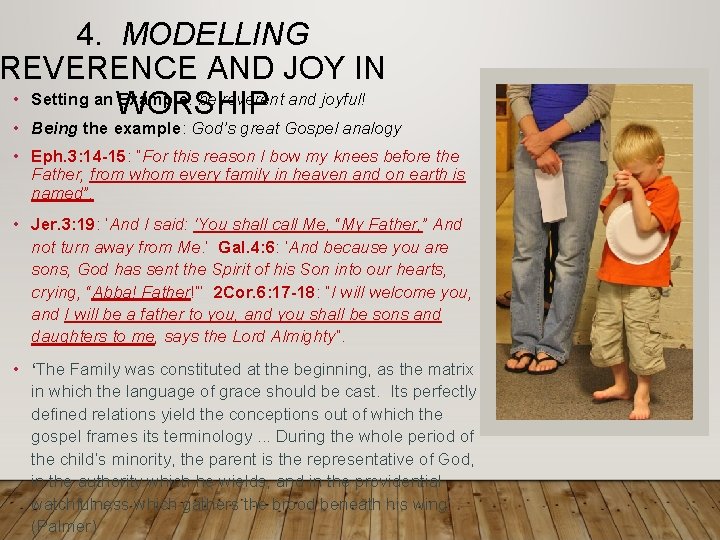
4. MODELLING REVERENCE AND JOY IN • Setting an WORSHIP Example: be reverent and joyful! • Being the example: God’s great Gospel analogy • Eph. 3: 14 -15: “For this reason I bow my knees before the Father, from whom every family in heaven and on earth is named”. • Jer. 3: 19: ‘And I said: 'You shall call Me, “My Father, ” And not turn away from Me. ’ Gal. 4: 6: ‘And because you are sons, God has sent the Spirit of his Son into our hearts, crying, “Abba! Father!”’ 2 Cor. 6: 17 -18: “I will welcome you, and I will be a father to you, and you shall be sons and daughters to me, says the Lord Almighty”. • ‘The Family was constituted at the beginning, as the matrix in which the language of grace should be cast. Its perfectly defined relations yield the conceptions out of which the gospel frames its terminology. . . During the whole period of the child’s minority, the parent is the representative of God, in the authority which he wields, and in the providential watchfulness which gathers the brood beneath his wing’ (Palmer)
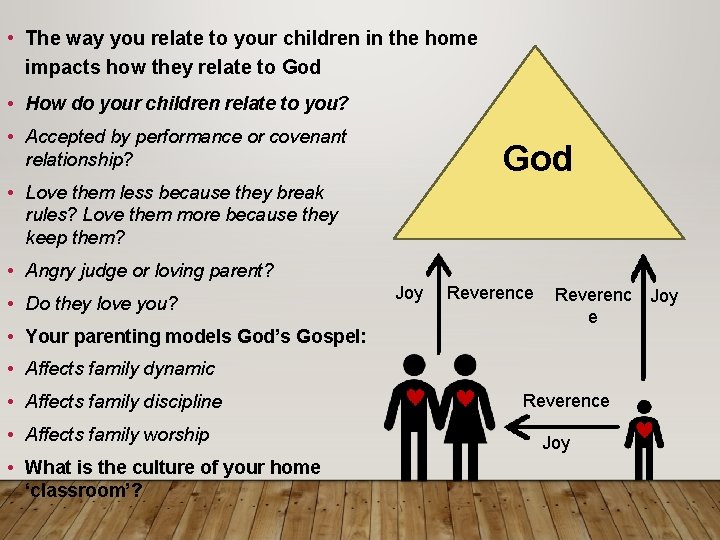
• The way you relate to your children in the home impacts how they relate to God • How do your children relate to you? • Accepted by performance or covenant relationship? God • Love them less because they break rules? Love them more because they keep them? • Angry judge or loving parent? • Do they love you? • Your parenting models God’s Gospel: Joy Reverence Reverenc e • Affects family dynamic • Affects family discipline • Affects family worship • What is the culture of your home ‘classroom’? Reverence Joy
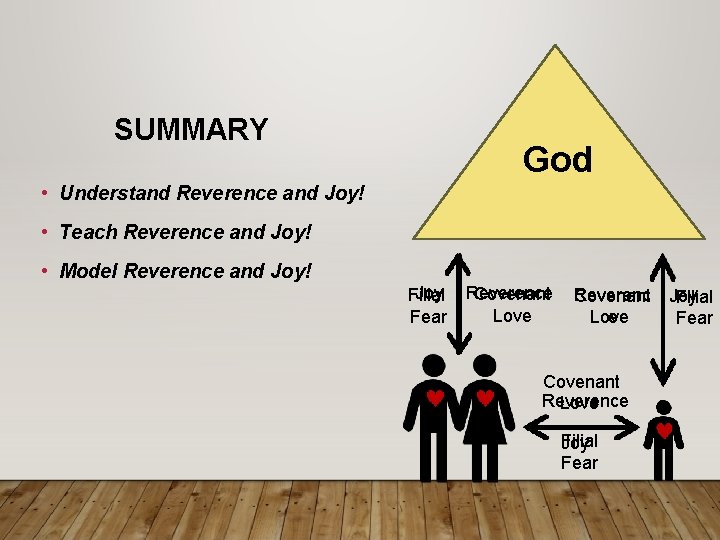
SUMMARY God • Understand Reverence and Joy! • Teach Reverence and Joy! • Model Reverence and Joy! Joy Filial Fear Reverence Covenant Love Reverenc Covenant e Love Covenant Reverence Love Filial Joy Fear Joy Filial Fear