
Teaching Children The joy the juice and the

- Slides: 41
Teaching Children The joy, the juice and the jingles Of A Sunday School Teacher
A Sunday School Program Is Outreach and evangelism – making friends and sharing the gospel n Education – God-centered life changing goal n Fellowship – Sharing in a partnership in the name of Jesus Christ n
Me? As a Sunday School … As a teacher, I touch the lives of students and their future. (Christa Mc. Auliffe) n By the grace of God, I am put in this position to guide and nurture students. n I stand in the gap for my students by prayers and loving care. n
A child’s basic needs Belonging / Significance n Competency / Mastery n n Power / Autonomy Virtue / Generosity n Fun / Enjoyment n
A child’s basic needs Look, Mom, straight A’s – n Acceptance n Approval n Advice n Autonomy n Achievement n Advancement
Intrinsic elements in learning Curiosity What’s that? n Drive to achieve competency Yes, I can. n Process of identification I want to be just like you. n Reciprocity Let’s do it together as a team. n
Stages of a child’s faith … By 1 observe and imitate n By 3 develop a vocabulary for prayers and stories about Jesus n By 4 act and feel good from doing what adults expect n
Stages of a child’s faith … n By 5 increase verbal ability, learn to interact, little connection with conceptual understanding, prayer as somehow linked with God
Stages of a child’s faith … n By 8 prayer as a particular activity, concrete requests, and God answers prayers of personal needs and desires
Stages of a child’s faith … n By 10 prayer as a conversation with God, what one thinks is more important than what one says – now they can internalize prayers
Stages of a child’s faith … n Think about it: A child’s understanding of God develops not only through biblical stories and prayers, but also through lived relationship (with you, with friends and with Jesus).
What is a teacher to do? n Guides n Stimulates n Cares
An effective teacher will do … n Lesson preparation n Planning n Classroom management n Evaluation
Let’s teach the students …But how? Tell me, I forget. Show me, I remember. Involve me, I understand.
How did Jesus teach? n He set clear, firm expectations “I give you a new command: Love each other. You must love each other as I have loved you. ” (John 13: 34) “Do to others what you want them to do to you. ” (Matthew 7: 12)
How did Jesus teach? n Jesus modeled His faith by His actions. “A student is not better than the teacher, but the student who has been fully trained will be like the teacher. ” (Luke 6: 40)
How did Jesus teach? n Jesus loved people and inspired them to greatness. Peter the fisherman Matthew the tax collector John the apostle of love Mary and Martha etc.
How did Jesus teach? n Jesus relied on God. He took time to reflect and connect. Jesus withdrew from the crowds to pray alone. (Mark 1: 35; 6: 46; Luke 6: 12)
How did Jesus teach? n Jesus has a sense of humor. “I tell you the truth, it is hard for a rich man to enter the kingdom of heaven. Again I tell you, it is easier for a camel to go through the eye of a needle than for a rich man to enter the kingdom of God. ” (Matt. 19: 23, 24)
How did Jesus teach? n Jesus was never boring. Great crowds followed Him to see what He would say or do. (Matthew 4: 25; Mark 3: 7 -8; Luke 6: 17)
Let’s teach the students … n Ways to check your progress: verbal responses from class written reports drawing small-group conference role play dramatic presentation show and tell
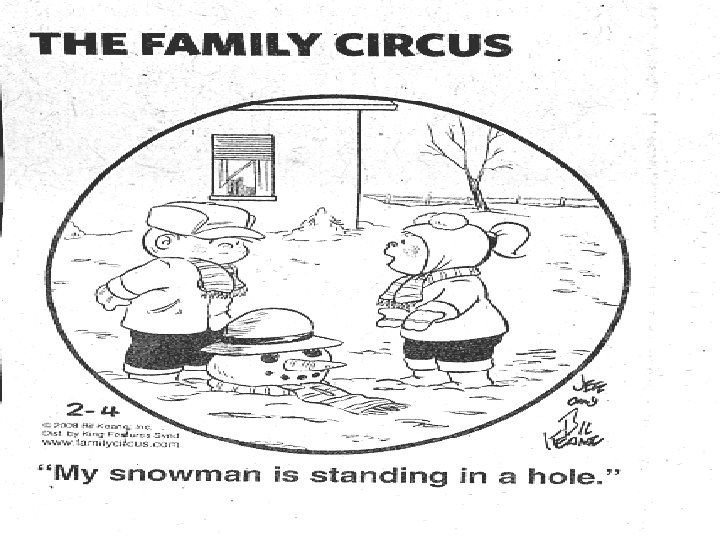
Let’s teach the students … n Humor helps: use exaggeration develop a “funny file” create a “humor is welcome” atmosphere use a secret sign language etc.
Let’s teach the students … n Boredom-busting ideas: be prepared vary activities keep it fast-paced do the unexpected use active learning have “educational wiggle” in a lesson, such as hands-on …
Classroom Management --Basic Principles Long-term behavior change, not quick fixed n Deal with student behavior n Rules must make sense n Be a model of what you expect n Stop doing what is ineffective n To be fair is not to be identical n Responsibility vs. obedience n
Classroom Management --Discipline Guidelines (pt. 1) Welcome every student. n Spend more time in the beginning to set the tone. n Make a bigger invitation to a withdrawn student. n Model effective expressions of anger (behavior) with your students. n
Classroom Management --Discipline Guidelines (pt. 2) Discipline responses require a 2 stage approach: stabilize and teach. n Discipline with choices and limits. n You must face the misbehaving student yourself. n
Classroom Management … Setting Rules based on principles n clear and specific n behavioral n enforceable n stated positively when possible n clear and concise n
Classroom Management … setting consequences clear and specific n has a range of alternatives n is not a punishment but the choice result n is related to the rule n is natural and logical (when possible) n
Classroom Management … Wu’s rules 1. Follow directions at all times. 2. Raise your hand wait for my permission before you talk.
Classroom Management … Wu’s consequences 1. 1 st time -- warning with my special signal 2. 2 nd time -- name into my book 3. 3 rd time – call the parents and explain the rules being violated
Classroom Management … Wu’s rules + consequences 1. Let it be known -post them in the visible spots in the classroom explain and practice with students and parents from the beginning of the year 2. Celebrate their good behaviors with students and parents immediately and often, very often.
Classroom Management … Wu’s rules n Food for thought … Rules without relationship lead to rebellions. We teach students, not the curriculum.
Special Needs Students n The greatest obstacle to a handicap/special needs person is not the person himself but the stigma attached to him from the society. n Welcome class them into your
Special Needs Students n n n Mainstream for some group activities – snack, singing etc. Modify the curriculum to meet the specific needs of the individual Set up the classroom for the most effective learning as a group and as for the individual Teaching assistant for him In touch with the parents
A Lesson Plan Anticipatory set n Lesson outcome Objectives in the cognitive domain in the affective domain n Content of the lesson n Activities to enrich the lesson n Evaluation n
A Lesson Plan Know the topic n Bible materials and memory verse n Determine student needs in relation to the lesson content n Select desirable outcomes for both cognitive and affective n Decide on time allotted for each activity n
A Lesson Plan Start with an introductory activity n Select Bible-learning projects n Plan group activities to enhance the Bible lesson for both large and small groups n Determine helper’s responsibilities n Firm up plan; gather resources; prepare teaching aids n
A Lesson Plan Evaluation of the lesson – both on-going during the class time and after each class. Get feedbacks from students and parents. n We strive for excellence, not perfection, in our teaching. n We lead students to build the relationship with Christ. n