Taxonomy and Cladistics How are organisms grouped and
- Slides: 14
Taxonomy and Cladistics How are organisms grouped and organized?
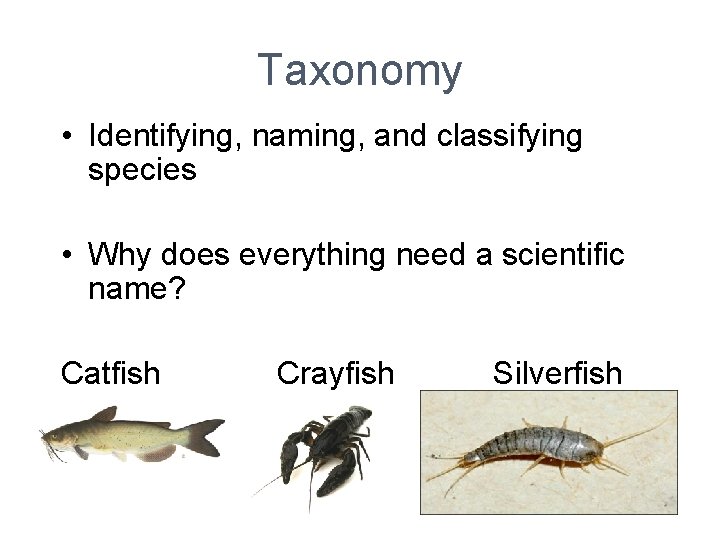
Taxonomy • Identifying, naming, and classifying species • Why does everything need a scientific name? Catfish Crayfish Silverfish
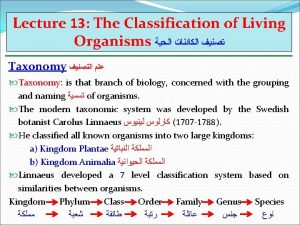
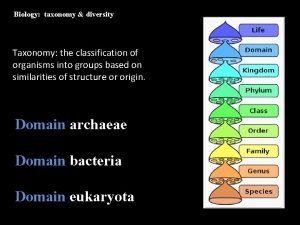
Linnaean System • Two-part Latin name for each species • Species categorized into broader and broader groups – According to similar characteristics
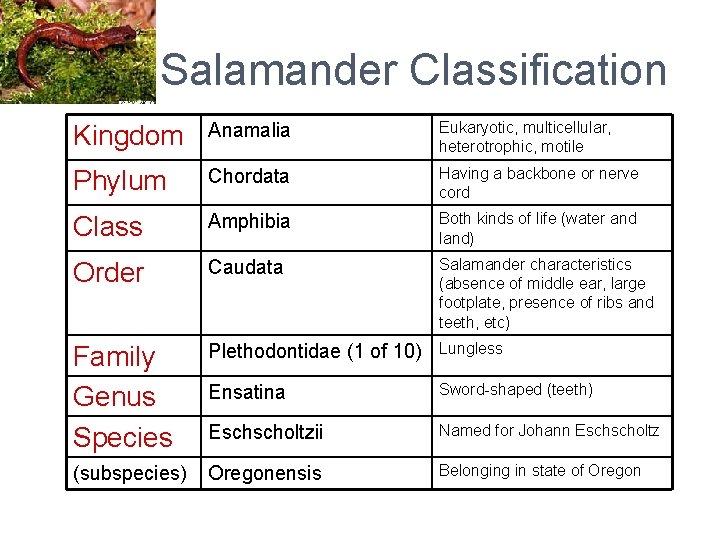
Salamander Classification Kingdom Anamalia Eukaryotic, multicellular, heterotrophic, motile Phylum Chordata Having a backbone or nerve cord Class Amphibia Both kinds of life (water and land) Order Caudata Salamander characteristics (absence of middle ear, large footplate, presence of ribs and teeth, etc) Family Genus Species Plethodontidae (1 of 10) Lungless Ensatina Sword-shaped (teeth) Eschscholtzii Named for Johann Eschscholtz (subspecies) Oregonensis Belonging in state of Oregon
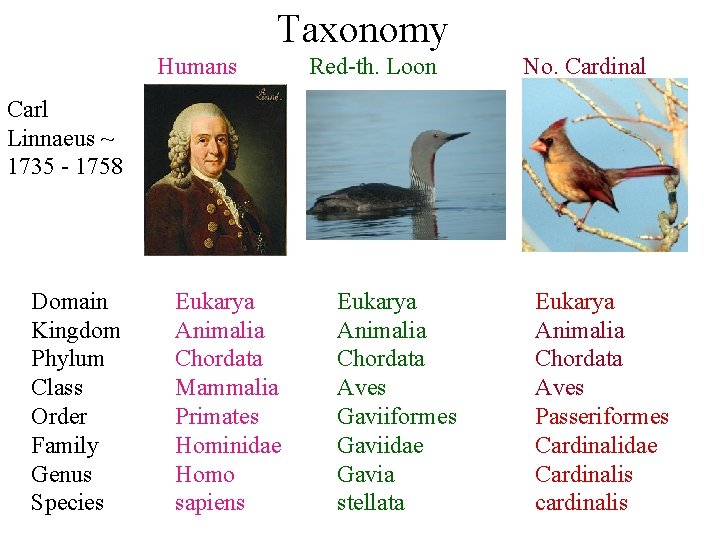
Taxonomy Humans Red-th. Loon No. Cardinal Carl Linnaeus ~ 1735 - 1758 Domain Kingdom Phylum Class Order Family Genus Species Eukarya Animalia Chordata Mammalia Primates Hominidae Homo sapiens Eukarya Animalia Chordata Aves Gaviiformes Gaviidae Gavia stellata Eukarya Animalia Chordata Aves Passeriformes Cardinalidae Cardinalis cardinalis
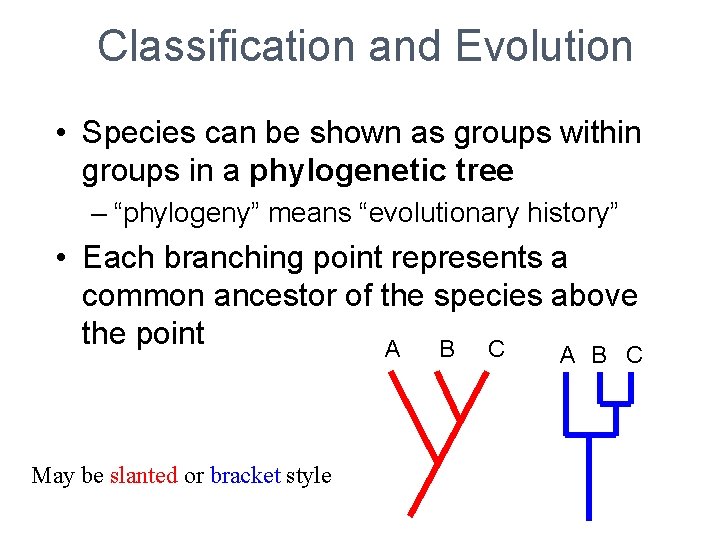
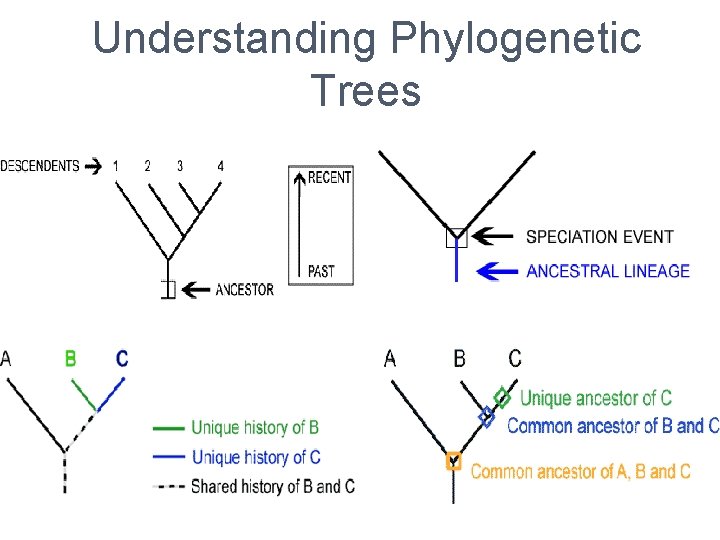
Classification and Evolution • Species can be shown as groups within groups in a phylogenetic tree – “phylogeny” means “evolutionary history” • Each branching point represents a common ancestor of the species above the point A B C May be slanted or bracket style
Understanding Phylogenetic Trees
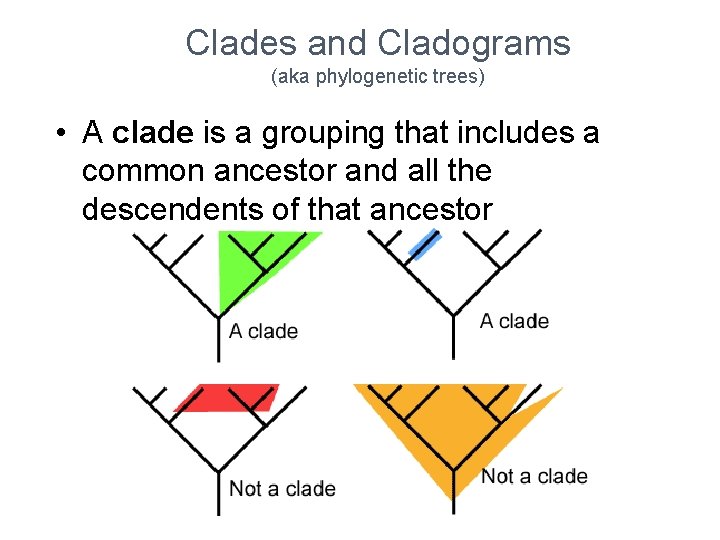
Clades and Cladograms (aka phylogenetic trees) • A clade is a grouping that includes a common ancestor and all the descendents of that ancestor
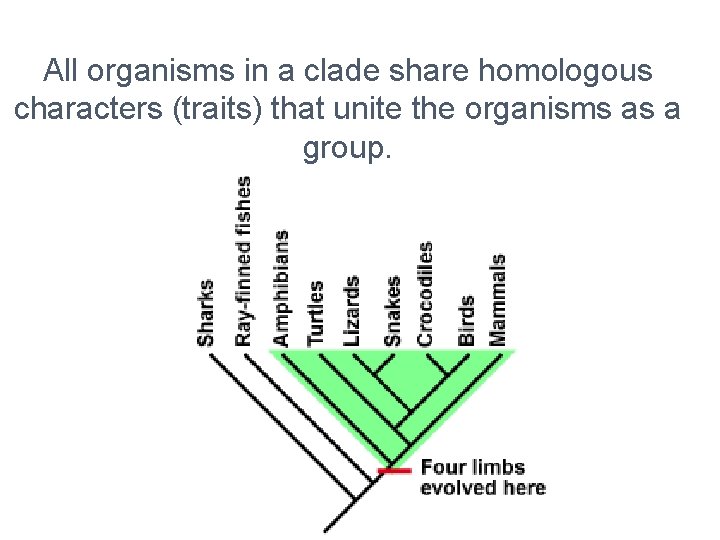
All organisms in a clade share homologous characters (traits) that unite the organisms as a group.
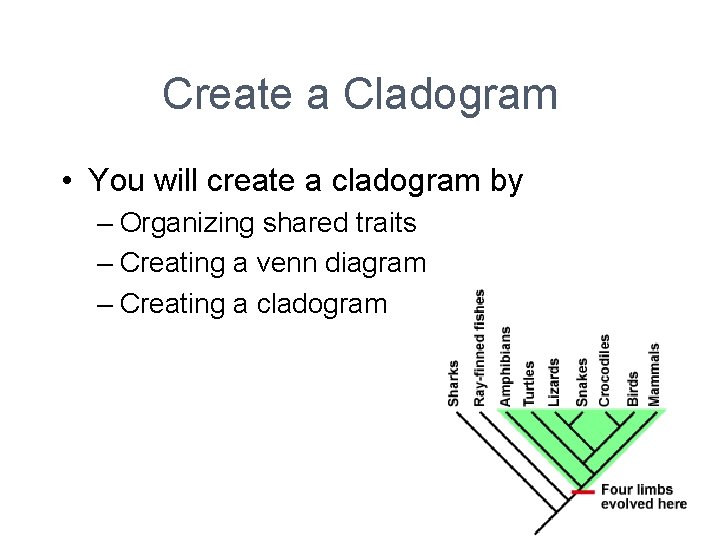
Create a Cladogram • You will create a cladogram by – Organizing shared traits – Creating a venn diagram – Creating a cladogram
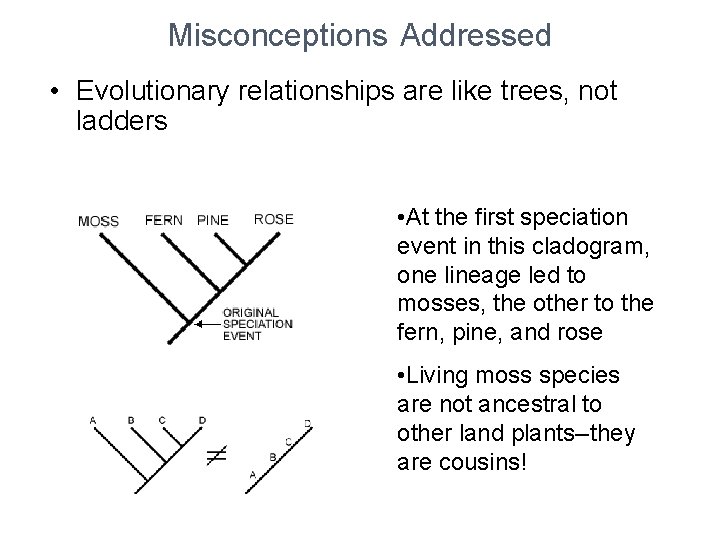
Misconceptions Addressed • Evolutionary relationships are like trees, not ladders • At the first speciation event in this cladogram, one lineage led to mosses, the other to the fern, pine, and rose • Living moss species are not ancestral to other land plants--they are cousins!
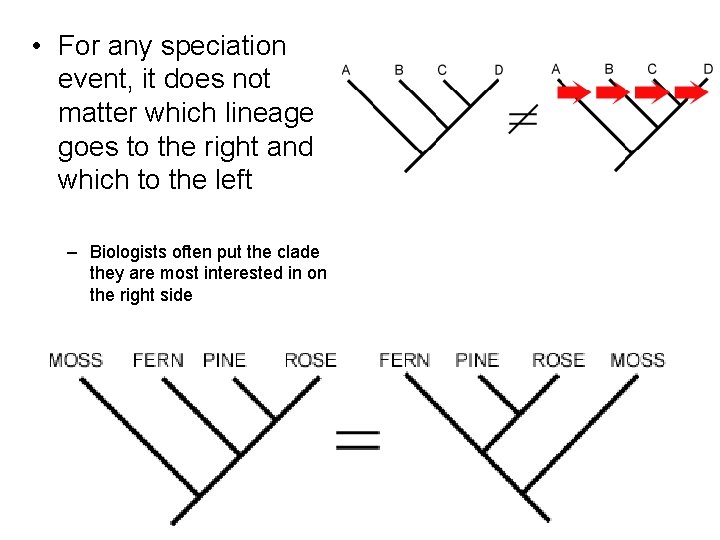
• For any speciation event, it does not matter which lineage goes to the right and which to the left – Biologists often put the clade they are most interested in on the right side
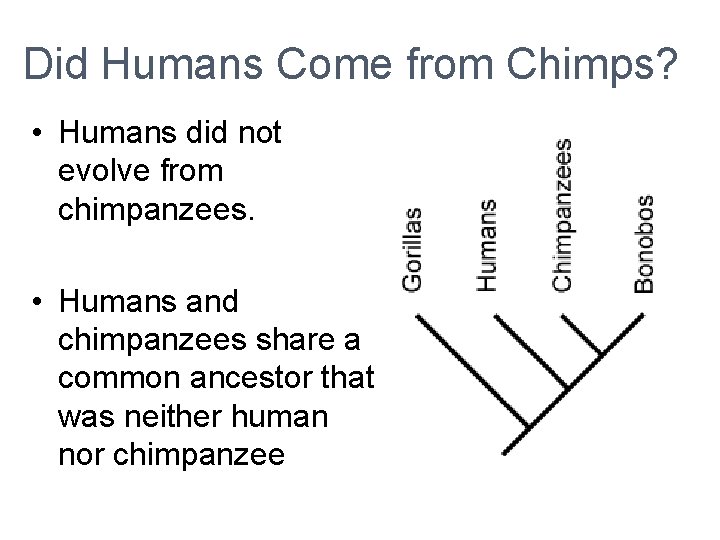
Did Humans Come from Chimps? • Humans did not evolve from chimpanzees. • Humans and chimpanzees share a common ancestor that was neither human nor chimpanzee