TAJIK STATE UNIVERSITY OF COMMERCE City Tajikistan Country
- Slides: 12
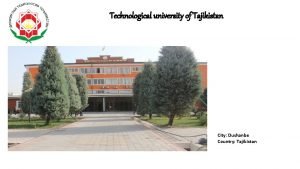
TAJIK STATE UNIVERSITY OF COMMERCE City: Tajikistan Country: Dushanbe Mubin Abduvaliev Middlesex University London 03. 11. 2017
Agenda 1. 2. 3. 4. 5. 6. 7. Credit system used at the institution Alignment (or lack of) with the Bologna Process Use (or lack of) ECTS Administration structure supporting student mobility Student mobility process Credit transfer process Grade conversion process
Alignment (or lack of) with the Bologna Process q By the Decision of the Ministry of Education and Science of the Republic of Tajikistan (#698 from 22. 09. 2004), starting from September 1, 2005 TUT and TSUC launched Credit Technology of Education as pilot HEI. q In 2010 transition of HEIs to Credit Technology of Education and in 2015 all HEIs launched Bologna Process. q Bachelor, Master and Ph. D Curriculums has been licensed by the authorized Ministries
Credit system used at the institution at BA level q 4 years, q 8 semesters q 240 ECTS (60% mandatory disciplines and 40% elective disciplines) q Shifts: according to availability of classrooms and depends on the year of study q 60 ECTS per year (30 ECTS per semester): Languages: Tajik, Russian and English
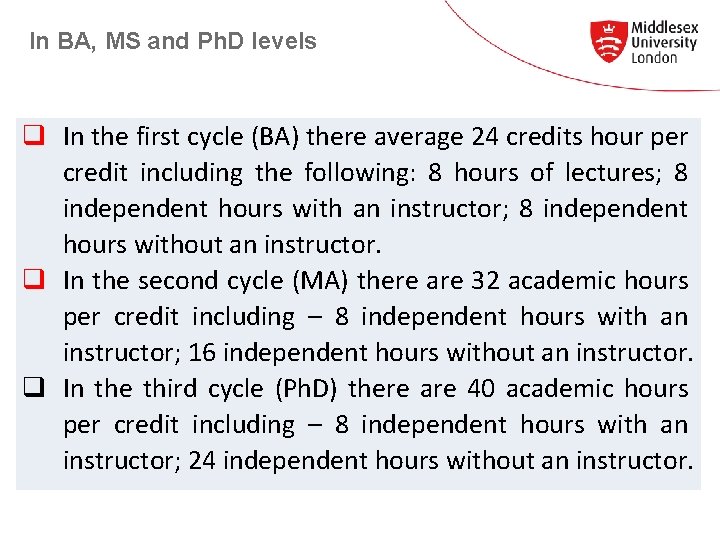
In BA, MS and Ph. D levels q In the first cycle (BA) there average 24 credits hour per credit including the following: 8 hours of lectures; 8 independent hours with an instructor; 8 independent hours without an instructor. q In the second cycle (MA) there are 32 academic hours per credit including – 8 independent hours with an instructor; 16 independent hours without an instructor. q In the third cycle (Ph. D) there are 40 academic hours per credit including – 8 independent hours with an instructor; 24 independent hours without an instructor.
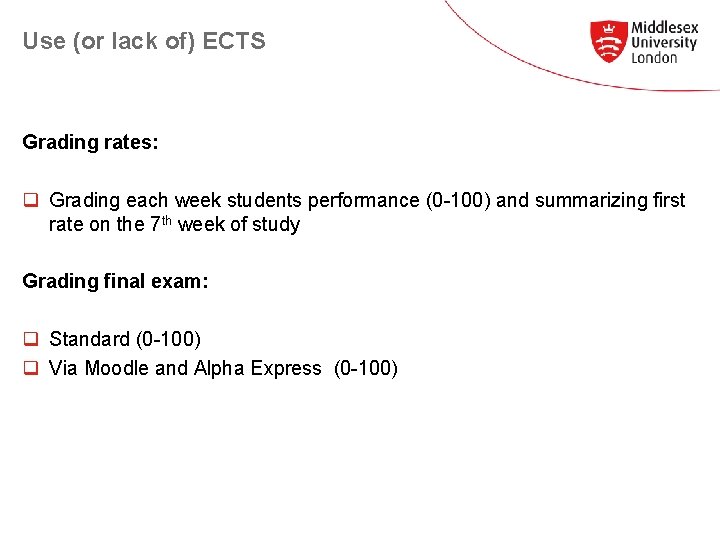
Use (or lack of) ECTS Grading rates: q Grading each week students performance (0 -100) and summarizing first rate on the 7 th week of study Grading final exam: q Standard (0 -100) q Via Moodle and Alpha Express (0 -100)
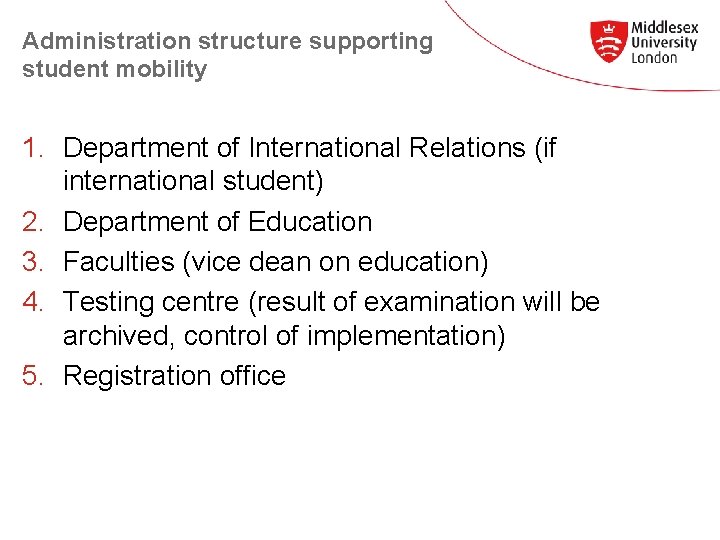
Administration structure supporting student mobility 1. Department of International Relations (if international student) 2. Department of Education 3. Faculties (vice dean on education) 4. Testing centre (result of examination will be archived, control of implementation) 5. Registration office
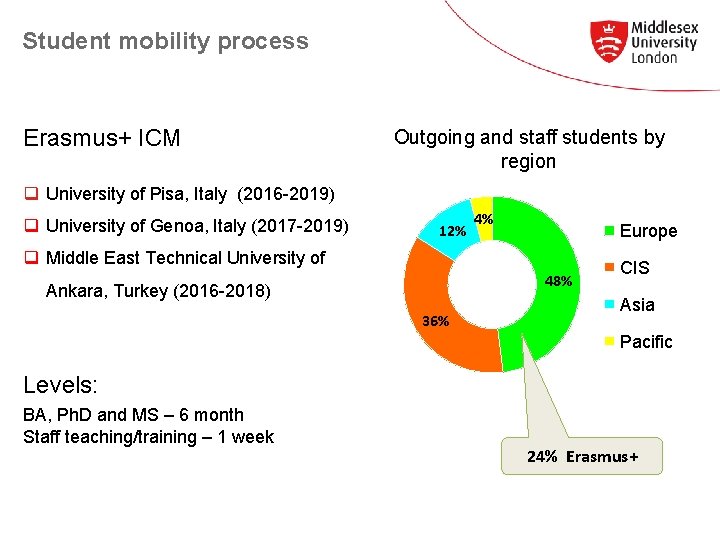
Student mobility process Erasmus+ ICM Outgoing and staff students by region q University of Pisa, Italy (2016 -2019) q University of Genoa, Italy (2017 -2019) 12% 4% Europe q Middle East Technical University of 48% Ankara, Turkey (2016 -2018) 36% CIS Asia Pacific Levels: BA, Ph. D and MS – 6 month Staff teaching/training – 1 week 24% Erasmus+
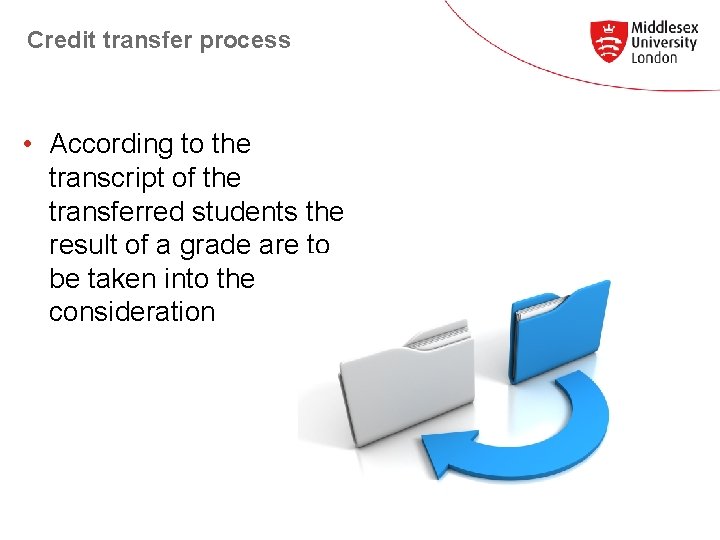
Credit transfer process • According to the transcript of the transferred students the result of a grade are to be taken into the consideration
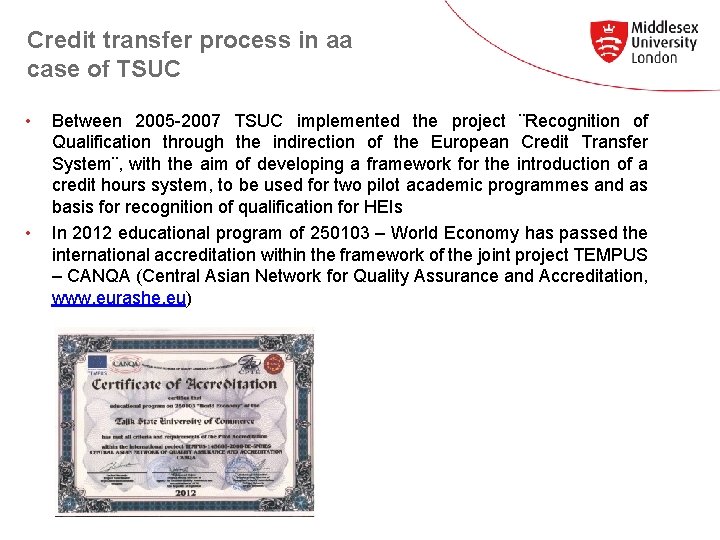
Credit transfer process in aa case of TSUC • • Between 2005 -2007 TSUC implemented the project ¨Recognition of Qualification through the indirection of the European Credit Transfer System¨, with the aim of developing a framework for the introduction of a credit hours system, to be used for two pilot academic programmes and as basis for recognition of qualification for HEIs In 2012 educational program of 250103 – World Economy has passed the international accreditation within the framework of the joint project TEMPUS – CANQA (Central Asian Network for Quality Assurance and Accreditation, www. eurashe. eu)
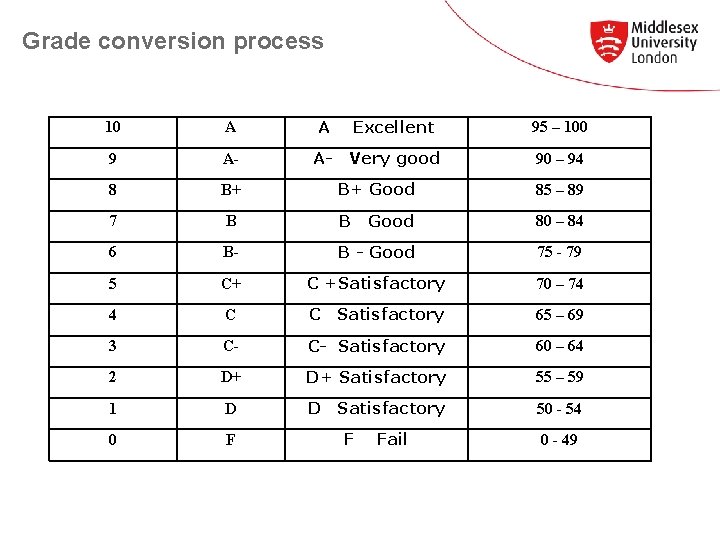
Grade conversion process 10 А A Excellent 95 – 100 9 А- A- Very good 90 – 94 8 В+ B+ Good 85 – 89 7 В B Good 80 – 84 6 В- B - Good 75 - 79 5 С+ C +Satisfactory 70 – 74 4 С C Satisfactory 65 – 69 3 С- C- Satisfactory 60 – 64 2 D+ D+ Satisfactory 55 – 59 1 D D 50 - 54 0 F Satisfactory F Fail 0 - 49
Click to edit Master title style THANK YOU! Slide 12 08/03/2021