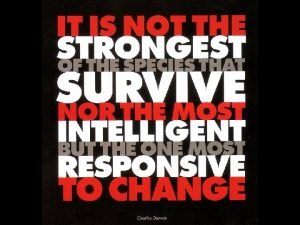
Survival guide You will need to read and
- Slides: 14
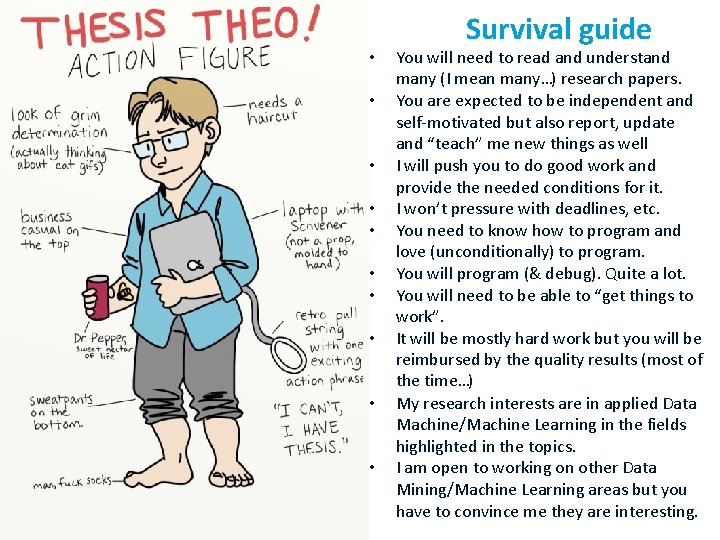
• • • Survival guide You will need to read and understand many (I mean many…) research papers. You are expected to be independent and self-motivated but also report, update and “teach” me new things as well I will push you to do good work and provide the needed conditions for it. I won’t pressure with deadlines, etc. You need to know how to program and love (unconditionally) to program. You will program (& debug). Quite a lot. You will need to be able to “get things to work”. It will be mostly hard work but you will be reimbursed by the quality results (most of the time…) My research interests are in applied Data Machine/Machine Learning in the fields highlighted in the topics. I am open to working on other Data Mining/Machine Learning areas but you have to convince me they are interesting.
Theses topic proposals 2017 -18 • General info: o Each thesis has a short description, a short data reference and several goals o In the comments below the slide you can find some useful references/starting points o Different goals might lead to different topics • General requirements (in case you skipped slide#1) o Unconditional love for programming o Machine learning/data mining understanding on a good level o For language related theses (slides #10 -#14), assume extra overhead if you are not familiar with text mining • For an updated version of these slides and/or new topics check: https: //dke. maastrichtuniversity. nl/jerry. spanakis/theses/
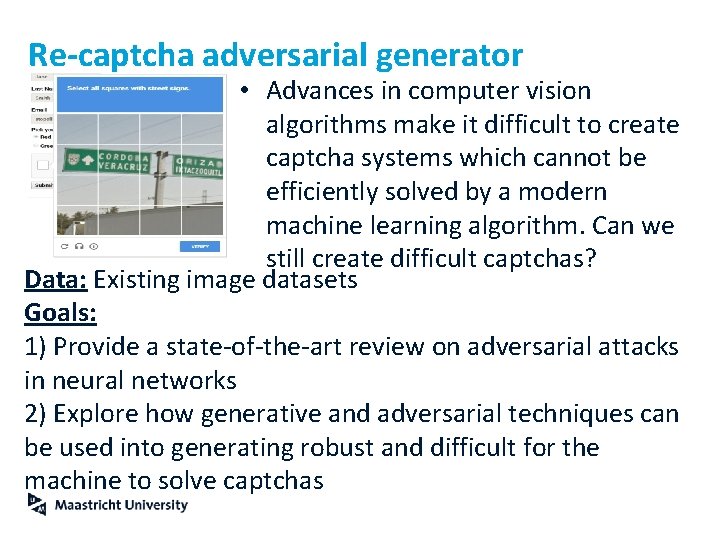
Re-captcha adversarial generator • Advances in computer vision algorithms make it difficult to create captcha systems which cannot be efficiently solved by a modern machine learning algorithm. Can we still create difficult captchas? Data: Existing image datasets Goals: 1) Provide a state-of-the-art review on adversarial attacks in neural networks 2) Explore how generative and adversarial techniques can be used into generating robust and difficult for the machine to solve captchas
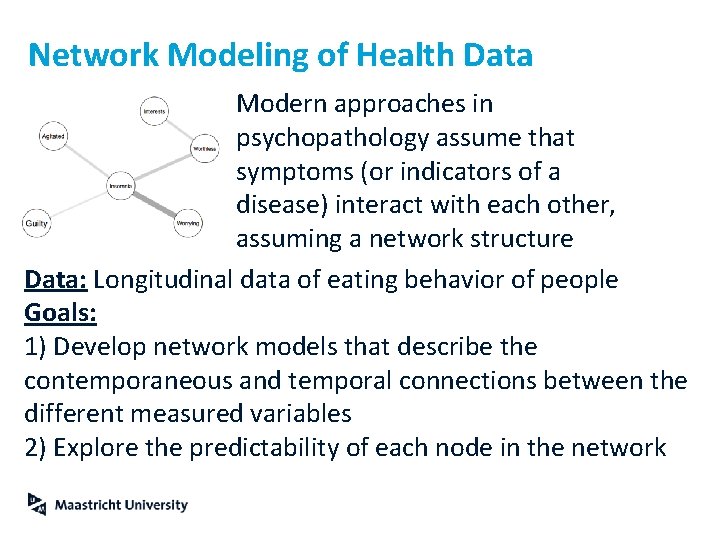
Network Modeling of Health Data Modern approaches in psychopathology assume that symptoms (or indicators of a disease) interact with each other, assuming a network structure Data: Longitudinal data of eating behavior of people Goals: 1) Develop network models that describe the contemporaneous and temporal connections between the different measured variables 2) Explore the predictability of each node in the network
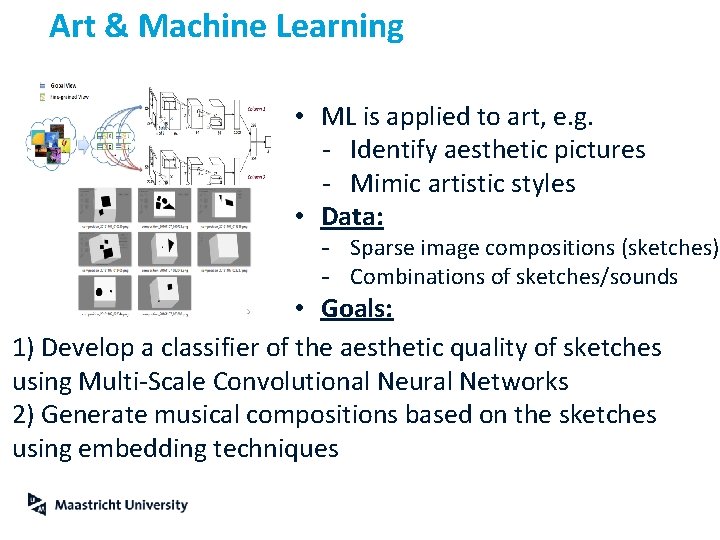
Art & Machine Learning • ML is applied to art, e. g. - Identify aesthetic pictures - Mimic artistic styles • Data: - Sparse image compositions (sketches) - Combinations of sketches/sounds • Goals: 1) Develop a classifier of the aesthetic quality of sketches using Multi-Scale Convolutional Neural Networks 2) Generate musical compositions based on the sketches using embedding techniques
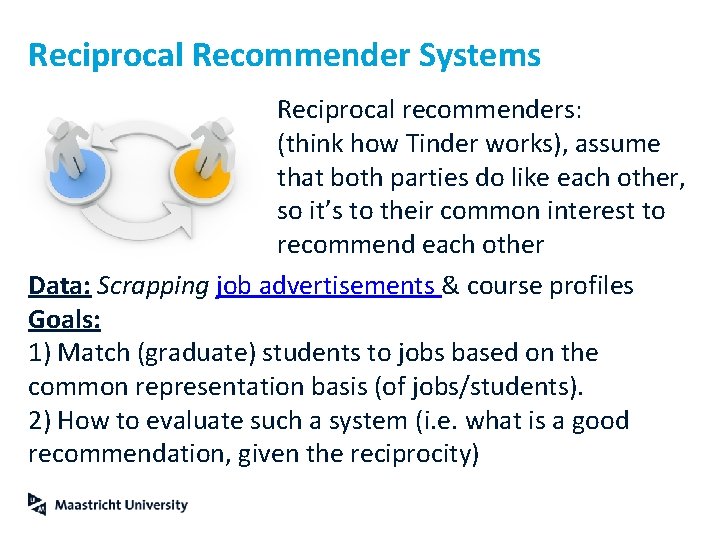
Reciprocal Recommender Systems Reciprocal recommenders: (think how Tinder works), assume that both parties do like each other, so it’s to their common interest to recommend each other Data: Scrapping job advertisements & course profiles Goals: 1) Match (graduate) students to jobs based on the common representation basis (of jobs/students). 2) How to evaluate such a system (i. e. what is a good recommendation, given the reciprocity)
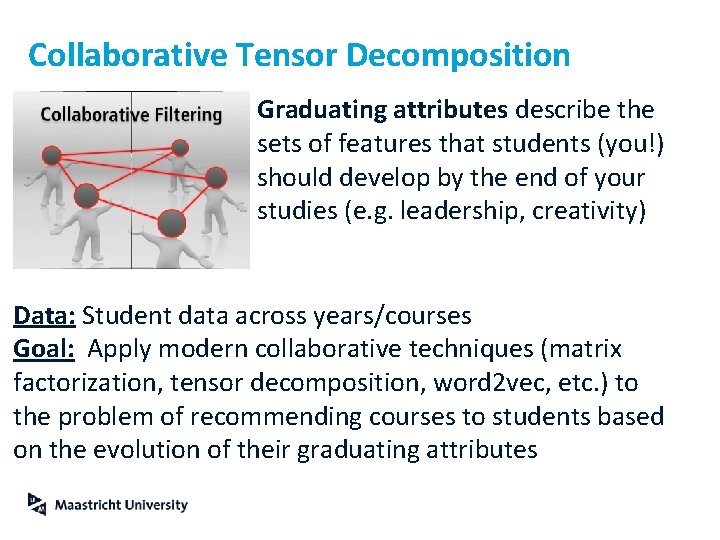
Collaborative Tensor Decomposition Graduating attributes describe the sets of features that students (you!) should develop by the end of your studies (e. g. leadership, creativity) Data: Student data across years/courses Goal: Apply modern collaborative techniques (matrix factorization, tensor decomposition, word 2 vec, etc. ) to the problem of recommending courses to students based on the evolution of their graduating attributes
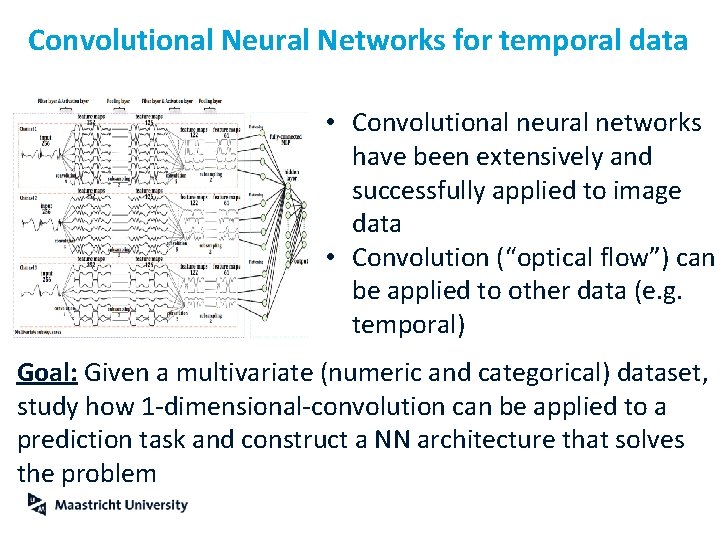
Convolutional Neural Networks for temporal data • Convolutional neural networks have been extensively and successfully applied to image data • Convolution (“optical flow”) can be applied to other data (e. g. temporal) Goal: Given a multivariate (numeric and categorical) dataset, study how 1 -dimensional-convolution can be applied to a prediction task and construct a NN architecture that solves the problem
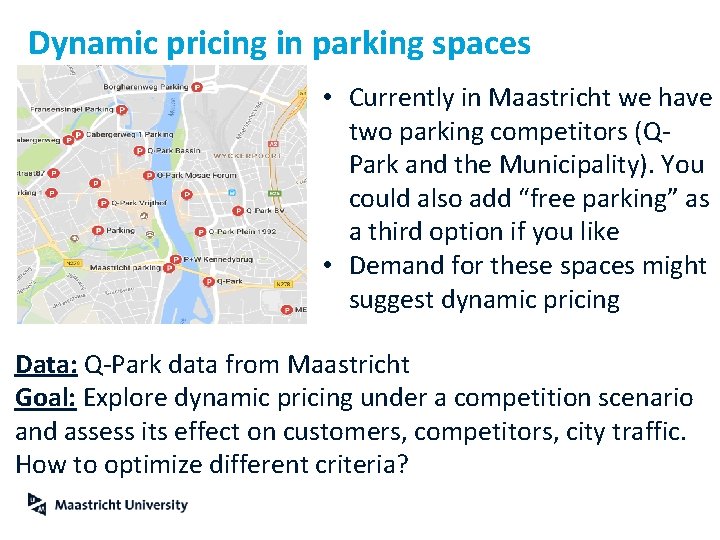
Dynamic pricing in parking spaces • Currently in Maastricht we have two parking competitors (QPark and the Municipality). You could also add “free parking” as a third option if you like • Demand for these spaces might suggest dynamic pricing Data: Q-Park data from Maastricht Goal: Explore dynamic pricing under a competition scenario and assess its effect on customers, competitors, city traffic. How to optimize different criteria?
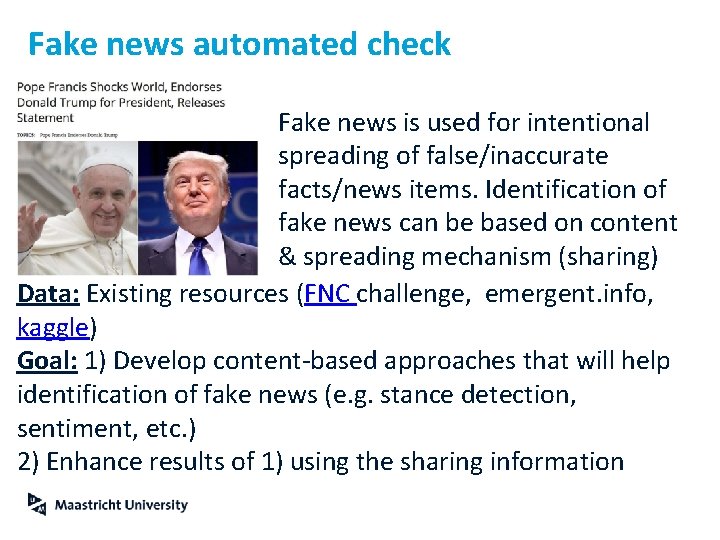
Fake news automated check Fake news is used for intentional spreading of false/inaccurate facts/news items. Identification of fake news can be based on content & spreading mechanism (sharing) Data: Existing resources (FNC challenge, emergent. info, kaggle) Goal: 1) Develop content-based approaches that will help identification of fake news (e. g. stance detection, sentiment, etc. ) 2) Enhance results of 1) using the sharing information
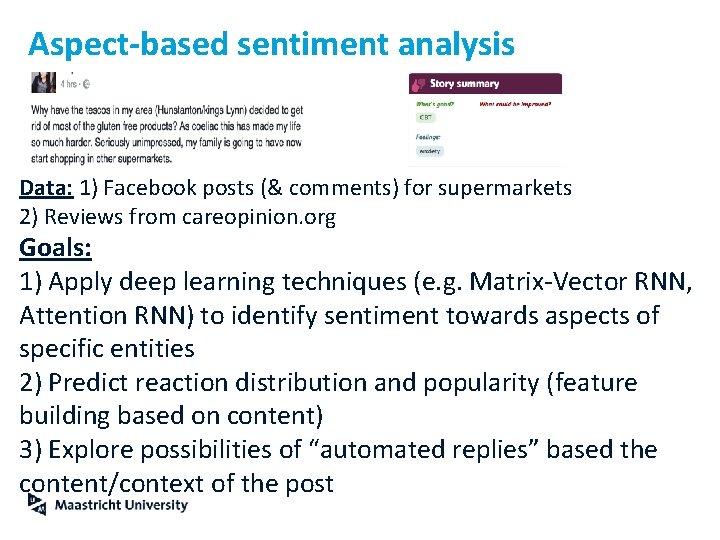
Aspect-based sentiment analysis Data: 1) Facebook posts (& comments) for supermarkets 2) Reviews from careopinion. org Goals: 1) Apply deep learning techniques (e. g. Matrix-Vector RNN, Attention RNN) to identify sentiment towards aspects of specific entities 2) Predict reaction distribution and popularity (feature building based on content) 3) Explore possibilities of “automated replies” based the content/context of the post
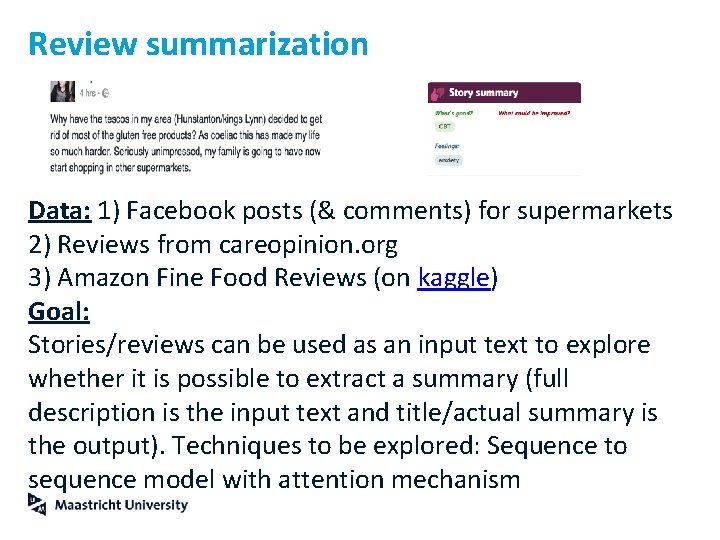
Review summarization Data: 1) Facebook posts (& comments) for supermarkets 2) Reviews from careopinion. org 3) Amazon Fine Food Reviews (on kaggle) Goal: Stories/reviews can be used as an input text to explore whether it is possible to extract a summary (full description is the input text and title/actual summary is the output). Techniques to be explored: Sequence to sequence model with attention mechanism
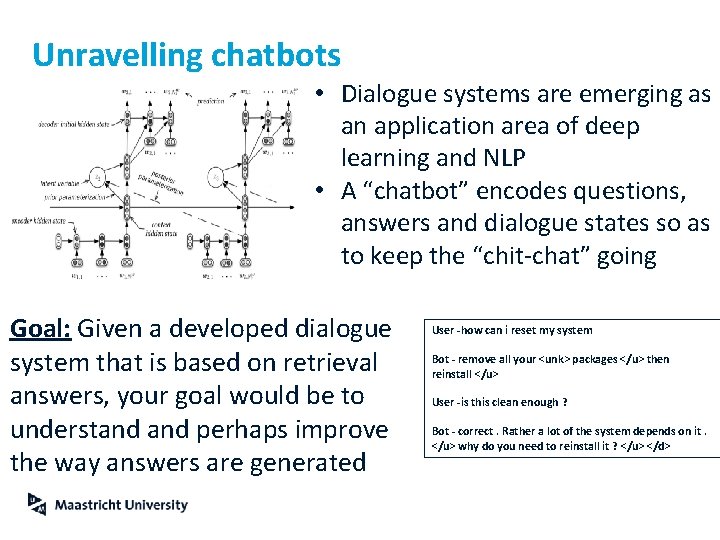
Unravelling chatbots • Dialogue systems are emerging as an application area of deep learning and NLP • A “chatbot” encodes questions, answers and dialogue states so as to keep the “chit-chat” going Goal: Given a developed dialogue system that is based on retrieval answers, your goal would be to understand perhaps improve the way answers are generated User -how can i reset my system Bot - remove all your <unk> packages </u> then reinstall </u> User -is this clean enough ? Bot - correct. Rather a lot of the system depends on it. </u> why do you need to reinstall it ? </u> </d>
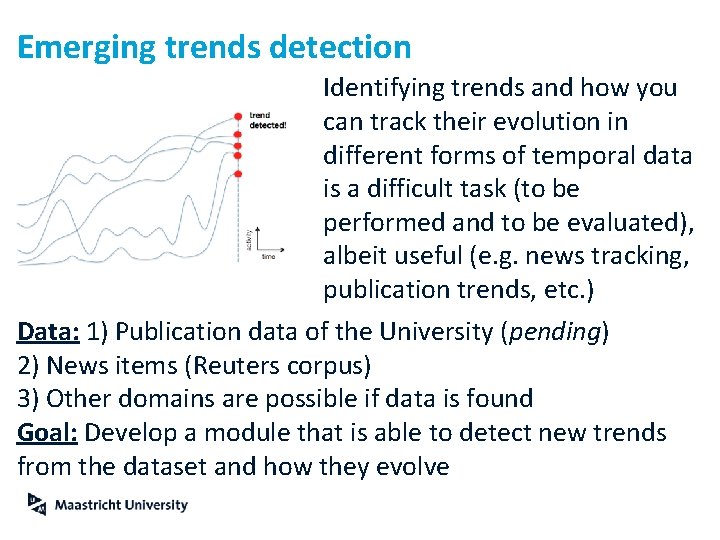
Emerging trends detection Identifying trends and how you can track their evolution in different forms of temporal data is a difficult task (to be performed and to be evaluated), albeit useful (e. g. news tracking, publication trends, etc. ) Data: 1) Publication data of the University (pending) 2) News items (Reuters corpus) 3) Other domains are possible if data is found Goal: Develop a module that is able to detect new trends from the dataset and how they evolve