STORM WATER STORAGE AND TREATMENT Code Requirements Often

- Slides: 12
STORM WATER STORAGE AND TREATMENT Code Requirements Often a storm water management system is required to • Restrict storm water runoff rate predevelopment levels (quantity) • Treat storm water so that runoff is relatively clean and free of toxins (quality)
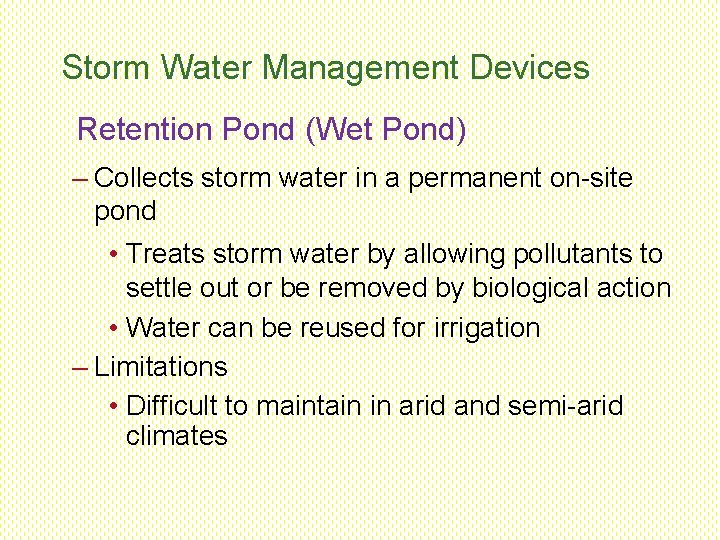
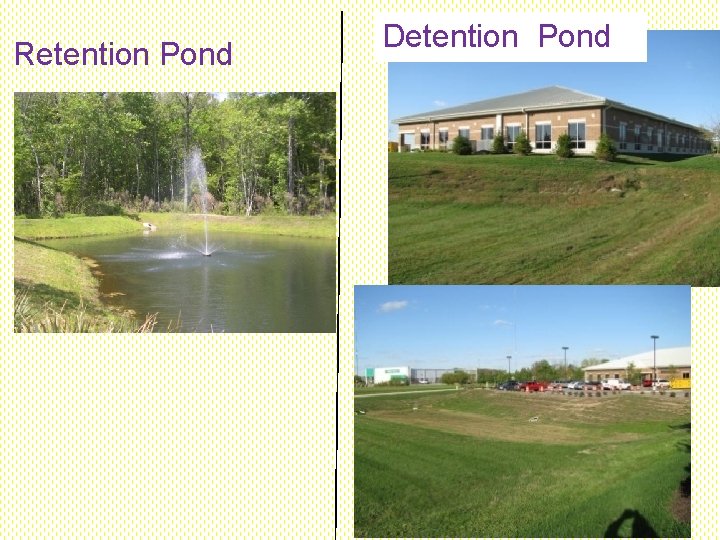
Storm Water Management Devices Retention Pond (Wet Pond) – Collects storm water in a permanent on-site pond • Treats storm water by allowing pollutants to settle out or be removed by biological action • Water can be reused for irrigation – Limitations • Difficult to maintain in arid and semi-arid climates
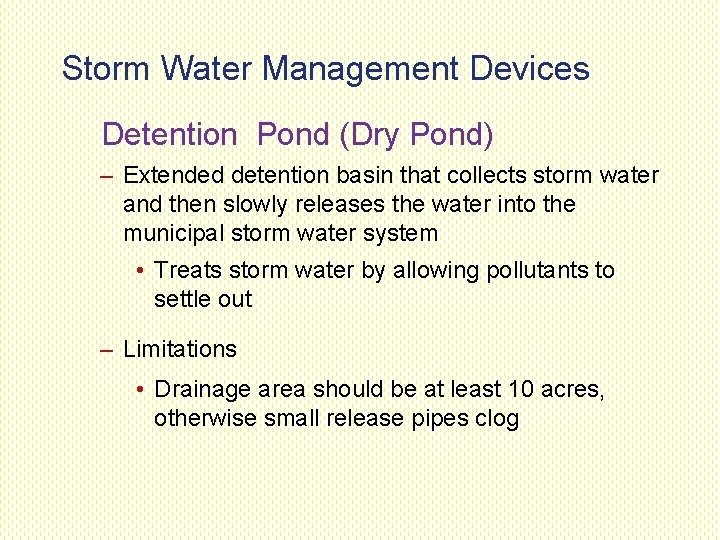
Storm Water Management Devices Detention Pond (Dry Pond) – Extended detention basin that collects storm water and then slowly releases the water into the municipal storm water system • Treats storm water by allowing pollutants to settle out – Limitations • Drainage area should be at least 10 acres, otherwise small release pipes clog
Retention Pond Detention Pond
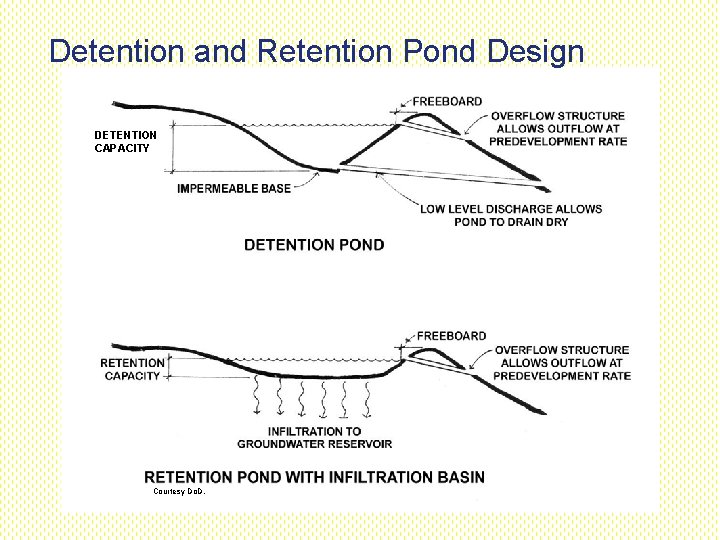
Detention and Retention Pond Design DETENTION CAPACITY Courtesy Do. D.
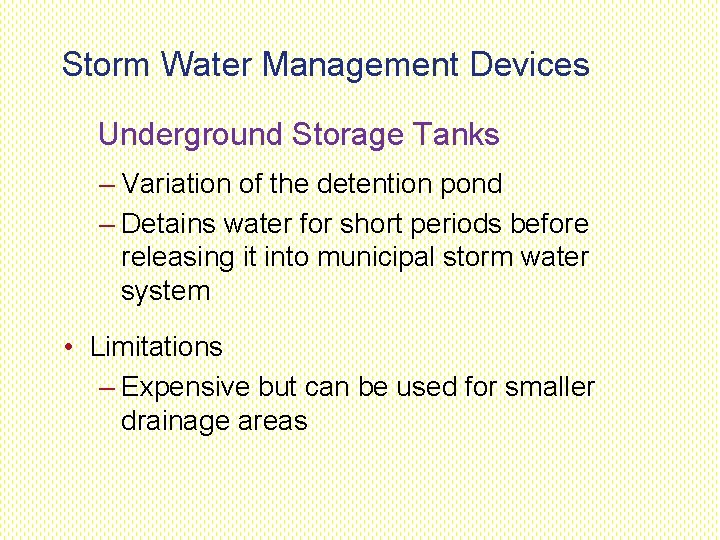
Storm Water Management Devices Underground Storage Tanks – Variation of the detention pond – Detains water for short periods before releasing it into municipal storm water system • Limitations – Expensive but can be used for smaller drainage areas
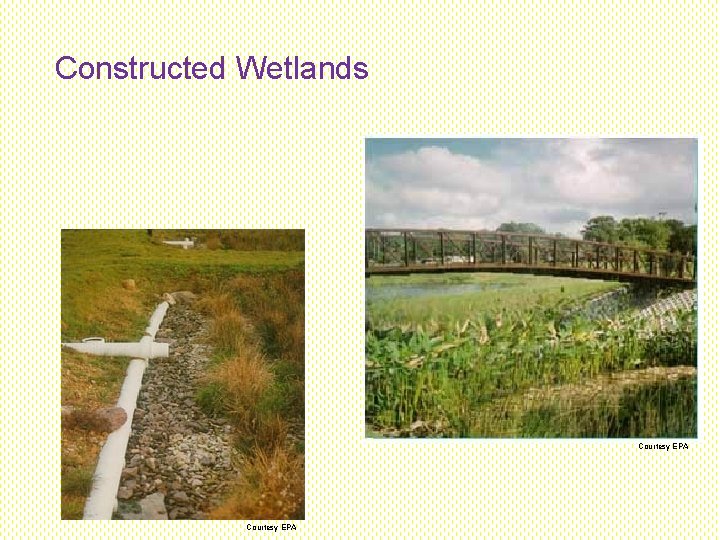
Storm Water Management Devices Storm water Wetlands (Constructed Wetlands) – Storm water diverted to a permanent pool that incorporates wetland plants • Pollutants removed through settling and biological activity – Limitations • Drainage area should be at least 25 acres • Difficult to maintain in arid and semi-arid climates
Constructed Wetlands Courtesy EPA
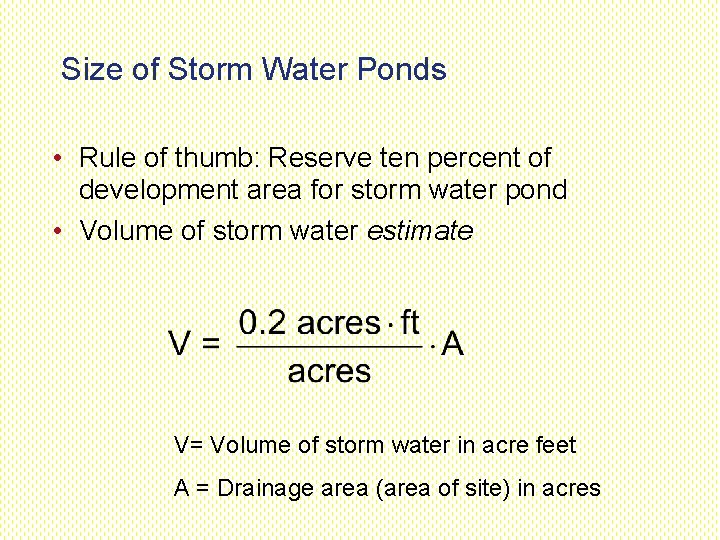
Size of Storm Water Ponds • Rule of thumb: Reserve ten percent of development area for storm water pond • Volume of storm water estimate V= Volume of storm water in acre feet A = Drainage area (area of site) in acres
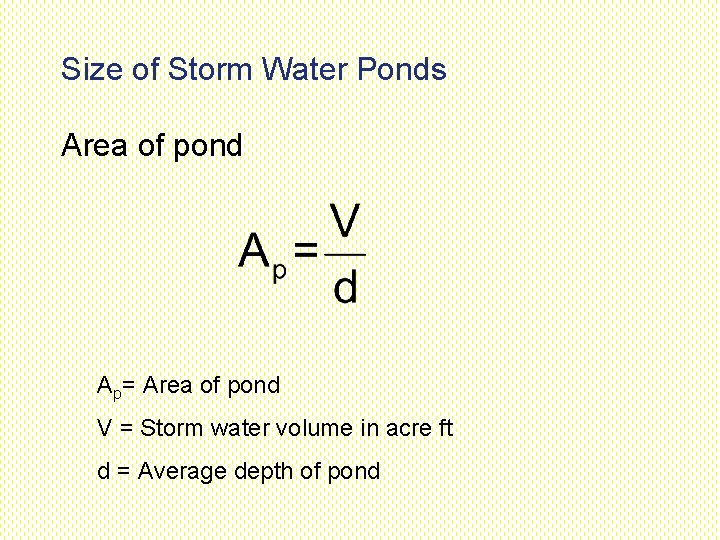
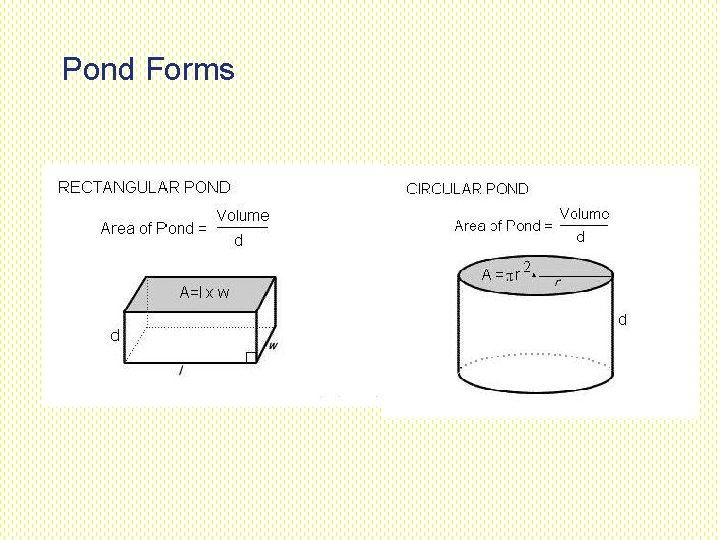
Size of Storm Water Ponds Area of pond Ap= Area of pond V = Storm water volume in acre ft d = Average depth of pond
Pond Forms
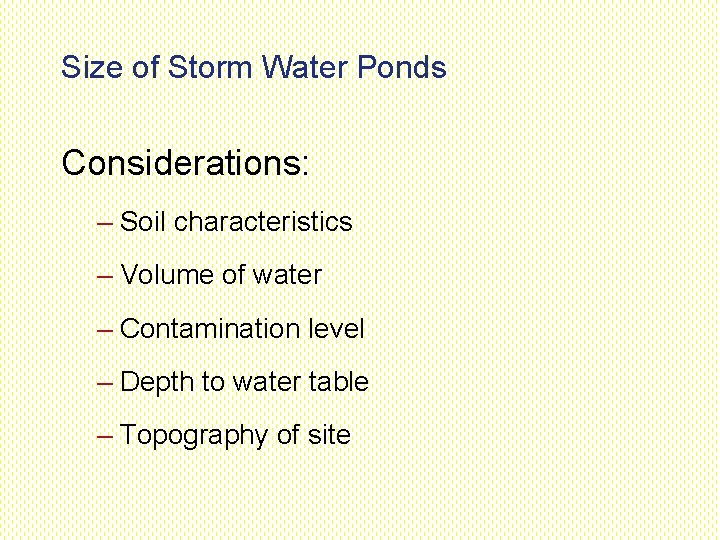
Size of Storm Water Ponds Considerations: – Soil characteristics – Volume of water – Contamination level – Depth to water table – Topography of site