Stockland Green Knowledge Organiser Sport Science Year 10
- Slides: 6
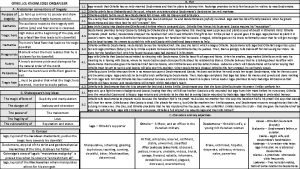
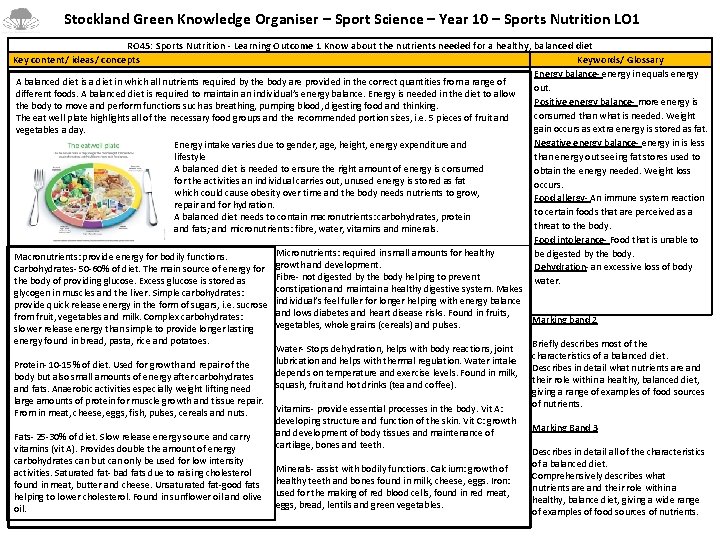
Stockland Green Knowledge Organiser – Sport Science – Year 10 – Sports Nutrition LO 1 RO 45: Sports Nutrition - Learning Outcome 1 Know about the nutrients needed for a healthy, balanced diet Key content/ ideas/ concepts Keywords/ Glossary Energy balance- energy in equals energy A balanced diet is a diet in which all nutrients required by the body are provided in the correct quantities from a range of out. different foods. A balanced diet is required to maintain an individual’s energy balance. Energy is needed in the diet to allow the body to move and perform functions such as breathing, pumping blood, digesting food and thinking. Positive energy balance- more energy is The eat well plate highlights all of the necessary food groups and the recommended portion sizes, i. e. 5 pieces of fruit and consumed than what is needed. Weight vegetables a day. gain occurs as extra energy is stored as fat. Negative energy balance- energy in is less Energy intake varies due to gender, age, height, energy expenditure and lifestyle than energy out seeing fat stores used to A balanced diet is needed to ensure the right amount of energy is consumed obtain the energy needed. Weight loss for the activities an individual carries out, unused energy is stored as fat occurs. which could cause obesity over time and the body needs nutrients to grow, Food allergy- An immune system reaction repair and for hydration. to certain foods that are perceived as a A balanced diet needs to contain macronutrients: carbohydrates, protein threat to the body. and fats; and micronutrients: fibre, water, vitamins and minerals. Food intolerance- Food that is unable to Micronutrients: required in small amounts for healthy Macronutrients: provide energy for bodily functions. be digested by the body. Carbohydrates- 50 -60% of diet. The main source of energy for growth and development. Dehydration- an excessive loss of body Fibre- not digested by the body helping to prevent the body of providing glucose. Excess glucose is stored as water. constipation and maintain a healthy digestive system. Makes glycogen in muscles and the liver. Simple carbohydrates: individual’s feel fuller for longer helping with energy balance provide quick release energy in the form of sugars, i. e. sucrose and lows diabetes and heart disease risks. Found in fruits, from fruit, vegetables and milk. Complex carbohydrates: Marking band 2 vegetables, whole grains (cereals) and pulses. slower release energy than simple to provide longer lasting energy found in bread, pasta, rice and potatoes. Briefly describes most of the Water- Stops dehydration, helps with body reactions, joint lubrication and helps with thermal regulation. Water intake characteristics of a balanced diet. Protein- 10 -15% of diet. Used for growth and repair of the depends on temperature and exercise levels. Found in milk, Describes in detail what nutrients are and body but also small amounts of energy after carbohydrates their role within a healthy, balanced diet, squash, fruit and hot drinks (tea and coffee). and fats. Anaerobic activities especially weight lifting need giving a range of examples of food sources large amounts of protein for muscle growth and tissue repair. of nutrients. Vitamins- provide essential processes in the body. Vit A: From in meat, cheese, eggs, fish, pulses, cereals and nuts. developing structure and function of the skin. Vit C: growth Marking Band 3 and development of body tissues and maintenance of Fats- 25 -30% of diet. Slow release energy source and carry cartilage, bones and teeth. vitamins (vit A). Provides double the amount of energy Describes in detail all of the characteristics carbohydrates can but can only be used for low intensity of a balanced diet. Minerals- assist with bodily functions. Calcium: growth of activities. Saturated fat- bad fats due to raising cholesterol Comprehensively describes what found in meat, butter and cheese. Unsaturated fat-good fats healthy teeth and bones found in milk, cheese, eggs. Iron: nutrients are and their role within a helping to lower cholesterol. Found in sunflower oil and olive used for the making of red blood cells, found in red meat, healthy, balance diet, giving a wide range eggs, bread, lentils and green vegetables. oil. of examples of food sources of nutrients.
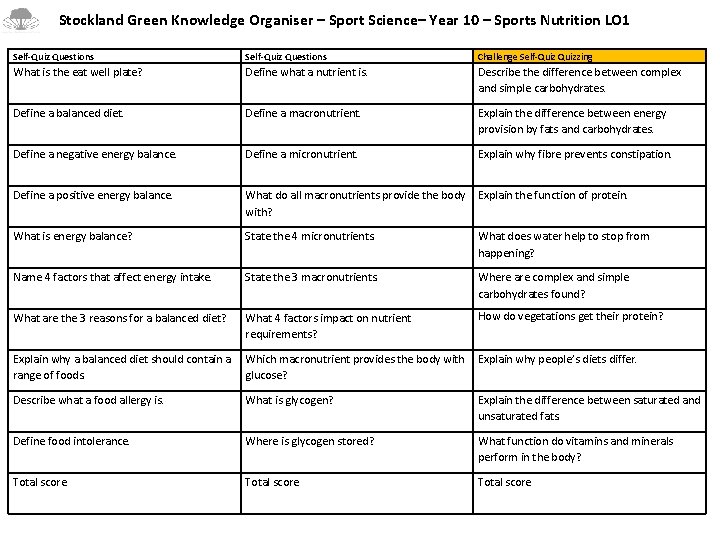
Stockland Green Knowledge Organiser – Sport Science– Year 10 – Sports Nutrition LO 1 Self-Quiz Questions Challenge Self-Quizzing What is the eat well plate? Define what a nutrient is. Describe the difference between complex and simple carbohydrates. Define a balanced diet. Define a macronutrient. Explain the difference between energy provision by fats and carbohydrates. Define a negative energy balance. Define a micronutrient. Explain why fibre prevents constipation. Define a positive energy balance. What do all macronutrients provide the body Explain the function of protein. with? What is energy balance? State the 4 micronutrients. What does water help to stop from happening? Name 4 factors that affect energy intake. State the 3 macronutrients. Where are complex and simple carbohydrates found? What are the 3 reasons for a balanced diet? What 4 factors impact on nutrient requirements? How do vegetations get their protein? Explain why a balanced diet should contain a Which macronutrient provides the body with Explain why people’s diets differ. range of foods. glucose? Describe what a food allergy is. What is glycogen? Explain the difference between saturated and unsaturated fats. Define food intolerance. Where is glycogen stored? What function do vitamins and minerals perform in the body? Total score
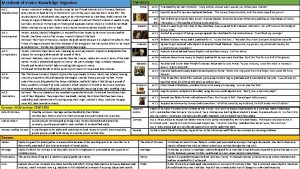
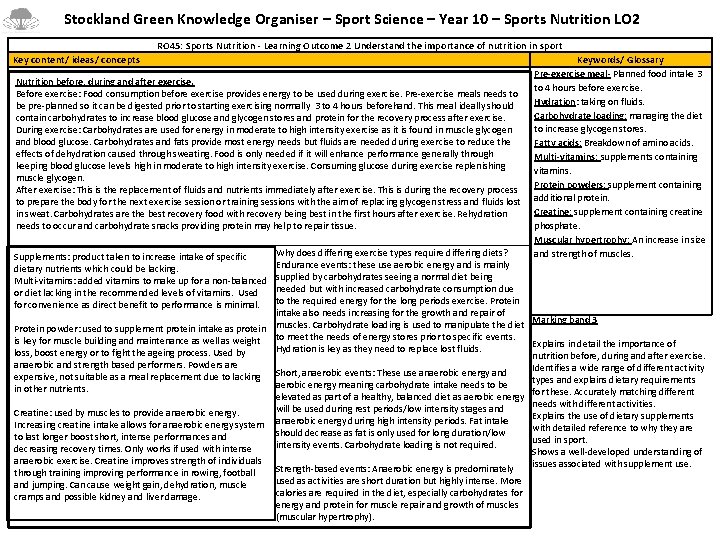
Stockland Green Knowledge Organiser – Sport Science – Year 10 – Sports Nutrition LO 2 RO 45: Sports Nutrition - Learning Outcome 2 Understand the importance of nutrition in sport Key content/ ideas/ concepts Keywords/ Glossary Pre-exercise meal- Planned food intake 3 Nutrition before, during and after exercise. to 4 hours before exercise. Before exercise: Food consumption before exercise provides energy to be used during exercise. Pre-exercise meals needs to be pre-planned so it can be digested prior to starting exercising normally 3 to 4 hours beforehand. This meal ideally should Hydration: taking on fluids. contain carbohydrates to increase blood glucose and glycogen stores and protein for the recovery process after exercise. Carbohydrate loading: managing the diet During exercise: Carbohydrates are used for energy in moderate to high intensity exercise as it is found in muscle glycogen to increase glycogen stores. and blood glucose. Carbohydrates and fats provide most energy needs but fluids are needed during exercise to reduce the Fatty acids: Breakdown of amino acids. effects of dehydration caused through sweating. Food is only needed if it will enhance performance generally through Multi-vitamins: supplements containing keeping blood glucose levels high in moderate to high intensity exercise. Consuming glucose during exercise replenishing vitamins. muscle glycogen. After exercise: This is the replacement of fluids and nutrients immediately after exercise. This is during the recovery process Protein powders: supplement containing to prepare the body for the next exercise session or training sessions with the aim of replacing glycogen stress and fluids lost additional protein. in sweat. Carbohydrates are the best recovery food with recovery being best in the first hours after exercise. Rehydration Creatine: supplement containing creatine needs to occur and carbohydrate snacks providing protein may help to repair tissue. phosphate. Muscular hypertrophy: An increase in size Why does differing exercise types require differing diets? Supplements: product taken to increase intake of specific and strength of muscles. Endurance events: these use aerobic energy and is mainly dietary nutrients which could be lacking. Multi-vitamins: added vitamins to make up for a non-balanced supplied by carbohydrates seeing a normal diet being needed but with increased carbohydrate consumption due or diet lacking in the recommended levels of vitamins. Used to the required energy for the long periods exercise. Protein for convenience as direct benefit to performance is minimal. intake also needs increasing for the growth and repair of Marking band 3 Protein powder: used to supplement protein intake as protein muscles. Carbohydrate loading is used to manipulate the diet is key for muscle building and maintenance as well as weight to meet the needs of energy stores prior to specific events. Explains in detail the importance of Hydration is key as they need to replace lost fluids. loss, boost energy or to fight the ageing process. Used by nutrition before, during and after exercise. anaerobic and strength based performers. Powders are Identifies a wide range of different activity expensive, not suitable as a meal replacement due to lacking Short, anaerobic events: These use anaerobic energy and types and explains dietary requirements aerobic energy meaning carbohydrate intake needs to be in other nutrients. elevated as part of a healthy, balanced diet as aerobic energy for these. Accurately matching different needs with different activities. will be used during rest periods/low intensity stages and Creatine: used by muscles to provide anaerobic energy. Explains the use of dietary supplements Increasing creatine intake allows for anaerobic energy system anaerobic energy during high intensity periods. Fat intake with detailed reference to why they are should decrease as fat is only used for long duration/low to last longer boost short, intense performances and used in sport. intensity events. Carbohydrate loading is not required. decreasing recovery times. Only works if used with intense Shows a well-developed understanding of anaerobic exercise. Creatine improves strength of individuals issues associated with supplement use. Strength-based events: Anaerobic energy is predominately through training improving performance in rowing, football used as activities are short duration but highly intense. More and jumping. Can cause weight gain, dehydration, muscle calories are required in the diet, especially carbohydrates for cramps and possible kidney and liver damage. energy and protein for muscle repair and growth of muscles (muscular hypertrophy).
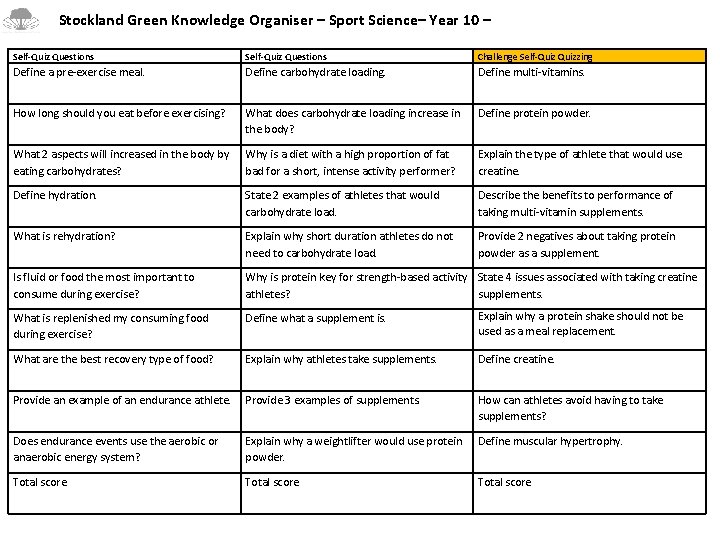
Stockland Green Knowledge Organiser – Sport Science– Year 10 – Self-Quiz Questions Challenge Self-Quizzing Define a pre-exercise meal. Define carbohydrate loading. Define multi-vitamins. How long should you eat before exercising? What does carbohydrate loading increase in the body? Define protein powder. What 2 aspects will increased in the body by eating carbohydrates? Why is a diet with a high proportion of fat bad for a short, intense activity performer? Explain the type of athlete that would use creatine. Define hydration. State 2 examples of athletes that would carbohydrate load. Describe the benefits to performance of taking multi-vitamin supplements. What is rehydration? Explain why short duration athletes do not need to carbohydrate load. Provide 2 negatives about taking protein powder as a supplement. Is fluid or food the most important to consume during exercise? Why is protein key for strength-based activity State 4 issues associated with taking creatine athletes? supplements. What is replenished my consuming food during exercise? Define what a supplement is. Explain why a protein shake should not be used as a meal replacement. What are the best recovery type of food? Explain why athletes take supplements. Define creatine. Provide an example of an endurance athlete. Provide 3 examples of supplements. How can athletes avoid having to take supplements? Does endurance events use the aerobic or anaerobic energy system? Explain why a weightlifter would use protein powder. Define muscular hypertrophy. Total score
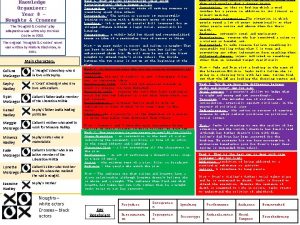
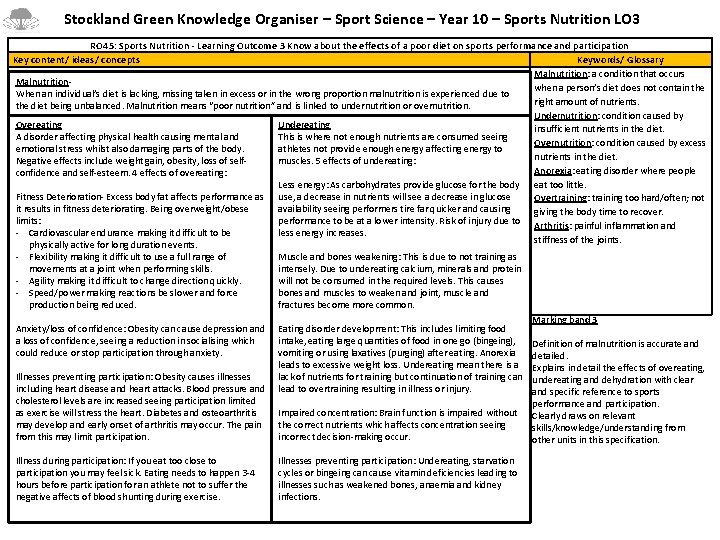
Stockland Green Knowledge Organiser – Sport Science – Year 10 – Sports Nutrition LO 3 RO 45: Sports Nutrition - Learning Outcome 3 Know about the effects of a poor diet on sports performance and participation Key content/ ideas/ concepts Keywords/ Glossary Malnutrition: a condition that occurs Malnutrition- when a person’s diet does not contain the When an individual’s diet is lacking, missing taken in excess or in the wrong proportion malnutrition is experienced due to the diet being unbalanced. Malnutrition means “poor nutrition” and is linked to undernutrition or overnutrition. right amount of nutrients. Undernutrition: condition caused by Overeating Undereating insufficient nutrients in the diet. A disorder affecting physical health causing mental and This is where not enough nutrients are consumed seeing Overnutrition: condition caused by excess emotional stress whilst also damaging parts of the body. athletes not provide enough energy affecting energy to Negative effects include weight gain, obesity, loss of selfnutrients in the diet. muscles. 5 effects of undereating: confidence and self-esteem. 4 effects of overeating: Anorexia: eating disorder where people Less energy: As carbohydrates provide glucose for the body eat too little. Fitness Deterioration- Excess body fat affects performance as use, a decrease in nutrients will see a decrease in glucose Overtraining: training too hard/often; not availability seeing performers tire far quicker and causing it results in fitness deteriorating. Being overweight/obese giving the body time to recover. limits: performance to be at a lower intensity. Risk of injury due to Arthritis: painful inflammation and - Cardiovascular endurance making it difficult to be less energy increases. stiffness of the joints. physically active for long duration events. - Flexibility making it difficult to use a full range of Muscle and bones weakening: This is due to not training as movements at a joint when performing skills. intensely. Due to undereating calcium, minerals and protein will not be consumed in the required levels. This causes - Agility making it difficult to change direction quickly. bones and muscles to weaken and joint, muscle and - Speed/power making reactions be slower and force fractures become more common. production being reduced. Marking band 3 Anxiety/loss of confidence: Obesity can cause depression and Eating disorder development: This includes limiting food a loss of confidence, seeing a reduction in socialising which intake, eating large quantities of food in one go (bingeing), Definition of malnutrition is accurate and could reduce or stop participation through anxiety. vomiting or using laxatives (purging) after eating. Anorexia detailed. leads to excessive weight loss. Undereating mean there is a Explains in detail the effects of overeating, Illnesses preventing participation: Obesity causes illnesses lack of nutrients for training but continuation of training can undereating and dehydration with clear including heart disease and heart attacks. Blood pressure and lead to overtraining resulting in illness or injury. and specific reference to sports cholesterol levels are increased seeing participation limited performance and participation. as exercise will stress the heart. Diabetes and osteoarthritis Impaired concentration: Brain function is impaired without Clearly draws on relevant may develop and early onset of arthritis may occur. The pain the correct nutrients which affects concentration seeing skills/knowledge/understanding from this may limit participation. incorrect decision-making occur. other units in this specification. Illness during participation: If you eat too close to participation you may feel sick. Eating needs to happen 3 -4 hours before participation for an athlete not to suffer the negative affects of blood shunting during exercise. Illnesses preventing participation: Undereating, starvation cycles or bingeing can cause vitamin deficiencies leading to illnesses such as weakened bones, anaemia and kidney infections.
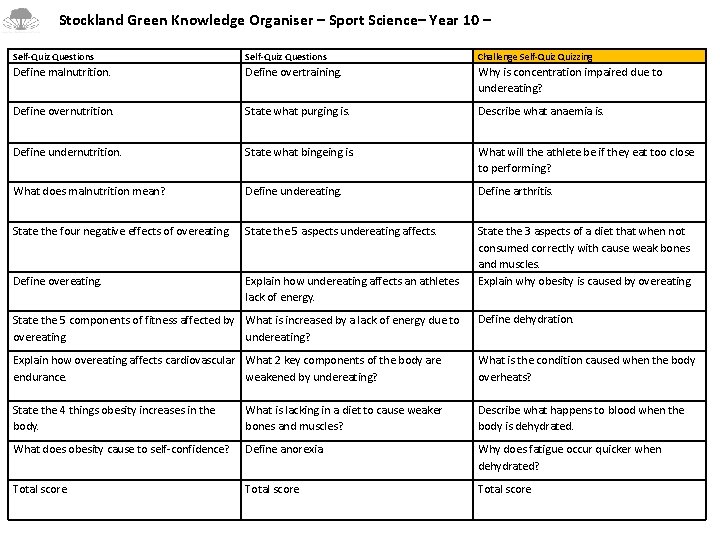
Stockland Green Knowledge Organiser – Sport Science– Year 10 – Self-Quiz Questions Challenge Self-Quizzing Define malnutrition. Define overtraining. Why is concentration impaired due to undereating? Define overnutrition. State what purging is. Describe what anaemia is. Define undernutrition. State what bingeing is. What will the athlete be if they eat too close to performing? What does malnutrition mean? Define undereating. Define arthritis. State the four negative effects of overeating. State the 5 aspects undereating affects. Define overeating. Explain how undereating affects an athletes lack of energy. State the 3 aspects of a diet that when not consumed correctly with cause weak bones and muscles. Explain why obesity is caused by overeating. State the 5 components of fitness affected by What is increased by a lack of energy due to overeating. undereating? Define dehydration. Explain how overeating affects cardiovascular What 2 key components of the body are endurance. weakened by undereating? What is the condition caused when the body overheats? State the 4 things obesity increases in the body. What is lacking in a diet to cause weaker bones and muscles? Describe what happens to blood when the body is dehydrated. What does obesity cause to self-confidence? Define anorexia. Why does fatigue occur quicker when dehydrated? Total score