Starting methods for induction motors Reducing electrical and


- Slides: 17
Starting methods for induction motors
Reducing electrical and mechanical stress at start-up • The starting current of an AC motor can vary from 3 to 7 times the nominal current. This is because a large amount of energy is required to magnetise the motor enough to overcome the inertia the system has at standstill. • The high current drawn from the network can cause problems such as voltage drop, high transients and, in some cases, uncontrolled shutdown. • High starting current also causes great mechanical stress on the motor’s rotor bars and windings, and can affect the driven equipment and the foundations. Several starting methods exist, all aiming to reduce these stresses
Starting current basics • The load, the motor and the supply network determine the most appropriate starting method. When selecting and dimensioning the starting equipment and any protective devices, the following factors must be taken into account: – The voltage drop in the supply network when starting the motor – The required load torque during start – The required starting time
Starting methods • • Direct on-line start – DOL Star-Delta (Y/D) starting Reactor start Auto transformer start Capacitor start Soft starters Frequency converter start Rheostat starting
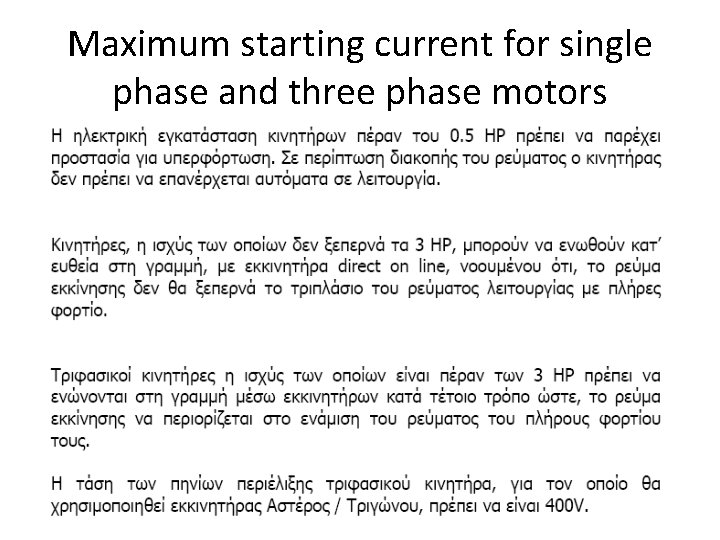
Maximum starting current for single phase and three phase motors 5
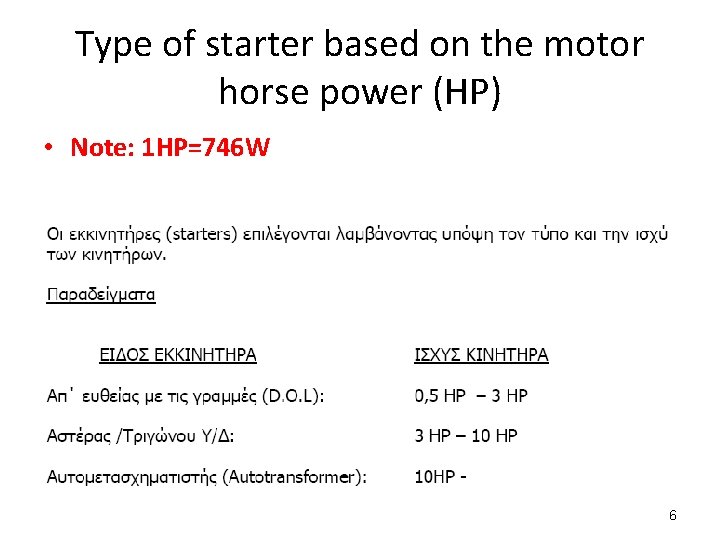
Type of starter based on the motor horse power (HP) • Note: 1 HP=746 W 6
Direct-on-line (DOL) start • Direct on line starting is suitable for stable supplies and mechanically stiff and well-dimensioned shaft systems. It is the simplest, cheapest and most common starting method. • Starting equipment for small motors that do not start and stop frequently is simple, often consisting of a hand operated motor protection circuit breaker. • Larger motors and motors that start and stop frequently, or have some kind of control system, normally use a direct-on-line starter which can consist of a contactor plus overload protection, such as a thermal relay.
Direct-on-line (DOL) start
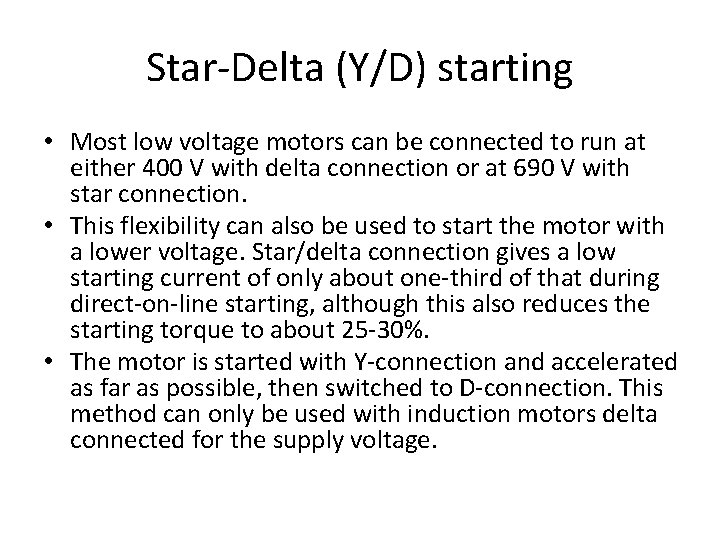
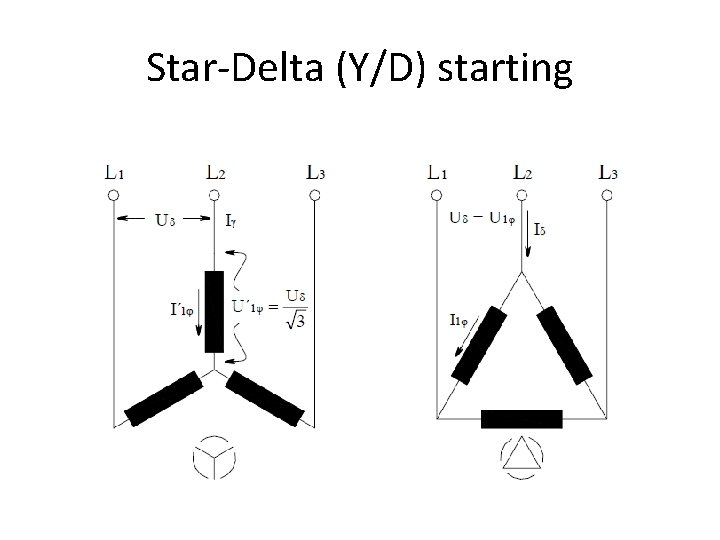
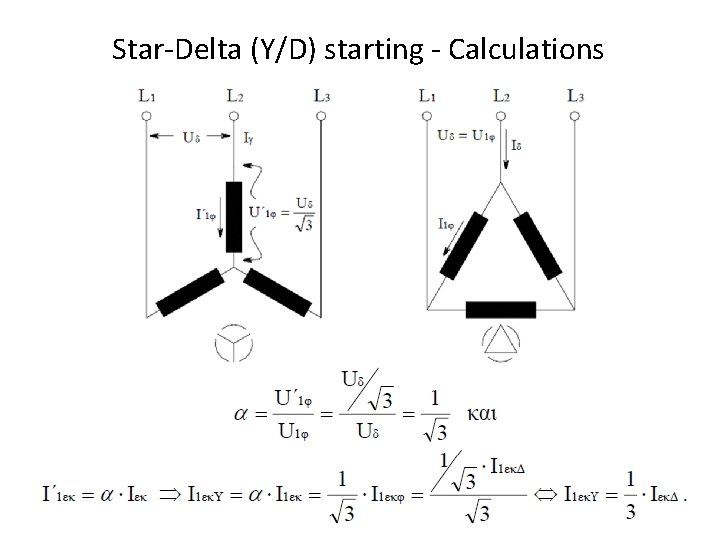
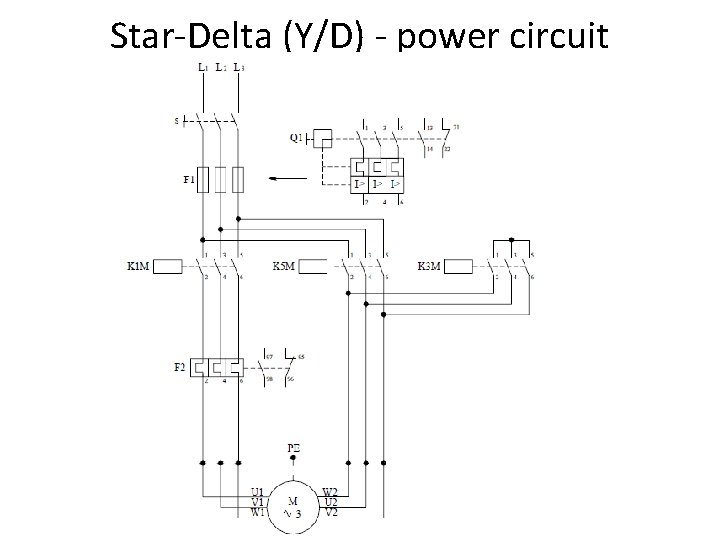
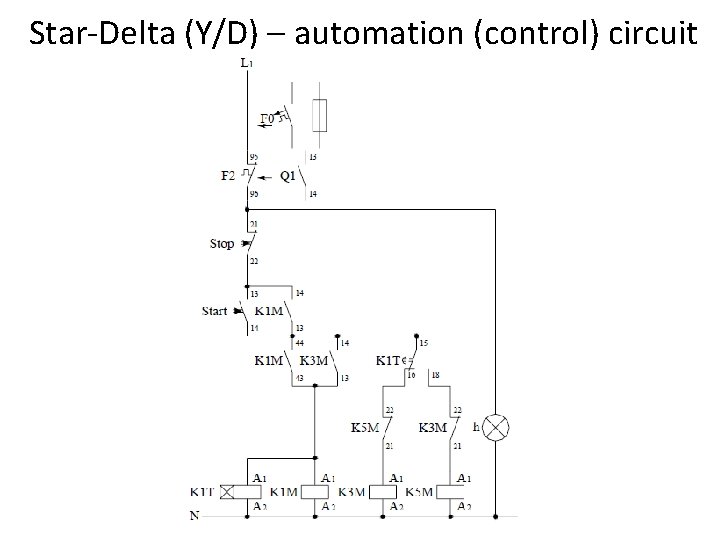
Star-Delta (Y/D) starting • Most low voltage motors can be connected to run at either 400 V with delta connection or at 690 V with star connection. • This flexibility can also be used to start the motor with a lower voltage. Star/delta connection gives a low starting current of only about one-third of that during direct-on-line starting, although this also reduces the starting torque to about 25 -30%. • The motor is started with Y-connection and accelerated as far as possible, then switched to D-connection. This method can only be used with induction motors delta connected for the supply voltage.
Star-Delta (Y/D) starting
Star-Delta (Y/D) starting
Star-Delta (Y/D) starting - Calculations
Star-Delta (Y/D) - power circuit
Star-Delta (Y/D) – automation (control) circuit