SPARCSing the Agenda on Social Protection Systems Arup
- Slides: 19
*SPARC(S)*-ing the Agenda on Social Protection Systems Arup Banerji Social Protection Inter-Agency Cooperation Board Informal Meeting 1
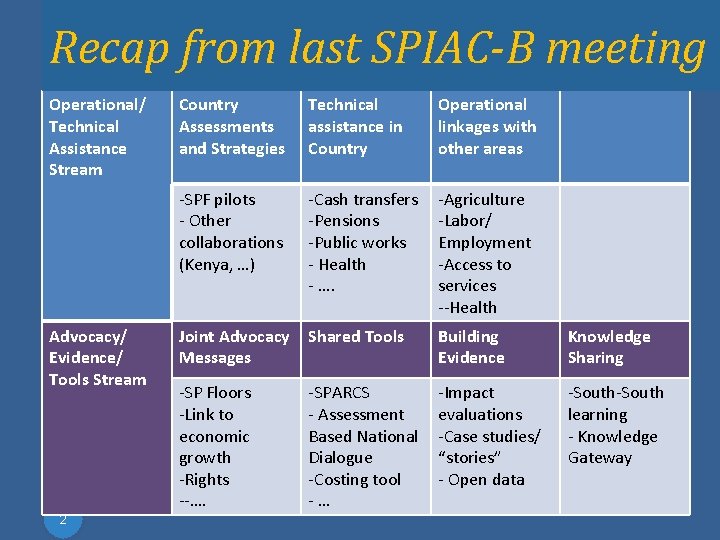
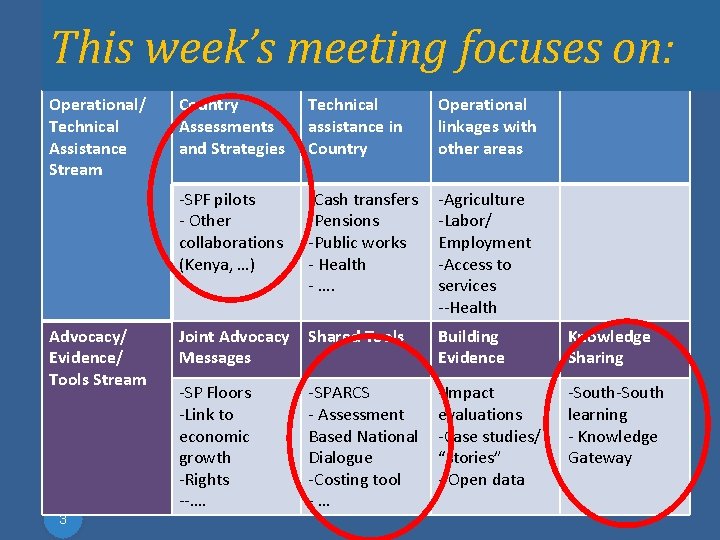
Recap from last SPIAC-B meeting Operational/ Technical Assistance Stream Advocacy/ Evidence/ Tools Stream 2 Country Assessments and Strategies Technical assistance in Country Operational linkages with other areas -SPF pilots - Other collaborations (Kenya, …) -Cash transfers -Pensions -Public works - Health - …. -Agriculture -Labor/ Employment -Access to services --Health Joint Advocacy Messages Shared Tools Building Evidence Knowledge Sharing -SP Floors -Link to economic growth -Rights --…. -SPARCS - Assessment Based National Dialogue -Costing tool -… -Impact evaluations -Case studies/ “stories” - Open data -South learning - Knowledge Gateway
This week’s meeting focuses on: Operational/ Technical Assistance Stream Advocacy/ Evidence/ Tools Stream 3 Country Assessments and Strategies Technical assistance in Country Operational linkages with other areas -SPF pilots - Other collaborations (Kenya, …) -Cash transfers -Pensions -Public works - Health - …. -Agriculture -Labor/ Employment -Access to services --Health Joint Advocacy Messages Shared Tools Building Evidence Knowledge Sharing -SP Floors -Link to economic growth -Rights --…. -SPARCS - Assessment Based National Dialogue -Costing tool -… -Impact evaluations -Case studies/ “stories” - Open data -South learning - Knowledge Gateway
Brief Background The World Bank’s 2012 -2022 Social Protection and Labor Strategy has a central focus: Building Social Protection and Labor Systems … shared by the new UNICEF and EC agendas, as well as other initiatives 4
But … • How to operationalize this? –What is a good SP System? –How can we help countries build and improve such systems? 5
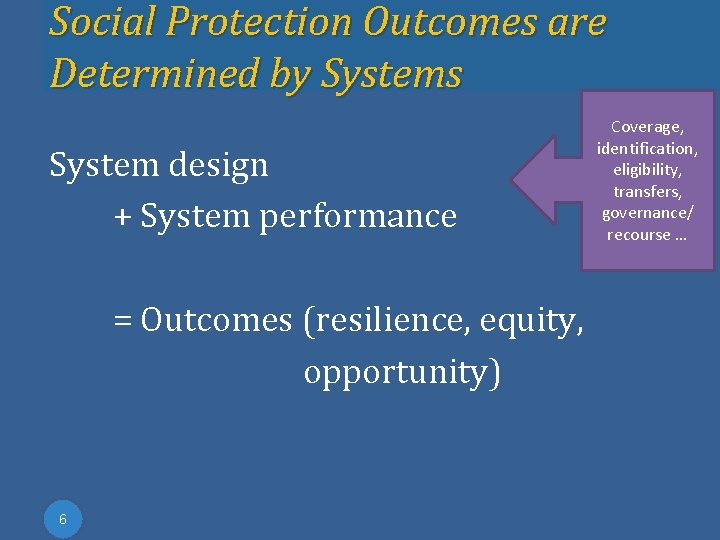
Social Protection Outcomes are Determined by Systems System design + System performance = Outcomes (resilience, equity, opportunity) 6 Coverage, identification, eligibility, transfers, governance/ recourse …
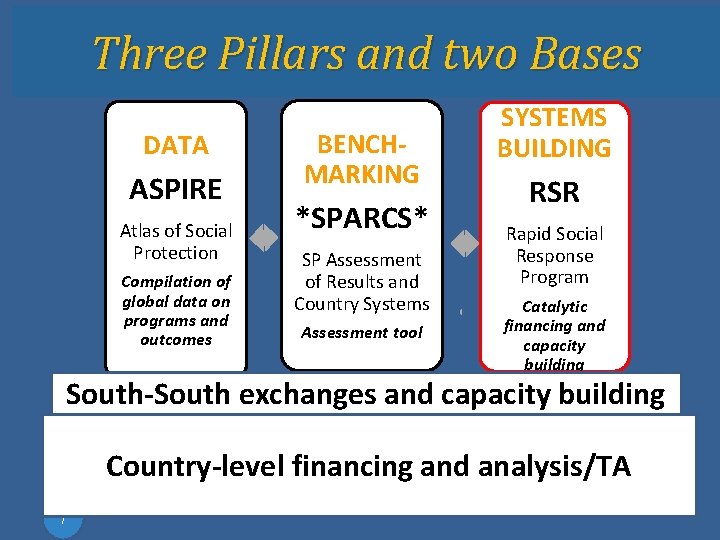
Three Pillars and two Bases DATA ASPIRE Atlas of Social Protection Compilation of global data on programs and outcomes BENCHMARKING *SPARCS* SP Assessment of Results and Country Systems Assessment tool SYSTEMS BUILDING RSR Rapid Social Response Program Catalytic financing and capacity building South-South exchanges and capacity building Country-level financing and analysis/TA 7
Social Protection Assessment of Results and Country Systems An agreed and shared instrument to assess social protection and labor systems and to guide their development 8
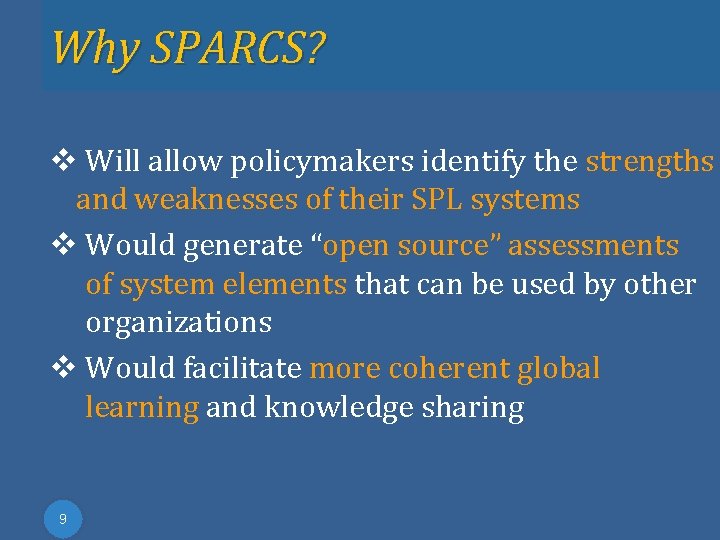
Why SPARCS? v Will allow policymakers identify the strengths and weaknesses of their SPL systems v Would generate “open source” assessments of system elements that can be used by other organizations v Would facilitate more coherent global learning and knowledge sharing 9
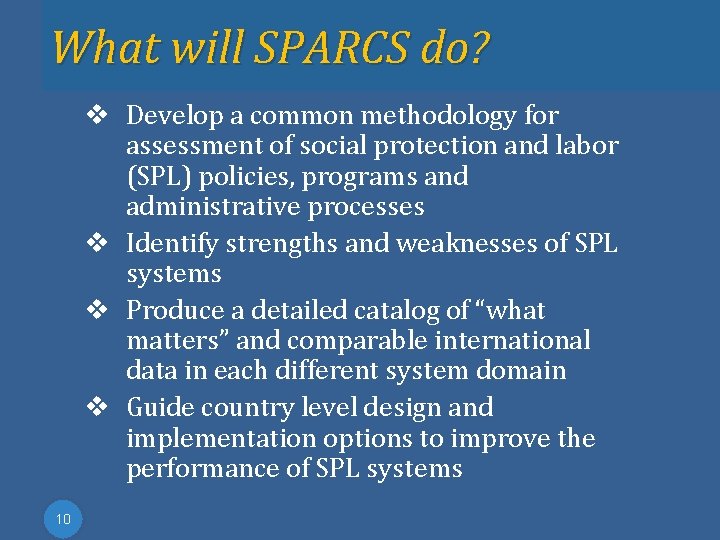
What will SPARCS do? v Develop a common methodology for assessment of social protection and labor (SPL) policies, programs and administrative processes v Identify strengths and weaknesses of SPL systems v Produce a detailed catalog of “what matters” and comparable international data in each different system domain v Guide country level design and implementation options to improve the performance of SPL systems 10
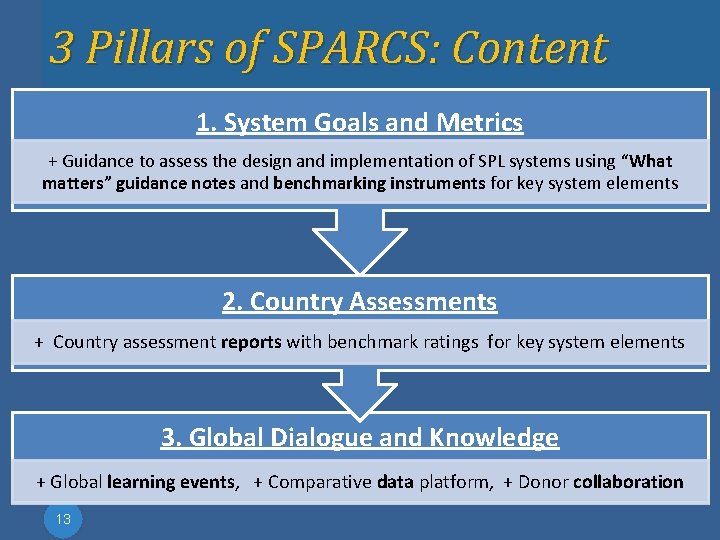
3 Pillars of SPARCS: Content 1. System Goals and Metrics + Guidance to assess the design and implementation of SPL systems using “What matters” guidance notes and benchmarking instruments for key system elements 2. Country Assessments + Country assessment reports with benchmark ratings for key system elements 3. Global Dialogue and Knowledge + Global learning events, + Comparative data platform, + Donor collaboration 13
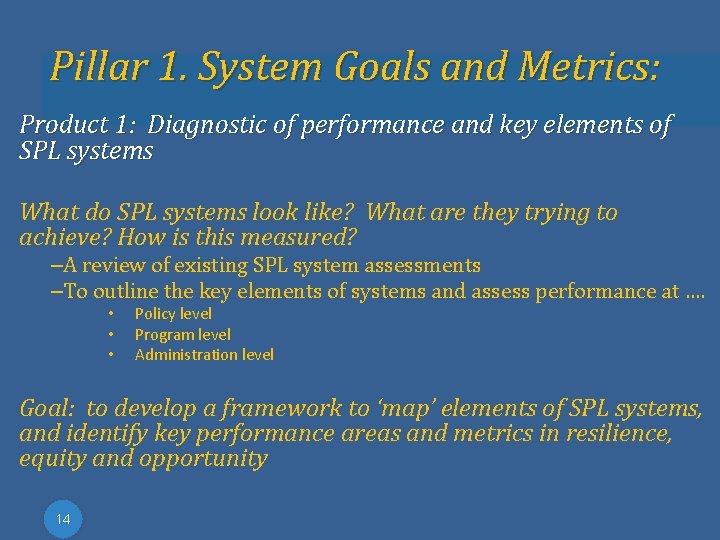
Pillar 1. System Goals and Metrics: Product 1: Diagnostic of performance and key elements of SPL systems What do SPL systems look like? What are they trying to achieve? How is this measured? –A review of existing SPL system assessments –To outline the key elements of systems and assess performance at …. • • • Policy level Program level Administration level Goal: to develop a framework to ‘map’ elements of SPL systems, and identify key performance areas and metrics in resilience, equity and opportunity 14
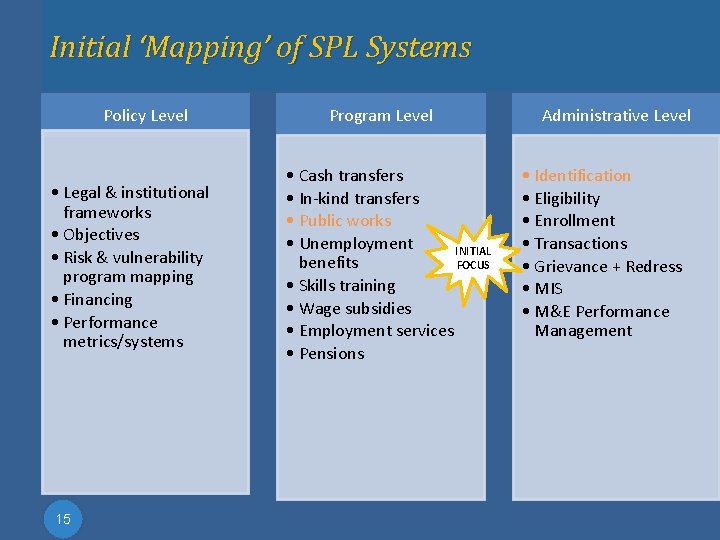
Initial ‘Mapping’ of SPL Systems Policy Level • Legal & institutional frameworks • Objectives • Risk & vulnerability program mapping • Financing • Performance metrics/systems 15 Program Level • Cash transfers • In-kind transfers • Public works • Unemployment INITIAL benefits FOCUS • Skills training • Wage subsidies • Employment services • Pensions Administrative Level • Identification • Eligibility • Enrollment • Transactions • Grievance + Redress • MIS • M&E Performance Management
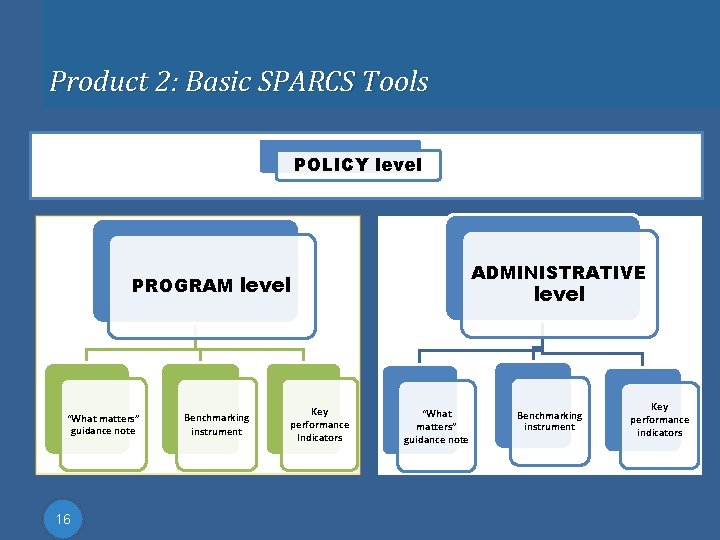
Product 2: Basic SPARCS Tools POLICY level ADMINISTRATIVE PROGRAM level “What matters” guidance note 16 Benchmarking instrument Key performance Indicators level “What matters” guidance note Benchmarking instrument Key performance indicators
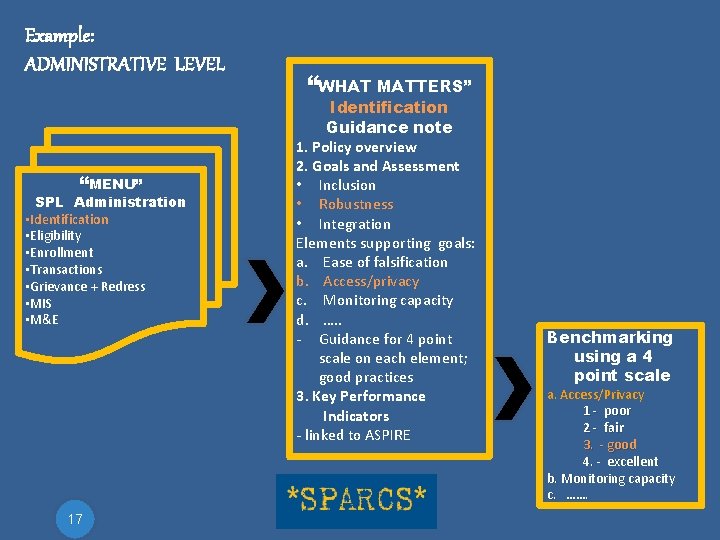
Example: ADMINISTRATIVE LEVEL “MENU” SPL Administration • Identification • Eligibility • Enrollment • Transactions • Grievance + Redress • MIS • M&E 17 “WHAT MATTERS” Identification Guidance note 1. Policy overview 2. Goals and Assessment • Inclusion • Robustness • Integration Elements supporting goals: a. Ease of falsification b. Access/privacy c. Monitoring capacity d. …. . - Guidance for 4 point scale on each element; good practices 3. Key Performance Indicators - linked to ASPIRE Benchmarking using a 4 point scale a. Access/Privacy 1 - poor 2 - fair 3. - good 4. - excellent b. Monitoring capacity c. …….
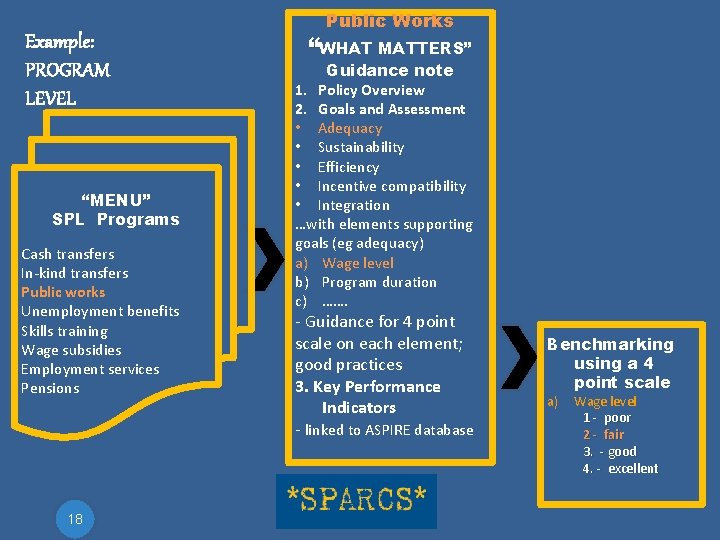
Example: PROGRAM LEVEL “MENU” SPL Programs Cash transfers In-kind transfers Public works Unemployment benefits Skills training Wage subsidies Employment services Pensions 18 Public Works “WHAT MATTERS” Guidance note 1. Policy Overview 2. Goals and Assessment • Adequacy • Sustainability • Efficiency • Incentive compatibility • Integration …with elements supporting goals (eg adequacy) a) Wage level b) Program duration c) ……. - Guidance for 4 point scale on each element; good practices 3. Key Performance Indicators - linked to ASPIRE database Benchmarking using a 4 point scale a) Wage level 1 - poor 2 - fair 3. - good 4. - excellent
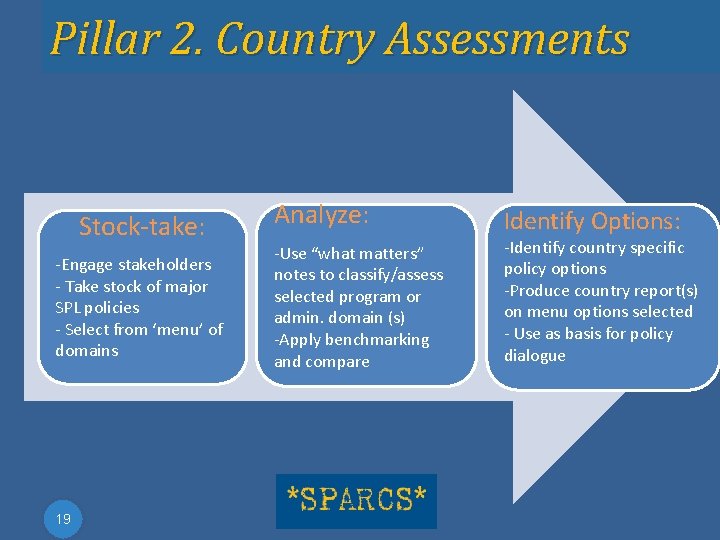
Pillar 2. Country Assessments Stock-take: -Engage stakeholders - Take stock of major SPL policies - Select from ‘menu’ of domains 19 Analyze: -Use “what matters” notes to classify/assess selected program or admin. domain (s) -Apply benchmarking and compare Identify Options: -Identify country specific policy options -Produce country report(s) on menu options selected - Use as basis for policy dialogue
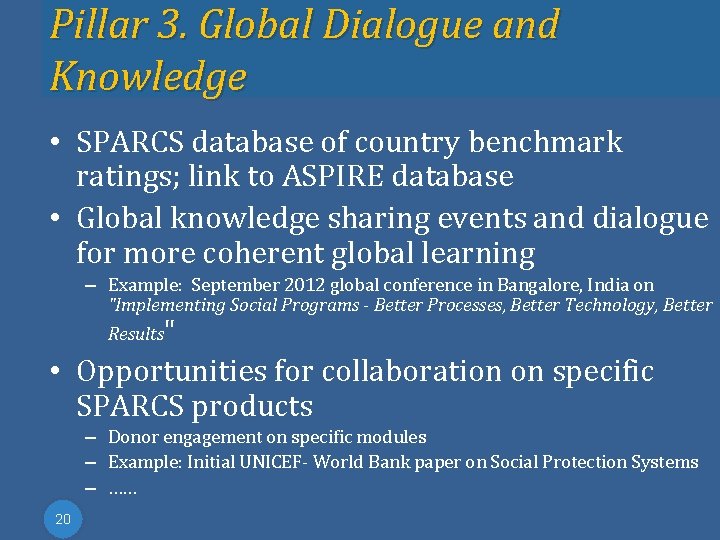
Pillar 3. Global Dialogue and Knowledge • SPARCS database of country benchmark ratings; link to ASPIRE database • Global knowledge sharing events and dialogue for more coherent global learning – Example: September 2012 global conference in Bangalore, India on "Implementing Social Programs - Better Processes, Better Technology, Better Results" • Opportunities for collaboration on specific SPARCS products – Donor engagement on specific modules – Example: Initial UNICEF- World Bank paper on Social Protection Systems – …… 20
An Invitation to SPIAC-B partners • SPARCS will work best if we can use it as a shred platform across agencies • So we would very much like to have SPARCS developed as a shared, and joint initiatives among agencies, and “own” as much of it as possible. • Please join us – in technical conversations – in taking leadership in specific pillars – in financing technical work – eventually, in piloting country-level discussions that will further refine the concepts 22