SOCIAL SKILLS IN MIDDLE SCHOOL DEFINITION AND EXPLANATION




- Slides: 9
SOCIAL SKILLS IN MIDDLE SCHOOL
DEFINITION AND EXPLANATION Social skills are the skills we use to communicate and interact with each other , both verbally and non-verbally, through gestures, body language and our personal appearance. Ø Human beings are sociable creatures and we have developed many ways to communicate our messages , thoughts and feelings with others. Ø Learning social skills improves students’ positive behavior and reduces negative behavior. Ø Lack of such skills can cause social awkwardness. Ø
BENEFITS Academic achievement 2 1 Social-emotional skills 3 Conduct/behavior in school 5 4 Attitudes about self and others Social interactions
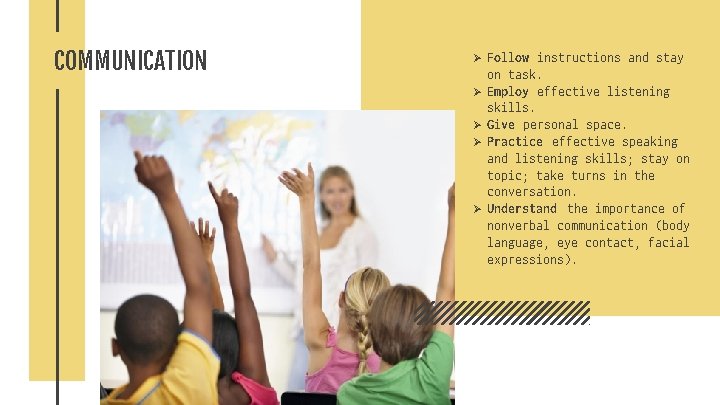
COMMUNICATION Ø Ø Ø Follow instructions and stay on task. Employ effective listening skills. Give personal space. Practice effective speaking and listening skills; stay on topic; take turns in the conversation. Understand the importance of nonverbal communication (body language, eye contact, facial expressions).
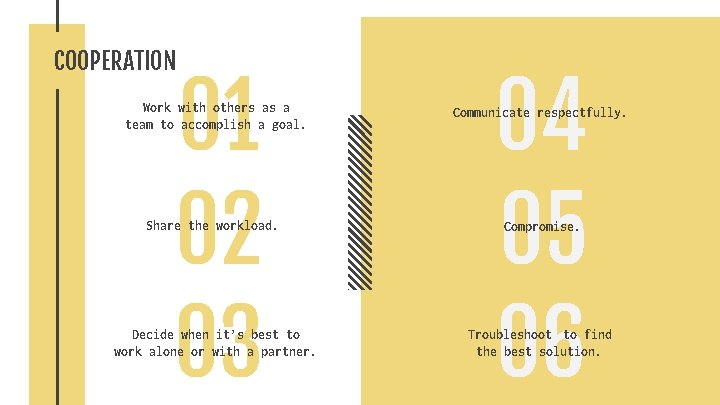
COOPERATION 01 02 03 04 05 06 Work with others as a team to accomplish a goal. Communicate respectfully. Share the workload. Compromise. Decide when it’s best to work alone or with a partner. Troubleshoot to find the best solution.
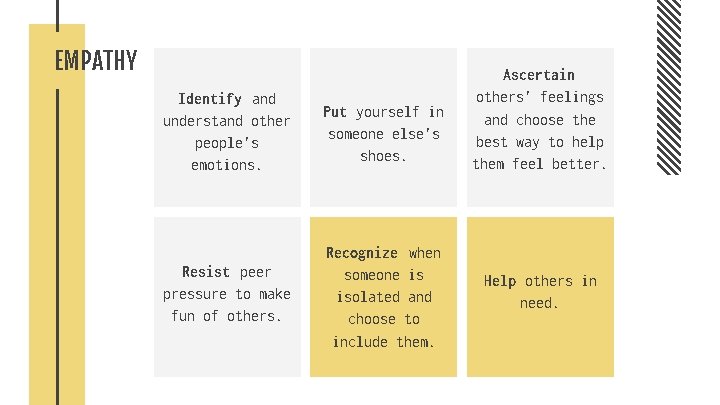
EMPATHY Identify and understand other people’s emotions. Put yourself in someone else’s shoes. Resist peer pressure to make fun of others. Recognize when someone is isolated and choose to include them. Ascertain others’ feelings and choose the best way to help them feel better. Help others in need.
MAKING AND KEEPING FRIENDS Ø Ø Ø Know when and how to work or play with others. Find friends with similar interests but be open to all kinds of friends. Initiate conversation appropriately. Ø Ø Ø Ask to join a game already in progress. Be positive. Be flexible. Initiate positively with a group after being rejected. Learn conflict resolution.
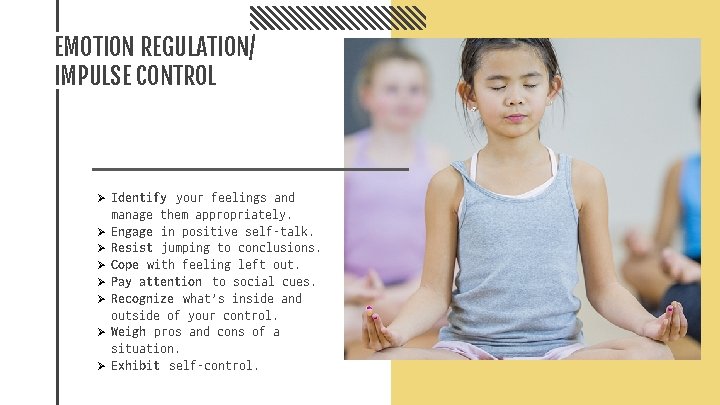
EMOTION REGULATION/ IMPULSE CONTROL Ø Ø Ø Ø Identify your feelings and manage them appropriately. Engage in positive self-talk. Resist jumping to conclusions. Cope with feeling left out. Pay attention to social cues. Recognize what’s inside and outside of your control. Weigh pros and cons of a situation. Exhibit self-control.
FOLLOW US @EDSOUTHSOS @ECAMPUSTOURS @STUDENTOUTREACHSERVICES @ECAMPUSTOURS STUDENT OUTREACH SERVICES FROM EDSOUTH