Social Groups and Organizations Chapter 6 After studying














- Slides: 39
Social Groups and Organizations Chapter 6
After studying this chapter, you should be able to do the following: Ø ◗ Distinguish between primary and secondary groups. Ø Ø Ø ◗ Explain the functions of groups. ◗ Understand the role of reference groups. ◗ Know the influence of group size. ◗ Understand the characteristics of bureaucracy. ◗ Know what Michels’s concept of “the iron law of oligarchy” is. ◗ Understand why social institutions are important.
The Nature of Groups Group Ø Is often used for almost any occasion when two or more people come together. Ø In sociology, however, we use several terms for various collections of people, not all of which are considered groups.
Social group Ø Consists of a number of people who have a common identity, some feeling of unity, and certain common goals and shared norms
Why do you feel social groups are important?
A social group has a purpose and is therefore important to its members, who know how to tell an “insider” from an “outsider. ”
Describe what is meant by insider and outsider.
Social Aggregate Ø Is made up of people who temporarily happen to be in physical proximity to each other, but share little else.
Ø Six characteristics of social groups: l l l Permanence beyond the meetings of members, that is, even when members are dispersed Means for identifying members Mechanisms for recruiting new members Goals or purposes Social statuses and roles, that is, norms for behavior Means for controlling members’ behavior
Primary and Secondary Groups Ø What is the difference between a primary group and a secondary group? Give an example.
The difference between primary and secondary groups lies in the kinds of relationships their members have with one another.
Primary groups Ø Involve interaction among members who have an emotional investment in one another and in a situation, who know one another intimately, and who interact as total individuals rather than through specialized roles.
Secondary group Ø Is characterized by much less intimacy among its members. Ø It usually has specific goals Ø Is formally organized and is impersonal.
Primary Group Family Secondary Group Co-Workers
Functions of Groups To function properly, all groups—both primary and secondary—must Ø Defining Boundaries Ø Choosing Leaders Ø Making Decisions Ø Setting Goals Ø Assigning Tasks Ø Controlling Members’ Behavior Ø Reference Groups
Choosing Leaders Ø All groups must grapple with the issue of leadership. Ø A leader is someone who occupies a central role or position of dominance and influence in a group.
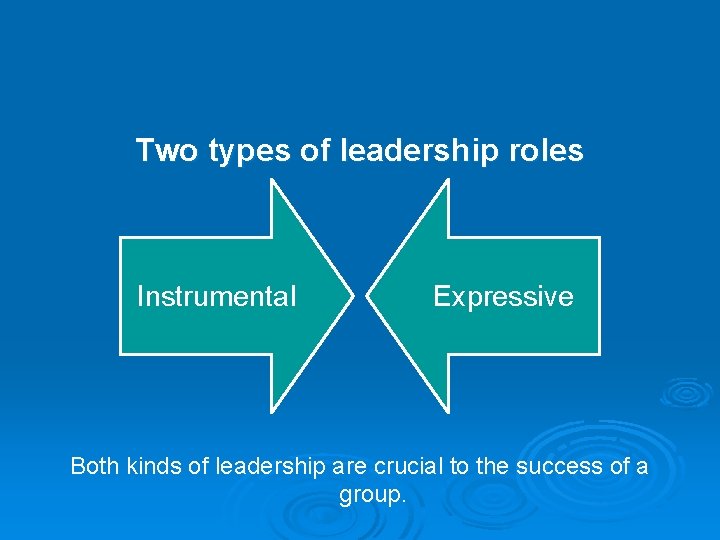
Two types of leadership roles Instrumental Expressive Both kinds of leadership are crucial to the success of a group.
Instrumental leadership Ø In which a leader actively proposes tasks and plans to guide the group toward achieving its goals.
Expressive leadership Ø A Leader works to keep relations among group members harmonious and morale high
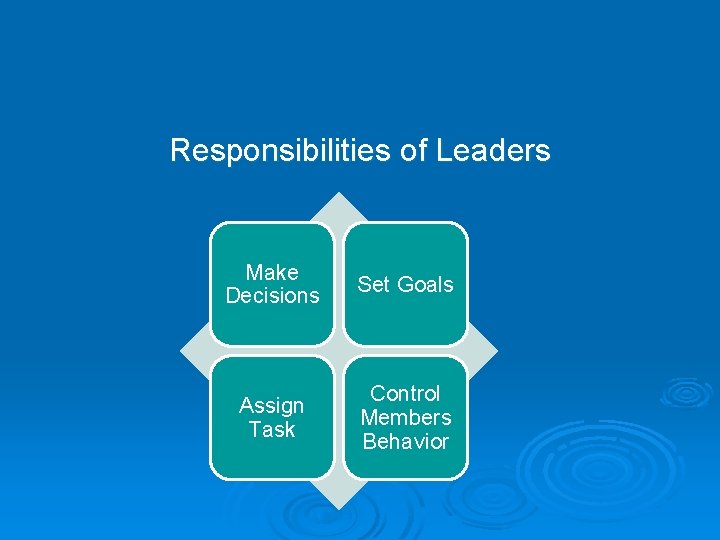
Responsibilities of Leaders Make Decisions Set Goals Assign Task Control Members Behavior
Reference group Ø A group or social category that an individual uses to help define beliefs, attitudes, and values and to guide behavior.
Reference Groups Ø Provides a comparison point against which people measure themselves and others. Ø Is often a category we identify with, rather than a specific group we belong to.
Differences between positive and negative reference groups Positive • Compose of people we want to emulate. Negative • Provide a model we do not wish to follow.
Small group Ø Many kinds of social groups, such as families, peer groups, and work groups, that actually meet together and contain few enough members so that all members know one another.
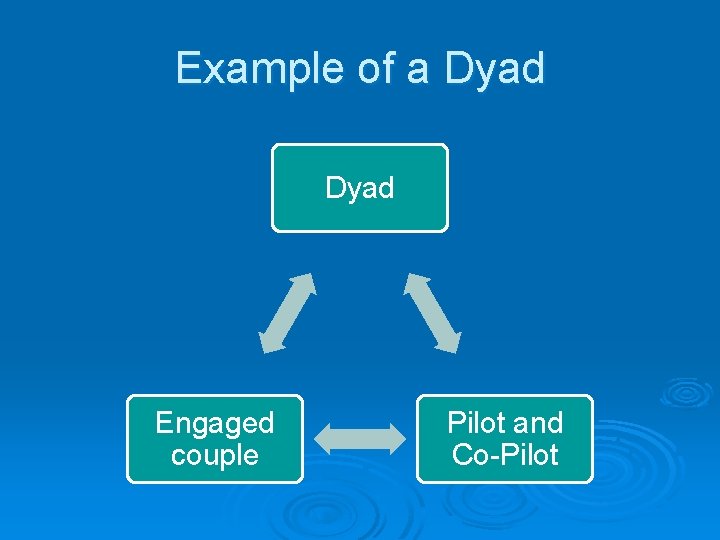
The smallest group possible is a dyad. Contains only two members.
Example of a Dyad Engaged couple Pilot and Co-Pilot
Splinter groups within the larger group Ø As a group grows larger, the number of relationships within it increases, which often leads to the formation of subgroups. Ø Once a group has more than five to seven members, spontaneous conversation becomes difficult for the group as a whole.
Triad Ø The addition of a third member, creates uncertainty because it introduces the possibility of two-against-one alliances. Ø Triads are more stable in those situations when one member can help resolve quarrels between the other two.
Formal Structure • Exemplified by the organizational structure called bureaucracy. Informal Structure • Networks of people who help out one another by “bending” rules and taking procedural shortcuts
Mechanical and Organic Solidarity Ø According to Durkheim, every society has a collective conscience—a system of fundamental beliefs and values. Ø Social solidarity emerges from the people’s commitment and conformity to the society’s collective conscience.
Ø A mechanically integrated society is one in which a society’s collective conscience is strong and there is a great commitment to that collective conscience. Ø Organically integrated society social solidarity depends on the cooperation of individuals in many different positions who perform specialized tasks.
Bureaucracy-Robert K. Merton (1969) Ø A formal, rationally organized social structure [with] clearly defined patterns of activity in which, ideally, every series of actions is functionally related to the purposes of the organization. ”
Weber’s Model of Bureaucracy: An Ideal Type Weber’s model of bureaucracy ideal type Ø Which is a simplified, exaggerated model of reality used to illustrate a concept.
A clear-cut division of labor. Hierarchical delegation of power and responsibility. Rules and regulations Impartiality Employment based on technical qualifications Distinction between public and private spheres
Weber outlined six characteristics of bureaucracies A clear-cut division of labor Employment based on technical qualifications Hierarchical delegation of power and responsibility Impartiality Distinction between public and private spheres Rules and regulations
The Iron Law of Oligarchy Ø Under which organizations that were originally idealistic and democratic eventually come to be dominated by a small self-serving group of people who achieved positions of power and responsibility.
Social institutions Ø The ordered social relationships that grow out of the values, norms, statuses, and roles that organize those activities that fulfill society’s fundamental needs.
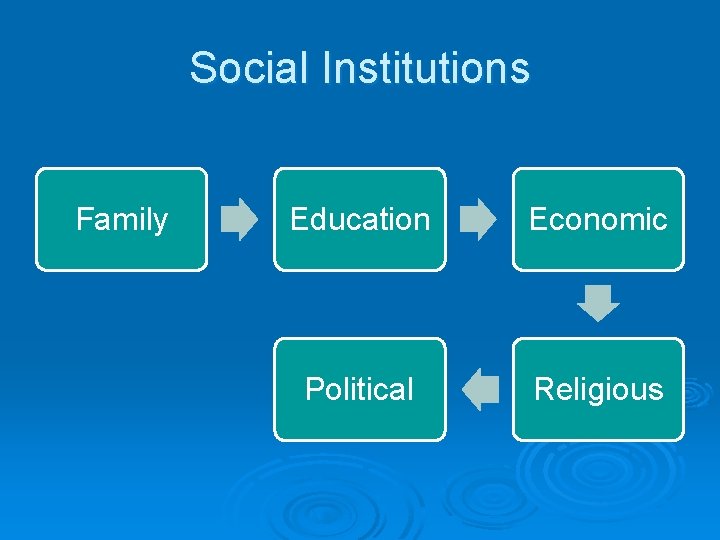
Social Institutions Family Education Economic Political Religious
Social Organization Social organization l Consists of the relatively stable pattern of social relationships among individuals and groups in society. Ø Relationships are based on systems of social roles, norms, and shared meanings that provide regularity and predictability in social interaction.